

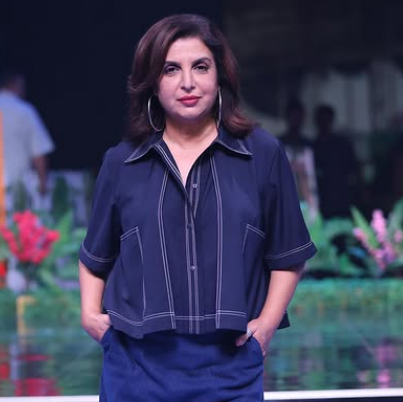
Farah Khan is one of Bollywood’s most recognizable choreographers, directors and television personalities. She rose from choreographing for song sequences to directing blockbuster entertainers
Known for her energetic dance numbers, warm humour and gift for showmanship, Farah Khan has left a mark on mainstream Hindi cinema for more than two decades.
Farah Khan is a name that signals big, joyful song-and-dance sequences, crowd-pleasing films and a cheerful presence on television.
Beginning her career as a choreographer, she quickly became one of the industry’s most sought-after directors of dance. Her transition to film direction brought a similar sensibility larger-than-life set pieces, comic timing and an emphasis on crowd appeal.
Over the years she has also appeared in cameo roles, judged reality shows and remained an influential voice in Bollywood.

Also Read: Govinda Bio, Movies, Family Life, Career Highlights and Facts
Table of Contents
Farah Khan’s Biography
Early life and background
Farah Khan was born and raised in Mumbai in a family with creative leanings. She grew up in a city that was the beating heart of Indian film and music.
From a young age, she was drawn to dance and performance. She worked as a background dancer and gradually moved into choreography.
Her grounding in practical, on-set dance work gave her a clear sense of timing, staging and what would connect with a mass audience. 1
Farah’s early years in the industry were not glamorous. Like many in the film world, she learned by doing. She observed established choreographers, worked on small projects and built a reputation for inventiveness and energy.
That steady build-up and consistent delivery is what helped her become a top choreographer in the 1990s and early 2000s.
Poora london thumakda.. looking forward to this ! pic.twitter.com/729zxIJHMG
— TheFarahKhan (@TheFarahKhan) August 14, 2023
Quick Facts
| Item | Detail |
|---|---|
| Full name | Farah Khan (often credited as Farah Khan Kunder) |
| Born | 9 January 1965 (commonly cited). |
| Place of birth | Mumbai, India. |
| Occupation | Choreographer, film director, producer, actress, TV personality. |
| Years active | 1980s – present. |
| Notable films (as director) | Main Hoon Na (2004), Om Shanti Om (2007), Tees Maar Khan (2010). |
| Notable work (as choreographer) | Dance sequences for Kuch Kuch Hota Hai, Karan Arjun, Dil Toh Pagal Hai, Main Hoon Na, Om Shanti Om. |
| Spouse | Shirish Kunder (film editor/director). Married 2004. |
| Children | Triplets (son Czar and daughters Diva and Anya) born in 2008. |
| Awards | Multiple film and choreography awards and nominations (Filmfare, IIFA and others). |
| Estimated net worth | Widely reported estimates vary; recent media reports place her net worth in the crores of rupees. |
Rise as a Choreographer
Farah Khan’s signature is big, well-structured dance sequences that balance technical movement with cinematic staging.
She became the go-to choreographer for major directors and stars. Some key aspects of her choreographic style:
-
Story-driven choreography: She designed moves that reflected a song’s emotion and the characters’ moods.
-
Group dynamics: Many of her numbers use large ensembles and creative formations that read well on camera.
-
Blend of classical and contemporary: She often fused traditional Indian steps with modern pop and filmi stylings.
-
Camera-minded staging: Her choreography always accounted for camera angles, edits and how sequences would appear on screen.
Films where her choreography made a lasting impact include Kuch Kuch Hota Hai and Dil Toh Pagal Hai, both defining films for dance in 1990s Bollywood. These credits raised her profile and opened doors to more creative roles in the industry.
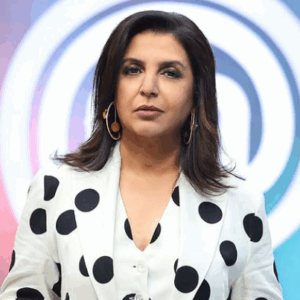
Transition to direction: films that defined her
Farah’s move from choreography to film direction was natural given her sense of spectacle and performance. She brought the same flair for staging to storytelling.
Main Hoon Na (2004)
Farah’s directorial debut Main Hoon Na blended action, comedy, romance and musical numbers. The film starred Shah Rukh Khan and did well at the box office.
Its mix of family drama and Bollywood masala signalled Farah’s strengths as a director who understood star appeal and commercial beats. The film also brought her first major recognition as a director.
Om Shanti Om (2007)
Om Shanti Om was a glossy, self-aware tribute to Bollywood. Featuring Shah Rukh Khan and Deepika Padukone in her debut role, the film combined pastiche, melodrama and big musical numbers.
It became a huge commercial success and remains one of the high points of Farah’s directorial career.
Tees Maar Khan (2010) and later projects
Not all of Farah’s films were uniformly praised. Tees Maar Khan attempted a heist-comedy format and had notable set pieces.
Public reception was mixed, and Farah has discussed the film’s reception candidly in interviews. She continued to work in films, served as a guest and cameo actor, and remained active on TV and stage.

Acting, cameo roles and TV presence
Although primarily known as a choreographer and director, Farah Khan has appeared on screen in cameo roles and special appearances.
She has also been a jury member and judge on several television reality shows, leveraging her popularity and easygoing style.
Her TV presence has kept her connected to audiences between films and added another dimension to her public image.2
Farah is also known for her entertaining interviews and candidness. She often uses humour and self-deprecation, which endears her to viewers. Her social media presence shows a mix of professional updates, family moments and playful posts.
Also Read: Abhay Deol’s Biography, Age, Career, Family, Movies and Facts
Personal Life
Farah married filmmaker Shirish Kunder in December 2004. The couple met on film projects and share a creative partnership.
In 2008, the couple welcomed triplets one son, Czar, and two daughters, Diva and Anya via in vitro fertilization.
Farah’s experiences as a mother of triplets have featured in media coverage, and she has spoken about balancing career and family.
The Khans live a relatively private family life compared with the spotlight their professional work attracts. Farah’s warmth and candid public persona, however, keep her in the public eye through interviews, TV appearances and social media interactions.
Recent news items frequently cover her visits to television sets, interactions with fellow celebrities and playful public moments.3

Style and Filmmaking Instincts
Farah Khan’s work is defined by several recurring traits:
-
Mass appeal: She designs for large audiences rather than niche filmgoers.
-
Energetic pacing: Her sequences often move fast and are edited rhythmically.
-
Visual comedy and timing: She uses comic beats that play well on camera.
-
Dance-first mentality: Even in films, her set pieces and songs are often the most talked-about moments.
This combination has made her films box-office friendly, though occasionally critics have pointed out gaps in narrative depth. Farah’s own voice in interviews stresses that her goal is to entertain and to make films that people enjoy watching.
Awards and Recognition
Farah Khan has earned numerous nominations and several awards across choreography and filmmaking categories.
Filmfare, IIFA and other awards bodies have recognised her choreography and directorial work.
While specific award lists are long, highlights include nominations for best director for Main Hoon Na and Om Shanti Om, and multiple wins or nominations for choreography in major awards circuits.
Business and Net Worth
Public estimates of Farah Khan’s net worth vary. Media outlets and financial summaries have placed her net worth in a comfortable bracket reflecting years of work in films, television appearances, brand deals and other ventures.
One recent report estimated her net worth in the range of several crores of rupees. Such figures are estimates and should be treated as approximate.4
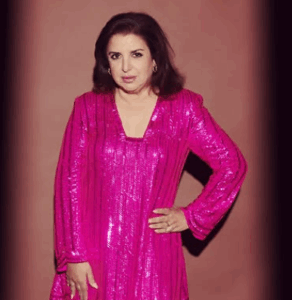
Controversies and Critical Reception
Like many high-profile filmmakers, Farah Khan has faced occasional criticism. Some films received mixed or negative reviews despite strong box-office showings.
At times she has responded openly to criticism, acknowledging what did not work. Her candid and humorous approach to discussion often diffuses controversy and frames setbacks as part of a public creative life.
Influence on Bollywood dance
Farah Khan helped define 1990s and 2000s Bollywood choreography in important ways.
By making dance sequences integral to character and story, and by staging numbers that translated well on screen, she trained a generation of dancers and choreographers to think cinematically.
Her choreography remains a reference point for commercial Hindi cinema and television dance formats.
Filmography
As choreographer / dance director:
-
Karan Arjun
-
Dil Toh Pagal Hai
-
Kuch Kuch Hota Hai
-
Main Hoon Na (also directed)
-
Om Shanti Om (also directed)
As director:
-
Main Hoon Na (2004).
-
Om Shanti Om (2007).
-
Tees Maar Khan (2010).
On-screen cameos and acting:
-
Small on-screen appearances in films and TV reality shows.
Philanthropy and public life
Farah Khan occasionally takes part in charitable events and public causes. She has also visited television and public events where she contributes time and presence to support causes or to participate in fund-raising activities.
Her public image as a warm, accessible celebrity makes her a valuable presence at charity and public awareness events.
Recent coverage shows her participating in TV shows and public events that promote positivity and entertainment.5
View this post on Instagram
FAQ’s
Q: Is Farah Khan primarily a choreographer or a director?
A: She began as a choreographer and became a leading director for mainstream Bollywood films. She continues to be recognized strongly for both roles.
Q: When was Farah Khan born?
A: Public sources commonly cite her birth date as 9 January 1965. Different profiles sometimes list slightly different details.
Q: Who is Farah Khan married to?
A: She is married to filmmaker Shirish Kunder since December 2004.
Q: Does Farah Khan have children?
A: Yes. Farah and Shirish Kunder have triplets: one son, Czar, and two daughters, Diva and Anya. The children were born in 2008.
Q: What are Farah Khan’s most successful films?
A: Main Hoon Na and Om Shanti Om are among her most commercially successful and culturally impactful films.
Q: Has Farah Khan won major awards?
A: Yes. She has received multiple nominations and several awards for choreography and film direction across major Indian award shows.
Q: What is Farah Khan’s net worth?
A: Public estimates vary. Media reports and financial summaries place her net worth in the range representative of senior industry figures in Bollywood. One recent estimate reported a figure in crores of rupees. Treat such figures as approximations.
Q: Is Farah Khan active on television?
A: Yes. Farah has been a judge and guest on several television reality shows. She often appears on popular TV formats and special television events.
Closing Note
Farah Khan’s journey in Bollywood is a study in adaptability. She evolved from a background dancer to one of the most visible choreographers and directors in mainstream Hindi cinema.
Her films and dance sequences are built to entertain and connect with wide audiences.
Whether you admire her choreography, her directorial eye or her warm television presence, Farah Khan has made a durable mark on modern Bollywood.
Also Read: Esha Deol Bio, Family, Career, Movies, Personal Life & More