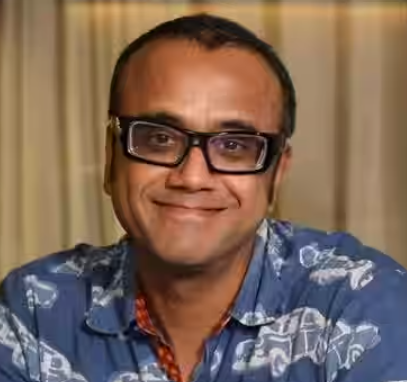
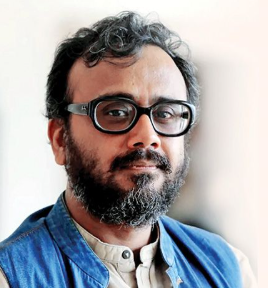
Dibakar Banerjee stands among the most original voices in contemporary Hindi cinema. Since his feature debut in 2006, he has repeatedly challenged the formula of mainstream storytelling with textured characters, incisive social observation, and a playful yet rigorous approach to film form
His movies Khosla Ka Ghosla!, Oye Lucky! Lucky Oye!, Love Sex aur Dhokha (LSD), Shanghai, Detective Byomkesh Bakshy!, and Sandeep Aur Pinky Faraar have earned critical accolades, cultural influence, and a faithful audience that values films with bite and brains.
He began in advertising, sharpened his craft in short-form storytelling, and then built a filmography that doubles as a chronicle of Indian urban life: aspirational, chaotic, witty, wounded, and restless.
Below you’ll find life story, a quick stats table, career highlights, signature themes, notable collaborators, awards, and FAQs everything about Dibakar Banerjee.
Also Read: Nidhhi Agerwal Bio, Age, Career, Movies, Net Worth and More
Table of Contents
Dibakar Banerjee’s Biography
Early Life and Education
Born on 21 June 1969 and raised near Karol Bagh in West Delhi, Dibakar Banerjee grew up surrounded by the rhythms of a bustling middle-class neighborhood.
That setting pragmatic, aspirational, occasionally cynical echoes across his films, where apartments, lanes, markets, and offices teem with characters who hustle to make life work.
He studied at Bal Bharati Public School in Delhi and later joined the National Institute of Design (NID), Ahmedabad to pursue visual communication and graphic design.
He left the program after roughly two and a half years, returning to Delhi where he learned on the job in the moving-image world.1
Even that partial design education proved pivotal: his work is precise about framing, color, typography, signage, and the look of public spaces.
When his movies capture a street sign or the font on a shop shutter, it isn’t accidental; it’s part of how he composes meaning.
Meeting the LSD shortfilm contest winners today, youngsters never cease to surprize !!!
— Dibakar Banerjee (@DibakarBanerjee) May 18, 2010
Quick Stats
| Category | Details |
|---|---|
| Full Name | Dibakar Banerjee |
| Profession | Film director, screenwriter, producer; also an ad-filmmaker |
| Known For | Khosla Ka Ghosla! (2006), Oye Lucky! Lucky Oye! (2008), Love Sex aur Dhokha (2010), Shanghai (2012), Detective Byomkesh Bakshy! (2015), Sandeep Aur Pinky Faraar (2021) |
| Date of Birth | 21 June 1969 |
| Birthplace | New Delhi, India |
| Education | Attended National Institute of Design (visual communication/graphic design; left after ~2.5 years) |
| Years Active | 2006–present (feature films); earlier in advertising |
| Spouse | Richa Puranesh |
| Major Honors | National Film Awards (for Khosla Ka Ghosla! and Oye Lucky! Lucky Oye!), multiple Filmfare nominations and wins (including Best Dialogue for Sandeep Aur Pinky Faraar) |
| Also Known For | Realist slices of urban India; satire; mock-doc and found-footage techniques; political drama; genre reinvention |
From Advertising to Cinema
Banerjee’s training ground was advertising, where he started as a copywriter at agencies like Shems Combit, TBWA Anthem, and then Contract Advertising (Delhi).
At Contract he worked under celebrated ad director Pradeep Sarkar, and alongside writer Jaideep Sahni, who would later write Khosla Ka Ghosla! The ad world taught Banerjee how to tell tight stories, build characters quickly, and use sound and image as hard-working tools.
In 1997, he left Contract to co-found Watermark, creating promos for Channel V/MTV and commercials for major brands skills that refined his sense of rhythm and his ear for the everyday.
Advertising also gave him a front-row seat to urban Indian consumer culture in the late 1990s and early 2000s: the chuckle of the jingle, the dream of the brand, the sell. That sensibility both skeptical and empathetic runs through his cinema.
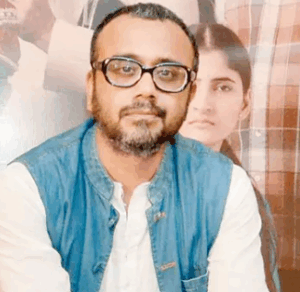
Breakthrough: Khosla Ka Ghosla! (2006)
Banerjee’s feature debut, Khosla Ka Ghosla!, is a Delhi comedy about land, dignity, and the power of a family to outwit a smooth-talking property racketeer.
The film allies the structure of a heist with tea-time humor and middle-class resourcefulness.
It was an instant critical and audience favorite and went on to win a National Film Award, establishing Banerjee as a fresh, grounded voice capable of balancing authenticity with entertainment.
Rebound and Refine: Oye Lucky! Lucky Oye! (2008)
With Oye Lucky! Lucky Oye! Banerjee delivered a caper-comedy about a charismatic Delhi thief who steals not just objects but class boundaries.
The film was joyous, sharp, and structurally inventive. It again won a National Film Award, cementing Banerjee’s reputation as a filmmaker who could render social critique with a grin.
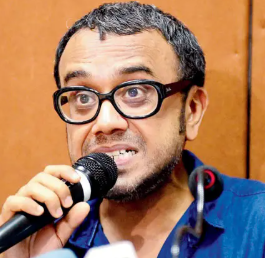
Risk and Reinvention: Love Sex aur Dhokha (LSD) (2010)
In 2010, Banerjee pivoted hard with LSD, an experimental anthology stitched from surveillance feeds, handy-cams, and reality TV aesthetics. The form wasn’t a gimmick it was the message.
The film probed voyeurism, honor, and the commodification of intimacy in an age of cheap cameras and cheaper moral outrage. It remains a landmark in how Hindi cinema can play with form to say something new about society.
The Political Turn: Shanghai (2012)
Shanghai is a slow burn one of the most restrained yet chilling political thrillers in Hindi cinema.
Based on Vassilis Vassilikos’s Z, it examines development dreams, state power, and the cost paid by the vulnerable when progress is a slogan.
Banerjee composes a town through faces: bureaucrats, activists, migrants, professionals each compromised in some way. The result is a film that feels like a dossier you can’t stop reading.
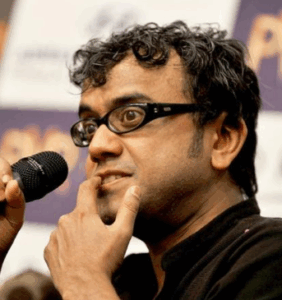
Anthology & Collaboration: Bombay Talkies (2013) and Beyond
In 2013, Banerjee joined Anurag Kashyap, Zoya Akhtar, and Karan Johar on Bombay Talkies, an anthology marking 100 years of Indian cinema.
His segment continued his habit of peering at the underside of dreams and the frictions between nostalgia and modernity. Collaborations like these show his ease in a room full of auteurs always distinct, never showy for the sake of it.
He later contributed to Lust Stories (2018; anthology format) and other multi-director projects, carrying forward his reputation for frank, wry, character-centric storytelling.
Genre Play: Detective Byomkesh Bakshy! (2015)
With Detective Byomkesh Bakshy!, Banerjee ventured into period mystery, reimagining the iconic Bengali sleuth in a stylized 1940s Calcutta.
It’s a world of fog, intrigue, and shifting allegiances handled with visual flair and narrative patience.
The film showcased Banerjee’s range and his interest in redesigning classic Indian intellectual property for a new generation.
The Slow-Bake Triumph: Sandeep Aur Pinky Faraar (2021)
Sandeep Aur Pinky Faraar endured a delayed release and opened modestly in theaters (March 2021), but its afterlife was powerful.
Streaming viewers discovered a tense, slyly funny thriller about a banker and a suspended cop on the run two people trapped by systems much larger than them.
The film gathered 10 nominations at the 67th Filmfare Awards and won Best Dialogue, with critics praising its world-weariness, character work, and social subtext. It’s a textbook example of a film whose resonance grew over time.
Notable Collaborators
-
Jaideep Sahni (writer): A key ally from his advertising days; wrote Khosla Ka Ghosla! and shaped its celebrated mix of humor and heart.
-
Pradeep Sarkar (mentor in advertising): Helped shape Banerjee’s early craft in ad storytelling.
-
Actors and ensembles: Anupam Kher, Boman Irani, Abhay Deol, Sushant Singh Rajput, Parineeti Chopra, Arjun Kapoor, Neena Gupta, Raghuvir Yadav each bringing texture to his worlds.
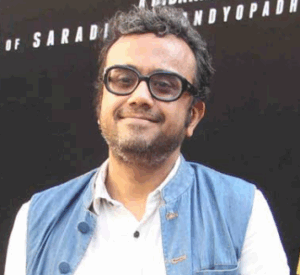
Awards and Recognition
-
National Film Awards (India):
-
Khosla Ka Ghosla! — National Film Award (recognized as a landmark debut feature).
-
Oye Lucky! Lucky Oye! — National Film Award (Best Popular Film Providing Wholesome Entertainment; among other recognitions).
-
-
Filmfare Awards:
-
Sandeep Aur Pinky Faraar 10 nominations at the 67th Filmfare Awards (2022), including Best Film (Critics); won Best Dialogue (Dibakar Banerjee & Varun Grover).
-
-
Festival and industry nods: Multiple nominations and wins across Indian award platforms; international festival interest for his formally daring projects.2
Awards lists vary by year and category; the highlights above are the most widely cited and representative of his stature.
Filmography
-
Khosla Ka Ghosla! (2006) — Satirical heist about a middle-class family vs. a land shark. National honors followed.
-
Oye Lucky! Lucky Oye! (2008) — A breezy, incisive caper about aspiration and theft in Delhi. National honors again.
-
Love Sex aur Dhokha (2010) — Found-footage anthology about voyeurism and violence.
-
Shanghai (2012) — Political thriller on development and dissent.
-
Bombay Talkies (2013; segment) — Centenary anthology of Hindi cinema.
-
Detective Byomkesh Bakshy! (2015) — Period mystery in 1940s Calcutta.
-
Lust Stories (2018; segment) — Anthology exploring intimacy.
-
Sandeep Aur Pinky Faraar (2021) — Offbeat chase thriller; later celebrated on streaming, major awards love.
Personal Life
Banerjee is married to Richa Puranesh, a professional with a background in FMCG marketing.
He has spent long stretches of his life in Delhi, which helps explain his films’ fidelity to the city’s speech patterns, habits, and humor.
Also Read: Plabita Borthakur’s Bio, Age, Career, Movies, Family, and More
Box Office vs. Legacy
Not every Banerjee film is a commercial smash on day one. Sandeep Aur Pinky Faraar struggled in theaters, releasing amid pandemic disruptions, but grew into a critical darling with multiple major award nominations and a win at Filmfare for dialogue.
This arc underlines a key point about his career: his movies often have long legs they age well, get rewatched, and find their audience.
Impact on Hindi Cinema
-
Space for mid-budget originality: His success helped keep oxygen flowing to the middle—films that are neither micro-indie nor VFX tentpoles.
-
Porous borders between “arthouse” and “commercial”: Banerjee builds bridges between these marketing boxes, demonstrating that form and fun can coexist.
-
A template for Delhi realism: Many later films and shows draw on the Khosla/Oye Lucky map of Delhi’s social world.
FAQs
1) Is Dibakar Banerjee an actor?
He is primarily a director, screenwriter, and producer, known for some of the most acclaimed Hindi films of the last two decades. He is not popularly known as an actor.
2) What are his most famous films?
Khosla Ka Ghosla!, Oye Lucky! Lucky Oye!, Love Sex aur Dhokha, Shanghai, Detective Byomkesh Bakshy!, and Sandeep Aur Pinky Faraar.
3) What awards has he won?
Among others, National Film Awards for Khosla Ka Ghosla! and Oye Lucky! Lucky Oye!; Filmfare recognition including Best Dialogue for Sandeep Aur Pinky Faraar and multiple nominations across categories.
4) Where did he study?
He attended Bal Bharati Public School in Delhi and later NID Ahmedabad for visual communication/graphic design, leaving after about two and a half years.
5) What makes his style unique?
Sharp social observation, humor that reveals character, formal experimentation when the story demands, and a precise visual design sensibility rooted in his advertising background.
6) Why did Sandeep Aur Pinky Faraar get so many award nominations despite low box office?
Because critics and industry peers admired its writing, performances, and direction. It released in March 2021 after delays, found a larger audience on streaming, and later earned 10 Filmfare nominations, winning Best Dialogue.
7) Is he connected with advertising even now?
Yes. Banerjee has continued to direct commercials alongside films, a dual track that keeps his craft sharp and visually alert.
8) Is there a “must-start” film for newcomers to his work?
Start with Khosla Ka Ghosla! for warmth and wit, then LSD for bold form, and Shanghai for political edge. Round it out with Detective Byomkesh Bakshy! to see his genre range, and Sandeep Aur Pinky Faraar to witness his late-phase maturity.
Closing Thought
If you arrived here searching for a “Bollywood actor” named Dibakar Banerjee, now you know why nearly every credible source identifies him as a director, writer, and producer a creative force who has shaped 21st-century Hindi cinema with intelligence and verve.
His films are witty without being glib, political without being didactic, and meticulously designed without losing their human pulse. Start anywhere, but don’t be surprised if you end up watching them all.
Also Read: Shriya Pilgaonkar Bio, Family, Career, Movies, Net Worth and More