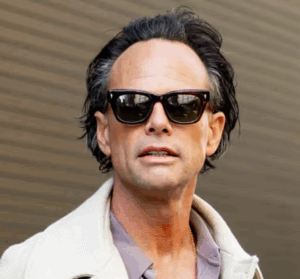

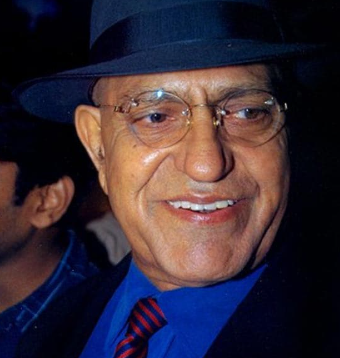
Amrish Puri’s name lives where power and presence meet cinema. For three decades he was the face of menace on the Indian screen
He could silence a room with a stare and lift a scene with a single line. Yet he was far more than a villain. He was a trained stage actor, a disciplined craftsman, and a dependable character performer who enriched hundreds of films across languages.
This biography brings you his story in simple, readable language. It covers his early years, theatre roots, entry into films, signature roles, craft, life beyond the set, and his lasting legacy.
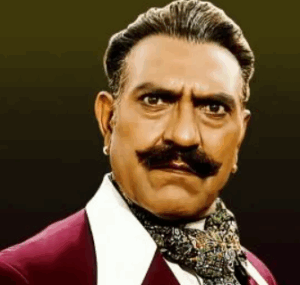
Also Read: Jay Bhanushali Bio, Age, Wife, Career, TV Shows and More
Table of Contents
Amrish Puri’s Biography
Early Life and Theatre Roots
Born on June 22, 1932, and passing on January 12, 2005, Amrish Puri left behind a body of work that continues to shape how Indian movies cast, write, and remember antagonists.
His catchphrase “Mogambo khush hua” is part of daily speech across India, and his roles in both Indian and international films show a rare range and command.
Amrish moved to Mumbai in the 1950s, faced rejection in his first screen test, and chose a steady day job while chasing the stage at night.1
That choice shaped him. It gave him technique, discipline, and patience the exact traits that later defined his command on screen.
Theatre was not a stopgap for him. It was the training ground where he learned voice control, posture, blocking, and the value of rehearsals.
His work in Hindi theatre earned him the prestigious Sangeet Natak Akademi Award in 1979. This national honour matters.
It signaled to the film world that here was not just a movie “villain,” but a serious actor with stage pedigree and a complete toolkit.
Key Stats
| Field | Detail |
|---|---|
| Full Name | Amrish Lal Puri |
| Profession | Actor (Stage and Screen) |
| Born | 22 June 1932, Nawanshahr (Rahon), Punjab, British India |
| Died | 12 January 2005, Mumbai, India |
| Years Active | 1967–2005 |
| Height | ~1.78–1.79 m |
| Family | Wife: Urmila Divekar Puri; Children: Rajiv and Namrata; Brothers: Madan Puri, Chaman Puri |
| Known For | Mogambo in Mr. India; Mola Ram in Indiana Jones and the Temple of Doom |
| Awards (Selected) | Sangeet Natak Akademi Award (Theatre, 1979); Filmfare Best Supporting Actor (for Meri Jung; later wins include Ghatak and Virasat) |
| Approx. Film Count | 400+ (often cited as 450+) |
| Languages | Hindi plus roles in Punjabi, Marathi, Kannada, Telugu and others |
Breaking Into Films
Like many character actors of his era, Puri’s rise was slow but steady. Through the 1970s he appeared in small and mid-sized roles, refining screen presence and voice.
Directors noticed the combination he offered gravitas, clarity of diction, and a baritone that cut through background noise.
By the early 1980s he was a go-to choice for complex antagonists and authority figures. This period included major parts in films such as Vidhaata, Shakti, and Hero, paving the path to his most famous roles later in the decade.
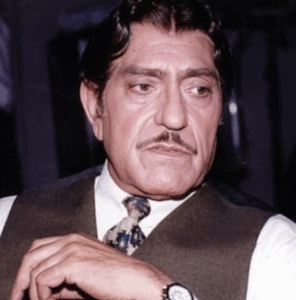
Mogambo: The Villain That Became Pop Culture
In 1987, Mr. India introduced a villain whose very name could fill a theatre with cheers: Mogambo. Dressed in militaristic regalia and ruling from a Bond-like lair, Mogambo was grand, theatrical, and unforgettable.
The catchphrase “Mogambo khush hua” became a national mantra for triumph and sarcasm alike. Puri delivered it with cold control instead of haste, letting the baritone land the punchline. Decades later, the line still trends in memes, speeches, and ads.
Mogambo’s success changed how Hindi cinema wrote antagonists. The role proved that a villain could be iconic without turning sloppy or campy.
He could be stylish, witty, and marketable. For Puri, it sealed a screen image that he would expand upon in different shades cruel feudal lords, corrupt politicians, rigid patriarchs, and men of power whose flaws were rooted in fear or pride.2
Hollywood and Global Recognition
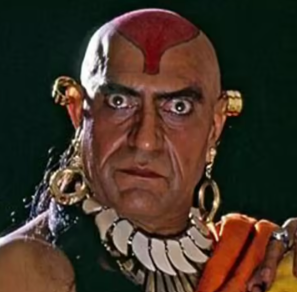
Two years before Mr. India, Puri appeared in Richard Attenborough’s Gandhi as Dada Abdulla. In 1984 he played Mola Ram, the Thuggee high priest, in Steven Spielberg’s Indiana Jones and the Temple of Doom.
Whatever one thinks about the film’s depiction of India, few dispute Puri’s imposing turn. He was chilling, precise, and technically superb exactly the kind of performance that travels across languages.
Major outlets revisiting the film’s legacy routinely single out Puri’s menace and control.
Not Just a Villain: Range and Reinvention
Amrish Puri became the emblem of the Bollywood antagonist, but he was never limited to evil. He played strict but caring fathers and upright elders with the same authority.
In Dilwale Dulhania Le Jayenge (1995) he stood for tradition yet softened into acceptance, adding warmth to the film’s classic ending. In Virasat (1997) he brought moral heft to a rural epic about power and responsibility, a performance that earned him top honours.
In Ghatak (1996) his character carried dignity through suffering. Media retrospectives still highlight this spectrum as the reason his legacy feels bigger than any single role.
Voice, Diction, and the Craft of Authority
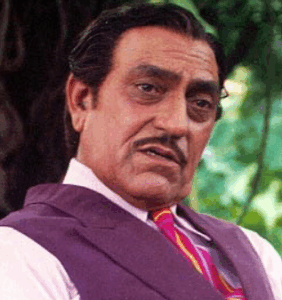
What set Puri apart was not only the look or the lines. It was the way the words came out.
He kept a steady tempo, softened consonants when a line needed warmth, and hit the baritone’s lower register when a scene needed threat. Years of theatre had taught him to project without shouting.
On camera it translated into quiet menace and instant authority. That vocal design also made his benevolent characters credible. A father figure needs voice as spine; Puri had it in every frame.
He matched this with body language. Upright posture, shoulders squared, chin level. Small tilts to express doubt or disdain. Minimal hand movements, often timed to a key word.
These choices fed the myth of command. Directors used him to anchor emotional stakes because he could announce danger or dignity just by standing still.
Collaborations and Work Ethic
Amrish Puri worked with the biggest directors and stars of his time and remained a favorite across generations. Anil Kapoor’s rise intersected with Puri’s peak in films like Meri Jung, Mr. India, Nayak, and others.
Directors trusted his precision and punctuality. He shaped characters with preparation rather than improvisation, often arriving set-ready with a clear sense of arc and rhythm.
His colleagues often recalled that he treated every role, big or small, with the same seriousness. If his character had only a few scenes, he mapped them like a mini-play entrance, build-up, payoff. This theatre-rooted mindset helped him stay consistent over an enormous slate of projects.
Awards and Recognition
Long before his most famous film roles, Puri earned the Sangeet Natak Akademi Award for theatre in 1979. It placed him among the country’s respected stage practitioners.
His film awards reflected both his villainy and his range. He won the Filmfare Award for Best Supporting Actor for Meri Jung (1985).
Later honours for Ghatak and Virasat reinforced a perception many still hold: he was the gold standard for screen authority, whether playing cruel or kind.
Also Read: Saurabh Shukla Bio, Movies, Achievements and Personal Life
Roles to Remember
If you are building an Amrish Puri watchlist, start here:
-
Mogambo in Mr. India (1987): The blueprint for modern Hindi-film villainy. Puri turns grandeur into personality.
-
Mola Ram in Indiana Jones and the Temple of Doom (1984): A global showcase of his control and menace.
-
Thakral in Meri Jung (1985): Courtroom charisma that won him Filmfare.
-
Chaudhary Baldev Singh in DDLJ (1995): Stern father who learns to let go. Proof of range.
-
Thakur Durjan Singh in Karan Arjun (1995): Cruelty drawn with chilling restraint.
-
Ashraf Ali in Gadar: Ek Prem Katha (2001): Authority mixed with conflicted emotion.
-
Balraj Chauhan in Nayak (2001): A study in political power and arrogance.
-
Shakti, Vidhaata, Gardish, Pardes, Virasat, Ghatak: Each adds a new shade to the Puri palette.
Work Across Languages
Although most famous for Hindi cinema, Puri acted in films across several Indian languages. His voice and bearing transcended linguistic borders, making him a dependable figure of authority in regional industries as well.
This cross-industry respect explains why his film count sits well above 400 and is often cited as above 450.
Personal Life
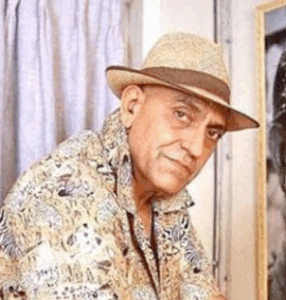
Off-screen, Amrish Puri was known as a private, disciplined man. He married Urmila Divekar in 1957. They had two children, Rajiv and Namrata.
Family ties to cinema were deep. His brothers Madan and Chaman Puri were character actors from earlier decades, and singer-actor K. L. Saigal was a cousin.
These connections never defined his work, but they placed him in a tradition of performance that he carried forward in his own distinct way.
Health, Final Days, and Passing
In late 2004, Puri’s health deteriorated due to myelodysplastic syndrome, a rare blood disorder. He underwent treatment and brain surgery.
He passed away on January 12, 2005, in Mumbai following a brain haemorrhage. Contemporary obituaries confirmed the circumstances and timeline. He was 72.
The news felt like the end of an era, but his films ensured that the voice and posture that defined authority would never fade from the Indian screen.
Filmography
-
1970s: Prem Pujari, Reshma Aur Shera, Alaap
-
Early–Mid 1980s: Vidhaata, Shakti, Hero, Meri Jung, Mr. India
-
1990s: Tridev, Ghayal, Gardish, DDLJ, Karan Arjun, Ghatak, Virasat, Pardes
-
2000s: Badal, Chachi 420 (late 1990s crossover comic turn), Nayak, Gadar, The Hero, Mujhse Shaadi Karogi, Hulchul
Career Highlights and Turning Points
-
Theatre Award (1979): The Sangeet Natak Akademi Award put a national spotlight on his stage work. It cemented his status as an actor’s actor and opened doors to richer film roles.
-
Legal Lion in Meri Jung (1985): As Thakral he owned the courtroom. The Filmfare win that followed backed the industry’s view that Puri could carry a film’s moral center even while playing the foil.
-
Mola Ram (1984) and Mogambo (1987): An international villain and a homegrown icon arrived back-to-back. One carried his name beyond India. The other made his name immortal within it.
-
The 1990s Expansion: He took on fathers, village elders, and pillars of society, showing that his art was never one-note. His presence gave mainstream films weight and balance.
Influence on Today’s Cinema
Modern antagonists in Hindi films often aim for sharp lines, grand entrances, and a code of conduct. That is Amrish Puri’s legacy at work.
Streaming-era writers now craft layered antagonists with backstories and motives. Puri’s best roles already hinted at such layering. You can trace the respect today’s films give their villains back to the space he carved out in the 1980s and 1990s.
FAQ’s
1) When and where was Amrish Puri born?
He was born on June 22, 1932, in Nawanshahr (Rahon), Punjab, British India.
2) What was his breakthrough role?
He had strong parts through the early 1980s, but Mogambo in Mr. India (1987) became his pop-culture breakthrough and remains his most famous role.
3) How many films did he act in?
He acted in well over 400 films, with many sources citing more than 450 across languages.
4) Did Amrish Puri act in international films?
Yes. He appeared in Gandhi (1982) and played Mola Ram in Indiana Jones and the Temple of Doom (1984).
5) Which awards did he win?
He received the Sangeet Natak Akademi Award for theatre in 1979 and won Filmfare’s Best Supporting Actor for Meri Jung (1985). He later won major honours for Ghatak and Virasat.
Conclusion
Amrish Puri transformed the idea of a villain in Indian cinema. He did it with discipline learned on stage, skill refined on set, and a voice that needed no amplification to be heard.
He could terrify without shouting and move you without tears. He proved that a great antagonist can elevate a film and that a great actor can do both darkness and light.
Across more than four hundred films, his influence spread to how roles are written, how scenes are blocked, and how voices are trained.
New generations who meet him through Mr. India, DDLJ, Virasat, or Nayak discover the same thing audiences felt in theatres decades ago: when Amrish Puri appears, the film sits up straight. That is legacy. That is craft. And that is why, long after the credits, the baritone still echoes.
Also Read: Rushad Rana Wiki, Bio, Wife, Family, TV Serials and Net Worth