

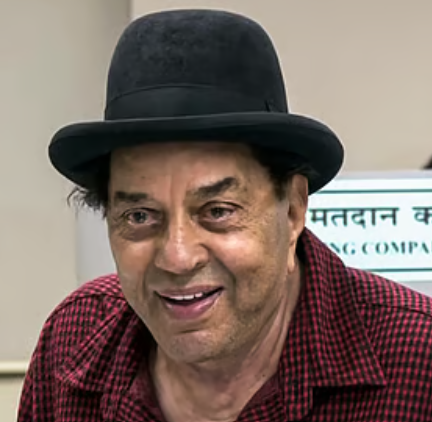
When we talk about icons of Indian cinema, certain names instantly leap to mind. Among them is Dharmendra Kewal Krishan Deol, better known simply as Dharmendra
Often called the “He-Man of Bollywood,” he is widely regarded as one of the most handsome, versatile and commercially successful actors in Hindi film history.
His career spans over six decades, during which he portrayed every shade of hero from romantic, to action, to comic and even explored different roles behind the camera and in public life.
In this article we trace his life, career, achievements and legacy in a simple, readable style, and also provide a helpful stats table and FAQs to round things off.
Also Read: Sunny Deol’s Bio, Age, Movies, Family, Career, Net Worth & More
Table of Contents
Dharmendra’s Biography
Early Life and Background
Dharmendra was born on 8 December 1935 in the village of Nasrali (also spelled Nagra) in the Jalandhar district of Punjab, British India. 1
His father, Kewal Krishan (or Kewal Kishan) Deol, was a school teacher and his mother, Satwant Kaur, was a homemaker.
Growing up in rural Punjab, Dharmendra belonged to a large family he had several siblings and had the typical upbringing of the time.
His early environment instilled in him simplicity, a strong ethic and a robust physique qualities that would later help him break into film. According to his biography, at the age of 23 he travelled to Bombay (now Mumbai) in 1958 to take part in a talent hunt organised by Filmfare magazine.
Though not from a film family, his good looks, screen presence and ability to take directions caught the eye of industry people. He made his film debut two years later.
Entry into Films and Early Career
Dharmendra’s first film was Dil Bhi Tera Hum Bhi Tere (1960), directed by Arjun Hingorani.
The film did not make much impact at the box office, but it marked the beginning of his journey in Bollywood.
In the early 1960s he took on romantic and dramatic roles.
Films such as Anpadh (1962) and Bandini (1963) helped him earn recognition for his acting skill.
By the mid-1960s he had formed a screen image of a strong-looking but sensitive hero, as in Phool Aur Patthar (1966) which established him as a leading star. His looks, combined with his emerging action-hero persona, made him popular among the masses.
Look at this… 👀https://t.co/5SBGzBGxAD
— Dharmendra Deol (@aapkadharam) March 23, 2025
Rise to Stardom: The Golden Period
The 1970s were perhaps the golden period of Dharmendra’s career. He transitioned seamlessly into action, comedy and strong character roles.
A major milestone was Sholay (1975), now a classic in Indian cinema. He played the role of Veeru, one half of the iconic duo with Amitabh Bachchan’s Jai. The film broke box-office records and became a cultural phenomenon.
Besides Sholay, he delivered hits such as Mera Gaon Mera Desh (1971), Seeta Aur Geeta (1972), Raja Jani (1972) and Chupke Chupke (1975) among many others.
In fact, many sources point out that Dharmendra holds the record for starring in the highest number of hit films in Hindi cinema.
For example, in 1987 he gave seven consecutive hits and nine successful films in a single year a feat still talked about.2
His physicality, screen charisma and willingness to experiment with genres gave him longevity and popular appeal.
Highlights of Career and Signature Roles
Here are some of the themes and notable facets of Dharmendra’s film career:
-
Action Hero with a Heart: His action roles often combined intense physicality with moral integrity. In many films he played characters who fought injustice.
-
Versatility: He did not limit himself to action only. He took on comedic roles (e.g., Chupke Chupke), dual roles (Samadhi, etc), social dramas (Satyakam) and musicals.
-
On-screen Chemistry and Pairings: He had memorable pairings with leading actresses of the time, including his real-life partner later in his career.
-
Producer and Mentor: Over time he expanded into film production and supported younger talent, including his own children who entered Bollywood.
-
Longevity: Unlike many stars whose careers decline sharply after a decade, Dharmendra remained active across decades, adapting to character roles and special appearances.
Personal Life
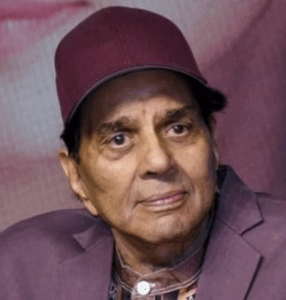
Dharmendra’s personal life has been as much in the public eye as his films. Key points:
-
Marriage(s): He married his childhood sweetheart Prakash Kaur in 1954 (at age 19) and they have four children: Sunny Deol, Bobby Deol, and two daughters (Vijeta/Ajeeta depending on sources). 3
Later, he married fellow actor Hema Malini in 1979/80, and they have two daughters: Esha Deol and Ahana Deol. -
Family Legacy: His sons and daughters have also carved out careers in film, making the Deol family one of the prominent film families in Bollywood.
-
Public Persona: Known for his warm, affable nature, good looks and fitness even at older ages. Interviews often talk about his humility, sense of humour and connection with fans.
-
Politics: Dharmendra also entered politics and served as a Member of Parliament (Lok Sabha) from the Bikaner constituency in Rajasthan from 2004–2009, representing the BJP.
Also Read: Bobby Deol’s Bio, Age, Family, Movies, Career, Net Worth & More
Awards, Honors and Net Worth
Dharmendra’s contributions have been recognized formally on multiple occasions.
-
He received the prestigious civilian honour Padma Bhushan from the Government of India in 2012.
-
He was awarded the Filmfare Lifetime Achievement Award in 1997 for his contribution to Hindi cinema.4
-
According to several sources his estimated net worth is reported in the range of US $60–70 million (roughly ₹500–535 crore) though exact numbers vary.
-
His more than 300 films (over six decades) and record of hits underline his commercial stature.
Challenges and Later Career
While Dharmendra’s peak spanned the 1960s–1980s, there were shifts in his career trajectory:
-
The 1990s saw a decline in his leading-man stardom with the rise of a new generation of stars in Bollywood.
-
However he reinvented himself by taking supporting and character roles, cameo appearances and producing films.
-
In the 2000s and beyond, he appeared in films like Life in a… Metro (2007) and Yamla Pagla Deewana (2011) alongside his sons, keeping a visible presence in the industry.
-
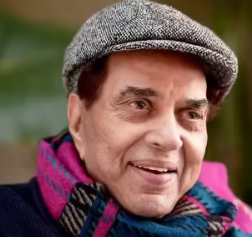
His later years saw him transition into elder statesman roles in films, mentoring younger actors and remaining a beloved figure among the public and industry peers alike.
Legacy
Dharmendra’s legacy can be traced on multiple fronts:
-
Cultural Icon: He symbolised the strong, handsome Hindi-film hero of his era. His dialogues, look, screen presence and films remain quoted, referenced and remade.
-
Influence on Bollywood: Many actors who followed cite him as an influence. His ability to switch genres and long career span set a benchmark.
-
Family Continuity: The Deol family remains active in Bollywood and the name “Deol” continues to evoke a legacy of production, acting, and stardom.
-
Evergreen Popularity: Even decades after his peak, he commands affection from fans across generations. His participation in stage appearances, reality shows, and social media presence reflect his enduring appeal.
Stats Table
| Attribute | Details |
|---|---|
| Full Name | Dharmendra Kewal Krishan Deol |
| Date of Birth | 8 December 1935 |
| Place of Birth | Nasrali (village in Jalandhar district), Punjab (British India) |
| Debut Film | Dil Bhi Tera Hum Bhi Tere (1960) |
| Approximate Films | Over 300 films in Hindi cinema |
| Notable Film | Sholay (1975) among many others |
| Political Role | Member of Parliament, Lok Sabha (2004-2009) for Bikaner, BJP |
| Major Awards | Padma Bhushan (2012); Filmfare Lifetime Achievement (1997) |
| Estimated Net Worth | US $60–70 million (approx. ₹500–535 crore) |
View this post on Instagram
FAQ’s
Q1. What is Dharmendra’s real/birth name?
His birth name is Dharmendra Kewal Krishan Deol.
Q2. Who are Dharmendra’s children?
From his first marriage to Prakash Kaur, he has sons Sunny Deol and Bobby Deol, and daughters Vijeta (or Ajeeta depending on sources) and Ajeeta. From his second marriage to Hema Malini, he has daughters Esha Deol and Ahana Deol.
Q3. What is Dharmendra’s most famous film?
While he has many famous films, Sholay (1975) remains perhaps his most iconic film, culturally significant and widely watched across generations.
Q4. Has Dharmendra won major awards?
Yes. He received the Filmfare Lifetime Achievement Award in 1997 and was awarded the Padma Bhushan in 2012 for his contribution to Indian cinema.
Q5. What is Dharmendra’s current involvement in films?
While his output as a leading actor has declined (as is natural with age), he continues to make special appearances, mentor younger actors, and take on character roles. His legacy status ensures he remains a relevant name in Bollywood.
Q6. Did Dharmendra have a political career?
Yes. He served as a Member of Parliament in India’s Lok Sabha from 2004 to 2009 representing the Bikaner constituency as a member of the Bharatiya Janata Party (BJP).
Q7. How many hit films did Dharmendra have?
While exact counts vary, one source states that he holds the record for the highest number of hit films in Hindi cinema. For instance, in 1987 he had seven consecutive hits and nine successful films in a single year.
Conclusion
Dharmendra’s life story is a testament to the enduring power of talent, charisma and adaptability.
From a village in Punjab to becoming one of Bollywood’s most beloved stars, his journey highlights how perseverance meets opportunity.
He not only crafted memorable on-screen personas but also off-screen managed to stay relevant, respected and admired.
His films continue to entertain, his family continues his legacy, and his name remains a hallmark of an era in Hindi cinema.
Whether you are a fan of vintage films or just exploring the history of Bollywood, understanding Dharmendra’s legacy is essential.
Also Read: Esha Deol Bio, Family, Career, Movies, Personal Life & More