
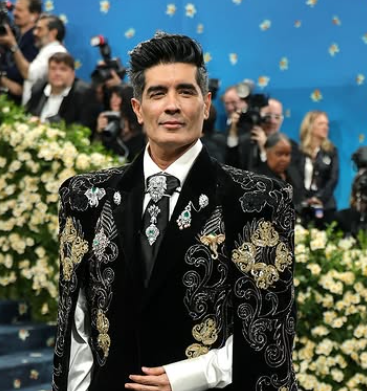
“Glamour” and “Bollywood” are words often used in the same sentence, and few people embody that fusion better than Manish Malhotra
While he is widely known as a fashion designer rather than as a conventional actor, his name resonates deeply with Hindi-film costumes, celebrity style and the rise of Indian couture in the global arena.
Over the past three decades he has built a legacy that bridges cinema, fashion, craft and business.
This article offers a comprehensive biography of Manish Malhotra: his early life, the trajectory of his career, major achievements, business ventures and personal highlights.
We include a stats table, frequently asked questions (FAQs) and source references.
Also Read: Prem Chopra Bio, Career, Movies, Family and Untold Facts
Table of Contents
Manish Malhotra’s Biography
Early Life and Background
Manish Malhotra was born on 5 December 1966 in Mumbai, India.1 He grew up in a Punjabi household and, as he has shared, was fascinated by Bollywood films from a young age. 2
His formal education includes studying at Elphinstone College in Mumbai. However, unlike many designers who undergo dedicated fashion-school training, Malhotra is essentially self-taught.
In interviews he has revealed that he couldn’t afford to study abroad and instead learnt by working in boutiques, drawing sketches and immersing himself in the world of fabrics and films.
This blend of cinema-obsession, hands-on learning and Mumbai’s bustling fashion ecosystem gave him both inspiration and exposure. His early work included modelling and working at a boutique on a modest stipend of Rs 500 per month.
In short, Malhotra’s origins lie outside elite fashion academies. Instead he carved his path through passion, observation and a love for film.
That sensibility would later define his unique position: a designer rooted in Bollywood storytelling rather than purely runway trends.
Career Beginnings: From Boutique to Bollywood Costume Design
Entering Costume Design
Malhotra made his costume-design debut in film with the 1990 Hindi film Swarg, starring Rajesh Khanna, Govinda and Juhi Chawla.3
Around the same time he began styling the Bollywood star Sridevi for photo-shoots and film appearances, helping him gain credibility.
One key breakthrough came with the film Rangeela (1995). His work on this film brought fresh styling outlooks and became a turning point.
Notably, his styling there led to the introduction of the Filmfare Award category for Best Costume Design, with Malhotra becoming the first recipient.
Straight from the house of Manish Malhotra (@ManishMalhotra) to your screens. Our founder and creative director adds another feather to his illustrious hat with the launch of his production company, STAGE5 Production that brings together these incredible actors with films like… pic.twitter.com/L5xfnY6InO
— ManishMalhotraWorld (@MMalhotraworld) November 10, 2025
Style Signature and Impact
What made Malhotra’s early work stand out was his willingness to go beyond the average “hero/heroine outfit” concept. He began to treat costumes as an extension of character, plot and setting.
In a feature the designer said:
“It’s more than garments for me; it’s about understanding the values of the character and portraying the best version of that character through their garments.”4
Films such as Dil To Pagal Hai, Kuch Kuch Hota Hai, Kal Ho Naa Ho, and Jab We Met all feature costumes that were trend-setting and widely imitated.
For instance, his work in Jab We Met introduced Patiala pants, long t-shirts paired with harem pants and phulkari scarves.
By 2020, Malhotra had worked on over 800 films in Bollywood, highlighting both his prolific output and the degree to which costume design in Indian cinema had become a distinct, visible craft.5
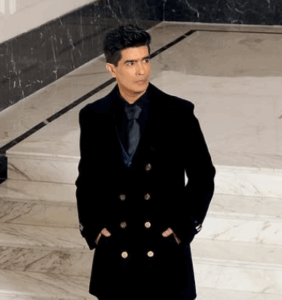
Transition to Personal Fashion Label
Parallel to his film costume design, Malhotra began building his own fashion label. His eponymous brand offers couture, bridal wear, luxury ready-to-wear, menswear and accessories.
The label is known for opulence, intricate embellishments, and a strong Bollywood-glamour aesthetic. 6
Over the years his business expanded to include flagship stores in Mumbai, Delhi and Hyderabad, a flagship store in Dubai (targeting Gulf and international clients) and global collaborations.
Thus the journey moved from boutique work to cinema costumes to a full-fledged luxury brand. The dual role of film designer and fashion house founder has given Malhotra a rare position in Indian fashion.
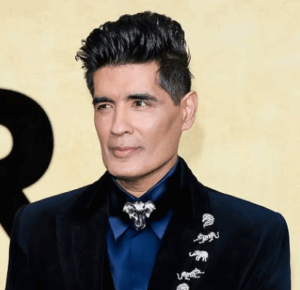
Major Milestones & Achievements
Here are some of the key milestones and achievements of Manish Malhotra.
-
1995: His work on Rangeela earned him the Filmfare Award for Best Costume Design, the first year that category existed.
-
2000s onward: His costumes in films such as Dil To Pagal Hai, Kuch Kuch Hota Hai, Kal Ho Naa Ho, Jab We Met, etc., became iconic.
-
2020: Celebrated 30 years in Bollywood fashion, having worked on 800+ films and maintained relevance.
-
Entrepreneurial ventures: Established his luxury label, flagship stores, and expanded into bridal, couture, menswear and international retail.
-
Recognitions: He has won multiple awards across Filmfare, IIFA, Zee Cine and others for costume design.7
-
Legacy impact: Malhotra is frequently cited for bringing character-based costume design to Bollywood and elevating Indian bridal couture globally.
Stats Table
| Parameter | Details |
|---|---|
| Full Name | Manish Malhotra |
| Date of Birth | 5 December 1966 |
| Place of Birth | Mumbai, Maharashtra, India |
| Education | Elphinstone College, Mumbai (formal) & self-taught in fashion |
| Primary Profession | Fashion Designer, Costume Stylist, Entrepreneur |
| Industry Entry (Film) | 1990 with the film Swarg |
| Major Breakthrough | Rangeela (1995) – first Filmfare Best Costume Design winner |
| Number of Films | 800+ (as of around 2020) |
| Brand / Label | “Manish Malhotra” luxury label – couture, bridal, menswear |
| Est. Net Worth* | Varies by source (e.g., ~$300 million cited) |
| Marital Status | Unmarried (as per publicly available data) |
| Height | Approx. 5′7″ (1.70 m) |
| Signature Style | Glamour + Bollywood drama + traditional Indian embroidery/fabrics |
Business & Brand Expansion
Malhotra’s career has not just been about costume design for films. He has leveraged his celebrity status and design acumen to build a broader business empire.
The Label
His label, built under the umbrella of his company (often cited as MM Styles Pvt. Ltd.), offers:
-
Couture and bridal wear with heavy embroidery, sequins and classic Indian silhouettes.
-
Luxury ready-to-wear diffusion lines.
-
Menswear and accessories, though the brand remains far stronger on the women’s side.
-
International retail presence: Dubai flagship store, stores in major Indian metros, and international clientele.
Collaborations & Extensions
Beyond apparel, Malhotra has extended into:
-
High jewellery and luxury accessories.8
-
Beauty and make-up collaborations
-
Film production: Though primarily known for design, he has signalled interest in film‐making and production ventures.
Business Model Insights
His business model blends visibility (via film costumes and celebrity associations) with exclusivity (luxury label). As one overview noted:
“His label marked a turnover of over INR one billion making it one of the first Indian luxury fashion houses to achieve this milestone.”9
Malhotra’s dual presence in film and fashion has given him recurring visibility and a strong pipeline of high-net-worth clientele. This model is somewhat unique among Indian designers, many of whom focus only on couture or ready-to-wear.
Also Read: Jackie Chan Bio, Height, Net Worth, Movies, Wife, and Life Story
Style Philosophy & Signature Aesthetic
Character-Driven Costume Design
Unlike standard costume work which might simply “dress a star”, Malhotra shifted the paradigm: he began to treat costumes as integral to character. His philosophy: each outfit should reflect who the character is, their arc and the film’s world.
Fusion of Bollywood Glamour and Indian Craft
Malhotra’s designs often weave in traditional Indian crafts (embroidery, brocade, chikankari, zardozi) with modern silhouettes and high-glamour finishes. For example, his chikankari couture collection ‘Mijwan’ revived craft while appealing globally.
Red Carpet & Bridal Signature
When applied to his label (rather than film costumes), the aesthetic is opulent, dramatic, plush and clearly glam-Bollywood.
Resplendent lehengas, heavy embellishments, vibrant colours, gold mesh fabrics — the look is aspirational and designed for high-visibility occasions (weddings, gala events, red carpet).
Trend-Setting Moments
Some of his memorable contributions:
-
In Kuch Kuch Hota Hai, the casual-chic layering and crossover looks became widely imitated.
-
In Jab We Met, the Patiala pants paired with long tee and phulkari scarf (for Kareena Kapoor’s character) became a trend.
-
His wedding wear for Bollywood stars and for high-profile clients helped set the tone for Indian bridal couture globally.
Challenges & Criticisms
No career is without bumps, and Manish Malhotra has also faced his share of critical commentary and professional hurdles.
Financial and Business Challenges
Expanding a luxury brand in India is challenging due to price sensitivity, counterfeiting, and evolving consumer tastes.
While Malhotra has succeeded, sustaining growth amid changing industry dynamics is ongoing. Some sources mention business shifts and the need to diversify beyond core bridal wear.
Style Critique
While many admire his glamour-centric aesthetic, some critics argue that his designs sometimes lean too heavy on embellishment and replicable silhouettes rather than innovation. For example, on Reddit one commenter writes:
“He is behind some of the most iconic fashion moments … but I feel his label version lacks creative vision and there is no depth to other than ‘Traditional Wear’ or Bridal Couture.”
Such commentary reflects that as consumer tastes shift, even established designers must evolve.
Industry Relationships
Malhotra revealed that despite being highly successful, some collaborations did not materialize.
For instance, he revealed that despite his friendship with filmmaker Sanjay Leela Bhansali he has not worked with him after their early work due to perceptions of him being aligned with other production houses.
These dynamics highlight how even top creatives navigate networks, reputations and shifting alliances in Bollywood.
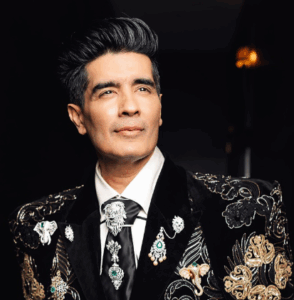
Personal Life & Off-Camera Persona
Manish Malhotra is recognised not only for his creativity but also for his personality. He is regarded as ambitious, disciplined and driven by a love for cinema and textiles.
In interviews he has spoken about how his mother encouraged him to pursue his dreams and how growing up in Mumbai his world was defined by Bollywood films, stars and fashion.
Regarding his personal relationships, publicly he is unmarried and keeps his private life largely out of the limelight.
His philanthropic engagements include working with education NGOs and championing traditional craft revival.
In terms of lifestyle, he maintains a high-profile presence attending major industry events, fashion weeks, celebrity launches and social gatherings yet his public persona remains professional and largely centred around design rather than celebrity celebrity (i.e., he does not court gossip or scandal).
Legacy and Industry Impact
When assessing Malhotra’s legacy, several themes emerge:
-
Elevating costume design in Indian cinema: His work helped make costume design a recognisable creative credit in Bollywood rather than an afterthought.
-
Bridging cinema and luxury fashion: He leveraged film visibility to build a couture brand, thus creating a template for how fashion and film can synergise.
-
Craft revival and global presence: By using Indian embroideries, textiles and by bringing Indian bridal aesthetics to the world stage, Malhotra helped raise awareness of Indian craftsmanship internationally.
-
Trend-setting influence: Bollywood stars wearing his costumes translated into popular fashion trends across India — from Patiala pants to embellished lehengas, sequinned sarees and high-glam ensembles.
-
Business-mindset: Rather than remaining solely a designer-artist, he took on the role of entrepreneur, brand-builder and business strategist, setting up retail, international expansion and brand extensions.
As one profile in Teen Vogue concluded:
“His rise to fashion fame began primarily in film … Over thirty years later, his name has become insurmountably entwined with modern-day Bollywood.”
Therefore, his legacy is not just about individual outfits; it is about raising the bar in how costume, celebrity dressing and couture interplay in India.
View this post on Instagram
FAQ’s
Q1. Is Manish Malhotra an actor?
A: No. Manish Malhotra is not primarily an actor. He is a fashion designer and costume stylist whose work appears in films, but he does not appear on-screen as an actor in lead Bollywood roles.
Q2. How did he become famous?
A: He became famous through his costume‐design work for Bollywood films, especially after his standout work in Rangeela (1995) and subsequent high-profile films. His celebrity encounters, film styling and the launch of his fashion label also contributed to his fame.
Q3. Does he have formal fashion education?
A: No. He did not attend a dedicated fashion design institute for his initial training. Instead, he learnt through working in boutiques, sketching, assisting stylists and immersing himself in fabrics and film sets.
Q4. What kind of style is he known for?
A: He is known for glamorous, elaborate, Indian-heritage-inspired designs with heavy embellishment, bold use of colour, and a fusion of Bollywood glamour with traditional craft. In costumes, his style is character-driven and narrative-aware.
Q5. Is he married?
A: Publicly, he is unmarried and keeps his personal life private. There is no widespread credible information about a spouse or marriage.
Conclusion
Manish Malhotra’s story demonstrates how talent, perseverance and a unique niche can combine to build a lasting brand and influence.
From a youngster sketching fabrics in Mumbai to the go-to designer for Bollywood stars and luxury bridal wear clients, his trajectory is inspiring.
His work has reshaped how Indian cinema thinks about costume; his fashion label has reshaped how India exports glamour and bridal luxury.
In a world of fast-changing trends, Malhotra’s ability to deploy craft, narrative, celebrity and business acumen gives him a rare standing.
His biography is not just about gowns and glitz but about the intersection of art, commerce, culture and cinema. As fashion evolves and India’s global influence grows, his role remains pivotal.
Whether you are a fashion student, a Bollywood fan, or someone curious about creative entrepreneurship, there is much to learn from his journey: get your hands dirty, learn from the ground up, find your niche and then build your brand. Manish Malhotra did exactly that.
Also Read: Rakul Preet Singh Bio, Age, Family, Movies, Career and More