
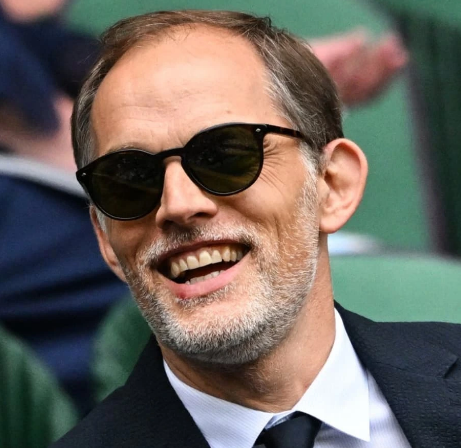
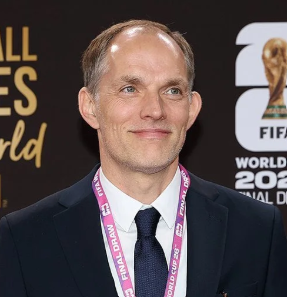
Thomas Tuchel has once again become one of the biggest talking points in world football. The England manager attracted plenty of attention before and during England’s FIFA World Cup knockout match against DR Congo because of his tactical ideas, team selection and willingness to make bold decisions
Tuchel has built a reputation as one of football’s smartest coaches. Throughout his career, he has shown that he is never afraid to change formations, adjust his tactics or surprise opponents.
Whether he was managing Borussia Dortmund, Paris Saint-Germain, Chelsea, Bayern Munich or now England, his ability to read games has made him one of the most respected managers in football.
Ahead of England’s clash with DR Congo, many fans and football experts discussed how Tuchel would approach the match.
England entered the game as favorites but Tuchel knew that knockout football is never easy.
Reports before the match suggested he was considering tactical changes to improve England’s attack while keeping the team balanced.
During the game, those tactical decisions proved to be important as England came from behind to win 2-1 and reach the Round of 16.
This article looks at Thomas Tuchel’s career, his coaching style, his achievements and why his tactical changes before and during the DR Congo match became one of the biggest stories of England’s World Cup campaign.
Also Read: Klaudia Zakrzewska Bio: Age, Career and London Crash Details
Table of Contents
Who is Thomas Tuchel?
Thomas Tuchel is a German football manager and former professional football player. He was born on August 29, 1973, in Krumbach, Germany.1
Although his playing career ended early because of a serious knee injury, Tuchel quickly found his true passion in coaching.
He started working with youth teams before climbing through the ranks of German football.
Over the years, Tuchel became known for his intelligence, attention to detail and ability to improve players. His coaching career has taken him across Europe, where he has managed some of the biggest clubs in football.
His managerial journey includes:
- Mainz 05
- Borussia Dortmund
- Paris Saint-Germain
- Chelsea
- Bayern Munich
- England national team
Every club helped shape his reputation as one of the game’s finest tacticians. His teams usually play with high intensity, quick passing, strong defensive organization and flexible formations that can change during a match.
This is one of the most difficult statements I have ever had to write – and it is one which I hoped I would not need to do for many years. I am devastated that my time at Chelsea has come to an end. pic.twitter.com/0TTlUOjWDx
— Thomas Tuchel (@TTuchelofficial) September 11, 2022
Early Life
Thomas Tuchel grew up in Bavaria, Germany. As a child, football was his biggest passion. He played for local youth teams and dreamed of becoming a professional player.
His professional playing career, however, was cut short because of a knee cartilage injury when he was only 25 years old.
Instead of leaving football behind, Tuchel decided to become a coach. That decision completely changed his life.
He worked with youth teams at VfB Stuttgart before moving to FC Augsburg, where he continued developing his coaching methods.
Those early years helped him understand player development, tactical planning and leadership.
Thomas Tuchel Managerial Stats
| Category | Details |
|---|---|
| Full Name | Thomas Tuchel |
| Nationality | German |
| Date of Birth | August 29, 1973 |
| Coaching Career Began | 2000 |
| Major Clubs Managed | Mainz 05, Borussia Dortmund, Paris Saint-Germain, Chelsea, Bayern Munich |
| England Manager Since | January 2025 |
| UEFA Champions League Titles | 1 (Chelsea, 2021) |
| FIFA Club World Cup Titles | 1 |
| UEFA Super Cup Titles | 1 |
| Ligue 1 Titles | 2 |
| DFB-Pokal Titles | 1 |
| Coaching Style | Flexible, possession-based, high pressing, tactical adaptability |
Coaching Career Begins at Mainz 05
Tuchel received his first major opportunity when he became the manager of Mainz 05 in 2009.2
Replacing the popular Jürgen Klopp was never going to be easy. Many supporters wondered if Tuchel could continue the club’s progress. He answered those doubts quickly.
Mainz played exciting football under Tuchel. His team pressed opponents aggressively and adapted their tactics depending on who they faced.
One of his most memorable achievements came during the 2010–11 Bundesliga season when Mainz won their opening seven league matches.
Although Mainz did not have one of Germany’s biggest budgets, Tuchel guided them into European competition. His success attracted attention from larger clubs across Europe.
Success at Borussia Dortmund
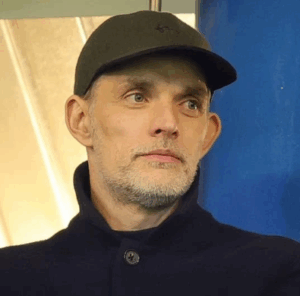
In 2015, Tuchel became the manager of Borussia Dortmund. He inherited a talented squad and immediately introduced a fast attacking style. Under Tuchel, Dortmund became one of Germany’s most entertaining teams.
Players enjoyed freedom in attack while remaining organized defensively.
His biggest achievement with Dortmund came in 2017 when the club won the DFB-Pokal.
Although his time at Dortmund lasted only two seasons, many players improved under his guidance.
Young stars developed into top-class footballers and Dortmund regularly competed with Bayern Munich in the Bundesliga.
Winning Trophies at Paris Saint-Germain
After leaving Germany, Tuchel accepted the challenge of managing Paris Saint-Germain.
At PSG, expectations were enormous because the club wanted to dominate French football and finally win the UEFA Champions League. Tuchel won multiple domestic trophies, including Ligue 1 titles.
His biggest achievement came during the 2019–20 season when he guided PSG to their first-ever UEFA Champions League final. Although the French club lost the final to Bayern Munich, reaching that stage was still considered a major success.
His work at PSG showed that he could manage world-class stars while keeping the team competitive.
Champions League Glory with Chelsea
In January 2021, Chelsea appointed Thomas Tuchel as their new manager. The impact was immediate.
Chelsea became much stronger defensively while still creating chances in attack. Only a few months after arriving, Tuchel guided Chelsea to victory in the UEFA Champions League.
Chelsea defeated Manchester City 1-0 in the final to lift Europe’s biggest club trophy.
He later added the UEFA Super Cup and FIFA Club World Cup to Chelsea’s trophy collection. These achievements established Tuchel as one of the best managers in world football.
Bayern Munich and the Move to England
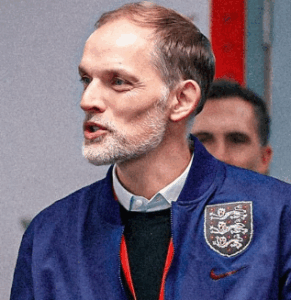
Tuchel returned to Germany when he became Bayern Munich manager. He continued to compete for major trophies before eventually leaving the club. Soon after, the Football Association appointed him as England’s new head coach.
Tuchel officially began leading England in January 2025. His appointment generated huge excitement because England believed his tactical expertise could help the national team finally win another major international trophy.
Since taking charge, Tuchel has focused on creating a flexible team capable of adapting to different opponents rather than relying on one fixed system.
England also qualified strongly for the 2026 FIFA World Cup under his leadership.
Thomas Tuchel’s Coaching Philosophy
Thomas Tuchel has never believed in using only one formation. Instead, he studies every opponent carefully and changes his tactics based on their strengths and weaknesses. This flexibility has earned him the nickname “tactical chameleon.”
His teams usually focus on:
- Keeping possession of the ball
- Pressing opponents high up the pitch
- Quick passing combinations
- Strong defensive organization
- Flexible formations
- Fast transitions from defense to attack
One match his team may play with three defenders. In another, they may switch to a back four or even change shape during the game.
This ability to adapt has made Tuchel one of the most respected tactical coaches in modern football.
Taking Charge of England
When the Football Association appointed Thomas Tuchel as England manager, expectations immediately increased.
England had reached the later stages of several major tournaments in recent years but had fallen short of winning a trophy.
The FA believed Tuchel’s experience in knockout football could help England take the final step.
Since becoming manager, Tuchel has encouraged his players to remain flexible. Rather than forcing one style, he prepares different plans depending on the opponent.
That approach became especially important during the 2026 FIFA World Cup.
England progressed through the group stage and entered the knockout rounds with confidence. However, Tuchel repeatedly warned that every knockout game brings different challenges.
England’s Challenge Before Facing DR Congo
Although England entered the Round of 32 as favorites, Tuchel made it clear that nobody inside the squad expected an easy afternoon.
He described DR Congo as an organized, disciplined, and dangerous team that would defend deep before trying to counterattack quickly. Before the match, Tuchel urged both his players and supporters to remain patient.
He explained that England could spend long periods controlling possession without immediately creating clear chances.
Rather than becoming frustrated, his players needed to trust the game plan and continue attacking with discipline.
Tactical Changes That Drew Attention
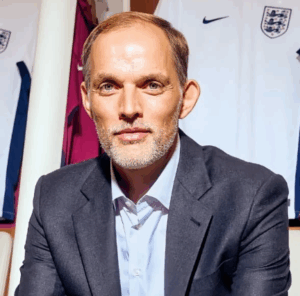
Much of the discussion before the match focused on Tuchel’s expected tactical adjustments.
Several reports suggested England would need more width, quicker ball movement and greater attacking support around Harry Kane.
Among the biggest talking points were:
- Changes at right-back because of injuries.
- Midfield balance.
- Better crossing from wide areas.
- More runners inside the penalty area.
- Smarter substitutions if the match remained level.
These ideas reflected Tuchel’s belief that every small tactical detail can decide a knockout match.
England’s Patient Approach
During his pre-match press conference, Tuchel repeatedly stressed one message. England must not panic.
He expected DR Congo to defend with a compact shape that would make scoring difficult.
Instead of forcing risky passes, England needed to keep possession, move the ball quickly and wait for spaces to appear.
That message became one of the main headlines before kickoff because it showed Tuchel’s confidence in his tactical system rather than relying only on individual talent.
Tactical Decisions During the Match
The match itself showed exactly why Tuchel is regarded as one of football’s best tactical coaches.
After England fell behind, he remained calm. Rather than making emotional decisions, he adjusted the team’s shape.
One of the most important changes came when assistant coach Anthony Barry suggested moving Declan Rice to right-back after a substitution. The change immediately improved England’s crossing and attacking width.
Only minutes later, Rice delivered the cross that helped Harry Kane score the equalizer.
England continued attacking and Kane scored again late in the match to complete a dramatic 2–1 comeback victory.
Why the Tactical Switch Worked
The Rice adjustment solved several problems at once.
England gained:
- Better delivery from wide areas.
- More support for Bukayo Saka.
- Greater control on the right side.
- More crosses into the penalty area.
- Extra pressure on the DR Congo defense.
Instead of forcing play through the middle, England attacked from wider positions.
The tactical switch stretched DR Congo’s defensive line and created the openings England had struggled to find earlier.
Many football analysts praised the move after the match because it completely changed England’s attacking rhythm.
England’s New Crossing Strategy
Another tactical feature that attracted attention was England’s increased use of crosses.
Under Tuchel, England delivered a remarkable number of open-play crosses against DR Congo.
The strategy reflected his understanding that compact defensive teams often leave little space through the center.
Instead of repeatedly attacking narrow areas, England targeted Harry Kane with crosses from both wings.
The approach proved successful as Kane scored twice to send England into the next round.
Statistics after the game showed England produced their highest number of open-play crosses in a World Cup match since 1966, highlighting just how important this tactical change had become.
Thomas Tuchel’s Leadership Style
One of the biggest reasons behind Thomas Tuchel’s success is his leadership.3
He expects high standards from every player but he also builds strong relationships with his squad.
Players often say that Tuchel explains every tactical detail clearly, helping them understand exactly what is expected on the pitch.
He pays close attention to video analysis, training sessions and even small movements during matches. This preparation allows his teams to react quickly when games become difficult.
Tuchel also believes communication is one of a manager’s most important skills. During matches, he is constantly giving instructions from the touchline and encouraging players to stay focused.
His calm approach under pressure was clearly visible during England’s World Cup match against DR Congo.
Even after England conceded first, he continued to encourage his players rather than making rushed decisions.
Also Read: Ruby Franke Biography: Arrest Updates and Current Life Status
Why Players Enjoy Working With Tuchel
Throughout his managerial career, many top footballers have praised Tuchel for helping them improve.
His coaching offers several advantages:
- Every player understands their role.
- Training sessions are well planned.
- Tactical instructions are easy to follow.
- Young players receive opportunities.
- Teams remain flexible during matches.
Although Tuchel demands discipline, he also gives players the confidence to make decisions when attacking.
This balance has helped him succeed in different leagues, including Germany, France, England and international football.
England’s Progress at the 2026 FIFA World Cup
England entered the 2026 FIFA World Cup as one of the favorites. The team finished at the top of Group L after producing several strong performances.
During the group stage, England showed:
- Solid defensive organization.
- Good ball possession.
- Strong attacking depth.
- Improved teamwork.
- Effective pressing.
However, the knockout rounds presented a different challenge. DR Congo defended deep, stayed compact and looked dangerous on the counterattack.
Tuchel had warned before the match that England needed patience because breaking down such a disciplined defense would not be easy.
Staying Calm Under Pressure
England fell behind early against DR Congo. Many teams would have panicked after conceding such an important goal in a knockout match. Instead, Tuchel remained composed.
He trusted the tactical plan, encouraged his players to keep moving the ball, and waited for opportunities to appear.
That patience paid off. England created more chances during the second half before Harry Kane scored twice to complete a dramatic 2–1 comeback victory.
After the match, Tuchel praised his players for believing until the final whistle. He said the team never accepted defeat and continued fighting despite the difficult situation.
Tactical Flexibility Makes the Difference
One quality separates Tuchel from many other managers. He rarely sticks to one system for an entire game.
Against DR Congo, England adjusted their attacking shape several times.
The switch involving Declan Rice moving wider helped improve England’s crossing, while other substitutions added fresh energy in attack.
Instead of forcing passes through the crowded middle, England stretched the pitch and created better opportunities from wide areas.
Football experts praised these adjustments after the final whistle because they completely changed England’s attacking rhythm.
Managing Big Expectations
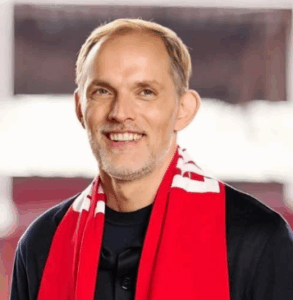
Being England manager is one of football’s most demanding jobs. Every decision receives huge attention from fans and the media. Tuchel understands those expectations. Rather than avoiding pressure, he embraces it.
Before facing DR Congo, he openly accepted that England were expected to win but reminded everyone that World Cup knockout matches are decided by very small margins.
He also prepared his players for the possibility of extra time and even penalties, showing once again how carefully he plans every scenario.
Major Honours of Thomas Tuchel
Thomas Tuchel has won numerous trophies during his coaching career.
His biggest achievements include:
- UEFA Champions League (Chelsea)
- UEFA Super Cup
- FIFA Club World Cup
- Ligue 1 titles with Paris Saint-Germain
- Coupe de France
- DFB-Pokal with Borussia Dortmund
- Bundesliga title with Bayern Munich
These achievements place him among the most successful managers of his generation.
Very few coaches have won major trophies in several different countries while consistently competing in the latter stages of the UEFA Champions League.
Why Tuchel Is Considered One of Football’s Best Managers
There are many reasons why Thomas Tuchel is highly respected across world football.
These include:
- Excellent tactical knowledge.
- Ability to change formations during matches.
- Strong defensive organization.
- Clear communication.
- Success in different countries.
- Experience in major finals.
- Ability to improve players.
- Calm decision-making under pressure.
His work with England has continued to demonstrate these qualities.
Even when matches become difficult, Tuchel remains focused on finding solutions rather than reacting emotionally.
The comeback victory over DR Congo offered another example of why so many people regard him as one of the finest tactical coaches in modern football.
FAQ’s
Who is Thomas Tuchel?
Thomas Tuchel is a German football manager and former professional footballer. He has managed top clubs such as Mainz 05, Borussia Dortmund, Paris Saint-Germain, Chelsea and Bayern Munich. In January 2025, he became the head coach of the England men’s national football team.
Why was Thomas Tuchel attracting attention before the DR Congo match?
Before England’s FIFA World Cup Round of 32 match against DR Congo, Tuchel attracted attention because of his expected tactical changes, lineup decisions and his emphasis on patience against a defensive opponent. He warned England not to panic if they found it difficult to break down DR Congo’s low defensive block.
What tactical changes did Tuchel make?
Tuchel adjusted England’s attacking approach by encouraging more width and crossing opportunities. During the match, he also made key positional changes that improved England’s attack, helping the team come from behind to win 2–1. England’s crossing strategy became one of the major talking points after the victory.
How did England perform against DR Congo?
England came from behind to defeat DR Congo 2–1 in the Round of 32. Harry Kane scored twice in the closing stages to secure the victory after England had fallen behind early in the match.
What is Thomas Tuchel’s coaching style?
Tuchel is known for his tactical flexibility. His teams usually focus on high pressing, quick passing, disciplined defending and adapting formations depending on the opponent. Rather than using one fixed system, he changes tactics to suit each match.
Conclusion
Thomas Tuchel has once again shown why he is regarded as one of the finest football managers in the modern game.
His attention to detail, tactical flexibility and calm leadership have already made a positive impact on the England national team.
Before the World Cup clash with DR Congo, much of the discussion centered on his expected tactical adjustments and patient approach against a disciplined opponent.
During the match, those qualities were on full display. England remained composed after conceding early, trusted the game plan and completed an impressive 2–1 comeback to reach the next round.
Tuchel’s decisions, particularly his willingness to adapt during the game, received praise from football experts and supporters alike.
Looking ahead, England’s hopes of winning the 2026 FIFA World Cup will depend on maintaining that same balance of discipline, creativity and resilience.
With Thomas Tuchel leading from the touchline, the Three Lions have a manager whose experience in high-pressure matches could prove invaluable as the tournament continues.
Also Read: Colleen Ballinger Bio: Rise, Controversy and Life After Backlash