

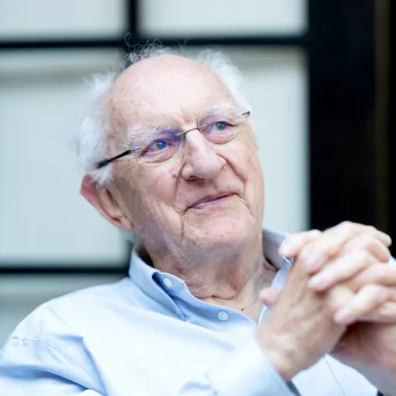
John Clarke is a renowned physicist whose research has helped scientists understand how the strange rules of quantum mechanics can operate in electrical systems large enough to study in a laboratory
He became widely recognized after receiving the 2025 Nobel Prize in Physics alongside Michel H. Devoret and John M. Martinis.
Clarke’s work focused on superconductivity, sensitive scientific instruments and quantum phenomena.
His experiments demonstrated that quantum mechanical effects are not limited to individual atoms and subatomic particles.
He became known for his experimental skills and his contributions to the development of highly sensitive instruments used to measure extremely small magnetic signals.
This article explores John Clarke’s biography, early childhood, education, scientific achievements and Nobel Prize.
It also explains why his research matters and answers common questions about his life and career.

Also Read: Britt Barbie Bio: From “Period Ahh” Meme to Internet Creator
Table of Contents
Who Is John Clarke?
John Clarke is a British-born experimental physicist and professor emeritus at the University of California, Berkeley.1
He was born in Cambridge, England, in 1942 and developed a career in experimental physics that brought him international recognition.
He is best known for his work on superconducting quantum interference devices, commonly called SQUIDs and for research into macroscopic quantum mechanical tunnelling.
In October 2025, Clarke shared the Nobel Prize in Physics with Michel H. Devoret and John M. Martinis.
The award recognized their discovery of macroscopic quantum mechanical tunnelling and energy quantization in an electrical circuit.
Their research helped demonstrate that quantum mechanics can be observed in a system that is much larger than an individual atom. This was an important step in understanding how quantum phenomena could be used in practical technology.
Clarke has also contributed to the development of scientific instruments that measure weak magnetic signals with exceptional sensitivity. Such devices have applications in physics, medical research and the development of quantum technologies.
His professional achievements have made him an important figure in modern experimental physics.
The 2025 physics laureate John Clarke was born in 1942 in Cambridge, UK.
He received his PhD in 1968 from the @Cambridge_Uni, UK. He is currently a professor at the @UCBerkeley, USA.
https://t.co/ry3Csvy22T https://t.co/TNTQGhXdJ9
— The Nobel Prize (@NobelPrize) October 7, 2025
Education and Academic Background
Education played a major role in John Clarke’s development as a physicist. He studied at the University of Cambridge and completed both undergraduate and doctoral studies there.
Clarke attended Christ’s College at Cambridge as an undergraduate, where he studied Natural Sciences. He earned his bachelor’s degree in physics in 1964.
He continued his education at Darwin College and conducted doctoral research at the Cavendish Laboratory, one of the university’s important physics research centers.
Clarke completed his PhD in physics in 1968. His advanced education gave him the theoretical knowledge and experimental training required to investigate superconductivity and other complex physical phenomena.
After completing his doctorate, he undertook postdoctoral research at the University of California, Berkeley. This experience introduced him to the research environment in which he would spend much of his professional career.
In 1969, Clarke joined Berkeley’s physics faculty. He went on to develop a distinguished research program focused on superconducting devices and the behavior of electrical systems at very low temperatures.
His academic background combined rigorous scientific training with practical laboratory research. This combination became a defining feature of his career.
Quick Facts
| Category | Details |
|---|---|
| Full name | John Clarke |
| Profession | Experimental physicist |
| Birth year | 1942 |
| Birthplace | Cambridge, United Kingdom |
| Nationality background | British-born scientist who built his career in the United States |
| Undergraduate institution | University of Cambridge |
| Bachelor’s degree | Physics, 1964 |
| Doctoral degree | PhD in physics, 1968 |
| Doctoral research institution | University of Cambridge |
| Main academic institution | University of California, Berkeley |
| Faculty appointment | Joined Berkeley in 1969 |
| Main research areas | Superconductivity, quantum physics and sensitive magnetic measurements |
| Best-known instrument research | Superconducting quantum interference devices (SQUIDs) |
| Nobel Prize | 2025 Nobel Prize in Physics |
| Nobel Prize co-recipients | Michel H. Devoret and John M. Martinis |
| Nobel Prize share | One-third |
| Major research milestone | Experiments demonstrating macroscopic quantum tunnelling and energy quantization |
| Other research connection | Axion Dark Matter Experiment |
John Clarke’s Scientific Career
John Clarke built his career around experimental physics, particularly the study of superconductivity and quantum phenomena.2
After joining the University of California, Berkeley, in 1969, he became involved in research that explored how superconducting materials could be used to investigate fundamental questions about nature.
Superconductors are materials that can conduct electricity without electrical resistance under suitable conditions. Their unusual properties make them useful for studying magnetic fields and quantum behavior.
Clarke became a leading researcher in the design and development of superconducting quantum interference devices. These instruments can detect extremely weak magnetic signals and are widely known as SQUIDs.
His research helped improve the understanding and practical use of these devices. SQUID technology has applications in a range of scientific fields, including physics, medical imaging research and the study of magnetic properties in materials.
Clarke also worked at Lawrence Berkeley National Laboratory, where he contributed to scientific research alongside his academic responsibilities. He later retired as a faculty senior scientist in the laboratory’s Materials Sciences Division in 2010.
His career reflects the importance of experimental research in advancing scientific knowledge. Rather than relying only on theoretical predictions, Clarke and his collaborators designed experiments to test whether quantum mechanical behavior could be observed in larger physical systems.
What Is John Clarke Famous For?
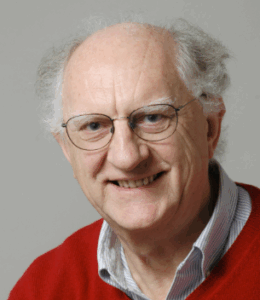
John Clarke is famous for three closely connected contributions to physics.
1. Research on SQUIDs
SQUIDs are extremely sensitive instruments that use superconducting circuits to detect tiny changes in magnetic flux.
A magnetic field is associated with forces produced by magnets and moving electric charges. Measuring very small magnetic changes can help researchers study materials and physical processes that would otherwise be difficult to detect.
Clarke contributed significantly to the theory, design and applications of these devices. His work helped establish SQUIDs as important tools for advanced scientific measurements.
2. Macroscopic Quantum Mechanical Tunnelling
Quantum tunnelling is a phenomenon in which a quantum system can pass through an energy barrier that it could not cross under ordinary classical physics.
Scientists had long understood tunnelling at the microscopic level. Clarke and his collaborators helped demonstrate that similar quantum behavior could be observed in a superconducting electrical circuit.
Their experiments in 1984 and 1985 showed that a system involving many particles could display quantum mechanical tunnelling. This result helped researchers understand the relationship between the microscopic quantum world and larger physical systems.
3. Energy Quantization in an Electrical Circuit
Clarke and his collaborators also demonstrated quantized energy levels in their electrical circuit.
In simple terms, quantization means that certain physical quantities can take specific allowed values rather than every possible value. The experiments showed that an engineered electrical system could display energy behavior predicted by quantum mechanics.
Together, these discoveries established important experimental foundations for later research into superconducting quantum devices.
John Clarke and the 2025 Nobel Prize in Physics
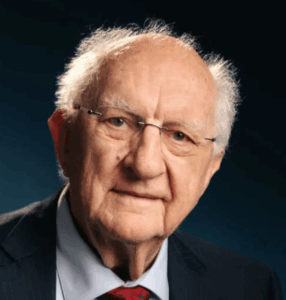
John Clarke received the 2025 Nobel Prize in Physics jointly with Michel H. Devoret and John M. Martinis.
The Royal Swedish Academy of Sciences announced the award on October 7, 2025. The prize recognized their discovery of macroscopic quantum mechanical tunnelling and energy quantization in an electrical circuit.
The experiments were conducted in 1984 and 1985 using a circuit built from superconducting components. These components were separated by a thin insulating layer that formed a Josephson junction.
The researchers carefully controlled and measured the circuit’s behavior. Their findings showed that quantum mechanical properties could be observed in a system large enough to hold in the hand.
This was a major scientific achievement because quantum effects are usually associated with extremely small particles and systems.
The experiments showed that the boundary between microscopic quantum physics and larger physical systems was more complex than previously demonstrated.
The Nobel Prize recognized the scientific importance of this work and its contribution to the development of quantum technology. Clarke shared the prize equally with Devoret and Martinis.
The award acknowledged their collaborative achievement rather than the work of one scientist alone.
Also Read: Angela Nikolau Age, Bio, Career, Relationship and Net Worth 2026
How John Clarke’s Research Connects to Quantum Computing
Quantum computing is an area of technology that uses quantum mechanical principles to process information.3
Traditional computers use bits that represent information as either zero or one.
Quantum computers use quantum bits, known as qubits, which can be prepared in quantum states that have no direct equivalent in ordinary digital computing.
Superconducting circuits are one of the leading approaches to building quantum computers. These circuits rely on carefully controlled quantum behavior and specialized electronic components.
Clarke’s research helped establish the experimental understanding of superconducting circuits and quantum phenomena.
His work on SQUIDs also contributed to the development of sensitive amplifiers that can measure signals from superconducting qubits.
These instruments are important because quantum systems can be extremely sensitive to disturbances. Researchers need accurate measurements to study and control their behavior.
Clarke’s work did not single-handedly create modern quantum computers. Instead, it contributed to a broader scientific foundation developed by many researchers over several decades.
His Nobel Prize-winning experiments helped demonstrate that quantum behavior could be studied and controlled in electrical circuits.
This remains an important concept in the development of quantum technology.

John Clarke’s Research and the Search for Dark Matter
Another important area connected to Clarke’s work is the search for dark matter.
Dark matter is a proposed form of matter that does not emit or reflect light in the way ordinary matter does.
Scientists infer its presence from gravitational effects observed in the universe but its exact nature remains unknown.
One candidate particle is the axion. Researchers have developed sensitive experiments to search for possible signs of these particles.
Clarke developed low-noise superconducting quantum amplifiers based on SQUID technology for the Axion Dark Matter Experiment, also known as ADMX.
These amplifiers help researchers detect extremely weak signals that could otherwise be hidden by electronic noise.
The experiment has not established that axions exist. Instead, it uses sensitive instruments to investigate whether these hypothetical particles can be detected.
This work illustrates how fundamental physics can contribute to several different research areas.
The same broad family of superconducting technologies can support investigations into quantum mechanics, quantum computing and questions about the composition of the universe.
Awards and Professional Recognition
John Clarke has received recognition for his contributions to physics over several decades.
His honors include election as a Fellow of the Royal Society in 1986. The Royal Society recognized his work on the theory, design and applications of superconducting quantum interference devices.
He received the Royal Society’s Hughes Medal in 2004 for his research on SQUID technology.
His professional recognition also includes the University of California’s Distinguished Teaching Award in 1987 and the California Scientist of the Year distinction.
The 2025 Nobel Prize in Physics was a major milestone in his career. It recognized the importance of experiments that demonstrated quantum mechanical behavior in an electrical circuit.
These honors reflect both the scientific value of his research and its influence on later developments in experimental physics.

Why Is John Clarke Being Searched Online?
John Clarke’s name may attract online interest because of his Nobel Prize, his scientific discoveries and the growing public attention given to quantum computing.
The Nobel Prize announcement in October 2025 was a clear reason for increased attention at that time. Later coverage has also explored how his work contributed to research into superconducting quantum devices.
However, a rise in searches does not automatically identify a particular news event. The name John Clarke is shared by several public figures, including scientists and people in entertainment and other professions.
As of October 10, 2026, the specific reason for a reported U.S. search spike could not be independently confirmed from the available evidence.
It would therefore be inaccurate to claim that a new award, announcement or personal event caused the current interest without further verification.
For readers searching for the physicist, the most relevant topics are his Nobel Prize, his early education, his work at UC Berkeley and the possible applications of superconducting technology.
View this post on Instagram
FAQ’s
1. Who is John Clarke?
John Clarke is a British-born experimental physicist and professor emeritus at the University of California, Berkeley. He is known for his work on superconducting devices and quantum mechanics.
2. Why did John Clarke win the Nobel Prize in Physics?
He shared the 2025 Nobel Prize in Physics with Michel H. Devoret and John M. Martinis for discovering macroscopic quantum mechanical tunnelling and energy quantization in an electrical circuit.
3. When was John Clarke born?
John Clarke was born in 1942 in Cambridge, United Kingdom.
4. Where did John Clarke study?
He studied at the University of Cambridge. He earned a bachelor’s degree in physics in 1964 and completed his PhD in physics in 1968.
5. What is John Clarke known for in science?
He is known for research on superconducting quantum interference devices, macroscopic quantum tunnelling and energy quantization in electrical circuits.
6. What are SQUIDs?
SQUIDs are superconducting quantum interference devices that can detect extremely small magnetic signals. They are used in scientific research and other applications requiring highly sensitive measurements.
Conclusion
John Clarke is an influential experimental physicist whose research has helped expand our understanding of quantum mechanics.
Born in Cambridge in 1942, he studied at the University of Cambridge before building a long scientific career at the University of California, Berkeley.
His work on superconducting quantum interference devices advanced the ability to measure extremely weak magnetic signals.
Although the precise reason for the reported October 2026 search spike remains unconfirmed, Clarke’s Nobel Prize and scientific achievements provide a well-documented basis for a biography.
His career demonstrates how careful experiments can transform theoretical ideas into measurable scientific results.
For readers interested in physics, quantum technology or Nobel Prize winners, John Clarke’s life and work offer a valuable example of long-term scientific achievement.
Also Read: Todd Monken Biography: Why Is He Trending Right Now?