

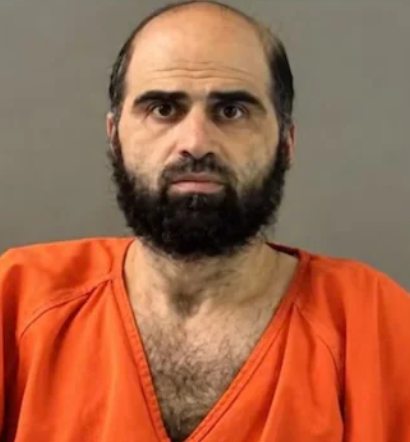
Nidal Hasan has returned to national attention following the announcement that the former U.S. Army psychiatrist is scheduled to be executed for the 2009 Fort Hood shooting
The case remains one of the most significant criminal cases in modern American military history because of the number of lives lost, the military setting and the questions it raised about security and the justice system.
On November 5, 2009, a shooting at Fort Hood in Texas killed 13 people and injured 32 others.
Hasan, who was serving as an Army major and psychiatrist at the time, was later convicted of the killings and sentenced to death by a military jury in 2013.
It is also about the 13 people who lost their lives, the survivors who experienced the attack and the questions that followed the tragedy.
This article examines who Nidal Hasan is, his early life, his education, his military career, the Fort Hood shooting, his trial and the latest developments surrounding his sentence.
Also Read: The Spanish Rapper Arkano Bio: His Life and Music Career
Table of Contents
Who Is Nidal Hasan?
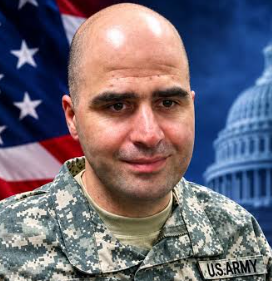
Nidal Malik Hasan is a former U.S. Army major and psychiatrist who was convicted of carrying out the November 2009 mass shooting at Fort Hood, a major U.S. Army installation in Texas.1
He was found guilty of 13 counts of premeditated murder and 32 counts of attempted premeditated murder.
Before the attack, Hasan had trained as a physician and worked within the Army’s medical system. His professional role involved psychiatric care for military personnel.
His case became particularly disturbing because he was a medical officer serving in the same institution where the attack occurred. Hasan was born in the United States to Palestinian immigrant parents and grew up in Virginia.
He attended college before entering medical school at the Uniformed Services University of the Health Sciences in Bethesda, Maryland. He subsequently trained in psychiatry through the Army medical system.
His military career took him to Fort Hood in 2009. At the time of the shooting, he was preparing for a possible deployment to Afghanistan.
The attack changed the course of the case from a military medical career to a major criminal prosecution. Hasan was seriously wounded when law enforcement officers confronted him during the incident.
He survived and was left paralyzed from the waist down. In August 2013, a military court found him guilty of all 45 charges brought against him. A military jury later sentenced him to death.
According to the U.S. Army’s October 2026 announcement, President Donald Trump approved the death sentence on October 2, 2026. The Army subsequently announced an execution date of December 3, 2026, at Fort Hood.
The date is a scheduled date, not confirmation that the execution has taken place. The case has attracted further attention because carrying out the sentence would mark the first U.S. military execution in more than 65 years.
The execution of Nidal Hasan by firing squad will take place at Fort Hood, Texas on Thursday, December 3rd, 2026, at 1 p.m. CT. https://t.co/re7BpqkSN4
— Acting Secretary of the Army (@SecArmy) October 7, 2026
Early Life and Childhood
Nidal Hasan was born in Arlington County, Virginia and grew up primarily in southwestern Virginia. His parents were Palestinian immigrants and he attended schools in the Roanoke area.
A contemporary biographical report published by The Washington Post in November 2009 stated that Hasan graduated from William Fleming High School in Roanoke after also attending Wakefield High School in Arlington for a year.
His childhood and educational background are relevant to understanding the path that eventually led him into the U.S. Army.
Hasan earned an associate degree in science in 1992 and later graduated from Virginia Tech in 1995 with a bachelor’s degree in biochemistry.
His academic background provided a foundation for his later medical training. After college, he pursued a career that combined medicine with military service.
Medical Training
Hasan continued his education after earning his undergraduate degree. In 1997, he entered the Uniformed Services University of the Health Sciences, a federal medical school in Bethesda, Maryland, that trains healthcare professionals for military and public service.
He earned his medical degree in 2003. After graduating, he continued his professional development at Walter Reed Army Medical Center, where he completed postgraduate training in the Army medical system.
His training included psychiatric work. Psychiatry focuses on the assessment, diagnosis and treatment of mental health conditions.
Military psychiatrists can support service members dealing with trauma, stress, depression and other psychological difficulties associated with military life. Hasan’s professional role therefore placed him within a system designed to support the health and readiness of military personnel.
His career also meant that his eventual involvement in the Fort Hood shooting raised serious questions about how the Army assessed potential warning signs and handled concerns about personnel. Later reviews examined the information available to military officials before the attack.
These institutional questions are separate from the evidence establishing Hasan’s criminal responsibility. Understanding what the Army knew before the shooting does not change the fact that he was convicted of the murders and attempted murders.
Quick Facts
| Detail | Information |
|---|---|
| Full name | Nidal Malik Hasan |
| Nationality | American |
| Birthplace | Arlington County, Virginia |
| Family background | Born to Palestinian immigrant parents |
| Profession before the shooting | U.S. Army psychiatrist |
| Military rank | Major |
| Undergraduate institution | Virginia Tech |
| Medical school | Uniformed Services University of the Health Sciences |
| Military assignment in 2009 | Fort Hood, Texas |
| Date of the shooting | November 5, 2009 |
| Location | Soldier Readiness Processing Center, Fort Hood |
| People killed | 13 |
| People injured | 32 |
| Charges resulting in conviction | 13 counts of premeditated murder and 32 counts of attempted premeditated murder |
| Date of conviction | August 23, 2013 |
| Date of death sentence | August 28, 2013 |
| Execution method announced | Firing squad |
| Announced execution date | December 3, 2026 |
| Execution status as of October 14, 2026 | Scheduled; not yet carried out |
Nidal Hasan’s Military Career
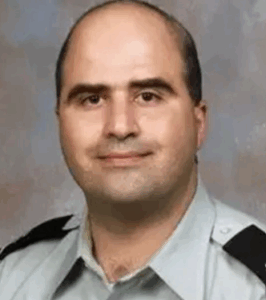
Hasan entered the Army after high school and eventually became a commissioned officer.2
Following medical school, he served as an Army physician and completed psychiatric training at Walter Reed Army Medical Center.
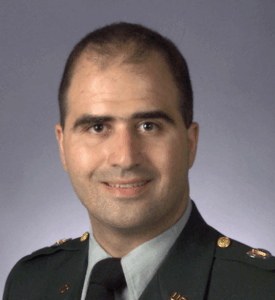
He was promoted to major in May 2009 and transferred to Fort Hood in Texas that summer. Fort Hood was a major military installation that supported large numbers of active-duty soldiers and military operations.
Hasan’s work involved military psychiatry. Before the shooting, he was preparing for a potential deployment to Afghanistan.
The prospect of deployment and his views about U.S. military operations later became subjects of scrutiny during the investigation and trial. Investigators and prosecutors examined his communications, statements and activities before the attack.
The case included evidence concerning his contact with Anwar al-Awlaki, a radical cleric who was later killed in a U.S. drone strike in Yemen. The existence of those communications became an important part of the broader discussion about radicalization and the information available to authorities before the shooting.
However, the precise significance of individual communications must be understood through the evidence and findings of the relevant investigations. The tragedy also raised questions about institutional oversight.
A congressional research report later summarized concerns about how the Army handled information relating to Hasan during his military career. Such questions remain important because military organizations must balance personnel privacy, professional judgment, security concerns and the duty to protect service members.
Hasan’s case is frequently discussed in connection with these issues but it should not be used to suggest that a person’s religion, ethnicity or profession alone predicts violent behavior.
What Happened in the 2009 Fort Hood Shooting?
The Fort Hood shooting took place on November 5, 2009, at the Soldier Readiness Processing Center at Fort Hood in Texas. Soldiers were using the facility for administrative and medical processing connected with their military duties.
Hasan opened fire inside the building. The attack killed 13 people and injured 32 others.
Twelve of those killed were military personnel, while one was a civilian. The victims included people who were preparing for military service and carrying out routine duties.
The attack created panic at the installation and prompted an emergency response from military and law enforcement personnel.
Officers confronted Hasan and shot him, ending the immediate threat. Hasan survived the encounter but was left paralyzed from the waist down.
The scale of the loss made the shooting one of the deadliest attacks at a U.S. military installation. It also had a lasting effect on the Fort Hood community and the families of those killed or injured.
The incident raised difficult questions about how a person serving as an Army medical officer could carry out such an attack within the military environment. Investigators examined Hasan’s preparation, his communications and his conduct before November 5.
The shooting also led to wider scrutiny of how the military and intelligence agencies handled information that might have indicated a potential security concern. It is important to remember that the victims were individuals with families, careers and plans for the future.
The significance of the case extends beyond Hasan himself and the legal consequences he now faces.
Also Read: Survivor Star Rick Devens Bio: Why Is Rick Devens Trending?
Investigation and Military Trial
Following the shooting, Hasan faced a military prosecution. His case proceeded through the court-martial system, which handles serious criminal offenses committed by members of the U.S. armed forces.3
The prosecution presented evidence concerning the attack, the deaths and injuries and Hasan’s actions before and during the shooting. The charges included 13 counts of premeditated murder and 32 counts of attempted premeditated murder.
Hasan chose to represent himself during the court-martial. His decision attracted considerable attention because a capital case involves complex legal questions and the possibility of a death sentence.
On August 23, 2013, the military jury found Hasan guilty on all 45 counts. Five days later, on August 28, the jury sentenced him to death.
The sentence followed the military jury’s consideration of the case and the applicable military justice procedures. The death sentence also triggered mandatory appellate review under the military justice system.
The appellate process examined the legality of the court-martial proceedings and the conviction. Hasan’s case continued through the military courts over the following years.
In March 2025, the U.S. Court of Appeals for the Armed Forces denied his request for review of the court-martial conviction.
The Army later stated in its October 2026 announcement that the appellate process had been completed and that the death sentence had received presidential approval. The distinction between a conviction, an appellate ruling and an execution date is important.
A conviction establishes legal guilt, while the appellate process reviews legal issues arising from the proceedings. An announced execution date identifies when authorities plan to carry out a sentence.
The case has now reached a stage where the Army has announced a specific date for the execution, although any new legal developments could affect the process.
Nidal Hasan Execution Date: What Is the Latest Update?
The main reason Hasan has returned to national headlines is the announcement of his scheduled execution.
On October 7, 2026, the U.S. Army announced that Hasan was scheduled to be executed by firing squad at Fort Hood, Texas, at 1 p.m. Central Standard Time on December 3, 2026.
The Army stated that President Donald Trump had approved the death sentence on October 2, following the completion of the appellate process. The acting secretary of the Army subsequently directed that the execution be scheduled in accordance with military regulations.
If carried out as announced, the execution would be the first U.S. military execution in more than 65 years. That historical significance has contributed to the national and international attention surrounding the case.
The proposed method has also drawn attention. Hasan is scheduled to face a firing squad rather than lethal injection.
The announcement has renewed discussion about the use of capital punishment within the U.S. military justice system. Another major development concerns plans to livestream the execution.
In October 2026, Defense Secretary Pete Hegseth publicly discussed making the event available to viewers. Pentagon officials subsequently confirmed plans for a livestream, although questions remain about how the broadcast would be handled and what restrictions might apply.
The prospect of broadcasting an execution has prompted debate about public accountability, the dignity of the condemned person, the interests of victims’ families and the possible psychological impact on viewers.
The proposed broadcast has also raised concerns about children encountering graphic material online. Critics have questioned whether making an execution widely accessible would serve a legitimate public purpose or turn a legal punishment into a public spectacle.
These concerns are separate from the question of Hasan’s guilt. He was convicted in 2013, and the current debate concerns how the sentence should be carried out and whether an execution should be broadcast.
As of October 14, 2026, December 3 remains the announced execution date. Readers should consult official Army announcements and reliable news reporting for any subsequent changes to the schedule or broadcast arrangements.
Why Has the Fort Hood Case Returned to National Attention?
Several developments explain the renewed interest in Hasan’s case.
1. A specific execution date has been announced.
The case remained in the military justice system for years after the 2013 death sentence. The announcement of December 3, 2026, has brought the case back into the public conversation and placed renewed focus on the final stages of the legal process.
2. The execution would be historically significant.
The U.S. military has carried out very few executions in modern history. If Hasan’s sentence is carried out, it would be the first military execution in more than 65 years, making it a significant event in the history of military capital punishment.
3. The proposed livestream has created a separate controversy.
The possibility of broadcasting the execution to the public has raised questions about ethics, media responsibility and the limits of public access to state punishment. It has also prompted concerns about the potential exposure of children to disturbing content.
4. Questions about military oversight remain relevant.
The Fort Hood shooting prompted scrutiny of the information available to military officials before the attack. The case continues to feature in discussions about security procedures, threat assessment and communication between institutions.
5. Victims and survivors remain central to the story.
The attack killed 13 people and injured 32 others. The legal developments have renewed public attention to the lives lost and the lasting effects of the shooting on survivors and their families.
Together, these developments explain why a case originating in 2009 is again receiving widespread coverage in 2026.
Impact on Victims, Survivors and the Military Community
The Fort Hood shooting left a lasting mark on the military community. The people killed in the attack were service members and a civilian who were carrying out their duties or supporting military operations.
For their families, the loss did not end when the investigation concluded or when Hasan was sentenced. Survivors and relatives have had to live with the consequences of the attack over many years.
The shooting also raised questions about the safety of military workplaces. Military installations are designed to support national defense and provide a secure environment for service members.
An attack inside such a setting can undermine confidence and create lasting concerns about security. The subsequent reviews of the Army’s handling of information related to Hasan highlighted the importance of clear reporting procedures and effective communication.
Institutions need systems that allow credible concerns to be assessed without relying on stereotypes or unsupported assumptions. The case also demonstrates the importance of distinguishing individual responsibility from broader communities.
Hasan’s actions and criminal conviction should not be used to stigmatize Muslims, people of Palestinian descent or military medical professionals as groups.
Responsible reporting should keep the focus on the evidence, the victims, the legal proceedings and the institutional lessons that can be drawn from the tragedy.
View this post on Instagram
FAQ’s
1. Who is Nidal Hasan?
Nidal Malik Hasan is a former U.S. Army major and psychiatrist who was convicted of the 2009 Fort Hood shooting in Texas. He was found guilty of 13 murders and 32 attempted murders and was sentenced to death in 2013.
2. What happened at Fort Hood in 2009?
On November 5, 2009, Hasan opened fire at the Soldier Readiness Processing Center at Fort Hood. The attack killed 13 people and injured 32 others. The shooting led to a major criminal investigation and a military court-martial.
3. How many people were killed in the Fort Hood shooting?
Thirteen people were killed in the attack. Another 32 people were injured. The deaths and injuries made it one of the deadliest attacks at a U.S. military installation.
4. What was Nidal Hasan’s profession before the shooting?
Hasan was an Army psychiatrist with the rank of major. He had completed medical school and postgraduate psychiatric training through the military medical system.
5. When was Nidal Hasan sentenced to death?
Hasan was sentenced to death on August 28, 2013, after a military jury found him guilty of all 45 charges against him.
Conclusion
Nidal Hasan’s case remains a significant chapter in American military and criminal justice history. Before the Fort Hood shooting, he was an Army major and psychiatrist who had completed extensive academic and medical training.
On November 5, 2009, he carried out an attack that killed 13 people and injured 32 others, leaving families, survivors and the military community to cope with its consequences.
Yet the victims and survivors must remain at the center of any responsible account of the case. The Fort Hood shooting was a human tragedy with consequences that extend far beyond the defendant and the sentence he received.
Understanding the case requires a careful distinction between established facts, official decisions and ongoing public debate.
It also requires avoiding sensationalism and recognizing that the lasting significance of the Fort Hood shooting lies in the lives lost, the survivors affected and the lessons institutions must learn to protect the people in their care.
Also Read: Eagles Star Lane Johnson Bio: NFL Career and Achievements