

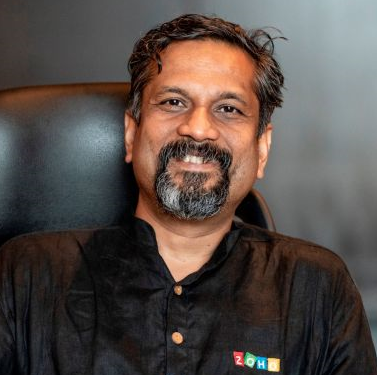
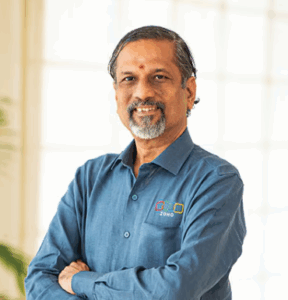
Sridhar Vembu is an Indian technology entrepreneur best known as the co-founder of Zoho Corporation
He helped build one of India’s most successful software companies by focusing on homegrown technology, long-term growth and independence from outside investors.
However, his latest appearance in the headlines has little to do with business software. Musk leads companies working in space technology, electric vehicles and artificial intelligence.
Vembu built his reputation by developing enterprise software and promoting Indian technology businesses that can compete internationally.
The debate also raises an important question: should India rely on foreign technology companies for essential digital services or should it prioritise domestic alternatives?
The discussion involves more than a disagreement between billionaires. It touches on internet affordability, national security, competition and India’s technological independence.
So, who is Sridhar Vembu? How did he build Zoho and why has he challenged Elon Musk over Starlink?
Here is a closer look at his life, career, achievements and the controversy that has brought him back into the news.

Also Read: John Clarke Biography: Know More About The Nobelist
Table of Contents
Who Is Sridhar Vembu?
Sridhar Vembu is the co-founder and chief scientist of Zoho Corporation.1
He previously served as the company’s chief executive officer before moving into a research-focused role in 2025.
He is known for building a globally competitive software business without following the conventional route of relying on venture capital funding and a stock market listing.
Vembu was born in 1968 in Tamil Nadu, India. He studied electrical engineering at the Indian Institute of Technology Madras and later earned postgraduate degrees, including a PhD, from Princeton University in the United States.
His early career included working at Qualcomm, where he gained experience in wireless communications. In 1996, he joined his brothers and other co-founders to establish AdventNet, the company that eventually became Zoho Corporation.
Zoho developed a broad range of business software products, including customer relationship management tools, office applications, accounting software and collaboration platforms.
Its products serve businesses around the world and compete with offerings from some of the biggest names in the technology industry. Vembu has also become known for supporting rural development and expanding technology education beyond major cities.
His approach challenges the idea that successful software companies must operate from Silicon Valley or recruit exclusively from elite universities. In 2021, he received the Padma Shri, one of India’s civilian honours, in recognition of his contribution to trade and industry.
His career has made him an important figure in conversations about Indian entrepreneurship and technological self-reliance.
Navaratri kolu in our Tenkasi office 🙏 https://t.co/HhDXpG3NEO
— Sridhar Vembu (@svembu) October 14, 2026
Early Childhood and Education
Vembu was born in 1968 in Tamil Nadu. He has spoken publicly about growing up in a modest family and attending a Tamil-medium school during his early education.
His father worked as a stenographer in the Madras High Court, while neither of his parents had attended college.
Despite these circumstances, Vembu performed well academically. His education gave him a strong foundation in mathematics and science and helped him secure admission to one of India’s most respected engineering institutions.
His experience of studying in a regional-language school is particularly relevant to his later work. Vembu has often supported the idea that talented students should have opportunities to develop technical skills regardless of their family income, educational background or location.
Rather than viewing access to elite institutions as the only path to success, he has argued through his work that practical skills and determination can also produce excellent engineers. Vembu studied electrical engineering at the Indian Institute of Technology Madras, graduating in 1989.
IIT Madras gave him a strong technical foundation and exposed him to the engineering principles that would later influence his career. His studies helped prepare him for work in advanced communications technology.
After graduating, he moved to the United States for further education. He attended Princeton University, where he earned a master’s degree and a doctorate in electrical engineering. He completed his PhD in 1994.
His academic background distinguished him from entrepreneurs who entered the software industry primarily through sales or business management.
Vembu developed an understanding of the technical systems behind communications and computing, which became valuable during the early stages of his professional life.
Stats Table
| Category | Details |
|---|---|
| Full name | Sridhar Vembu |
| Birth year | 1968 |
| Age in 2026 | Approximately 58 |
| Birthplace | Tamil Nadu, India |
| Nationality | Indian |
| Profession | Technology entrepreneur and computer scientist |
| Known for | Co-founding Zoho Corporation |
| Company founded | AdventNet, established in 1996 |
| Current role | Co-founder and chief scientist at Zoho |
| Undergraduate education | IIT Madras |
| Postgraduate education | Princeton University |
| Previous position | Zoho CEO, until 2025 |
| Major business achievement | Building a global software company |
| Civilian honour | Padma Shri, 2021 |
| Main areas of interest | Software, research, AI and rural education |
Sridhar Vembu’s Career: From AdventNet to Zoho
Vembu’s career is closely connected to the growth of India’s software industry. His business did not become globally successful overnight.2
It developed through years of product building, customer service and investment in engineering.
Founding AdventNet in 1996
AdventNet was established to develop software for managing networks and supporting technology infrastructure. At the time, many Indian technology companies concentrated on providing software development services for overseas clients.
Vembu and his co-founders pursued a different model. They focused on developing their own products, allowing the company to build intellectual property and maintain greater control over its direction.
This strategy required patience. Product companies often need years of investment before their software gains enough customers to generate consistent revenue. However, successful products can also provide a more sustainable business model than relying entirely on contracts for individual projects.
AdventNet gradually expanded its software portfolio and customer base. Its experience in network management eventually helped create a foundation for broader business applications.
The Transformation Into Zoho
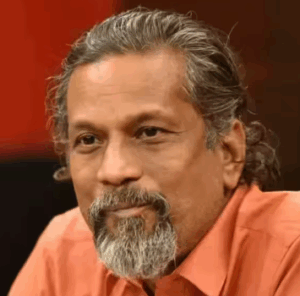
In 2009, AdventNet adopted the Zoho Corporation name as the company expanded its focus on cloud-based business software. Zoho began offering tools that allowed businesses to manage customers, email, documents, finances, projects and internal communication through connected software services.
One of its most important products is Zoho CRM, which helps organisations manage customer relationships and sales activities. The company also developed a larger suite of applications designed to reduce the need for businesses to purchase separate products from multiple vendors.
The strategy helped Zoho compete with international software providers. Its customers could use a range of business applications within a common ecosystem rather than depend entirely on a single specialised product.
Zoho’s growth also demonstrated that an Indian company could develop and sell software globally without depending on the traditional Silicon Valley funding model.
Building Zoho Without Venture Capital
One of the most distinctive aspects of Vembu’s career is his preference for bootstrapping. Bootstrapping means building a business largely through its own revenue rather than depending on repeated rounds of external investment.
This approach can reduce pressure to pursue rapid growth at any cost. Zoho became well known for maintaining this independence.
The strategy allowed the company to concentrate on its products, customers and long-term business priorities. It also came with challenges.
A company that avoids large external funding rounds must manage cash carefully, generate sustainable revenue and choose investments wisely.
Vembu’s approach has attracted attention because it offers an alternative to the startup culture in which companies often prioritise rapid expansion and high valuations.
Becoming Chief Scientist
Vembu served as Zoho’s chief executive officer for many years. In January 2025, he stepped down from the CEO role to focus on research and development as the company’s chief scientist, particularly in deep technology and artificial intelligence.
The change reflected a shift in his priorities rather than an exit from the technology industry. Research and development are important for software businesses because established products must continue to evolve as customer needs change.
Artificial intelligence, automation and new computing technologies are creating fresh opportunities as well as competitive challenges. Vembu’s technical background makes this role a natural continuation of his earlier work.
Instead of concentrating primarily on daily business management, he can devote more attention to technological development.
Why Is Sridhar Vembu in the News?
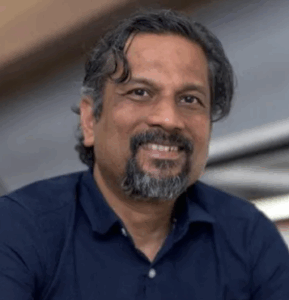
The latest attention around Vembu comes from the debate over Starlink’s entry into India.
Starlink is a satellite internet service operated by SpaceX, the aerospace company led by Elon Musk.
Instead of relying entirely on traditional mobile towers and underground cables, Starlink uses satellites in low Earth orbit to provide internet connectivity. This approach can be useful in remote regions where conventional broadband infrastructure is expensive or difficult to build.
India represents a potentially important market for satellite internet because the country has a large population and many rural and geographically challenging areas. However, launching such a service requires regulatory approvals and compliance with government requirements.
In October 2026, Musk publicly criticised the difficulties facing Starlink’s entry into India. His comments brought renewed attention to the competition between satellite internet providers and established telecom companies.
Vembu responded by defending India’s existing digital economy. He highlighted the country’s relatively affordable mobile data and credited the expansion of low-cost connectivity, particularly through Reliance Jio, with changing how Indians access the internet.
His argument was not simply that Starlink should stay out of India. Rather, he questioned the suggestion that the Indian market was unfairly structured against foreign companies and emphasised the value of domestic competition.
The issue became even more significant when Vembu commented on a separate report claiming that the United States might consider restricting Starlink access in Ukraine. He argued that the possibility demonstrated the risks of depending on technology controlled by foreign companies.
Importantly, that report was not confirmed as an active US plan. The distinction matters because Vembu’s comments reflected a concern about potential dependence on foreign infrastructure rather than proof that Starlink access in Ukraine was about to be cut off.
The exchange has therefore placed Vembu at the centre of a wider discussion about how India should balance international technology partnerships with its own strategic interests.
Also Read: Eagles Star Lane Johnson Bio: NFL Career and Achievements
Why Does Sridhar Vembu Disagree With Elon Musk?
The disagreement between Vembu and Musk centres on the relationship between foreign technology companies, Indian regulation and competition in the internet market.3
1. The Starlink licensing dispute
Starlink aims to provide internet access through a network of satellites. Its technology could help connect places where conventional broadband services are limited.
However, satellite communications operate within a regulated environment. Providers must meet the relevant licensing, spectrum and security requirements before launching commercial services.
Musk has publicly questioned the obstacles facing Starlink in India. He has suggested that domestic business interests are contributing to delays in the company’s entry.
The Indian government has maintained that satellite internet applicants must comply with applicable rules and security checks.
Government representatives have also rejected suggestions that the process is simply designed to favour one domestic company.
This is the background to Vembu’s response. His position is that India’s existing technology market should not be dismissed as uncompetitive simply because a foreign provider faces regulatory requirements.
2. India’s affordable mobile data
Vembu has highlighted the affordability of mobile internet in India. In his October 2026 comments, he argued that Indian consumers benefit from low data prices and pointed to Reliance Jio’s role in expanding affordable connectivity.
He also referred to India’s broader digital infrastructure as an example of how competition and domestic innovation can benefit consumers. The argument is relevant because satellite internet does not automatically replace conventional mobile broadband. The two technologies serve different needs.
For many urban and suburban users, mobile data and fibre broadband may already provide affordable and reliable connectivity.
Satellite internet may be more attractive in remote areas, at isolated worksites or in places where traditional networks cannot easily reach.
Vembu’s point is that a new foreign service should be assessed in the context of India’s existing market rather than assumed to be inherently superior.
3. The importance of technological independence
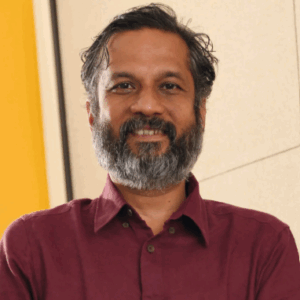
Vembu’s concerns extend beyond prices and competition. Modern societies increasingly depend on digital systems for communication, business operations, public services and emergency response.
If an essential service is controlled by a company based in another country, its availability can potentially be affected by decisions made outside the country it serves. This does not mean that every foreign technology provider is unreliable.
International partnerships can bring investment, innovation and access to advanced infrastructure. However, Vembu believes that India should develop its own technological capabilities so that it is not overly dependent on external providers.
His reaction to the unconfirmed Ukraine report illustrated this concern. He argued that India should build its own capabilities rather than assume foreign technology will always remain available under every political circumstance.
This principle is closely related to the broader idea of technological self-reliance. It encourages domestic research, locally developed products and the ability to maintain critical services even when international relationships become strained.
4. Competition versus regulation
The debate also highlights a difficult question: how can governments encourage competition while protecting national security?
A market with multiple internet providers can give consumers more choice and potentially lower prices. New entrants may also bring useful technology and improve service in underserved regions.
At the same time, satellite communications raise questions involving spectrum management, network security and lawful regulatory oversight. A fair assessment needs to consider both sides.
Excessive restrictions can limit competition, while inadequate oversight can create risks for critical communications infrastructure. Vembu’s public comments defend India’s right to establish its own rules.
Musk’s criticism reflects the perspective of a company seeking access to a major new market. The eventual outcome will depend on regulation, commercial decisions and the ability of providers to satisfy India’s requirements.
Sridhar Vembu’s Personal Life and Philosophy
Although Vembu is a prominent technology entrepreneur, he has generally maintained a relatively low public profile compared with celebrity business leaders. His public image is closely associated with engineering, education, rural development and long-term business building.
He has also attracted attention for his decision to spend time in rural Tamil Nadu rather than remain based entirely in the major technology centres of the United States.
His connection to rural India
One of Vembu’s notable initiatives is Zoho Schools, an educational programme designed to train young people in software development and other professional skills.
The initiative offers an alternative pathway into the technology industry for students who may not follow the conventional university route. It reflects his belief that employers should recognise practical ability and potential rather than rely exclusively on formal academic qualifications.
Zoho has also established operations outside major metropolitan areas. These efforts have helped demonstrate that technology jobs and product development can be located in smaller communities when businesses invest in training and infrastructure.
For Vembu, rural development is connected to a larger economic argument. If skilled employment is available outside major cities, more people can pursue professional careers without necessarily moving away from their home communities.
His approach to wealth and business
Vembu is frequently described as a billionaire because of his ownership interests in Zoho and its business success. However, his approach to entrepreneurship has often emphasised independence over public recognition.
His preference for avoiding external investment has helped shape Zoho’s identity. Rather than making the company dependent on investors seeking a rapid exit, the business has generally focused on revenue, product development and sustainable growth.
This does not mean that every decision in such a business model is easy. Maintaining independence requires financial discipline and an ability to compete against larger companies with substantial resources.
Nevertheless, Zoho’s development has made Vembu an example of a different route to building a global technology business.
His public image and controversies
Vembu’s public statements have occasionally generated debate, particularly when they involve politics, technology policy or India’s economic direction. His support for domestic technology development has made him a visible participant in discussions about national self-reliance.
The Starlink dispute is a recent example of how his business philosophy can intersect with public policy. His views should be understood as those of a technology entrepreneur participating in a wider debate, rather than as an official statement of government policy.
What Could the Starlink Controversy Mean for India?
The disagreement involving Vembu and Musk has implications beyond the public exchanges on social media.
More choices for internet users
Satellite internet could improve connectivity for people living in remote villages, mountainous regions and other locations where conventional broadband is difficult to provide.
If providers can operate commercially and offer suitable pricing, their services could give consumers additional options.
Businesses operating far from major cities may also benefit from more reliable connections. However, satellite internet must compete on affordability as well as technical capability.
Equipment costs, subscription fees and service availability will influence whether it can attract a broad customer base.
Greater investment in domestic technology
Vembu’s comments also underline the potential value of developing Indian alternatives.
Domestic investment in telecommunications, satellite systems, semiconductor design and software can build technical expertise and reduce reliance on overseas suppliers.
It can also create jobs and strengthen the country’s ability to develop products suited to local needs. At the same time, technological independence does not require rejecting every international partnership.
India can encourage domestic innovation while allowing foreign companies to compete under transparent and consistent rules.
A continuing debate over security
Satellite networks are part of increasingly important communications infrastructure. Their regulation involves more than consumer pricing.
Governments must consider security, spectrum use, operational reliability and compliance with national laws.
Companies entering a market must also understand that approval processes can be necessary even when their technology is commercially attractive.
The challenge is to establish clear and fair requirements that protect the public interest without unnecessarily preventing innovation.
For now, the disagreement between Vembu and Musk illustrates the competing priorities involved in building India’s digital future.
View this post on Instagram
FAQ’s
1. Who is Sridhar Vembu?
Sridhar Vembu is an Indian entrepreneur and the co-founder of Zoho Corporation, a global software company. He is also known for promoting technological self-reliance, rural education and an independent approach to business growth.
2. Why is Sridhar Vembu trending in October 2026?
Vembu has attracted attention for responding to Elon Musk’s comments about Starlink’s entry into India. He defended India’s technology market, highlighted affordable mobile data and raised concerns about depending too heavily on foreign technology providers.
3. Why did Sridhar Vembu criticise Elon Musk?
Vembu challenged the arguments surrounding Starlink’s difficulties in entering India and defended the country’s existing digital economy. His broader concern is that India should develop its own technological capabilities instead of relying excessively on infrastructure controlled by foreign companies.
4. What is Starlink?
Starlink is a satellite internet service operated by SpaceX. It uses satellites in low Earth orbit to deliver internet connectivity, including in places where traditional broadband networks may be difficult to deploy.
5. Is Starlink the same as Reliance Jio?
No. Starlink is operated by SpaceX and uses satellite technology. Reliance Jio is an Indian telecommunications business best known for its mobile network and broadband services. Reliance has also pursued satellite connectivity initiatives.
Conclusion
Sridhar Vembu’s latest public disagreement with Elon Musk has brought attention to questions that are central to India’s technology future.
The debate involves Starlink’s efforts to enter the Indian market, the affordability of internet services and the balance between international competition and national technological independence.
What is already clear is that the debate has created an opportunity to examine how the country wants its digital economy to develop.
For readers searching for Sridhar Vembu, the central story is therefore larger than a disagreement between two wealthy technology leaders.
It is about the future of internet access, the role of Indian innovation and the importance of making technology affordable, reliable and strategically sustainable.
Also Read: The Spanish Rapper Arkano Bio: His Life and Music Career