

Indian wrestling has produced several world-class athletes who have won medals at the Olympics, World Championships and Asian Games. However, turning individual talent into consistent success at the highest level remains a major challenge
Georgian wrestling coach Bentinidis Shako believes India has the physical ability to compete with the best but needs to improve its technical skills, tactical understanding and winning mentality.
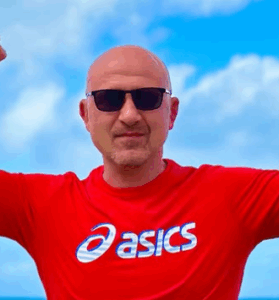
Shako, whose full name is Emzarios Bentinidis, returned to India in 2026 to take charge of the men’s freestyle wrestling team.
He believes that better technical training, stronger mental preparation and regular exposure to elite foreign opponents could help India achieve more success.
So, what does India’s wrestling coach think the team is missing? Shako’s answer centres on developing a champion’s mindset while improving technique, discipline and the quality of training.
Also Read: The Spanish Rapper Arkano Bio: His Life and Music Career
Table of Contents
Who Is Bentinidis Shako?
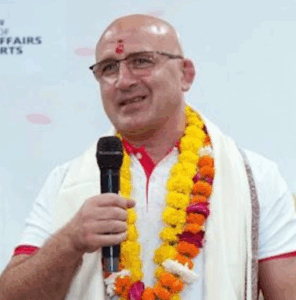
Bentinidis Shako is a Georgian wrestling coach and former international wrestler who has worked with some of India’s leading freestyle wrestlers.1
He became widely known among Indian sports fans through his association with Bajrang Punia, whom he coached before the Tokyo Olympics.
Shako has competed at the international level himself. His experience as a wrestler has helped shape his coaching philosophy, which places considerable emphasis on technique, timing, defence and the ability to make decisions under pressure.
He believes that strength and stamina are important but cannot guarantee victory against a technically skilled opponent. A wrestler must also understand when to attack, how to defend and how to respond when a match becomes difficult.
His work with Bajrang brought him recognition in India. The coach helped the wrestler refine his approach to competition and prepare for major international events.
Their partnership ended in 2021 but Shako remained a respected figure in Indian wrestling. In 2026, he returned to the country in a larger role as coach of the men’s freestyle national team.
The appointment gave him the opportunity to work with a wider group of wrestlers rather than concentrating on one athlete.
His current challenge is to help Indian wrestlers convert their ability into consistent results against the world’s best competitors.
I am very proud that my name was mentioned in the most popular show today and with the most popular presenter @SrBachchan https://t.co/O5vP8AymXM
— Shako Bentinidis (@Bentinidis) January 6, 2021
Early Childhood and Background
Shako Bentinidis was born in Tbilisi, Georgia, on August 16, 1975, according to international wrestling records. His career developed in a country with a strong wrestling tradition.
Georgia has produced many accomplished wrestlers who have competed successfully at European, world and Olympic events.
His competitive record offers a clearer picture of his early sporting journey. He began competing internationally as a young wrestler and represented Georgia before later competing for Greece.
His career included appearances at major European and world competitions. Wrestling requires a combination of physical strength, balance, speed, patience and tactical awareness.
Developing these qualities takes years of training. Shako’s long competitive career gave him firsthand experience of the demands placed on athletes at the international level.
That experience later became an important part of his work as a coach. Instead of focusing only on physical conditioning, he came to emphasise the importance of mastering techniques and understanding the tactical side of a match.
His own journey also gave him an understanding of the psychological pressure that wrestlers face when they compete against experienced international opponents.
Stats Table
| Category | Details |
|---|---|
| Full name | Emzarios Bentinidis |
| Commonly known as | Shako Bentinidis |
| Date of birth | August 16, 1975 |
| Birthplace | Tbilisi, Georgia |
| Nationality and sporting representation | Georgian-born; represented Georgia and Greece during his wrestling career |
| Profession | Wrestling coach and former international wrestler |
| Main coaching association in India | Bajrang Punia |
| Coaching speciality | Freestyle wrestling |
| Major coaching achievement | Helped Bajrang Punia win an Olympic bronze medal |
| Olympic coaching milestone | Tokyo 2020 Olympics, held in 2021 |
| Current coaching role | Men’s freestyle wrestling coach for India |
| Coaching priorities | Technique, tactics, discipline, mindset and international exposure |
Shako’s Career as an International Wrestler
Before becoming known as a coach, Bentinidis competed as a wrestler at the highest level.2
His competitive history includes participation in European Championships, World Championships and Olympic Games.
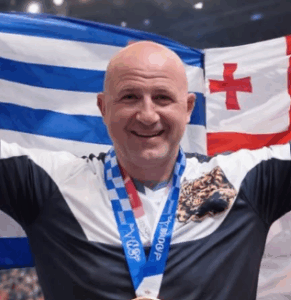
He represented Georgia earlier in his career and later competed for Greece. His Olympic appearances included the 2000 Sydney Games for Georgia and the 2004 Athens and 2008 Beijing Games for Greece.
His participation in international competitions gave him experience against wrestlers with different styles and strengths. Such experience can be valuable for a coach because it helps explain why the same strategy does not work against every opponent.
For example, one opponent may rely on explosive attacks, while another may be skilled at counterattacking. A wrestler who understands these differences can adjust tactics instead of following the same plan throughout a match.
Shako’s coaching methods reflect this practical understanding. He believes wrestlers should learn to recognise opportunities, choose the right moment to attack and remain composed when an opponent gains an advantage.
His transition from athlete to coach allowed him to apply those lessons to the next generation of wrestlers.
How Shako Helped Bajrang Punia Become an Olympic Medallist
One of the most important chapters in Shako’s career is his partnership with Bajrang Punia. The Indian wrestler became one of the country’s leading freestyle competitors and won several major international medals during his career.
Shako worked with Bajrang for several years and helped him prepare for elite competition. Their partnership was particularly significant in the lead-up to the Tokyo Olympics, which took place in 2021 after being postponed because of the COVID-19 pandemic.
Bajrang won bronze in the men’s 65kg freestyle category at the Tokyo Games. The achievement strengthened Shako’s reputation as a coach who could help Indian wrestlers compete successfully on the Olympic stage.
Their training focused on more than endurance. Shako worked on Bajrang’s technical skills, defensive ability, attack timing and concentration.
He believed that an athlete needed to understand how to use physical strength effectively rather than depending on stamina alone. This approach also involved repeating techniques until they became instinctive.
In wrestling, a small delay or a poorly timed movement can allow an opponent to score. Repeated practice helps an athlete react quickly without wasting energy.
Shako’s work with Bajrang became an example of how technical development can improve a wrestler’s performance. It also helped explain why he believes similar methods could benefit other Indian wrestlers.
Why Did Shako Return to Coach India’s Wrestling Team?
Shako returned to India in 2026 after spending time away from the national wrestling setup. His appointment as men’s freestyle coach gave him a broader responsibility for developing Indian talent.
India has a strong wrestling culture, with traditional training centres and a long history of producing international competitors.
Yet Shako believes the country needs to improve certain aspects of its preparation if it wants to challenge the strongest wrestling nations consistently. His role is not limited to helping athletes become fitter.
He also wants to improve the technical standard of training and expose wrestlers to opponents who can test them at the highest level. In his view, wrestlers need to experience different styles and learn how to adapt under pressure.
Training repeatedly with familiar opponents can help build skills but it may not fully prepare an athlete for the variety of challenges faced at a World Championship or Olympic Games.
Shako has therefore advocated international training camps and regular sessions with high-level wrestlers from countries such as Georgia, Russia and the United States.
His return also reflects his confidence in Indian wrestling. He believes the country has enough talent to achieve more, provided athletes receive the right preparation and develop the mindset needed to succeed internationally.
Also Read: Cal Ritchie Bio: What to Know About the Young NHL Star
What Does India’s Wrestling Coach Think the Team Is Missing?
Shako’s main message is that Indian wrestlers have considerable physical ability but need to become more complete competitors. His assessment can be divided into five key areas.3
1. A stronger winning mentality
Shako believes confidence is essential when wrestlers face opponents with impressive international records.
An athlete may enter a match against a world champion already expecting a difficult contest. That hesitation can affect decision-making and prevent the wrestler from using their strengths effectively.
Shako wants Indian wrestlers to approach such bouts with the belief that they can win. He often uses the idea of a gladiator to describe the competitive character he wants to develop.
This does not mean that athletes should ignore their opponents or take unnecessary risks. It means they should enter the contest prepared to compete without being intimidated by an opponent’s reputation.
2. Better technique and tactical awareness
Shako has repeatedly stressed that physical strength alone is not enough. Wrestlers need to know how to use their strength through correct technique.
Technical skills include offensive attacks, defensive movements, counters and the ability to control an opponent’s position. Tactical awareness involves deciding when to use those skills and how to respond to changes during a match.
Shako has argued for more focused mat training rather than relying too heavily on general gym work and conditioning exercises.
Strength training remains useful, but it must support wrestling performance. A powerful athlete who cannot execute an attack at the right moment may struggle against a technically superior opponent.
3. More international training exposure
Another concern is the quality of training partners available to Indian wrestlers.
Shako believes athletes benefit from regular sessions with international competitors who have experience at the highest level. Such exposure helps wrestlers understand different styles and test their techniques against unfamiliar opponents.
Training abroad can also reduce the psychological barrier that athletes sometimes feel when competing against wrestlers from established wrestling nations.
Repeated exposure helps make international opponents more familiar. Instead of seeing them as competitors who are difficult to beat, Indian wrestlers can learn from previous sessions and develop practical strategies for future matches.
4. Greater discipline
Shako also believes that discipline is essential for long-term improvement. Athletes must arrive prepared, follow their training schedules and take responsibility for their development.
Discipline does not mean training through every injury or ignoring recovery. A professional programme must also include rest, medical support and appropriate workload management.
The objective is consistency. Small improvements made during daily training can become significant over months and years.
5. Individual training plans
Shako does not believe every wrestler should follow exactly the same programme. Athletes have different strengths, weaknesses, physical needs and competitive styles.
One wrestler may need to improve defence, while another may require more effective attacks or stronger ground wrestling. A single training plan may not address these different requirements.
Individual development plans allow coaches to identify specific weaknesses and monitor progress. They can also help athletes prepare for important tournaments without creating unnecessary training loads.
These five areas form the core of Shako’s vision for Indian freestyle wrestling.
How Did India’s Wrestlers Perform at the 2026 Asian Games?
India’s results at the 2026 Asian Games provided an important reference point for Shako’s assessment of the team’s potential.
According to The Indian Express, India won six wrestling medals at the Games: two gold, two silver and two bronze. The report described the result as India’s best Asian Games wrestling performance since 1962.
Among the men’s freestyle wrestlers, Aman Sehrawat won gold in the 57kg category and Sujeet Kalkal won gold at 65kg. Deepak Punia earned bronze at 97kg.
Sagar Jaglan also produced a notable performance by defeating reigning Olympic champion Razambek Jamalov in a repechage bout. However, he missed out on a bronze medal.
Rajal Ruhal, competing at 125kg, exited in the first round. Shako was pleased with the team’s medal return but he also saw room for improvement.
He praised the medal winners while pointing out that wrestlers could become more effective through better preparation and mental development. The results show why his approach is not simply about identifying weaknesses.
India already has athletes capable of defeating leading international opponents. The next challenge is to make such performances more consistent.
For Shako, success at one tournament should be a foundation for future progress rather than the final goal.
What Is Shako’s Vision for the Los Angeles 2028 Olympics?
The Los Angeles 2028 Olympics represent a major long-term target for Indian wrestling. Shako’s coaching approach is intended to help athletes build towards that competition through steady technical and tactical development.
The process requires more than short bursts of intensive training before a major event. Wrestlers need a structured programme that includes skill development, international competition, recovery and preparation tailored to their individual needs.
Shako has highlighted the importance of international camps and high-level training partners. He also wants athletes to develop confidence through experience rather than relying only on motivation before a tournament.
The coach must balance ambition with injury prevention. Wrestlers need to train hard but excessive workloads can disrupt preparation and affect long-term performance.
A successful programme will therefore depend on cooperation between athletes, coaches, medical staff and sports administrators. Consistency across the training cycle will be just as important as the work done in the final weeks before a competition.
India has already demonstrated that its wrestlers can win Olympic medals. Shako’s challenge is to help more athletes reach that level and give them the tools to compete consistently against the world’s best.
View this post on Instagram
FAQ’s
1. Who is Bentinidis Shako?
Bentinidis Shako, whose full name is Emzarios Bentinidis, is a Georgian wrestling coach and former international wrestler. He is known in India for coaching Bajrang Punia and for leading the men’s freestyle wrestling team in 2026.
2. What is Shako Bentinidis famous for?
He is best known for coaching Bajrang Punia, who won bronze in the men’s 65kg freestyle category at the Tokyo 2020 Olympics, held in 2021. Shako is also known for his emphasis on technique, discipline and mental preparation.
3. What does Shako think Indian wrestlers are missing?
Shako believes Indian wrestlers need a stronger winning mentality, better technical and tactical skills, more exposure to elite international training partners and greater discipline. He also supports individual training plans for different athletes.
4. Why does Shako emphasise mindset in wrestling?
He believes wrestlers should not feel intimidated by opponents with major titles or strong international reputations. Confidence helps athletes use their skills effectively, make better decisions and remain competitive under pressure.
5. Does Shako believe Indian wrestlers lack physical strength?
No. His assessment is that Indian wrestlers already have strong physical attributes, including stamina and power. He believes those qualities must be supported by better technique, tactical understanding and mental preparation.
Conclusion
Bentinidis Shako’s assessment of Indian wrestling is both a challenge and an opportunity.
He believes the country’s wrestlers have the physical qualities needed to compete internationally but he wants them to become more technically skilled, tactically aware and mentally confident.
With the Los Angeles 2028 Olympics on the horizon, the real test will be whether these principles can translate into performances against the world’s best.
For Shako, the goal is clear: Indian wrestlers should step onto the mat believing they belong at the highest level and have the skills to win.
Also Read: Katie Zacharia Bio: Meet the New White House Press Secretary