
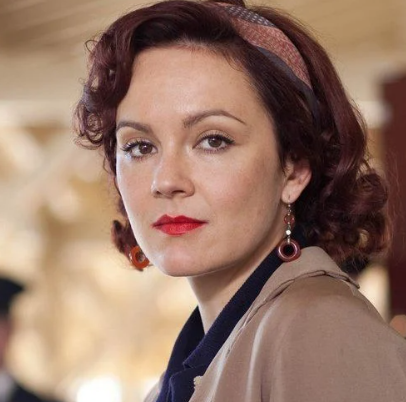
Rachael Stirling has attracted widespread attention after sharing an unusual and deeply personal detail about her relationship with her late mother, legendary British actress Diana Rigg
Stirling revealed that she sometimes consumes a tiny amount of her mother’s ashes before stepping on stage.
Although the revelation surprised many people, the actress described it as a meaningful way to feel close to her mother during an important moment in her professional life.
The story gained renewed attention in 2026 as Stirling promoted her book All About My Mother.
Her recent comments have drawn attention to an intimate side of grief that people rarely discuss openly.
For Stirling, the ashes ritual is not intended to shock anyone.
She has explained it as a personal act that helps her feel accompanied by her mother when she faces the stage.
So who is Rachael Stirling? What was her childhood like? How did she become an actress? And why did she begin consuming a small amount of Diana Rigg’s ashes before performances?
Here is a closer look at her life, career and the family story behind the headlines.
Also Read: Eagles Star Lane Johnson Bio: NFL Career and Achievements
Table of Contents
Who Is Rachael Stirling?
Rachael Stirling is a British actress known for her work in theatre, film and television.1
She was born on May 30, 1977, in London, England. Her full name is Rachael Atlanta Stirling.
She is the daughter of Diana Rigg and theatre producer Archibald Hugh Stirling. Growing up with a mother who was already an established performer meant that acting was never far from her world.
However, Stirling’s decision to pursue the same profession was not initially welcomed by her mother. Diana Rigg had built a respected career through determination and a strong commitment to her craft.
She understood the difficulties of working in the entertainment industry and was reportedly concerned about her daughter’s decision to become an actress. Stirling has spoken openly about this tension and how their relationship changed over time.
Despite the challenges, she went on to establish herself in her own right. Her work has included period dramas, contemporary television series and acclaimed theatre productions.
She has also received nominations for the Laurence Olivier Awards, one of the leading honours in British theatre.
In recent years, Stirling has also taken on the role of chronicler of her mother’s life. Her book All About My Mother combines personal memories with research into Diana Rigg’s professional achievements and private experiences.
It offers readers a perspective that only a daughter could provide, while also acknowledging the complicated parts of their relationship. Her story is therefore about more than being the child of a famous actress.
It is about finding her own professional path, navigating a complex family bond and learning how to carry grief while continuing to work.
Hoped contemplative woman staring at the sea would be my vibe today but fear it’s more electrified chihuahua.
— Rachel Stirling (@Stirlingwriter) January 11, 2025
Early Childhood
Rachael Stirling grew up in a family connected to the world of theatre and entertainment.
Her mother, Diana Rigg, became famous through her work in television, film and on stage. Her father, Archibald Stirling, worked as a theatre producer.
This background gave Rachael an early view of the performing arts. She grew up around a mother whose career demanded long working hours, discipline and a strong personality.
Yet life at home was not simply an extension of the glamorous world audiences saw on screen. In her later writing, Stirling has described a close relationship with her mother that included affection, humour and intense emotional moments.
Like many parent-child relationships, theirs was not always easy. Diana Rigg could be fiercely honest and had strong opinions about her daughter’s choices.
One important source of tension was Rachael’s decision to become an actress. Stirling has recalled that her mother did not want to provide an easy path into the profession.
Rigg had experienced the demands of the industry herself and did not automatically encourage her daughter to follow her example. That disagreement did not mean the two lacked love for each other.
Instead, it became part of a relationship that changed as Rachael grew older. Their bond included periods of conflict as well as moments of deep connection.
Stirling attended Wycombe Abbey, a boarding school in Buckinghamshire. She later studied art history at the University of Edinburgh, where she also became involved in university theatre.
Her education gave her interests beyond acting, while her experience in student theatre helped her explore performance more seriously. Her childhood was also shaped by her mother’s celebrity.
Diana Rigg was widely admired, particularly for her role as Emma Peel in The Avengers. For Rachael, however, the woman audiences admired was also her mother.
That difference between a public figure and a private person became an important theme in her later reflections. In All About My Mother, Stirling looks back at her mother’s personality and the experiences that shaped her.
The book does not present their family life as perfect. Instead, it explores how two strong personalities could clash while remaining deeply attached to one another.
Stats Table
| Category | Details |
|---|---|
| Full name | Rachael Atlanta Stirling |
| Date of birth | May 30, 1977 |
| Age | 49 as of October 2026 |
| Birthplace | London, England |
| Nationality | British |
| Profession | Actress |
| Education | Wycombe Abbey; University of Edinburgh |
| Field of study | Art history |
| Mother | Dame Diana Rigg |
| Father | Archibald Hugh Stirling |
| Spouse | Guy Garvey |
| Marriage year | 2016 |
| Children | One son |
| Years active | Late 1990s to present |
| Notable television work | Tipping the Velvet, The Bletchley Circle, Detectorists |
| Notable film work | The Young Victoria, Snow White and the Huntsman |
| Theatre recognition | Two Laurence Olivier Award nominations |
| Recent book | All About My Mother |
The Decision to Become an Actress
Stirling’s education included her time at Wycombe Abbey and the University of Edinburgh, where she studied art history. Her academic interests gave her a foundation outside the entertainment industry.2
However, acting eventually became her professional focus. Her interest in the stage developed through practical experience and exposure to performance.
During her time at university, she took part in theatre activities and gained experience in front of audiences. Her mother was not immediately enthusiastic about the decision.
In interviews, Stirling has recalled that Diana Rigg made it clear she would not simply use her influence to launch her daughter’s acting career. That attitude meant Stirling had to establish herself through her own work.
Having a famous parent can create opportunities but it can also lead to expectations and comparisons. Audiences may judge a performer against the reputation of a parent before evaluating the work itself.
Stirling gradually built a career across different forms of acting. She appeared in films and television productions while also developing a strong presence on stage.
Theatre became an important part of her professional identity. Her career has included challenging roles that require emotional range and close attention to character.
Rather than being known only for one genre, she has moved between drama, comedy and period productions. Her experience also reflects the demands of a profession in which actors often face uncertainty.
Roles come and go, and success in one production does not guarantee the next opportunity. Stirling has continued to work across different projects while developing a reputation of her own.
Rachael Stirling’s Acting Career
Early Film Work
Stirling began appearing in screen productions in the late 1990s. One of her early film appearances was in the British comedy Still Crazy.
She later appeared in several other films, including The Young Victoria and Snow White and the Huntsman. These roles helped introduce her to audiences beyond the theatre.
Period dramas and fantasy films also allowed her to work in productions with different styles and storytelling approaches. In The Young Victoria, she appeared in a historical drama about the early life of Queen Victoria.
In Snow White and the Huntsman, she took part in a fantasy film that reimagined a familiar fairy tale. Her screen work has been part of a broader career rather than the sole focus of her professional life.
Stirling has continued to return to theatre, where actors must sustain a performance in front of a live audience.
Breakthrough With Tipping the Velvet
One of Stirling’s best-known television roles came in the BBC adaptation of Tipping the Velvet, based on the novel by Sarah Waters. The period drama attracted attention for its story of identity, relationships and life in the Victorian era.
Stirling’s involvement helped establish her as a performer capable of handling complex dramatic material. The production also showed her ability to work in stories that explore social expectations and personal relationships.
It remains one of the projects frequently associated with her career.
Television Success With The Bletchley Circle
Stirling later appeared in The Bletchley Circle, a British television drama about women who use their wartime codebreaking skills to solve crimes after the Second World War. The series combined mystery with historical drama.
It also placed women at the centre of the story, showing how their intelligence and experience could be overlooked by society.
Stirling’s work on the series helped strengthen her television profile. The show developed an audience interested in character-driven mysteries and the experiences of women whose abilities were not fully recognised.

Detectorists and Other Projects
Stirling also appeared in the British comedy series Detectorists, created by Mackenzie Crook. The show became known for its gentle humour, quiet storytelling and focus on ordinary people pursuing an unusual hobby.
Her involvement demonstrated her versatility. She has moved between intense drama, historical productions and understated comedy rather than limiting herself to one kind of role.
Her theatre career has also remained important. Stirling has been nominated twice for a Laurence Olivier Award for her stage work.
These nominations reflect recognition within British theatre, where live performance requires a different set of skills from work on film or television. Across her career, Stirling has developed a reputation as a performer who can adapt to different characters and styles.
Her work continues to be considered separately from her mother’s legacy, even though the two remain closely connected in public discussion.
Rachael Stirling’s Personal Life
Rachael Stirling is married to Guy Garvey, the lead singer of Elbow. The couple married on June 3, 2016 and have one son.
Stirling and Garvey have occasionally spoken about their relationship in interviews. Stirling has described taking a direct approach to important life decisions.
Their relationship has also been shaped by the demands of creative careers and family responsibilities. Her family life became particularly important during Diana Rigg’s final years.
Stirling has discussed the experience of caring for her mother and the emotional difficulty of losing someone who had been central to her life.
Diana Rigg died in September 2020 at the age of 82 after being diagnosed with cancer. Her death occurred during the COVID-19 pandemic, when public gatherings and traditional ceremonies were affected by restrictions.
For Stirling, grief did not end with the funeral or the passing of time. Her later writing shows how memories of her mother continued to influence her work, her thoughts and her sense of identity.
The book All About My Mother grew out of that continuing connection. It allowed Stirling to reflect on the person behind the public image and to preserve stories that might otherwise have remained private.
Also Read: Joe Flacco Bio: What Happened to the NFL Quarterback?
The Story Behind Diana Rigg’s Ashes
The most unusual part of Stirling’s recent story concerns what she does with a small amount of her late mother’s ashes before going on stage.3
In her account published in The Guardian in October 2026, Stirling explained that the ritual began on the opening night of a play after her mother’s death.
She was preparing to perform and felt emotional about facing the stage without Diana Rigg in the audience. The first night of a production can be stressful for any actor.
It is the moment when weeks or months of rehearsal become a live performance in front of an audience and critics. Stirling had a small container holding some of her mother’s ashes.
While handling it, she accidentally spilled a few grains. A stage call came over the public-address system, signalling that she needed to prepare to enter.
In the rush of the moment, she collected some of the spilled grains with her finger and placed them in her mouth. She described the act as instinctive and said it felt right to her.
Rather than seeing the moment as frightening or disturbing, Stirling experienced it as a source of comfort.
She felt that she was taking her mother with her onto the stage. The experience became a personal ritual before opening nights and certain performances.
Stirling has explained that it helps her feel connected to her mother’s theatrical spirit and gives her confidence before stepping in front of an audience.
The revelation surprised many readers because the consumption of cremated remains is unusual in contemporary British public life. Some reactions focused on the shock value of the story, while others understood it as a personal response to grief.
Stirling has pushed back against sensational descriptions of her actions. She explained that she did not expect to be portrayed as a cannibal and felt that the headlines had made the ritual sound more extreme than the small act she described.
It is important to understand that this is Stirling’s personal account of mourning. She has not suggested that everyone should respond to loss in the same way.
Her story instead shows how private rituals can take forms that other people may find difficult to understand.
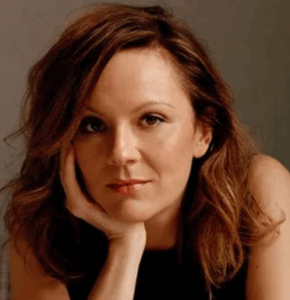
Why Did Rachael Stirling Share the Story?
Stirling’s decision to discuss the ritual publicly is connected to her book, All About My Mother. The memoir examines her relationship with Diana Rigg and offers a more intimate portrait of the actress than a conventional career biography might provide.
Stirling has said that her mother did not want a biography during her lifetime. She worried that written accounts might fail to capture her personality.
The book therefore draws on family memories, letters, interviews and material from Rigg’s long career. The ashes story fits into this wider effort to show the relationship as it really was.
Stirling does not hide the unusual or uncomfortable parts of her experience. She presents them alongside the humour, affection and difficult moments that shaped their lives.
By speaking about the ritual, she has also opened a broader conversation about grief. People often feel pressure to mourn in ways that others consider acceptable.
Yet personal responses to loss can be deeply individual. For Stirling, the ritual gives her a feeling of closeness to her mother at a time when she must perform with confidence.
It is an act of remembrance rather than a statement intended to persuade others. The public reaction has ranged from surprise to sympathy.
Some readers have found the story difficult to understand, while others have recognised the desire to maintain a connection with someone who has died. Ultimately, Stirling’s explanation offers a reminder that grief is not always tidy or predictable.
A person may find comfort in a memory, an object, a song or a private ritual that would not have the same meaning for anyone else.

Rachael Stirling and Diana Rigg: A Complicated but Loving Bond
One of the most compelling parts of Stirling’s story is that she does not describe her mother as perfect. Diana Rigg was a celebrated performer with a formidable public image.
She could be witty, direct and demanding. As a parent, she could also be intensely affectionate and strongly involved in her daughter’s life.
Stirling’s writing explores the tension between those qualities. Their relationship included disagreements about acting, moments of frustration and periods when they had to work through difficult feelings.
The memoir also looks at the ways their relationship changed as they grew older. The mother who had once questioned her daughter’s career became someone whose experiences Stirling could examine with greater understanding.
This complexity makes the story more relatable than a simple account of celebrity admiration. Loving a parent does not mean agreeing with every decision they make.
Nor does grief erase the difficult parts of a relationship. Stirling’s tribute allows both truths to exist together. She can acknowledge the challenges of their bond while still describing her mother as a powerful source of inspiration.
The ashes ritual reflects that continuing relationship. It is a way for Stirling to carry a part of her mother’s memory into her professional life.
The gesture is unusual but the feeling behind it is familiar: the wish to keep someone close after they are gone.
View this post on Instagram
FAQ’s
1. Who is Rachael Stirling?
Rachael Stirling is a British actress known for theatre, film and television. She is the daughter of the late actress Diana Rigg and theatre producer Archibald Hugh Stirling. Her television credits include Tipping the Velvet, The Bletchley Circle and Detectorists.
2. Why has Rachael Stirling been in the news?
Stirling attracted attention after discussing her personal ritual of consuming a tiny amount of her late mother Diana Rigg’s ashes before going on stage. The story received renewed coverage in 2026 as she discussed her memoir, All About My Mother.
3. Who was Diana Rigg?
Diana Rigg was an acclaimed British actress known for playing Emma Peel in The Avengers, Olenna Tyrell in Game of Thrones and Tracy Bond in On Her Majesty’s Secret Service. Her career included major stage roles and numerous honours.
4. Why does Rachael Stirling consume her mother’s ashes?
Stirling has explained that the ritual began after she accidentally spilled a few grains of her mother’s ashes while preparing to perform. She found the act comforting and came to associate it with feeling close to her mother before going on stage.
5. Is the ashes ritual part of Rachael Stirling’s memoir?
Yes. Stirling discusses the experience in All About My Mother, a book about Diana Rigg’s life and the relationship they shared. The memoir combines personal memories with research into Rigg’s career and life.
Conclusion
Rachael Stirling’s story has captured attention because it brings together celebrity, family history and a highly personal response to grief.
The story is not simply about ashes. It is about memory, love and the personal ways people cope with losing someone important.
Stirling’s experience may not be familiar to everyone but her desire to carry her mother’s influence into her work is understandable.
By speaking openly about an experience that many people might keep private, she has encouraged a wider conversation about grief and remembrance.
Her story shows that there is no single way to process loss and that the meaning of a private ritual can be understood only by the person who finds comfort in it.
Also Read: Cal Ritchie Bio: What to Know About the Young NHL Star