

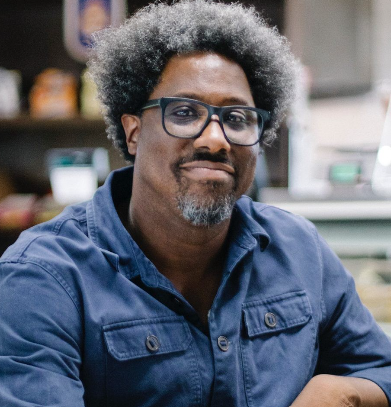
Bell’s journey into comedy developed gradually. He became interested in stand-up at a time when the traditional comedy club remained an important place for performers to develop their voices and find an audience
He began performing professionally in the early 2000s. Like many comedians, he had to learn how to turn personal observations into material that worked in front of a live audience.
His style was different from comedy built entirely around punchlines or celebrity impressions. Bell was interested in the social meaning behind everyday situations.
He explored how people communicate across cultural differences and how assumptions about race and identity shape ordinary interactions.
He also released comedy albums, including One Night Only in 2007 and Face Full of Flour in 2010. These projects helped him build a reputation in the stand-up world.
Bell later became a founding member of the comedy collective Laughter Against the Machine. The group brought together performers who used comedy to address political and social subjects.
These early experiences gave Bell the opportunity to refine his material and develop the confident style that would later become familiar to television audiences.

Also Read: Eagles Star Lane Johnson Bio: NFL Career and Achievements
Table of Contents
Totally Biased With W. Kamau Bell
A major step in Bell’s career came with Totally Biased with W. Kamau Bell.1
The show began as a late-night programme before moving to the FX and FXX television networks. It combined stand-up, interviews, comedy sketches and discussions about current affairs.
Bell used the programme to address topics that were not always central to mainstream late-night entertainment. Race, political identity and cultural stereotypes were regular subjects.
The show helped introduce his work to viewers who might never have attended one of his live performances.
It also demonstrated that Bell could do more than deliver a stand-up routine. He could host conversations, respond to breaking news and bring different voices into a discussion.
The series was relatively short-lived, but it played an important role in his professional development. It gave him experience in television production and established a foundation for his later documentary work.
The programme also helped define his public image as a comedian who was comfortable expressing political opinions rather than hiding them behind a supposedly neutral persona.
Thanks for spreading the word about the ACLU’s good work. Support them at https://t.co/ilDn0GzC4u!❤️
— W. Kamau Bell (@wkamaubell) August 14, 2026
United Shades of America: His Biggest Television Breakthrough
Bell reached a wider audience when he became the host and executive producer of United Shades of America on CNN.
The documentary series premiered in 2016 and explored different communities across the United States. Bell travelled to meet people whose experiences, beliefs and backgrounds were often missing from conventional television discussions.
The programme examined subjects including race relations, religious communities, political divisions and groups that are frequently misunderstood by the wider public.
Instead of relying only on studio interviews, Bell visited communities and spoke directly with the people who lived there. His role was to ask questions, listen to their experiences and help viewers understand perspectives they might not encounter in their everyday lives.
Comedy remained part of his approach, but the series was not simply a stand-up show. It required research, interviews and an ability to approach sensitive subjects with care.
United Shades of America earned major industry recognition, including multiple Emmy Awards. Bell hosted the programme for seven seasons, establishing himself as a respected television presenter as well as a comedian.
The series became one of the defining projects of his career.
It also demonstrated that humour could serve as a starting point for more serious conversations. Bell could make viewers laugh while encouraging them to consider the experiences of people outside their own communities.
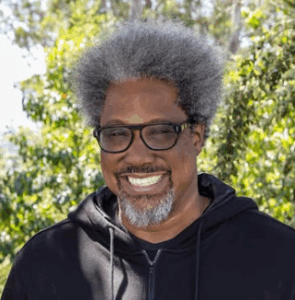
Documentary Work and the Conversation About Bill Cosby
Bell’s interest in social issues extended beyond United Shades of America.2
In 2022, he directed and produced We Need to Talk About Cosby, a Showtime documentary series examining the public legacy of comedian and actor Bill Cosby alongside the sexual assault allegations against him and the criminal case that led to his conviction.
The project explored the contrast between Cosby’s reputation as a pioneering Black entertainer and the accounts of women who accused him of sexual abuse.
It also examined the broader questions raised by the case. How should audiences remember an influential public figure when serious allegations and criminal proceedings change the way that person’s career is understood? What happens when admiration for a celebrity makes it harder for people to listen to those who say they were harmed?
The documentary received a Peabody Award.
The project illustrated Bell’s interest in examining the relationship between entertainment, power and public responsibility. It also showed how he could move from comedy into documentary filmmaking without abandoning his interest in difficult cultural questions.
In 2023, Bell directed and produced 1000% Me: Growing Up Mixed, an HBO documentary about the experiences of mixed-race children and families. The film further demonstrated his interest in identity and the ways children understand race and belonging.
Together, these projects helped establish Bell as a filmmaker who approaches social issues through personal stories and conversations rather than relying exclusively on commentary.
Books, Podcasts and Other Projects
Bell has also developed a career as an author and podcast host.
His memoir, The Awkward Thoughts of W. Kamau Bell, explores his experiences as a comedian, father and socially engaged public figure. The book’s full title reflects his willingness to use humour when describing his own identity.
He later co-authored Do the Work: An Antiracist Activity Book, which encourages readers to examine their assumptions and think more carefully about racism and social inequality.
Bell has also hosted and co-hosted several podcasts. These include Kamau Right Now!, Politically Re-Active and Denzel Washington Is The Greatest Actor of All Time Period.
The projects demonstrate his range as a communicator. He can work in long-form interviews, write for readers and develop arguments through humour and discussion.
His involvement in racial justice initiatives is another part of his public career. Bell has served as an ACLU artist ambassador for racial justice and has supported organisations working on education and other social issues.
These activities help explain why his criticism of Shane Gillis attracted attention. Bell has spent years building a public identity around comedy that examines the social consequences of language and stereotypes.
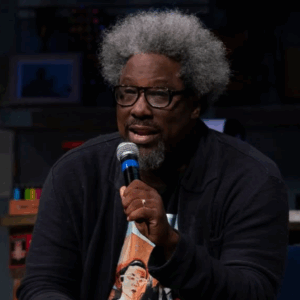
Why Did W. Kamau Bell Criticise Shane Gillis’s SNL Monologue?
Bell’s comments about Shane Gillis became a major entertainment story in October 2026.3
Gillis hosted Saturday Night Live on October 10. During his opening monologue, he joked about returning to the gym and expressed surprise at what women wear while exercising. He used a derogatory term to describe women in tight workout clothing.
The joke prompted criticism from viewers and entertainment figures, including former SNL cast members. Critics argued that the remarks were demeaning to women and particularly inappropriate given the wider conversation about sexual violence and victim-blaming.
Bell addressed the controversy on his podcast Who’s With Me?.
According to The Daily Beast in its October 14, 2026 article about Bell’s reaction, he argued that Gillis was performing for a particular audience rather than responding to the audience actually watching him.
Bell connected Gillis’s style to what he described as the “Rogan-sphere” of comedy. The term refers to the cultural circle associated with Joe Rogan and comedians whose humour often challenges progressive social attitudes.
Bell suggested that Gillis’s performance was aimed at people who already shared his outlook rather than the broader audience watching SNL.
His criticism was not simply that the joke offended people. He argued that the performance itself did not work particularly well as comedy because Gillis appeared to be playing to his friends rather than engaging with the room.
Bell also pointed to a pattern across Gillis’s three SNL monologues. In his view, the repeated negative reactions suggested a problem with how the comedian approached the show’s audience.
That distinction is important to understanding Bell’s position. His comments focused on both the content of the joke and the way Gillis delivered it.
The controversy also involved a wider question about the responsibilities of a television programme that invites comedians to perform provocative material. Critics asked why the show had approved the monologue, while others defended Gillis’s right to use boundary-pushing humour.
Bell’s response became part of that larger debate.
Also Read: Katie Zacharia Bio: Meet the New White House Press Secretary
What Is the Rogan-Sphere and Why Did Bell Mention It?
The term “Rogan-sphere” is used in discussions about comedians, podcasters and online personalities whose audiences overlap with Joe Rogan’s media platform and its surrounding culture.
Rogan’s podcast attracts guests from entertainment, sports, science and politics. It has also become an influential space for discussions about free speech, political correctness and cultural debates.
Some comedians associated with this wider scene favour provocative material that challenges progressive social norms. Their supporters often argue that comedy should be allowed to offend and that audiences should not expect performers to avoid controversial subjects.
Critics sometimes argue that this approach can become predictable when the humour repeatedly targets women or marginalised groups.
Bell’s criticism of Gillis centred on the idea that the comedian was trying to appeal to a particular cultural audience even when performing on a programme with a broader viewership.
In Bell’s interpretation, the problem was not merely that a joke was controversial. It was that Gillis seemed more interested in signalling to people who shared his outlook than in building a connection with the audience watching the show.
That is Bell’s assessment rather than an established fact about Gillis’s intentions. The controversy has prompted different interpretations of the performance, and Gillis’s supporters may view the material differently.
Still, Bell’s comments reveal a central theme in his own career: comedy depends on understanding an audience, and a joke’s impact can change according to where and how it is delivered.
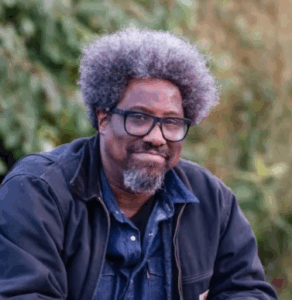
W. Kamau Bell’s Approach to Comedy
Bell’s style is rooted in social observation and political satire. He often uses humour to challenge assumptions that people might otherwise accept without question.
He is particularly interested in the way identity affects everyday life. His work frequently explores how race, class, gender and politics influence people’s experiences.
This approach differs from comedy that treats controversial subjects as a way to shock an audience without exploring their meaning. Bell often wants the audience to consider why a joke works, who it targets and what assumptions it relies on.
His documentary work has given him another way to approach those questions. By meeting people and listening to their stories, he can explore issues that would be difficult to explain through a stand-up routine alone.
That does not mean every viewer agrees with his opinions. Political comedy naturally attracts disagreement, particularly when performers discuss subjects connected to deeply held beliefs.
Bell’s importance lies in his willingness to make those disagreements part of his work. He does not avoid politics to appeal to everyone. Instead, he uses comedy as a way to examine the arguments that shape public life.
His reaction to Gillis follows the same pattern. Bell assessed the monologue through his understanding of audience engagement, cultural politics and the role of comedy in public conversation.
Personal Life and Family
Although Bell is outspoken about public issues, he generally keeps the focus of his work on comedy, culture and social questions rather than constant publicity about his private life.
He is married to Melissa Hudson Bell, a scholar and creative professional. The couple have three children.
Bell has occasionally discussed family life in his comedy and writing. His memoir’s title includes references to being a father and a “Mama’s Boy,” reflecting the personal experiences that helped shape his identity.
He has also spoken about how his background affects his perspective on race and belonging. However, his public work does not require audiences to know every detail of his private life.
Bell’s ability to combine personal experience with broader social commentary is one of the features that distinguishes his career. He often begins with an individual story and uses it to explore a larger issue.
Major Achievements and Recognition
Bell’s career includes several important milestones.
His work on United Shades of America brought him national recognition and helped establish him as a major documentary television host. The programme received multiple Emmy Awards during its run.
His Showtime series We Need to Talk About Cosby received a Peabody Award for its examination of Cosby’s public legacy and the allegations against him.
Bell has also earned recognition for his writing and comedy. His memoir introduced readers to the personal experiences behind his public persona, while Do the Work offered a practical approach to examining racism.
His documentary 1000% Me: Growing Up Mixed expanded his work into conversations about mixed-race identity and childhood.
These achievements show that Bell’s career is not defined by a single television appearance or one viral comment. He has built a body of work that spans live comedy, scripted television, documentary filmmaking, books and podcasts.
FAQ’s
1. Who is W. Kamau Bell?
W. Kamau Bell is an American stand-up comedian, television host, director, producer and author. He is best known for hosting CNN’s United Shades of America and the comedy series Totally Biased with W. Kamau Bell.
2. What is W. Kamau Bell’s real name?
His full name is Walter Kamau Bell. He is professionally known as W. Kamau Bell.
3. How old is W. Kamau Bell?
Bell was born on January 26, 1973. He is 53 years old in 2026.
4. Where was W. Kamau Bell born?
He was born in Palo Alto, California, in the United States.
5. What was W. Kamau Bell’s childhood like?
Bell grew up in several parts of the United States, including Boston and Chicago, and spent time in Alabama with his father. His experiences in different communities later became relevant to his interest in race and American culture.
Conclusion
W. Kamau Bell is much more than a comedian who comments on controversial entertainment stories. He is a stand-up performer, television host, filmmaker and author who has spent years using humour to examine race, identity and American culture.
His childhood across several cities exposed him to different communities, while his education and early comedy career helped him develop an individual voice.
Programmes such as Totally Biased with W. Kamau Bell and United Shades of America brought that voice to a wider audience.
Whether audiences agree with Bell or not, his career demonstrates that comedy can be more than entertainment. It can question assumptions, expose contradictions and encourage people to discuss subjects they might otherwise avoid.
For anyone asking where this outspoken comedian came from, the answer lies in a career built over many years.
Bell has combined stand-up with journalism-style conversations, documentary filmmaking and social commentary.
His reaction to Gillis is another example of the approach that has made him a distinctive voice in American comedy.
Also Read: Sahibzada Farhan Bio: Pakistan’s Rising Cricket Star