

What if a jar of honey could tell a story about more than bees and flowers? What if it could also represent community, social inclusion and a different way of thinking about work?
That is the idea behind Bybi, an urban beekeeping project founded by Oliver Maxwell in Copenhagen, Denmark.
Maxwell is a British anthropologist and social entrepreneur who turned his interest in nature into an unusual community initiative.
His project produces honey while bringing together people from different backgrounds, including refugees, volunteers, artists, students and people who have experienced social exclusion.
At first glance, Bybi might look like an ordinary honey business. The organisation keeps beehives across Copenhagen, harvests honey and sells its products through different channels.
Maxwell’s work challenges conventional ideas about employment, productivity and success. Instead of measuring everything through financial results, Bybi places importance on relationships, participation and the health of the wider community.
His approach has also evolved. While the project initially aimed to create employment for marginalised people, Maxwell has increasingly questioned whether conventional paid work is always the right measure of someone’s contribution. Today, Bybi provides opportunities for people to participate voluntarily and at their own pace.
This unusual combination of beekeeping, social enterprise and environmental awareness makes Oliver Maxwell a person worth knowing.

Also Read: Sahibzada Farhan Bio: Pakistan’s Rising Cricket Star
Table of Contents
Who Is Oliver Maxwell?
Oliver Maxwell is a British anthropologist, urban beekeeper and social entrepreneur best known as the founder of Bybi, a community beekeeping initiative based in Copenhagen.1
His professional background is different from that of a traditional business founder. Maxwell trained as an anthropologist and developed an interest in how people interact with their surroundings.
His earlier experiences included working as a primate researcher in Madagascar, participating in forest protection work in Vietnam and training social entrepreneurs in Brighton, England.
These experiences helped shape the way he thinks about communities, nature and economic activity.
Rather than treating environmental protection and social problems as separate issues, Maxwell began looking for practical ways to connect them. He wanted to develop a project that could benefit the natural environment while giving people from different backgrounds a reason to work together.
Bybi became that project.
The name Bybi comes from Danish and means “city bee.” It reflects the project’s focus on bringing beekeeping into an urban setting and connecting city life with the natural world.
Maxwell founded the initiative in 2010. Since then, it has developed into a community-based enterprise involving beekeepers, volunteers, partner organisations and businesses.
The organisation’s work includes maintaining urban beehives, harvesting and packing honey, distributing flower seeds and encouraging people to create habitats that support pollinators.
Maxwell’s story stands out because he did not simply establish a business to sell honey. He built an initiative around the idea that nature can provide a shared purpose for people who might otherwise have little opportunity to meet or collaborate.
Oliver Maxwell’s Early Childhood and Family Background
Oliver Maxwell’s childhood has not been extensively documented in publicly available sources. There is limited verified information about his parents, siblings, schooling or the specific experiences that shaped his earliest years.
It would therefore be inaccurate to invent a detailed childhood story or claim that he grew up dreaming of becoming a beekeeper.
What is publicly documented is that Maxwell is originally from Britain and developed an academic and professional interest in anthropology, nature and social relationships.
His early professional years provide a clearer picture of the interests that eventually led him to establish Bybi.
He worked in environmental settings and became familiar with the challenges involved in protecting natural habitats. His experiences in Madagascar and Vietnam exposed him to work involving wildlife, forests and the relationship between people and the environment.
These experiences appear to have helped him develop a broader understanding of environmental issues. Protecting nature is not only about preserving plants and animals. It also involves understanding the communities that live alongside them and the social systems that influence how people interact with the natural world.
Maxwell later moved into social entrepreneurship. This field offered another way to explore the connection between environmental concerns and human needs.
His personal life also changed when he moved to Copenhagen in 2007 to start a family. He subsequently founded Bybi in the Danish capital.
Although details about his childhood remain private, his professional journey shows a consistent interest in the relationship between people, communities and nature.
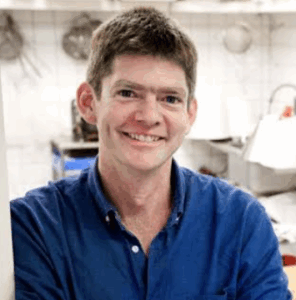
Education and Professional Background
Maxwell’s training in anthropology is central to understanding his work.2
Anthropology examines human societies, cultures, relationships and behaviour. It encourages people to look beyond individual actions and consider the wider systems that shape everyday life.
This perspective can help explain why Maxwell approaches beekeeping as a social activity rather than simply an agricultural or commercial operation.
His earlier work as a primate researcher in Madagascar introduced him to the study of animals and their environments. His forest protection work in Vietnam provided further experience with environmental conservation.
He also worked with social entrepreneurs in Brighton. That experience connected his environmental interests with the practical challenges of building organisations that aim to create positive social change.
These different areas of experience eventually came together in Bybi.
The organisation brings together environmental activity, practical work, education and community participation. It also works with businesses and public institutions that want to make their properties greener or involve their employees in sustainability initiatives.
Maxwell’s background helps explain why the project places so much emphasis on relationships and shared responsibility.
How Did Oliver Maxwell Start Bybi?
The idea for Bybi began with a chance encounter.
In December 2009, Maxwell was cycling through an industrial area in Copenhagen when he noticed a group of beehives. The sight made him curious. He contacted the beekeeper responsible for the hives and spent an afternoon talking with him about his work.
That conversation opened the door to a new way of thinking about the city.
The beehives revealed connections that were not immediately obvious. Bees depended on flowers and suitable habitats. Maintaining colonies required practical knowledge and regular care. Honey connected the natural environment with food production and local communities.
Maxwell began to see urban beekeeping as a way to bring different people and organisations together around a shared activity.
He was also concerned about climate change and social problems. Rather than treating those concerns as separate issues, he wanted to create something practical that could address aspects of both.
In 2010, he founded Bybi.
The beginning was modest, but it established the basic idea that would guide the organisation: beekeeping could become a shared community activity with environmental and social benefits.
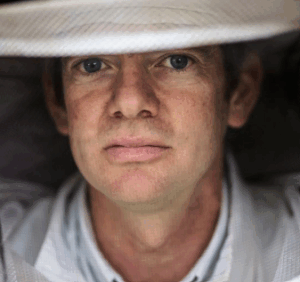
What Is Bybi?
Bybi is an urban beekeeping and community initiative based in Copenhagen, Denmark.3
Its primary activity involves maintaining honeybee colonies in urban locations and producing honey. However, its wider work includes education, community participation and projects that encourage greener urban spaces.
The organisation places beehives on rooftops and at different sites across the city. These locations can include businesses, public institutions, schools and other properties with suitable conditions for beekeeping.
Participants help with activities such as caring for hives, harvesting honey, packing products and distributing flower seeds.
Bybi also works with partner organisations to encourage people to create more habitats for pollinators. These efforts can include planting flowers and allowing green spaces to support a wider range of insects and wildlife.
The organisation’s honey provides a practical connection between its environmental work and the public. People can buy or receive a jar of honey and learn about the location where it was produced.
Each harvest can reflect the flowers available in a particular area and the conditions in which the bees forage.
Bybi’s broader purpose is to encourage people to see the city as an ecosystem rather than simply a collection of buildings, roads and businesses.
Its work also demonstrates how an ordinary product can become a starting point for conversations about community and environmental responsibility.
Oliver Maxwell’s Stats at a Glance
| Category | Details |
|---|---|
| Full Name | Oliver Maxwell |
| National Background | British |
| Profession | Anthropologist and social entrepreneur |
| Known For | Founding Bybi |
| Organisation | Bybi, an urban beekeeping initiative |
| Founded | 2010 |
| Main Location | Copenhagen, Denmark |
| Previous Research Work | Primate research in Madagascar |
| Environmental Experience | Forest protection work in Vietnam |
| Other Professional Experience | Social entrepreneurship in Brighton |
| Moved to Denmark | 2007 |
| Main Focus | Beekeeping, social inclusion and environmental awareness |
| Reported Current Scale | Approximately 80–100 bee colonies |
| Reported Annual Honey Production | Up to six tonnes |
| Community Involvement | Volunteers, marginalised people, students, artists, refugees and business partners |
| Personal Net Worth | Not publicly verified |
How Bybi Creates Opportunities for Marginalised People
One of the most distinctive parts of Maxwell’s work is his approach to social inclusion.
People who experience homelessness, displacement, unemployment or other forms of exclusion can face barriers that go beyond finding a job. They may struggle to build relationships, develop a sense of belonging or find activities in which their skills and interests are recognised.
Bybi offers a different kind of setting.
Participants can become involved in practical activities connected with bees, flowers and honey. Depending on the project and their interests, they may help maintain hives, plant flowers, pack honey or prepare seeds for distribution.
These activities provide opportunities to learn through participation. They also create situations in which people can meet others and contribute to a shared purpose.
An important part of Maxwell’s approach is that he does not want a person’s social circumstances to define their identity within the organisation.
This example illustrates the difference between treating someone only as a person who needs assistance and recognising them as someone who has knowledge and skills to contribute.
Bybi’s approach can also help participants build confidence. Working with bees requires attention, patience and practical knowledge. Taking responsibility for a hive or helping with a harvest gives participants a concrete task and a visible outcome.
The organisation does not suggest that beekeeping can solve every social problem. Instead, it creates an environment in which people can take part in meaningful activities and build relationships with others.
Also Read: W. Kamau Bell Biography: From Stand-Up to CNN
Why Maxwell Questions the Traditional Idea of Work
Bybi’s social mission has evolved over time.
Initially, the organisation aimed to employ people who experienced difficulties entering the labour market. The idea was that honey production could create work while helping people gain practical experience.
However, Maxwell has since questioned whether conventional employment is always the most effective way to support people who are excluded from society.
This shift reflects a broader question about the meaning of work.
Traditional economic systems often place a high value on paid employment, productivity and measurable output. Those measures are important in many situations, but they do not capture every form of human contribution.
People can provide value by helping others, sharing knowledge, participating in community activities or caring for the environment.
Bybi creates space for these contributions.
Volunteers can participate at a pace that suits them. Some activities can be completed without the pressure of a conventional workplace. Participants may develop skills or relationships that later help them in other areas of life.
This does not mean that paid employment is unimportant. Rather, Maxwell’s approach questions whether it should be the only recognised form of participation.
The idea is particularly relevant to people who face barriers to conventional work. It allows them to become involved in a community without requiring them to meet every expectation associated with a standard job.

The Environmental Side of Bybi
Social inclusion is only one part of Bybi’s mission. Environmental awareness is equally important.
Bees are well known for their role in pollination. As they visit flowers, they help many plants reproduce and contribute to the functioning of ecosystems.
Urban environments can provide useful habitats for pollinators when they contain a variety of flowering plants, suitable green spaces and access to food throughout the growing season.
Bybi encourages businesses, schools and local communities to think about how their surroundings can support pollinators.
One of its activities involves distributing flower seeds and encouraging people to plant flowers. The aim is to make urban spaces more welcoming to bees and other insects.
The project also works with organisations that host hives on their properties. These partnerships can help introduce sustainability discussions into workplaces and public institutions.
However, it is important to distinguish honeybee management from biodiversity protection as a whole.
Honeybees are only one group of pollinators. Wild bees and other insects also play important ecological roles. The benefits of urban beekeeping therefore depend on local conditions and careful management.
Bybi’s wider focus on planting flowers and improving habitats is relevant because environmental projects should consider the needs of many pollinator species rather than honey production alone.
Its work presents urban nature as something that people can actively support through everyday decisions.
How Bybi Produces and Shares Its Honey
Honey is the most visible product of Bybi’s work.
The organisation manages colonies across Copenhagen and collects honey as part of its seasonal activities. The harvested honey is then processed and prepared for distribution.
Bybi’s honey can be sold through selected outlets and partnerships. Some of its products have also been used in community events and given away on particular occasions.
The organisation has explored creative ways of presenting and distributing honey. These approaches can turn the product into a conversation starter about where food comes from and how communities are connected to the environment.
The honey also provides a source of income for the initiative, alongside donations, sponsorships and partnerships.
This combination is important because a community project needs resources to maintain its activities. Beekeeping requires equipment, hive maintenance, transport, processing and ongoing attention to the health of the colonies.
Bybi’s model therefore combines a tangible product with a wider social purpose.
The honey matters, but it is not the only measure of what the project produces.

Challenges and Criticism
Bybi’s approach is unusual, but it also raises important questions.
One challenge is financial sustainability. Maintaining beehives and running community activities require money, time and skilled people. Honey sales can contribute to those costs, but they may not cover every expense.
The organisation therefore depends on a mix of commercial activity, partnerships, donations and volunteer participation.
Another challenge concerns the role of unpaid work. Volunteering can provide people with valuable experiences and relationships, but it should not automatically replace fair paid employment where paid work is appropriate and available.
A successful community model needs to consider the needs of participants as well as the organisation.
Environmental questions also matter. Although honeybees are useful pollinators, large numbers of managed colonies can create competition for floral resources in some locations. Local ecology and the availability of flowers should therefore be considered when deciding where and how many hives to maintain.
These questions do not erase Bybi’s achievements. They demonstrate that social and environmental projects need ongoing reflection rather than assuming that good intentions automatically guarantee good outcomes.
The most useful aspect of Maxwell’s model may be its willingness to question familiar systems and adapt as the organisation learns.
Why Oliver Maxwell’s Story Matters
Oliver Maxwell’s story is relevant because it connects several issues that are often discussed separately.
Environmental protection is frequently treated as a technical challenge. Social inclusion is often discussed in terms of employment and public services. Business is commonly measured through financial performance.
Bybi brings these subjects together through a practical activity.
Beekeeping provides a reason for people to meet, share knowledge and contribute to a common project. Honey creates a product that can be sold or distributed. Flower planting encourages people to consider the quality of their local environment.
The project also raises a question about how communities recognise value.
A person does not become valuable only when they have a paid job. People can contribute in different ways, and community activities can help make those contributions visible.
That idea is especially important in societies where people who experience homelessness, displacement or unemployment may be treated primarily as recipients of support rather than as individuals with skills and interests.
Maxwell’s approach does not offer a universal solution to social exclusion. However, it provides an example of how a small, practical project can create opportunities for participation while also supporting environmental awareness.
عرض هذا المنشور على Instagram
Conclusion
Oliver Maxwell’s journey from anthropological and environmental work to founding Bybi demonstrates how an unusual idea can develop into a meaningful community initiative.
After moving to Copenhagen in 2007, Maxwell became interested in urban beekeeping and established Bybi in 2010. What began with a small number of hives grew into a citywide project involving businesses, volunteers and people from a wide range of backgrounds.
The organisation now produces honey while encouraging community participation, environmental awareness and more inclusive ways of thinking about work.
Nevertheless, Bybi offers a compelling example of how a familiar activity can inspire new ideas about social connection.
Oliver Maxwell’s story is ultimately about more than beekeeping. It is about recognising that people, communities and the natural world are connected. It asks whether a successful project can produce something valuable while also making room for people who are often left out of conventional systems.
In Bybi’s case, the answer begins with a simple idea: bring people together around the bees, give them opportunities to contribute and allow the honey to become one part of a much larger story.
FAQ’s
1. Who is Oliver Maxwell?
Oliver Maxwell is a British anthropologist and social entrepreneur. He is best known as the founder of Bybi, an urban beekeeping and community initiative based in Copenhagen, Denmark.
2. What is Bybi?
Bybi is a community beekeeping project that manages urban honeybee colonies, produces honey and supports community participation and environmental awareness.
3. When was Bybi founded?
Oliver Maxwell founded Bybi in 2010 after becoming interested in urban beekeeping in Copenhagen.
4. Where is Oliver Maxwell from?
Maxwell is originally from Britain. He moved to Copenhagen in 2007 and later established Bybi in the Danish capital.
5. What was Oliver Maxwell’s profession before Bybi?
Maxwell trained as an anthropologist. His earlier experience included primate research in Madagascar, forest protection work in Vietnam and work with social entrepreneurs in Brighton.
6. What is the meaning of Bybi?
Bybi means “city bee” in Danish. The name reflects the organisation’s focus on urban beekeeping.
Also Read: Celina Jaitly Biography: Her Story Beyond Bollywood