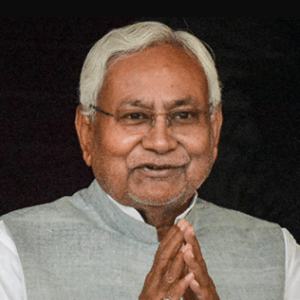

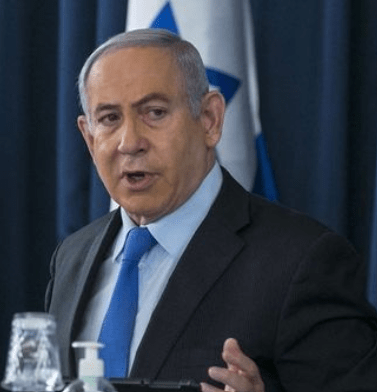
Benjamin Netanyahu, a distinguished Israeli politician, has assumed the mantle of Prime Minister of Israel since December 2022
His political journey has been remarkable, marked by his unwavering commitment to public service and leadership.
Benjamin Netanyahu’s enduring political career and steadfast dedication to Israel’s growth and stability underscore his impact on the nation’s trajectory.
His position as the longest-serving prime minister is a testament to his resilience and unwavering commitment to the people he serves.
Benjamin Netanyahu’s religious identity, firmly rooted in Judaism, significantly influences his political journey and policy decisions.
As the leader of the Likud Party and a staunch advocate for Israel’s Jewish identity, his beliefs and values continue to shape the nation’s trajectory, sparking debates and discussions both domestically and on the international stage.
Understanding the intersection of religion and politics is essential in comprehending Netanyahu’s approach to governance and his vision for Israel.
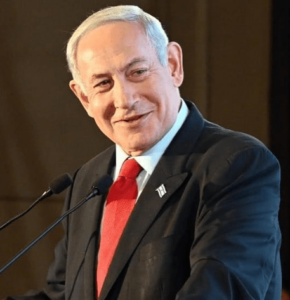
Also Read: James Mustapic Gender: Is He Trans? Wiki/Bio And Family Background Explored
Table of Contents
Israel’s Prime Minister Benjamin Netanyahu
Prior to his current term, Netanyahu had already made his mark in Israeli politics, having served two terms as the nation’s prime minister.1
This experience positioned him as a seasoned statesman well-versed in the nuances of governing a complex and diverse nation.
Netanyahu’s Pinnacle Achievement
At the helm of the Likud party, Netanyahu has carved a legacy that remains unparalleled. His tenure as chairman spans an impressive 16 years, solidifying his position as a revered figure in Israeli politics.
Notably, he holds the distinction of being the longest-serving prime minister in Israel’s storied history.
שמעתי בצער רב על פטירתו של חברנו נרי אבנרי ז״ל לאחר מאבק ארוך במחלה ממושכת.
נרי היה לוחם עז נפש נגד השקרים המוטחים במדינת ישראל ובמחנה הלאומי. בכל פגישותיי עמו התרשמתי עמוקות מהידע העצום שצבר ושפעל לשמרו, ומן המחויבות הבלתי מסויגת שלו להגן על ארצנו ועל צדקת דרכנו.
יהי זכרו…
— Benjamin Netanyahu – בנימין נתניהו (@netanyahu) August 20, 2025
Netanyahu’s Historical Significance
Benjamin Netanyahu is a trailblazer in the realm of Israeli politics, being the first prime minister born in the country following its Declaration of Independence.
This fact underscores his deep-rooted connection to the nation’s history and his unwavering dedication to its prosperity.
In the midst of the challenging war with Hamas, the public eye has turned towards Netanyahu’s religious beliefs.
This aspect of his identity has garnered significant attention, shedding light on the intersection of faith and leadership in turbulent times.
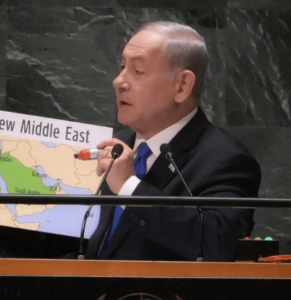
Coalition Crisis: Ultra‑Orthodox Parties Exit
In mid‑July 2025, the ultra‑Orthodox United Torah Judaism (UTJ) party withdrew its members from Netanyahu’s coalition, leaving him with a slim 61‑seat majority in the 120‑member Knesset.2
The dispute centered on drafting reforms requiring mandatory military service for yeshiva students—an issue fiercely defended by the ultra‑Orthodox.
Political Ramifications
The withdrawal has rendered Netanyahu’s government vulnerable to collapse and puts his ceasefire negotiators in a bind, as far‑right parties threaten to exit if concessions are made.
While an immediate parliamentary dissolution is unlikely, summer recess offers a brief pause to forge a compromise or risk early elections.
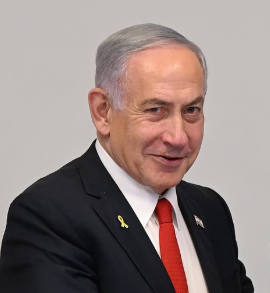
Benjamin Netanyahu’s Security & Military Strategy
Airstrikes & Defense Decisions
-
On July 15, 2025, Israel launched targeted airstrikes on Syrian government positions in Sweida’s Druze-majority area to curb violence and solidify a “demilitarisation zone.” Netanyahu authorized the operation to safeguard the Druze community and ensure regional stability.3
-
His recent military initiatives include the establishment of the Morag Corridor in southern Gaza, designed to pressure Hamas through territorial containment measures.4
Hostage Negotiations & Ceasefire Talks
In a July 12 interview with Fox News, Netanyahu expressed confidence that a ceasefire-hostage exchange deal could be reached potentially a 60‑day truce including the release of living and deceased hostages.5
This initiative aligns with recent talks in Doha involving Hamas and mediation by Qatar.
International Diplomacy & US Relations
White House Visit & Diplomatic Clout
Netanyahu traveled to Washington, DC, on July 7, for high-profile talks with former President Trump.
The agenda spanned Gaza ceasefire efforts, Iran containment, and broader regional security. Trump continues supporting Israel, advocating an end to the Gaza war and negotiated hostage release.
Strengthening Military Ties
On July 9, Netanyahu was hosted by the Pentagon. Defense Secretary Pete Hegseth praised Israel’s joint operations with the U.S. particularly “Operation Midnight Hammer” and “Operation Rising Lion” targeting Iran’s nuclear & military infrastructure.
Legal Controversies: ICC Warrant & Security Leak
The ICC issued an arrest warrant for Netanyahu in November 2024, alleging war crimes—including the use of starvation tactics and crimes against humanity during operations in Gaza.
The warrant mandates arrest in all 124 ICC member states, complicating international travel.
Security Leak Investigation
A longtime Netanyahu aide—Jonatan Urich—faces charges for allegedly leaking classified military information to influence public perceptions and aid Qatar’s image amid hostage negotiations.
Netanyahu has cooperated with investigators and labels the probe politically motivated.6
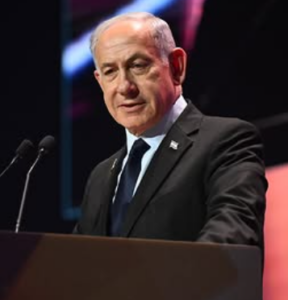
Benjamin Netanyahu’s Religion
Exploring His Religious Affiliation and Its Influence
Benjamin Netanyahu, the prominent Israeli figure and Prime Minister, raises intriguing questions about his religious identity.7
Is he Jewish, Christian, or Muslim? In this article, we delve into Netanyahu’s religious background and its implications on the political landscape, shedding light on his Jewish faith and its impact on the nation.
Netanyahu’s Jewish Heritage and Affiliation
Benjamin Netanyahu, born in Tel Aviv to secular Jewish parents, is undeniably Jewish. His upbringing was steeped in the rich traditions and practices of Judaism.
His affiliation with the Likud Party, a prominent secular right-wing political entity, further underscores his Jewish heritage.
Also Read: Norberto Marcos (Fatima Florez Spouse) Bio, Wiki, Career, Age Gap & More
Benjamin Netanyahu’s Origin and Heritage
Benjamin Netanyahu, the esteemed Israeli Prime Minister, has a rich heritage deeply rooted in Tel Aviv, where he was born to a family of secular Jewish lineage.
Understanding his origins is essential in appreciating the man and his journey in the realm of Israeli politics.
Blend of Ancestry: Polish, Lithuanian, and Belarusian Roots
At the heart of Benjamin Netanyahu’s ethnic identity lies a fascinating blend of Belarusian, Lithuanian, and Polish ancestry. This unique mix shapes not only his cultural outlook but also his approach to leadership and governance.
Benzion Netanyahu, originally known as Benzion Mileikowsky, Benjamin’s father, played a significant role in the family’s journey and cultural identity.
He was not only a scholar but also a passionate Zionist activist. The family’s relocation to Israel in 1920 marked a pivotal moment in their lives and laid the foundation for Benjamin’s future.
Tzila Segal: A Tapestry of Jewish Heritage
- Benjamin Netanyahu’s mother, Tzila Segal, hailed from Petah Tikva, Israel, boasting a diverse background that encompasses Lithuanian Jewish, Polish Jewish, and Belarusian Jewish roots.
- This mosaic of heritage undoubtedly contributed to Benjamin’s rich cultural tapestry.
- A compelling aspect of Benjamin Netanyahu’s heritage is the transformation of the family’s surname.
- Originally Mileikowsky, the family chose to embrace its Hebrew roots, hebraizing the name to Netanyahu, signifying “God has given.” This choice underlines a profound connection between the family and their Jewish faith.
- In conclusion, Benjamin Netanyahu’s religious affiliation is unquestionably Jewish, deeply ingrained through his upbringing in Tel Aviv by secular Jewish parents.
- His contributions to Israeli politics are monumental, solidifying his position as a significant figure in the nation’s history. The amalgamation of Belarusian, Lithuanian, and Polish roots in his ethnic background adds a multifaceted layer to his identity, mirroring the diverse tapestry of Israel’s population.
- The transformation of the family’s surname to Netanyahu, carrying the symbolic meaning of “God has given,” highlights a lasting and profound connection to their faith and history.
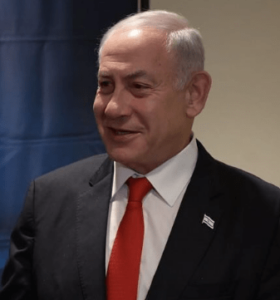
Benjamin Netanyahu’s Career
Benjamin Netanyahu, a prominent figure in Israeli politics, was born in Tel Aviv in 1949 to Tzila Segal and Benzion Netanyahu.8
His father, a historian specializing in the Jewish Golden age of Spain, was originally from Warsaw, and his mother hailed from Petah Tikva, part of the Ottoman Empire’s Mutasarrifate of Jerusalem.
Netanyahu’s paternal grandfather, Nathan Mileikowsky, was a rabbi and Zionist writer, contributing to the family’s rich heritage.
Upon his father’s immigration to Israel, the family adopted the name “Netanyahu,” signifying “God has given.”
Although their background is primarily Ashkenazi, a DNA test later revealed some Sephardic ancestry, connecting them to the Vilna Gaon’s lineage.
Educational Foundation in Jerusalem
As the second of three children, Netanyahu spent his early years in Jerusalem, attending Henrietta Szold Elementary School.
His 6th-grade teacher, Ruth Rubenstein, commended him for his responsible and punctual work, along with his courteous and disciplined behavior.
American Sojourn and Dissatisfaction
Between 1956 and 1958, and again from 1963 to 1967, the family lived in Cheltenham Township, Pennsylvania, where Benzion Netanyahu taught at Dropsie College.
Benjamin attended Cheltenham High School, actively participating in various clubs.
Despite the opportunities, he and his brother Yonatan felt disenchanted with the lifestyle, disagreeing with the counterculture movement and the liberal ethos of the Reform synagogue they attended.
Military Call and Formative Service Years
In 1967, following high school graduation, Netanyahu returned to Israel and enlisted in the Israel Defense Forces.
He underwent intensive combat training and served five years in the prestigious special forces unit, Sayeret Matkal.
Netanyahu participated in critical cross-border assault raids during the 1967–70 War of Attrition, eventually becoming a team leader in the unit. His valor was evident as he sustained multiple combat-related injuries during this period.
Embracing Challenges and Resilience
Notably, Netanyahu was an integral part of several vital missions, such as the 1968 Israeli raid on Lebanon and the successful rescue of Sabena Flight 571 in May 1972.
Despite being wounded during these missions, his dedication remained steadfast. Even after his discharge from active service in 1972, he continued his commitment to the Sayeret Matkal reserves.
Yom Kippur War
In October 1973, during the Yom Kippur War, Netanyahu returned to Israel to stand by his nation’s side. He showcased his valor once again, participating in special forces raids along the Suez Canal against Egyptian forces.
Later, he led a classified commando attack deep into Syrian territory, further underlining his dedication and strategic prowess.
Benjamin Netanyahu’s early life and military experiences significantly shaped his character and paved the way for his notable political career.
View this post on Instagram
FAQ’s
Q1: Why did the ICC issue an arrest warrant for Netanyahu?
A1: The ICC accused him of war crimes and crimes against humanity, including starvation as a method of warfare during the Gaza conflict.9
Q2: What is the status of his corruption trial (Case 4000)?
A2: The trial has been delayed for security reasons and has yet to resume.10
Q3: What military strategies has Netanyahu pursued in Gaza?
A3: He has intensified operations in Gaza City, mobilized reservists, demanded full release of hostages before ceasefires, and continues to face global humanitarian criticism.11
Q4: How have international relations been affected?
A4: Diplomatic relations with Australia and France have deteriorated due to recognition of Palestine and differing narratives on antisemitism.12
Q5: What risks does Netanyahu face abroad?
A5: The ICC warrant obligates member nations to arrest him if he visits. Some countries, however, have offered exemptions or have adjusted flight paths to avoid arrest risk.
Also Read: Iwa Moto: Husband Pampi Lacson, Relationship, Bio, Age, Career, Net Worth 2023, TikTok Awards