
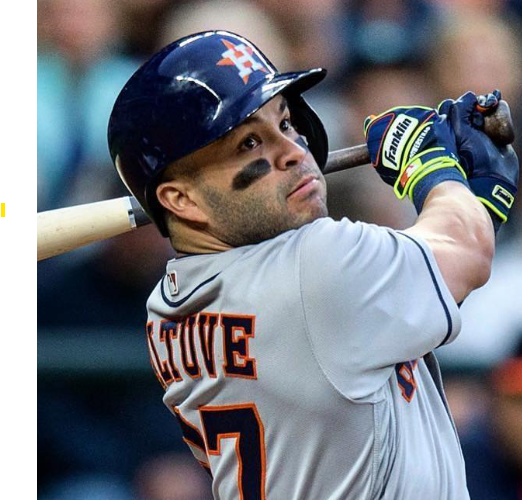
Jose Altuve’s current slump is not just a matter of bad luck or cold streaks — it’s a confluence of aging, mechanical regression, and circumstantial disruption
Tyler Stafford’s analysis offers a sobering yet insightful look into why the Astros star isn’t producing the way fans are used to.
While Altuve may still provide value in other ways — leadership, experience, clutch defense — his days as a fearsome offensive force might be fading.
Only time will tell. But one thing’s for certain — the baseball world will be watching closely.
Every great athlete has those moments when they remind the world who they are. For Jose Altuve, Thursday night was one of those moments.
After months of doubt, he stepped up when it mattered most and delivered a performance that could mark the beginning of a powerful second-half surge.
Whether it leads to a playoff berth or simply restores his confidence, one thing is clear: Jose Altuve is back—and the Astros are better for it.
Also Read: Chris Sale Declares $185M Rangers Star the Best in Baseball
Table of Contents
Jose Altuve’s Mysterious Slump
A Deep Dive into the Astros Star’s Struggles
Jose Altuve, once the heart and soul of the Houston Astros lineup, is currently enduring one of the most troubling slumps of his career.1
Through his last nine games before Thursday, Altuve went just 4-for-33 at the plate — a worrying sign for a player who has historically been one of the most consistent hitters in baseball.
The numbers are well below his career standards: just four home runs and 14 RBIs so far this season. For a former AL MVP and perennial All-Star, these stats are a massive red flag.
Position Switch: A Subtle Disruption?
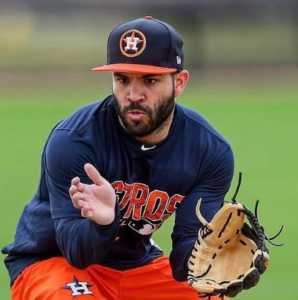
One of the more talked-about factors behind Altuve’s struggles is the Astros’ decision to move him from second base to the outfield starting this season.
While Altuve has been a second baseman his entire MLB career, the defensive shift may be disrupting his mental and physical rhythm.
A position change can often take more of a toll than many realize — new sightlines, new footwork, and a different mental approach to the game can seep into a player’s offensive performance.
Even if he’s not making errors in the outfield, the comfort and confidence he once had playing second base might be missing. Baseball is a game of routine and muscle memory, and disrupting either can have unforeseen consequences.
This is frustrating!!! I can’t take it anymore. No más. I’m quitting!
— Jose Altuve (@JoseAltuve27) November 21, 2018
The Age Factor: Is Time Catching Up?
Another explanation floated by fans and pundits alike is age. At 35, Altuve is no longer the springy, quick-twitch athlete he was in his late 20s.
Though many players stay productive into their mid-30s, a steep decline can happen suddenly, and that might be what we’re witnessing.
The reflexes slow, the legs lose a step, and most critically for hitters — the bat speed begins to drop. While it’s easy to blame the aging curve for a player’s downturn, there’s still more beneath the surface in Altuve’s case.
Tyler Stafford’s Analysis: A Deeper Look
Astros analyst Tyler Stafford offered a different perspective during his appearance on Crush City Territory this past Thursday. His breakdown of Altuve’s slump points to something both concrete and alarming: bat speed.
According to Stafford, Altuve’s bat speed has dropped by two miles per hour since the 2022 season. While that might sound like a small difference, it can be monumental at the professional level, where milliseconds and inches determine hits and outs.
Stafford explained that while Altuve is still making solid contact — the same amount of squared-up hits — the issue lies in the force behind the swing. The contact is not as powerful, which explains the lack of home runs and extra-base hits.

Jose Altuve: Bat Speed
The Quiet Killer
“He’s swinging at 68 miles per hour, which is one of the lowest in the league,” Stafford noted.2
“That’s okay — it’s not like that prevents you from being a good hitter — but it is down two miles per hour from two years ago.”
In essence, Altuve’s mechanical approach hasn’t changed, but the explosiveness behind it has. That makes all the difference. A fastball that once met the barrel of his bat for a double in the gap might now be a weak groundout.
It’s a subtle change, but in the razor-thin margins of Major League Baseball, it can mean the end of dominance.
Why the Decline Matters More Than You Think
To many, a two-mile-per-hour drop in bat speed might seem negligible. But when facing 95+ mph fastballs regularly, that difference can mean the bat lags just enough to foul a pitch off instead of driving it into the outfield.
That can dramatically alter outcomes over time — fewer hits, fewer runs batted in, and a complete loss of offensive identity.
For someone like Altuve, whose swing has been a trademark of quick, explosive contact, the bat speed decline is like watching a sprinter lose their first step. The instincts are still there, the mechanics are polished, but the raw physical ability is slipping away.
Jose Altuve: No Easy Fix at This Age
Stafford’s analysis was candid and perhaps difficult for Astros fans to hear: “I don’t think there’s a trick to gaining a harder swing at 35.”
That’s the unfortunate reality. While younger players can adjust and increase bat speed with specialized training, players in their mid-30s often hit a wall that’s hard to push back.
Altuve could try swing tweaks or recovery strategies, but there’s no guarantee those will make up for what time has taken. And with his bat speed already among the slowest in the league, the margin for error is slim.
The Psychological Weight of a Slump
There’s also the mental toll to consider. For a competitor like Altuve, known for his fiery energy and leadership, slumping for this long can eat away at confidence. And confidence is everything at the plate.
When you no longer trust your swing or your ability to catch up to a fastball, it becomes a self-fulfilling prophecy.
Add in the noise from fans, media, and even internal doubts, and it’s easy to see how a player can spiral. Even with years of success under his belt, Altuve is not immune to the psychological side of the game.
Team Impact: How the Astros Are Affected
Altuve’s slump doesn’t just hurt his stat line — it reverberates throughout the Astros lineup.
As the longtime leadoff hitter and tone-setter, his performance often dictates the team’s offensive rhythm. When he’s on, the whole lineup seems to click. When he’s off, it creates a domino effect of inconsistency.
In a season where the Astros are battling stiff competition in the AL West, they can ill afford for one of their cornerstone players to be a liability at the plate.
Is This the Beginning of the End?
Some are beginning to wonder: is this slump just a temporary valley or the start of a permanent decline? Given the multiple factors at play — age, decreased bat speed, positional change — it might be more than a blip.
The indicators, particularly the measurable ones like swing velocity, don’t offer much optimism.
For a player who has accomplished so much — a World Series champion, an MVP, and a batting title winner — it’s difficult to imagine the curtain falling like this.
But in baseball, even legends are not exempt from the wear and tear of time.
Also Read: Walker Buehler: Who Is He? Baseball Contract Breakdown, Endorsement and More
Jose Altuve Comes Out of Slump in a Big Way
For much of the 2024 MLB season, Jose Altuve—typically a spark plug for the Houston Astros—struggled to find his rhythm at the plate.3
But on Thursday night at Minute Maid Park, Altuve reminded fans and critics alike why he’s one of the most impactful hitters of his generation.
With a resounding two-homer performance against the Seattle Mariners, the veteran second baseman may have officially broken out of his slump.
A Night to Remember
In a much-needed 9-2 victory over the Mariners, Altuve provided a spark that lit up Minute Maid Park. His first big moment came in the bottom of the fifth inning.
Facing Seattle reliever Eduard Bazardo, Altuve launched a solo shot to left field, extending Houston’s lead to 6-2.
One inning later, he went deep again—this time with a two-run homer that blew the game wide open at 8-2.
The crowd erupted as Altuve rounded the bases. Not only were these critical insurance runs for the Astros, but they also marked Altuve’s first multi-homer game since April 28th—an important sign that he’s rounding back into form.
Breaking the Slump
Before Thursday night, Altuve had looked like a shell of his former self. His batting average had dipped, his slugging numbers were below career norms, and his timing at the plate appeared off.
Whether it was lingering fatigue, mechanical adjustments, or simply a cold streak, Altuve had not been his usual self through much of the early summer.
Thursday’s performance, however, showed flashes of the MVP-caliber hitter that Houston fans have come to expect.
The swings were quick, the contact was clean, and the power—always underrated in his compact frame—was unmistakably back.
Timing Is Everything
Altuve’s turnaround couldn’t have come at a better time for Houston. The Astros have been struggling to maintain consistency this season, with injuries and uneven pitching performances creating a rollercoaster of results.
With the AL West remaining competitive, the Astros need their veteran leaders to step up.
A rejuvenated Altuve can serve as a catalyst—not just for the offense, but for the entire clubhouse. His presence in the lineup has always set the tone.
When Altuve gets going, it has a ripple effect, putting pressure on opposing pitchers and opening up opportunities for teammates like Yordan Alvarez, Kyle Tucker, and Alex Bregman.
Jose Altuve: Leadership by Example
Though Altuve isn’t the most vocal presence in the Astros’ clubhouse, his leadership is undeniable.
He’s been with the franchise through its highs and lows—from 100-loss seasons to World Series triumphs.
Teammates often speak about his work ethic and professionalism, and nights like Thursday show why he remains the heartbeat of the team.
Younger players take notice when a veteran fights through adversity. Altuve’s recent struggles could have worn him down, but he kept working, kept showing up, and eventually found his swing. That resilience can be contagious—and invaluable as the season heats up.
A Boost for the Astros’ Playoff Push
With the second half of the season well underway, Houston is eyeing a return to October baseball. The AL Wild Card race is tight, and every game matters. Altuve’s resurgence could be the X-factor the team needs.
When he’s hot, Altuve can carry a lineup. He’s capable of leadoff home runs, clutch RBI singles, and stretching base hits into doubles.
His ability to change a game with one swing or one stolen base gives Houston an added layer of versatility and danger. Thursday’s game may have only been one night, but it felt like a turning point—for both Altuve and the Astros.
View this post on Instagram
Historical Significance
- Altuve’s two-home-run performance was not only meaningful in the context of this season, but also another entry in his already impressive career resume.
- With more than 200 home runs to his name, Altuve continues to build a legacy as one of the most accomplished hitters in Astros history.
- He has consistently defied expectations—initially overlooked due to his small stature, only to become a perennial All-Star and 2017 AL MVP. Thursday night was a reminder that you can never count out a player with Altuve’s track record and determination.
- Astros fans were buzzing on social media after the game. From long-time supporters to casual viewers, many expressed joy at seeing their beloved second baseman return to form.
- Memes, videos, and celebratory tweets highlighted just how much this moment meant—not just as a win, but as a symbolic return of one of Houston’s greatest players.
- Local radio shows and postgame analysts echoed the same sentiment: if Altuve is locked in again, the rest of the league better watch out.
Also Read: Xander Bogaerts (Baseball): MLB Debut, Legacy, Girlfriend Jarnely Martinus and Family Time