
When you watch a Bollywood film or a popular Indian television show, you often remember the star leads
But behind many memorable scenes and moments are the character actors who bring depth, texture and nuance to the story.
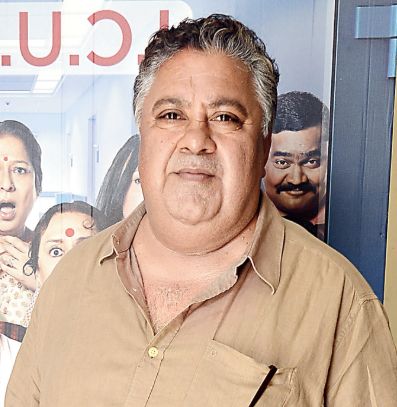
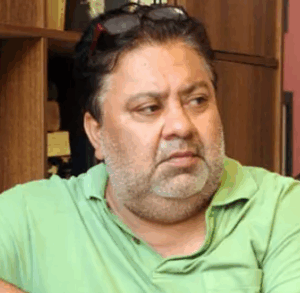
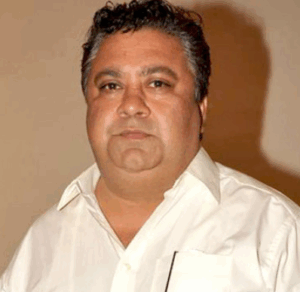
One such actor is Manoj Pahwa. With a career spanning decades, across theatre, television and films, Manoj Pahwa has quietly built a reputation as a reliable, versatile actor equally competent in comedy and serious drama.
In this article we will trace his early life, theatre and television beginnings, transition into films, major milestones, key roles, personal life and legacy.
We will also provide a statistics table summarizing his career, a set of frequently asked questions, and source references for those who wish to dig deeper.
Also Read: Anya Singh Bio, Age, Career, Movies, Family, and Inspiring Journey
Table of Contents
Manoj Pahwa: Biography
Early Life and Background
Manoj Pahwa was born on 8 December 1963 in New Delhi, India.1 He comes from a Punjabi family his father migrated from what was then West Punjab (in present-day Pakistan) to India post-Partition. 2
He grew up in Daryaganj, a historic neighborhood in Delhi, where he attended National Public School, Daryaganj.
According to an interview, his father ran an automobile battery business and initially wished Manoj to join the family business. But Manoj, drawn to acting and theatre, moved in a different direction.
In his late 20s (around the early 1990s) he made the bold decision to shift to Mumbai (then Bombay) to pursue a full-time acting career, leaving behind his family business and the comforts of familiar surroundings. “I left my father’s business at the age of 30 and moved to Mumbai to become an actor. I was married and had two children.” he told India Today. 3
It is worth noting that the move to Mumbai required his family’s support, courage and financial risk. In interviews, Manoj Pahwa has spoken about how he weighed about 110 kgs and yet took the leap to pursue his dreams, despite family responsibilities and societal expectations. 4
His early years were also spent doing theatre in Delhi (around Mandi House area) where he honed his craft before breaking into television and films.
This foundation in theatre and the bold decision to move to Mumbai would later pay off as he gradually built a steady career rather than chasing instant stardom. He has described his journey as not a “shooting star” but one of gradual formation and steady persistence.5

Theatre and Television: The Formative Years
Before achieving widespread recognition in films, Manoj Pahwa cut his teeth in theatre and television.
His background in theatre allowed him to build an actor’s discipline, understand different character types and transition between mediums.
In an interview he said: “When I shifted to Mumbai, I had no strategy. I just wanted to act be it in a television show or music video. I just wished to be known as a ‘good actor’.”
Early Television Work
His first notable on-camera role came in the landmark Doordarshan serial Hum Log (1984-85), which is often cited as India’s first soap opera. In that show, he played the character “Tony”.
He later recalled that when he got the casting call, he initially thought it might have been a scam because he was asked to fill out forms and deposit money (which was unusual to his experience) but soon realised it was a legitimate role.
Subsequently, he appeared in other flagship television shows such as Just Mohabbat (1996-2000) and the iconic sitcom Office Office (from about 2001) where his performance as “Bhatia” is still fondly remembered.
On the show Office Office, he gained considerable visibility and became known for his comedic timing. Television in the 1990s and early 2000s offered him weekly shows and a platform to build a strong television persona.
Style and Path
Pahwa’s television years gave him two crucial advantages: consistency of work and the ability to experiment with character roles rather than chase the leading-man template. In one interview, he said:
“People have type-cast me as a fat, happy-go-lucky actor… If a filmmaker wants a funny character in an out-and-out commercial film, he will not experiment and cast an actor like Nawazuddin Siddiqui. He will cast an actor like me.”
This awareness allowed him to carve his niche he accepted the roles that came his way while quietly preparing for bigger transitions. The television years built his reputation as a repeating, dependable actor.
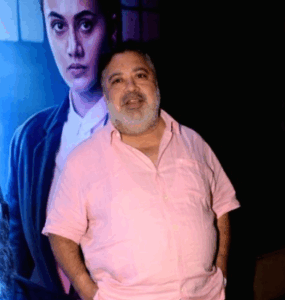
Transition to Films: From Comic Relief to Supporting Strength
The shift from television to films is seldom easy especially in Bollywood, where star-power, looks and marketability dominate.
Manoj Pahwa’s film career began modestly but steadily. He made his film debut with Tere Mere Sapne (1996) though it did not bring major recognition.
Over the next decade he worked in several films many commercial, many smaller. Initially, many of his roles were comic in nature or supporting, reinforcing the typecasting mentioned earlier.
For example, his role in the film Khap (2011), a socio-political drama, showed his willingness to move beyond comic roles.
Breakthrough Roles
A few films stand out as turning points:
-
Being Cyrus (2005): Though not a blockbuster, it showcased a different kind of role for Pahwa and allowed him to stretch beyond pure comedy.
-
Dabangg 2 (2012) and Jolly LLB (2013): As mainstream films where he played supporting but important characters, they reinforced his presence in Bollywood.
-
Dil Dhadakne Do (2015): A multi-starrer which allowed him to be part of ensemble cinema with high production values.
-
Mulk (2018): This film is often described by Pahwa himself as a watershed moment. Director Anubhav Sinha reportedly had doubts about casting him because Pahwa was seen as a comedian, but the role changed perceptions.
-
Article 15 (2019): Another serious, issue-driven film where Pahwa delivered a strong performance, marking his full transition into serious supporting roles.
Reinvention and Respect
Pahwa has talked about how he was often frustrated by the labels and typecasting but continued to work steadily. In an interview he said:
“Although I’m known for comedy, I have not done my best comic role yet.”
The film Mulk, according to him, marked the shift:
“The award that I ever got in my career is Best Actor for a negative role for Article 15. It is ironic.”
His career evolution shows that he did not just accept one mode of acting he strove to break free from comfort zones, choose roles that challenged him and thereby earned credibility.
Also Read: Manish Chaudhari Bio, Career, Family, Education and Life Journey
Major Works & Career Highlights
Here are some of the key works across television and film that define Manoj Pahwa’s career.
Television
-
Hum Log (1984–85): His first major television role.
-
Office Office (2001 onwards): The role of Bhatia made him a household name in comedy television.
-
Just Mohabbat (1996–2000): A youth-oriented show that added to his television credentials.
Films (Selected)
| Film | Year | Role & Significance |
|---|---|---|
| Tere Mere Sapne | 1996 | Film debut. |
| Being Cyrus | 2005 | Showed his ability beyond light comedy. |
| 7½ Phere | 2005 | Example of his comic supporting work. |
| Singh Is Kinng | 2008 | Commercial big-budget film. |
| Dabangg 2 | 2012 | Worked in mainstream action-comedy. |
| Jolly LLB | 2013 | Critical and commercial success; supporting role. |
| Dil Dhadakne Do | 2015 | Ensemble film, expanded his filmography. |
| Mulk | 2018 | Marked a serious transition – critical acclaim. |
| Article 15 | 2019 | Serious issue-driven film; celebrated his range. |
| The Great Indian Family | 2023 | Recent film where he continues working in major productions. |
Noteworthy Patterns
-
Pahwa often plays supporting characters rather than leads, which allows him to ease into stories and bring character value without the pressure of headlining.
-
He transitioned from comic roles and “happy-go-lucky” persona to taking serious and layered roles, demonstrating his growth as an actor.6
-
He pointed out that he did hundreds of advertisements (over 200 commercials) during his early career and television days.
Personal Life
Manoj Pahwa’s personal life is rooted in his partnership with fellow actor, theatre-personality and director Seema Pahwa.
Marriage & Family
-
The two got married in 1988.
-
Seema Pahwa has shared a charming anecdote about how their relationship started: a theatre production family-photo being mistaken by Manoj’s father as a real family photograph, leading him to believe Manoj already had a wife and children!
-
They have two children: a daughter, Manukriti Pahwa, and a son, Mayank Pahwa.
-
The family lives in Versova, Mumbai.
Insights & Quotes
In interviews, Manoj Pahwa has candidly spoken about his move to Mumbai. He said he was married and had two children when he moved, and people around him thought the decision odd because he was overweight (110 kgs) and leaving a business to become an actor.
He also noted that though television gave him a platform, the daily-soap-heavy schedule created constraints:
“After Office Office I did not feel like working on television. I did TV for 15 years… I can’t do a hectic 25-days-a-month schedule.”
These candid reflections reveal his persistence, self-awareness and confidence in his craft.
Recognition & Awards
While Manoj Pahwa has not always been in the limelight, he has gained recognition for his work, especially in recent years when he took on more serious roles.
-
He has been nominated for awards such as the Filmfare Critics Award for Best Supporting Actor for Mulk (2018).
-
In interviews he has said that the award he prizes most is for his negative role in Article 15.
-
Many articles note his enduring presence in “over 70 films” as a character actor.
His recognition may not always be headlined but in the industry he is respected as a character actor who elevates the material.
Style, Strengths & Legacy
Acting Style & Strengths
-
Manoj Pahwa has the ability to inhabit characters without overshadowing the story. His supporting roles stand out not because they dominate but because they are memorable.
-
His background in theatre gives him an edge in timing, expression and presence. He has spoken about his theatre days and how they shaped his mindset as an actor.
-
Over time he has shown range: from overt comedic roles (e.g., the sitcom era, television, lighter films) to intense dramatic supporting roles (Mulk, Article 15). Many fans note that he is one of the few actors who can move between genres and still retain authenticity.7
Legacy & Industry Position
-
In Bollywood, the lead stars are often the focus but character actors such as Manoj Pahwa are the pillars that hold many ensemble films together. He has built a career not on stardom but on steady work, versatility and respect.
-
He serves as an inspiration to aspiring actors who may not fit the “hero” mould but who believe in craft and perseverance. His decision to leave the family business, move to Mumbai, sustain a career through years of TV and smaller movie roles, and then reinvent himself speaks volumes.
-
His work is often quoted by audiences and commentators as “the scene gets better when Manoj Pahwa appears”; while tongue-in-cheek, there is truth in that reference to the uplift his presence gives a film.
Challenges & Reflections
-
Typecasting: As he himself admitted, being cast as “the portly happy-go-lucky actor” for many years limited his options.
-
Market realities: In Bollywood, leads often dominate attention and quantity of roles. Pahwa’s acceptance of supporting roles shows pragmatic realism.
-
Transitioning to serious roles: It took time and certain films like Mulk and Article 15 to change perceptions of him. The journey was gradual rather than instant.
View this post on Instagram
FAQ’s
Q1: What was Manoj Pahwa’s first acting job?
A1: His first major on-camera role was in the television serial Hum Log (1984-85) where he played the character Tony. However, before that he had been active in theatre in Delhi for several years.
Q2: How many films has Manoj Pahwa acted in?
A2: While an exact number is difficult to pinpoint publicly, various sources list “over 70 films” for his Hindi film career.
Q3: Has Manoj Pahwa won any major awards?
A3: He has been nominated for awards such as the Filmfare Critics Award for Best Supporting Actor for the film Mulk. While he may not have a large trophy cabinet, his performances have gained critical acclaim and recognition within the industry.
Q4: Is Manoj Pahwa married? Who is his spouse?
A4: Yes. He is married to actress and theatre-personality Seema Pahwa. They were married in 1988 and have two children a daughter, Manukriti, and a son, Mayank.
Q5: What was his breakthrough film or turning point role?
A5: While he had many supporting roles earlier, the film Mulk (2018) is often cited by Pahwa himself as a turning point where the industry and viewers began seeing him beyond comedic roles. Article 15 (2019) consolidated that transition into more serious cinema.
Q6: Does Manoj Pahwa still act in films today?
A6: Yes. His filmography indicates recent projects such as The Great Indian Family (2023) in which he appears.
Q7: What kind of roles is he known for?
A7: He is known for his strong supporting roles often comedic characters in his earlier career, and in recent years serious and layered roles. His versatility is a hallmark.
Q8: Did he do commercials or theatre work?
A8: Yes. Before fully climbing the film ladder he did theatre in Delhi and also featured in many TV commercials (in fact over 200 at one point) as part of his early acting career.
Also Read: Gautami Kapoor Bio, Family, Career, Movies, TV Shows and More