
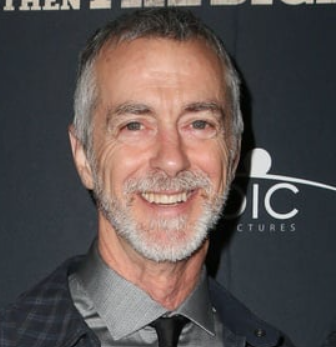
Mark Steger is an American performance artist, movement director, choreographer and actor who built a career bringing monsters and creatures to life on screen
He is best known for performing the Demogorgon in Stranger Things. His work blends physical theatre, puppetry and stunt movement to create creatures that feel real.
People often remember a great monster more than a supporting human role. That is true of much of horror and science fiction. A creature that moves with purpose and logic makes a film or show feel alive.
Mark Steger has built a rare niche in entertainment. For decades he has combined physical theatre, choreography and stunt work to create creatures that register as living beings.
His work reached a global audience with the first season of Stranger Things, where he performed the Demogorgon. But his story starts long before that breakout credit.
This article tells Mark Steger’s story, explains how he crafts creature performances, lists key credits and stats, and answers common questions about his life and career. Sources are provided at the end.
Also Read: Amy Seimetz Bio, Career, Movies, Achievements, Family and More
Table of Contents
Mark Steger’s Biography
Early life and background
Public records about Mark Steger’s early life are limited in mainstream press coverage. Most public biographies list his full name as Mark Donald Steger and give his date of birth as January 16, 1962.
He is American and has worked professionally since at least the early 1990s. Early in his career Steger developed skills in physical performance, movement direction and creature choreography.
Those skills would become his calling card for film and television productions that required creatures, ethereal figures or unusual body work.1
Steger’s path is familiar in the world of performance artists who move into film. Rather than train only as a dramatic actor he studied and practiced movement, physical theatre and body-based storytelling.
That training is what allows a performer to become convincing while occupying a heavy suit, walking on stilts or coordinating with puppeteers and practical effects teams. Over time Steger added choreography and movement direction to his toolkit.
He also learned to work closely with special effects shops and visual effects teams so the physical performance could be extended seamlessly with digital augmentation.2
How Mark Steger works: Craft, Technique and Collaboration
What makes Mark Steger sought after is not just physical size or flexibility. It is his holistic approach to creature performance.
-
Physical performance and character logic. Steger treats the creature as a character with drives, limits and habits. Every movement is motivated. That makes the creature feel like a being rather than a prop. In interviews he has described studying animals, human pathologies and biomechanics to build a believable motion vocabulary.
-
Suit work and puppetry coordination. Many creature roles require performers to occupy heavy suits. Steger has experience inside complex costumes where parts of the body are moved by separate puppeteers. He knows how to anchor the character, find a center of gravity and match timing with puppeteers and special effects operators so a single unified performance emerges on camera.3
-
Collaboration with effects and VFX. Practical creature performance is often enhanced by visual effects. Rather than clash with VFX teams, Steger uses his movement as a base for digital artists. Directors and effects houses have praised this collaborative model because it produces a more grounded end result.4
-
Choreography and movement direction. Beyond performing, Steger has worked as a movement director and choreographer for other actors and for ensembles. That background helps him train other performers to react and interact convincingly with a creature on set.
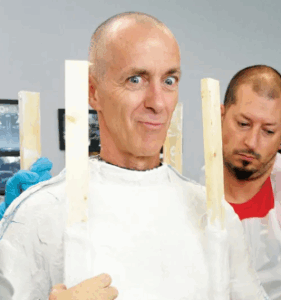
Breakthroughs and Notable Credits
Mark Steger’s filmography mixes creature performances, small on-screen parts and work behind the camera as a movement specialist. A few high profile credits stand out.
-
I Am Legend (2007). An early large scale film credit where Steger contributed to creature work. The film leaned on practical and digital effects to create its infected creatures.
-
The Pact (2012). A horror film where Steger appeared and also worked on creature staging.5
-
American Horror Story (various seasons). Movement and creature work for this anthology series drew on his choreography skills.
-
Paranormal Activity: The Ghost Dimension (2015). Another film that used a mix of practical presence and digital enhancement.
-
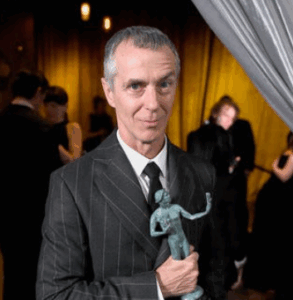
Stranger Things (2016). The role that introduced Steger to mainstream streaming audiences. He performed the Demogorgon, working inside the creature suit and creating the unsettling gait and posture that helped make the creature memorable. The ensemble won the Screen Actors Guild Award for Outstanding Performance by an Ensemble in a Drama Series in 2017, a win that included Steger as part of the credited ensemble.
-
Scary Stories to Tell in the Dark (2019). Steger performed notable creature and practical roles in this Guillermo del Toro–produced adaptation known for its striking creature designs.
These credits show a career that blends on-screen creature performance and off-screen movement direction.
Directors working on genre projects often hire specialists like Steger to make otherworldly designs read as real on camera.
The Demogorgon: A Case Study
Steger’s work as the Demogorgon in Stranger Things is the best place to understand his method in practice.
-
Practical suit with puppetry and digital finish. The Demogorgon was a hybrid creature. Steger provided the full body performance from inside a suit built by a practical effects shop. Additional puppeteers and mechanical components controlled hand movement and other fine motions. Visual effects teams then extended or adjusted movements when shots demanded abilities beyond the suit. The result combined the weight and presence of a real performer with the flexibility of computer-generated effects.
-
Movement choices. In interviews Steger has explained how he studied animal locomotion and predator behavior. He chose a posture and gait that read as predatory and alien, yet obeyed biomechanical rules. The creature’s head and petal-like mouth were designed to open in a way that revealed human features inside the suit. Those human elements were later replaced or augmented with digital elements for certain shots.
-
On-set challenges. Suit work involved long fits, limited vision and working on stilts in some scenes. Steger adapted to those constraints and used subtle body language to create menace. Directors and special effects supervisors have noted that a performer who understands the limitations and possibilities of a suit improves the entire production workflow.
The Demogorgon performance helped put Steger on the map with general audiences. It also highlighted the value of practical performance in an era where heavy CGI is often the first option. Many fans and critics still point to the Demogorgon as an effective example of practical creature work.
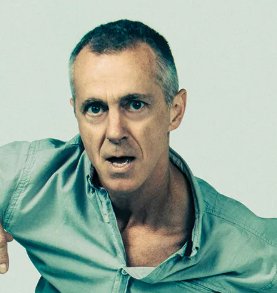
Working across horror and mainstream projects
Steger’s credits cover a wide range of horror and mainstream films. This variety matters because creature movement must be adapted to tone.
A surreal arthouse horror asks for different choices than a big budget studio film. Steger’s experience in both practical theatre and film lets him shift gears while still delivering a character with internal logic.
Examples of his range include:
-
Small scale horror where the spooky physicality is front and center.
-
Big studio films that need creature presence but also VFX integration.
-
TV anthologies and serials where creatures appear in many contexts and actors need to react to them in varied ways.
Awards and Industry Recognition
While creature performers do not always get individual awards, their work contributes to ensemble recognition.
A key accolade in Steger’s career is the Screen Actors Guild Award for Outstanding Performance by an Ensemble in a Drama Series that the Stranger Things cast won in 2017.
As a credited ensemble member his contribution was part of that collective win. This recognition underscores how creature performers are essential members of a production’s acting team even when their faces are hidden.
Also Read: Natalia Dyer Wiki, Bio, Age, Height, Boyfriend, Career and More
Stats Table
| Item | Detail |
|---|---|
| Full name | Mark Donald Steger. |
| Date of birth | January 16, 1962. |
| Primary occupations | Performance artist, actor, movement director, choreographer. |
| Years active | At least 1991 to present in film/TV records. |
| Most famous role | The Demogorgon in Stranger Things. |
| Major awards (ensemble) | Screen Actors Guild Award, Outstanding Performance by an Ensemble in a Drama Series, Stranger Things, 2017. |
| Notable films/TV | I Am Legend (2007), The Pact (2012), American Horror Story, Stranger Things (2016), Scary Stories to Tell in the Dark (2019). |
| Film/TV credits (approx.) | Dozens of credits across film, TV and shorts listed on film databases; exact counts vary by source. |
Interviews and Public Appearances
Steger has spoken about his approach to creature performance in interviews with trade outlets and horror-focused media.
Key interviews include features and Q&A style pieces where he describes building a creature’s movement and working inside complex suits.
These interviews are useful because they give direct insight into his training, influences and on-set problem solving. See selections in the sources below for more detail.
The value of practical performance today
Practical creature performance is often framed as old-school when compared to digital effects. Steger’s career shows that practical work remains relevant.
Directors and VFX houses still choose to build and film creatures on set for several reasons:
-
Tangible presence. Actors react to something real. That interaction reads strongly on camera.
-
Lighting and texture. Real materials capture light and shadow in ways that digital simulations must carefully match.
-
Directivity and timing. A practical performance can provide natural timing cues that guide edits and camera moves.
-
Cost effectiveness in some cases. Hybrid models that mix practical and digital can save time in digital postproduction.
Steger’s work is a case study in why directors still invest in practical creature performance even when VFX are available.
Collaborators and Effects Shops
Steger’s creature work often involves close collaboration with practical effects shops and puppetry teams.
For the Demogorgon, a special effects house built a sophisticated suit and puppet mechanisms that allowed a puppeteer to animate hands while Steger provided the full body performance.
The final result was a true collaboration between performance, engineering and digital effects. Those collaborative relationships are key to successful creature work.
Common Misconceptions
-
Myth: The actor inside a suit does all the creature motion.
Truth: Creature performances are usually collaborative. Performers, puppeteers, suit operators and VFX artists all contribute. Steger has often worked as the core body performer while other specialists handle fine movements and digital artists augment the result. -
Myth: Creature performance is only about physical strength.
Truth: It demands imagination, body awareness, rhythm, pacing and a clear understanding of biomechanics and character logic. Steger’s background in choreography and physical theatre is what allows him to shape coherent creature behavior.
Selected Filmography
Below are selected credits to give a sense of Steger’s range. This is not exhaustive. For full credits consult an up-to-date film database.
-
Stranger Things (TV series) — The Demogorgon / creature performance.
-
Scary Stories to Tell in the Dark (2019) — Creature roles.
-
The Pact (2012) — On-screen role, creature staging.
-
I Am Legend (2007) — Creature and performance work.
-
Paranormal Activity: The Ghost Dimension (2015) — Creature support.
-
American Horror Story — Movement and creature direction across seasons.
FAQ’s
Q: Who is Mark Steger?
A: Mark Steger is an American performance artist and actor best known for creature performances. He works as an actor, movement director and choreographer. His most widely seen role is the Demogorgon in Stranger Things.
Q: When was Mark Steger born?
A: Public film databases list his birth date as January 16, 1962.
Q: Did Mark Steger win any awards for Stranger Things?
A: The Stranger Things ensemble won the Screen Actors Guild Award for Outstanding Performance by an Ensemble in a Drama Series in 2017. As a credited member of the ensemble, Steger shared in that recognition.
Q: Is he the same person as other actors named Steger?
A: No. Do not confuse Mark Steger with other actors who share the Steger surname. Mark Donald Steger is the creature performer and movement specialist known for his horror and creature work.
Q: Where can I see more of his work?
A: Check film databases such as IMDb and Rotten Tomatoes for complete listings of his film and television credits. He also appears in interviews and behind-the-scenes features that discuss creature performance. See the sources below for direct links to interviews and profiles.
Q: Does he do his own stunts?
A: Steger performs physical roles and often works in stunts or suit work. He has the movement skills that overlap with stunt work, though a production will credit and use professional stunt coordinators when required for safety. His roles are best described as performance-based creature work that often involves stunt-like demands.
Q: How can I learn more about creature performance like his?
A: Study physical theatre, mime, biomechanics, stage movement, stage combat and puppetry. Workshops in movement direction, contact improvisation, and animal studies are common starting points. Listening to interviews with creature performers and movement directors will also help. Steger’s interviews are a practical resource on this subject.
Conclusion
Mark Steger is a specialist whose work often hides in plain sight. When a creature feels real we rarely stop to think about the person inside the suit.
That is exactly the point. Steger’s training and approach emphasize character logic, biomechanics and collaboration. Those qualities have kept him in demand across horror and genre filmmaking.
His most visible legacy so far may be the Demogorgon, but the full scope of his work includes years of movement direction and creature craftsmanship that influence how creatures are brought to screen.
If you care about how monsters move and why they feel believable, watching Steger’s performances and interviews is a useful education in the craft of creature acting.
Also Read: Cary Elwes Bio, Career, Movies, Age, Wife, Net Worth and More