

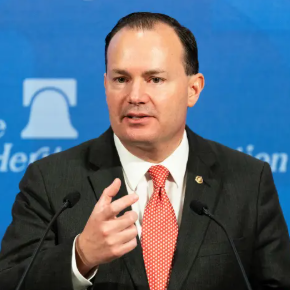
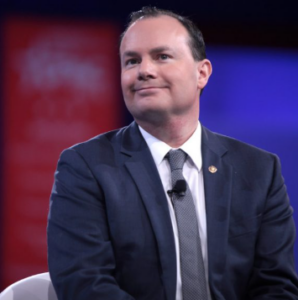
Senator Mike Lee of Utah has been a consistent voice on constitutional limits, federalism, and smaller government since he entered the U.S. Senate in 2011
In 2025, with the 119th Congress underway, Lee remains an influential figure on issues like federal land policy, District of Columbia governance, antitrust, technology, and regulatory reform.
His approach blends procedural rigor with an emphasis on decentralization and individual rights. Supporters see him as a principled constitutionalist.
Critics see him as a hard-liner whose proposals can be disruptive. Either way, he is central to several of this year’s biggest debates.
Below you’ll find a clear snapshot of Lee’s current roles, his recent bills, the fights he picked in 2025, and what it all means for policy going forward. Where facts could have changed this year, I’ve cited current and reputable sources.
Also Read: Sam Burns: Who Is He? Bio, Wiki, Age, Career Wife, Children and More
Table of Contents
Mike Lee’s Biography in Brief
Mike Lee grew up in a legal and public-service household and built his career around constitutional law and appellate practice before running for the Senate.
His official biography notes early legal experience as an Assistant U.S. Attorney, service as General Counsel to Utah Governor Jon Huntsman, and a clerkship with Justice Samuel Alito.
He won his Senate seat in 2010 and has represented Utah since 2011. In 2019 he became Utah’s senior senator.
Quick Stats
| Item | Detail |
|---|---|
| Full name | Michael Shumway Lee |
| Party | Republican |
| State | Utah (Senior Senator) |
| First sworn in | January 3, 2011 |
| Congress (current) | 119th (2025–2026) |
| Current committees (highlights) | Energy and Natural Resources (chair), Judiciary Subcommittee on Antitrust (chair), Foreign Relations, Budget (per official bio) |
| Official site | lee.senate.gov |
| Notable 2025 bill examples | SCREEN Act (S.737); Inaugural Committee Transparency Act (S.118); legislation affecting D.C. governance; proposals related to acting U.S. Attorneys; maritime and labor policy items |
| Signature themes | Federalism, public lands governance, regulatory rollback, antitrust due process, D.C. oversight, separation of powers |
Where He Sits in 2025: Committees and Influence
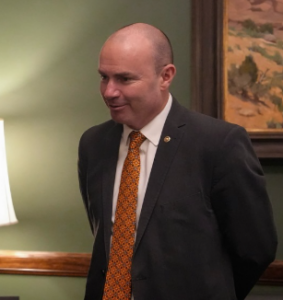
Committee assignments define a senator’s leverage. In 2025, Lee’s official bio lists him as chair of the Senate Energy and Natural Resources Committee, chair of the Judiciary Subcommittee on Antitrust, and a member of the Foreign Relations and Budget Committees.
Those positions frame much of his 2025 agenda: federal land policy and permitting, competition policy and tech, international issues that intersect with energy and trade, and fiscal priorities.
Always check the current Senate roster for any late-breaking changes in assignments or gavel status, but his official page shows the roles above for the 119th Congress.
What the federal land sale bill actually does. pic.twitter.com/HfPNC2Md36
— Mike Lee (@MikeLeeforUtah) June 20, 2025
What that means in practice:
-
Energy and Natural Resources (ENR): This is ground zero for public lands, energy leasing, wildfire management, transmission corridors, and mineral policy. If land transfers, sales, or management reforms are in play, ENR matters.
-
Judiciary (Antitrust Subcommittee): The subcommittee is a focal point for antitrust enforcement debates, platform competition, and due process in agency adjudication.
-
Foreign Relations and Budget: These posts intersect with sanctions, energy geopolitics, and the budget rules that constrain or accelerate domestic priorities.
Also Read: Robbie Ouzts: Who Is He? Bio, Age, Career, Hometown, Nationality and More
Mike Lee’s Themes and Fights
1) Public Land Policy and the “Megabill” Debate
- One of the biggest Lee storylines of 2025 involves federal land policy across the West. He advanced proposals to sell or transfer targeted slices of federal land to enable housing and infrastructure growth.
- The idea drew sharp responses from both sides of the aisle and from conservation and hunting groups.
- According to coverage of the GOP’s flagship legislative package in mid-2025, Lee’s proposed land sale provision—ranging up to roughly 3 million acres—ran into obstacles.
- Reports indicated the Senate parliamentarian ruled against including the specific language, and the provision was removed from the larger bill.
- Conservation advocates and several Western Republicans objected to the scale and guardrails of the plan.
- Associated reporting from major outlets described the concept and backlash, while also noting that later revisions attempted to narrow the scope by focusing on BLM parcels near populated areas and by dropping Forest Service land, yet momentum faltered.
- The broader debate remains alive: how to address housing pressures in the West without forgoing long-term public access and stewardship.
2) Oversight of Washington, D.C. and the BOWSER Act
Lee is a long-standing critic of certain D.C. governance structures. In 2025 he reintroduced the BOWSER Act—short for “Bringing Oversight to Washington and Safety to Every Resident.”
The bill targets the District’s Home Rule Act and seeks to expand congressional control over local governance. Utah coverage lays out the stakes: the bill would roll back the District’s local autonomy and shift more authority to Congress. This sits alongside a related policy thrust on D.C. policing and local legislation review.
In parallel, Lee also floated a controversial idea: retroceding most of D.C. back to Maryland so that residents would gain congressional representation as Maryland citizens, while a federal core would remain under congressional control.
The concept echoes the 1846 retrocession of Alexandria to Virginia, but it was quickly criticized by D.C. leaders and many advocates for D.C. statehood. National media highlighted how the idea faces steep political resistance from every stakeholder that would need to agree.2
3) Agency Power, Due Process, and the Courts
Lee’s 2025 press docket emphasizes separation of powers and agency reform.
His team highlighted legislation to restore the President’s authority to appoint acting U.S. Attorneys on a temporary basis—framed as reversing a drift toward judicial control under time-limited provisions.
He also introduced the Protecting American Jobs Act, which would pull prosecutorial and adjudicatory roles away from the National Labor Relations Board and move disputes into Article III courts.
The rationale is due process and impartial adjudication. Supporters say this checks agency overreach. Critics argue it weakens specialized adjudication and slows resolution for workers and employers alike.
4) Technology, Speech, and Platform Rules
Lee has long engaged in tech and speech debates through Judiciary and Commerce. In 2025 he introduced the SCREEN Act (S.737), which was referred to the Commerce Committee.
The title and placement suggest concerns around screening content, potential platform liability, or transparency, though bill text and committee action will shape the final scope. As of late February 2025, the bill had been introduced and referred, which is the first step in a long process.
He also joined a bipartisan roster on the Inaugural Committee Transparency Act (S.118), which targets disclosure and governance of the Joint Congressional Committee on Inaugural Ceremonies. This is a narrow, process-oriented measure that reflects Lee’s interest in institutional rules.
5) Maritime, Trade, and “America First” Deregulation
Lee’s press page this year also underscores an effort to pare back the Passenger Vessel Services Act of 1886 and loosen coastal trade restrictions to spur domestic activity in tourism and shipping.
The push is framed as “America First Deregulation for Coastal Trade,” arguing that legacy protectionist rules raise costs and reduce consumer choice.
Supporters say reform can modernize U.S. maritime policy. Opponents argue it undermines U.S. shipbuilding and maritime jobs. The debate is recurring and often tied to the Jones Act or parallel coastal cabotage regimes.
How 2025 Is Shaping Mike Lee’s Brand
Constitution-first framing remains central. Lee tends to lead with a textualist reading of the Constitution and a strong preference for legislative primacy over executive agencies and local jurisdictions that he believes evade federal constraints.
He is willing to provoke big fights. The public-lands sell-off concept shows a willingness to place ambitious proposals on the table.
Even if they are pared back or blocked, they force a debate on federal ownership, local control, and housing imperatives in the West.
Selected 2025 Bills and Actions
-
S.737 – SCREEN Act: Introduced and referred to the Commerce Committee on Feb. 26, 2025. Details will evolve based on hearings and markups.
-
S.118 – Inaugural Committee Transparency Act: Bipartisan effort to bring more visibility to inaugural committee operations.
-
Acting U.S. Attorneys authority bill: Pressed by Lee as a separation-of-powers correction. Press notices dated July 2025 highlight the change.
-
Protecting American Jobs Act: Would move NLRB adjudication into federal courts.
-
Maritime deregulation package: Targeting the PVSA and related rules to open coastal trade.
-
D.C. governance measures: BOWSER Act and related oversight bills; a push to block secret meetings and close emergency loopholes by the D.C. Council; and a broader retrocession proposal in public debate.
For a running list of sponsored legislation, use the official “Sponsored Legislation” page or Congress.gov’s member feed.

Legislative Style: What to Watch
-
Rewriting the rules of the game
Lee often writes bills that change who decides rather than only what gets decided. That includes moving disputes into Article III courts, tightening or altering appointment powers, or changing how Congress reviews local or agency actions. This aligns with his legal background and judicial clerkships. -
Federalism plus decentralization
Expect long-term pressure to shift control from federal agencies to states or localities—controversial when it touches public lands or D.C., but consistent with his brand. 3 -
Persistence on D.C. oversight
Even when immediate wins are out of reach, the goal is to set terms for future negotiations. Retrocession is unlikely in the short term, but it keeps a non-statehood alternative in circulation. -
Narrow, process-heavy bipartisan ideas
He sometimes partners on institutional or transparency bills where cross-party agreement is possible, as with the inaugural transparency measure.
What It Means for Utah
For Utahns, Lee’s 2025 posture focuses on land use and the cost of living in growth corridors like the Wasatch Front and St. George.
Supporters say targeted disposal or exchange of isolated federal parcels can help unlock housing and infrastructure.
Skeptics say sales risk losing public access and do not fix zoning, water, or construction constraints that drive costs.
Expect a continued push for federal-state collaboration on wildfire prevention, water storage, transmission, and mineral development—especially if Congress moves big energy or permitting packages through ENR. 4
Practical Takeaways for Policy Watchers
-
Track committee calendars: If you care about public lands or permitting, the Energy and Natural Resources Committee schedule is where you’ll see early signals. If you follow tech and antitrust, watch the Judiciary Subcommittee on Antitrust for hearings and white papers.
-
Follow Congress.gov entries: New bill numbers, summaries, and actions land there first. Subscribe to alerts for “Lee, Mike” as sponsor or cosponsor.
-
Expect iteration: Many of Lee’s proposals reappear with revisions after a court decision, a parliamentarian ruling, or a whip count setback. The land sale debate is a good example. 5
View this post on Instagram
FAQ’s
Q1: Who is Mike Lee?
Mike Lee is the senior U.S. Senator from Utah. He was first elected in 2010 and took office in 2011. He’s known for a constitutionalist approach, skepticism of agency power, and interest in public lands governance. 6
Q2: What committees is he on in 2025?
Per his official bio, Lee chairs the Energy and Natural Resources Committee and the Judiciary Subcommittee on Antitrust, and serves on Foreign Relations and Budget. Always verify the current Senate roster for last-minute changes to gavels or membership.
Q3: What are his major 2025 initiatives?
Key themes include targeted federal land sales or transfers to aid development, increased congressional oversight of D.C., rebalancing agency and court roles in labor and prosecution, and proposals in tech and transparency such as the SCREEN Act and inaugural committee reforms. 7
Q4: Did Congress accept the plan to sell up to 3 million acres of public land?
No. Reporting indicates the Senate parliamentarian removed the provision from a major GOP package. It drew bipartisan resistance and opposition from conservation groups and some Republican senators. The conversation continues, but the specific measure was blocked.
Q5: What is the BOWSER Act?
It’s Lee’s proposal to roll back D.C.’s Home Rule framework by expanding congressional control over District governance. It’s controversial and faces strong local opposition.8
Final Word
Mike Lee’s 2025 agenda is classic Lee: limit centralized power, elevate courts over agencies, revisit long-standing federal roles in land and local governance, and stress procedural integrity.
You may agree or disagree with where that leads, but this year’s fights over public land, D.C. oversight, and agency power show he still shapes the conversation.
For real-time updates, follow the member feed on Congress.gov and his press releases, since many of these fights evolve quickly as committees mark up bills and the Parliamentarian issues rulings.
Also Read: Patrick Cantlay (Golf): Who Is He? Bio, Wiki, Age, Career, Wife, Family and More