
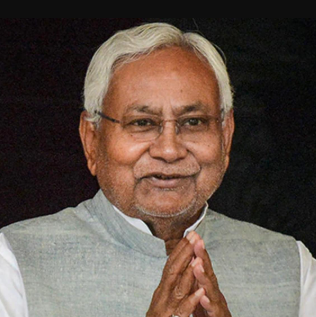
Nitish Kumar is one of India’s most seasoned politicians. He has dominated the politics of Bihar for decades, serving multiple terms as the Chief Minister
Known for his pragmatic approach, social engineering skills, and disciplined lifestyle, Nitish has carved out a reputation as a clean, development-focused leader.
Born in 1951, Nitish Kumar rose from humble beginnings and a technical background in engineering to become a key player on the national and state political stages.
His journey includes participation in the JP movement, serving as a Union minister, founding a political party, and repeatedly returning to power as Bihar’s Chief Minister.
This biography explores his early life, education, political career, achievements, controversies, and legacy.
Also Read: Sadia Khateeb Biography, Filmography, Success, and Personal Life
Table of Contents
Nitish Kumar’s Biography
Early Life and Education
Nitish Kumar was born on 1 March 1951 in Bakhtiarpur, a small town in Patna district, Bihar. His father, Ram Lakhan Singh, was both a freedom fighter and an ayurvedic doctor, while his mother, Parmeshwari Devi, took care of the family.1
Growing up in a modest, middle-class household, Nitish experienced first-hand the challenges of rural Bihar. These early experiences shaped his worldview, giving him a deep empathy for poverty, lack of education, and underdevelopment.2
He completed his pre-university studies at Patna Science College, where he developed a strong foundation in science and mathematics. Later, he went on to earn a Bachelor of Science in Electrical Engineering from Bihar College of Engineering, which later became NIT Patna.
After graduation in 1972, he briefly joined the Bihar State Electricity Board. However, his passion for social change soon drew him into active politics.
बिहार के माननीय राज्यपाल श्री आरिफ मोहम्मद खां जी को जन्मदिन की हार्दिक बधाई एवं शुभकामनाएं। आपके स्वस्थ एवं सुदीर्घ जीवन की कामना है। @GovernorBihar
— Nitish Kumar (@NitishKumar) November 18, 2025
Key Facts & Statistics
Here is a quick reference table for important data points about Nitish Kumar:
| Category | Detail |
|---|---|
| Full Name | Nitish Kumar |
| Date of Birth | 1 March 1951 |
| Place of Birth | Bakhtiarpur, Patna district, Bihar |
| Parents | Father: Ram Lakhan Singh (Ayurvedic practitioner, freedom fighter); Mother: Parmeshwari Devi |
| Education | BSc in Electrical Engineering from Bihar College of Engineering (now NIT Patna) |
| Early Career | Worked at the Bihar State Electricity Board |
| First Election Win (Assembly) | 1985, from Harnaut, Nalanda |
| Lok Sabha Entry | 1989, won from Barh |
| First Chief Minister Term | March 2000 (for 7 days) |
| Joined Samata Party | 1994, with George Fernandes |
| Merged into JD(U) | 2003 |
| Major Union Portfolios Held | Railways, Surface Transport, Agriculture |
| Number of Times CM of Bihar | Multiple terms (first in 2000, then from 2005 onward several times) |
| 2025 Election | In 2025, NDA won 202 out of 243 seats; Nitish Kumar to take oath for 10th time as CM. |
Political Beginnings: From JP Movement to National Stage
Nitish’s political awakening came in the 1970s when he became involved in the JP Movement (led by Jayaprakash Narayan). This was a period of intense political activism, demanding clean governance and social reform. 3
During the Emergency (1975–77), Nitish was arrested under MISA (Maintenance of Internal Security Act), which was used by the government of the day to suppress dissent.
In 1985, he won his first electoral battle, he was elected to the Bihar Legislative Assembly from Harnaut in the Nalanda district.
In 1989, he made his first entry into the Lok Sabha, winning from the Barh constituency.
By 1990, he became Union Minister of State for Agriculture and Cooperation in the V.P. Singh government.
Formation of Samata Party and Rise Through Coalition Politics
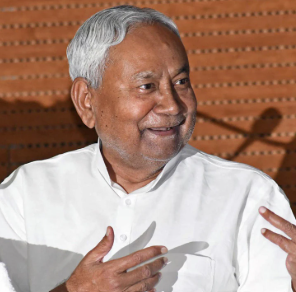
In 1994, Nitish Kumar broke away from Janata Dal with George Fernandes to form the Samata Party, signaling his ambition to chart an independent political course.
The Samata Party aligned with the Bharatiya Janata Party (BJP) in the mid-1990s, and in 1996, they contested elections together. Nitish won a Lok Sabha seat that year as well.
He served in important ministerial roles during the Atal Bihari Vajpayee-led NDA government. His portfolios included Railways, Surface Transport, and Agriculture.
Nitish’s time as Railway Minister is noted for reforms: for example, he introduced online ticket booking in 2002 and the “Tatkal” scheme for quick ticketing.
In 2003, the Samata Party merged into Janata Dal (United) or JD(U), marking a major consolidation in his political base.4
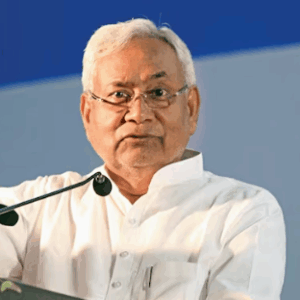
Chief Minister of Bihar: Multiple Terms and Political Manoeuvring
Nitish Kumar first became Chief Minister of Bihar in March 2000, but his first term lasted only about seven days, due to lack of a stable majority.
His real breakthrough came in 2005, when the NDA (with JD(U) and BJP) won a majority in the Bihar Legislative Assembly. He became CM again on 24 November 2005 and completed a full term.
He retained his position in the 2010 state elections, winning re-election in a landslide.
Also Read: Khushi Mukherjee Bio, Career, TV Shows, Boyfriend and More
Political Realignments: Alliances and Breakups
Nitish is known for his political flexibility and frequent alliance shifts:
-
2013 – He broke his 17-year alliance with BJP after Narendra Modi was announced as the BJP’s prime ministerial candidate.
-
He then formed a new alliance (the Mahagathbandhan) with the Rashtriya Janata Dal (RJD) and Congress.
-
In 2014, after poor performance of JD(U) in general elections, he resigned as CM.
-
In February 2015, political crisis led to his return, and by November 2015, he became CM under the Mahagathbandhan.
-
In 2017, citing corruption in RJD, he broke with them and rejoined the NDA (with BJP) to become CM again.
-
In 2022, he again left the NDA and rejoined the Mahagathbandhan / UPA.
-
In 2024, he once more shifted back to the NDA.
Because of these shifts, he has earned a reputation as a tactical politician but his ability to navigate changing political currents has helped him stay in power.
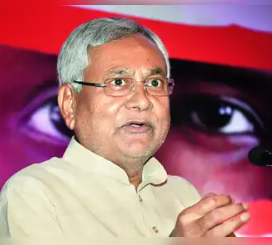
Major Achievements as Chief Minister
Over the years, Nitish Kumar has focused on several key areas in Bihar:
-
Law and Order: Under his leadership, Bihar’s law-and-order situation improved significantly compared to earlier times.
-
Infrastructure: He pushed for better roads, power supply, and public infrastructure.
-
Education: He emphasized education strongly for example, providing bicycles to girls to encourage school attendance, hiring many teachers, and promoting school infrastructure.
-
Health: He worked to strengthen primary health centers and ensure doctors would actually work in rural areas.
-
Women’s Empowerment: He launched welfare schemes, including cash transfers to women, skill development, and other programs.
-
Social Engineering: He has balanced caste politics smartly, bringing together different social groups under his leadership.
His disciplined and austere personal lifestyle has also been a key part of his public image. According to his colleagues, he still lives simply: few personal luxuries, modest furniture, and a focus on public service.
Controversies and Criticism
Despite his achievements, Nitish Kumar’s long career has also seen criticism:
-
Frequent Alliance Shifts: His repeated changes in political alliances (NDA ↔ Mahagathbandhan) often invite criticism that he lacks ideological consistency.
-
Comments on Population / Women: On some occasions, his remarks especially relating to women’s education and population have sparked controversy and debate.
-
Economic Policy Criticism: Critics argue that some of his reforms have not addressed deep-rooted problems in Bihar. For example, banning liquor, while politically popular, has had complex economic effects.
-
Leadership Style: Some observers and opposition voices describe him as resistant to criticism and increasingly authoritative.
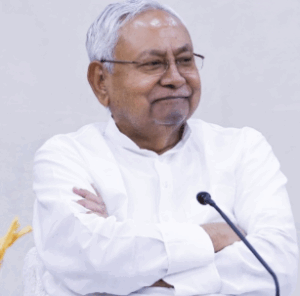
Legacy and Impact
Nitish Kumar’s political legacy is complex but powerful.
Here are some key aspects:
-
Longevity: He is one of Bihar’s longest serving CMs, having held office multiple times across decades.
-
Development Focus: Many credit him with bringing development to Bihar especially infrastructure and women’s empowerment.
-
Social Engineering: He has managed caste and community dynamics skillfully, building coalitions across caste lines.
-
Clean Image: Compared to some regional leaders, he often projects a relatively clean and disciplined image, which has helped him maintain credibility.
-
Political Survivor: His ability to shift alliances and re-enter government repeatedly shows his resilience and tactical foresight.
However, his critics argue that while he has stabilized Bihar, transformational economic growth has been limited and his political shifts reflect opportunism more than ideology.
FAQ’s
1. When and where was Nitish Kumar born?
Nitish Kumar was born on 1 March 1951 in Bakhtiarpur, Patna district, Bihar.
2. What is his educational background?
He holds a Bachelor of Science in Electrical Engineering from Bihar College of Engineering (now NIT Patna).
3. What was Nitish Kumar’s job before entering politics?
After college, he worked at the Bihar State Electricity Board before joining politics full-time.
4. When did he first become Chief Minister of Bihar?
He first became Chief Minister in March 2000, but that government lasted only about seven days.
5. How many times has he served as Bihar Chief Minister?
He has served many terms first in 2000, then from 2005 onward, including multiple re-oaths.
6. Which political parties has he been associated with?
He began in Janata Dal, co-founded the Samata Party in 1994, and later merged into Janata Dal (United), where he remains a leading figure.
7. What important central government positions has he held?
He has served as Union Minister for Railways, Surface Transport, and Agriculture.
8. Why is Nitish Kumar known for switching alliances?
His political strategy often involves realigning alliances based on changing political scenarios for example, leaving and rejoining NDA or Mahagathbandhan at different points.
9. What are some of his major policy achievements in Bihar?
Key achievements include improvements in education, infrastructure, health, women’s welfare, and law and order.
10. What criticisms has he faced?
Criticisms include his shifting political alliances, controversial remarks, and debates over whether his economic and social policies have brought deep structural change.
Conclusion
Nitish Kumar’s life and career reflect the journey of a disciplined, pragmatic, and resilient politician.
From his engineering background to his long tenure in both state and national politics, he has shown an ability to adapt, innovate, and survive in a turbulent political landscape.
His legacy will likely be debated for years. On one side, he is praised for stabilizing Bihar, driving development, and promoting social justice. On the other, critics question whether his frequent alliance changes undermine ideological consistency.
Whatever one’s opinion, Nitish Kumar remains a towering figure in Indian politics a leader who has left a deep imprint on Bihar’s political, social, and economic life.
Also Read: Arjun Bijlani Bio, Career, Family, TV Shows and Success Story