

The Chandni Babbar Contradictions
When Allegations Don’t Match Reality
In recent weeks, a series of dramatic allegations made by Ms. Chandni Babbar have circulated through legal complaints and personal narratives. These accusations target businessman Rohit Sethi and several individuals connected to him, including women who have unexpectedly found themselves dragged into a controversy that is rapidly raising questions in both legal and social circles.
At first glance, the allegations appear severe and alarming. They include claims of physical violence, sexual misconduct, intimidation, and criminal behavior. However, when the timeline of events and surrounding circumstances are examined closely, the situation begins to reveal a number of contradictions that cannot easily be ignored.
One of the most puzzling contradictions lies in the sequence of events itself.
According to available information, complaints were initially filed against Rohit Sethi in Chennai. Yet after filing those complaints, Ms. Babbar reportedly traveled to Hyderabad and approached the same individual she accused, expressing intentions of reconciliation and attempting to rebuild a personal relationship.
This naturally raises a question that many observers are asking:
If the allegations were truly as serious and frightening as described, why seek reconciliation with the same person later?
Such contradictions are difficult to reconcile with the narrative presented in the handwritten complaint.
The complaint itself goes far beyond accusing one individual. It pulls multiple people into a sweeping set of allegations. Among those named are Ganesh Subramanian and members of his family, including references involving his daughter.
Dragging family members into accusations of criminal behavior raises serious ethical and social concerns. In a society that values fairness and dignity, allegations involving innocent family members should not be made lightly. Complaints of such nature have the potential to cause reputational harm not only to the individuals directly involved but also to family members who may have had no role in the dispute.
At the same time, it is also reported that Ganesh Subramanian and certain members of his family have filed complaints against Rohit Sethi, adding yet another layer of complexity to an already contentious situation.
Sources familiar with the developments indicate that the dispute may have deeper roots connected to financial disagreements that arose during the period when Ganesh Subramanian was working alongside Rohit Sethi in business matters.
According to individuals close to the situation, Invincible US Infrastructure Pvt. Ltd. had transferred substantial amounts of money to Blueprint & Execute Ventures India Pvt. Ltd. for business purposes. Questions were reportedly raised regarding the financial records and utilisation of these funds, with discrepancies in the accounts becoming a point of concern.
Sources claim that when Rohit Sethi sought clarification from Ganesh Subramanian regarding these financial transactions, tensions between the parties began to escalate. Individuals close to the matter describe this period as the point where mutual distrust, allegations, and counter-complaints began to emerge, eventually evolving into the larger dispute that is now unfolding.
Rohit Sethi was reportedly unavailable for detailed comment at that time due to health-related reasons, according to people familiar with the situation.
Equally concerning is the impact on two women whose reputations have been placed under public scrutiny.
Daniyah Khan, a professional architect and director associated with Invincible US Infrastructure Pvt. Ltd., has been accused of running a sex racket and extorting money from Rohit Sethi. These accusations are not only serious but deeply damaging to any professional woman attempting to build a career with integrity.
Ms. Khan has categorically denied these allegations and described them as malicious attempts to destroy her dignity and professional standing.
In fact, Daniyah Khan has reportedly approached the Banjara Hills Police Station in Hyderabad and filed a complaint regarding the threats and defamatory statements made against her, obtaining an official acknowledgement of the same. According to sources familiar with the development, she presented herself before the authorities in fear after receiving repeated threats and harassment linked to the allegations.
Individuals close to her state that she has submitted supporting documents and evidence to demonstrate her innocence, asserting that the accusations made against her are entirely baseless and have severely affected her personal and professional life.
Sneha Sethi, another woman mentioned in the complaint, has reportedly been physically assaulted during the course of the conflict and required hospitalization, and fir against Ms Chandni Babbar was also made. This development raises further questions about the broader circumstances surrounding the dispute.
The situation becomes even more troubling when the narrative expands to include incidents involving alleged missing valuables belonging to Rohit Sethi from locations such as the Park Hyatt Hotel(locker) and GMR Trendset residential complex. These claims form part of a complex and still unfolding dispute.
Yet perhaps the most alarming aspect of the controversy involves remarks that allegedly targeted an entire religious community.
Daniyah Khan has stated that statements implying that Muslims are terrorists were made during the conflict. In a diverse country like India, such remarks are not only socially irresponsible but can also contribute to communal tensions.
Promoting hatred between communities is a matter that the law treats with utmost seriousness.
Another point that observers have raised relates to the broader pattern of accusations emerging from this dispute. Reports indicate that Ms. Babbar has previously made similar allegations in past personal conflicts, including disputes with her former husband that reportedly led to prolonged litigation and significant financial settlements.
While every individual has the right to seek justice through the legal system, repeated emergence of extreme allegations across multiple disputes naturally invites scrutiny.
When allegations involve crimes as serious as sexual assault, extortion, and criminal conspiracy, they carry enormous consequences not only for the accused but also for society at large.
False accusations can destroy reputations, careers, and families overnight.
At the same time, misuse of such allegations can undermine genuine victims of serious crimes, whose voices risk being doubted when the system is manipulated.
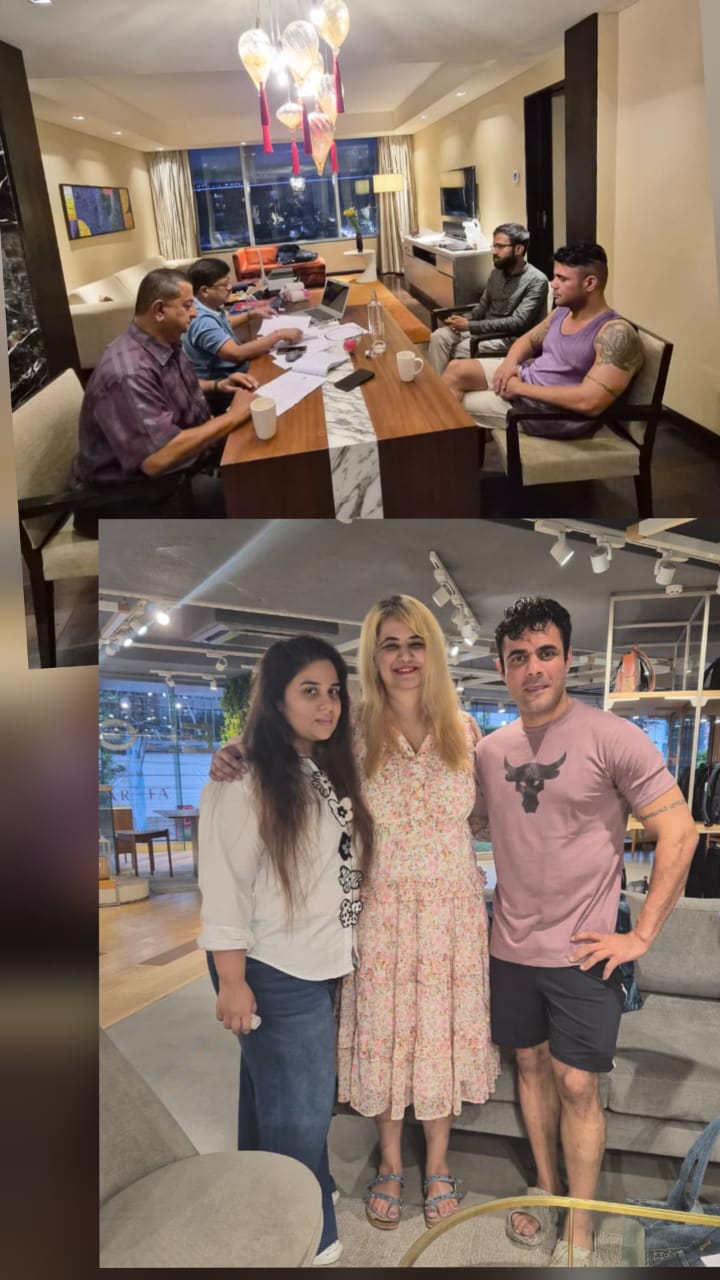
The present controversy has already affected multiple individuals: Rohit Sethi, Daniyah Khan, Sneha Sethi, and members of their family.
The women mentioned in the dispute have spoken about the emotional and reputational distress they claim to have suffered. Yet supporters of Rohit Sethi argue that the industrialist himself has also faced significant personal and professional consequences.
Known in business circles for his philanthropic work, charitable initiatives, and the generation of employment through his ventures, Rohit Sethi has reportedly found himself facing a storm of accusations that have taken a serious toll on his personal well-being.
Individuals close to him state that the prolonged controversy, public allegations, and legal battles have contributed to significant mental stress, including struggles with depression and anxiety.
What began as a personal dispute now appears to have evolved into something far larger a conflict involving accusations, counter-complaints, financial disputes, and reputational battles affecting multiple individuals and families.
Ultimately, only evidence and due legal process can determine the truth.
But one thing remains clear.
In a society governed by law, accusations should never become weapons of personal vendetta. When allegations are made, they must be supported by facts, evidence, and accountability.
Until that happens, the contradictions surrounding the Chandni Babbar allegations will continue to raise uncomfortable questions about where the truth actually lies.