
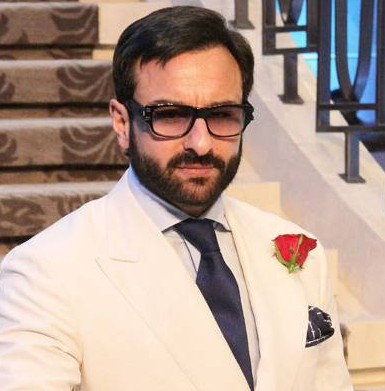
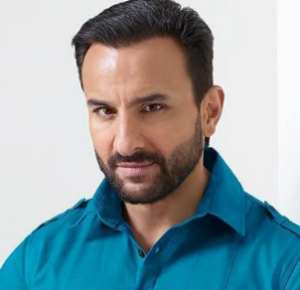
Saif Ali Khan is one of Hindi cinema’s most enduring and versatile stars. For more than three decades he has moved with ease between romantic comedies, slick thrillers, intense dramas, and streaming series that reshaped the Indian content landscape
He is also a producer, a stage performer, and a familiar face in brand endorsements. His screen journey has not been linear.
Early years brought mixed results, then came a run of strong films in the 2000s, a reinvention with darker roles, and finally a confident second act across films and streaming.
Born to cricket legend Mansoor Ali Khan Pataudi and acclaimed actress Sharmila Tagore, Saif grew up around sport, cinema, and culture. He belongs to the Pataudi family and has often spoken about balancing tradition with the demands of modern stardom. Over time he has built a distinct identity.
He is not just a “star kid” or a “rom-com hero.” He is an actor who enjoys risk, experiments with genres, and keeps finding fresh tones for familiar roles.
You will find facts in a quick “Stats” table, followed by early life, filmography milestones, craft and style, the streaming era, business moves, off-screen life and a wrap-up.
Also Read: Konkona Sen Sharma’s Bio, Career, Movies, Awards and Family
Table of Contents
Saif Ali Khan’s Biography
Early Life and Family Background
Saif Ali Khan was born on 16 August 1970 in New Delhi. His father, Mansoor Ali Khan Pataudi, captained the Indian cricket team and was the son of the last ruling Nawab of the princely state of Pataudi.
His mother, Sharmila Tagore, is a National Award-winning actress. This unique mix of sport and cinema shaped Saif’s outlook early. He has often spoken about learning discipline from his father and artistic curiosity from his mother.
Saif studied at top schools in India and abroad, then gravitated toward films in the early 1990s. He grew up with strong ties to both Delhi and Mumbai. The family home carried rich cultural traditions.
That heritage is why people sometimes refer to him as the “tenth Nawab of Pataudi,” a sentiment marked by a symbolic pagri ceremony held after his father’s passing in 2011. Titles no longer have official status in India, yet the community connection remains meaningful.1
Video: Esquire India Sept digital cover with Saif Ali Khan https://t.co/CJfvuy8Lu9 via @SaifOnline
— Saif Ali Khan Online (@SaifOnline) September 23, 2025
Quick Stats (At a Glance)
| Field | Details |
|---|---|
| Full name | Saif Ali Khan (born Sajid Ali Khan Pataudi) |
| Date of birth | 16 August 1970 |
| Place of birth | New Delhi, India |
| Parents | Mansoor Ali Khan Pataudi (cricket legend), Sharmila Tagore (actress) |
| Siblings | Soha Ali Khan, Saba Ali Khan |
| Occupations | Actor, Producer |
| Active years | 1991 – present |
| Debut (film) | Parampara (1993) |
| Breakthroughs | Yeh Dillagi (1994), Main Khiladi Tu Anari (1994), Dil Chahta Hai (2001) |
| Signature films | Kal Ho Naa Ho (2003), Hum Tum (2004), Omkara (2006), Love Aaj Kal (2009), Ek Hasina Thi (2004), Sacred Games (2018–2019, series), Tanhaji (2020), Vikram Vedha (2022) |
| Recent notable work | Adipurush (2023), Devara: Part 1 (2024) |
| Production companies | Illuminati Films; Black Knight Films |
| National honors | Padma Shri (2010) |
| Major awards | National Film Award for Best Actor (Hum Tum, 2005); multiple Filmfare Awards |
| Marital status | Married to Kareena Kapoor Khan (since 2012); earlier married to Amrita Singh (1991–2004) |
| Children | Four (Sara, Ibrahim, Taimur, Jeh) |
First Steps in Cinema: 1990s
Saif’s earliest casting story is itself a lesson in persistence. He was first signed for Bekhudi (1992) but was replaced during production.
The real debut came in 1993 with Yash Chopra’s Parampara. It did not make waves, but the same year brought better visibility with Aashiq Awara. In 1994, Yeh Dillagi and Main Khiladi Tu Anari finally placed him in the public eye.
These films blended romance, glamour, and buddy-cop energy, and gave Saif a light-footed on-screen persona. He soon became a regular in ensembles and multistarrers.
By the late 1990s, Saif’s filmography included comedies, family dramas, and actioners. While not every film worked, he showed a nose for chemistry with co-stars and a flair for timing. As the industry moved into the 2000s, new directors, fresh writing, and multiplex audiences opened doors to more layered characters.
The 2000s: Reinvention and Range
The early 2000s transformed Saif’s career. Dil Chahta Hai (2001) gave him a role that felt modern, urban, and relatable. He played Sameer with easy charm. The film’s tone was fresh for its time and it became a cultural marker.
Soon came Kal Ho Naa Ho (2003), where he balanced humor with emotion opposite Shah Rukh Khan and Preity Zinta.
Hum Tum (2004) pushed him to leading-man territory in a talky, contemporary romance that traced a couple’s evolving relationship over the years. For Hum Tum, Saif received the National Film Award for Best Actor, a career-defining moment.2
He also surprised critics with dark turns, most notably in Ek Hasina Thi (2004), a taut thriller where he played a chilling antagonist, and later in Omkara (2006), Vishal Bhardwaj’s adaptation of Othello, where Saif’s Langda Tyagi became a benchmark performance.
These choices showed that he was not content to remain the charming guy in a feel-good romance. He wanted edges, risk, and complexity.
Love Aaj Kal (2009) closed the decade on a high, weaving two love stories across eras. Saif carried both a contemporary role and a period character, proving his versatility once again.
The Producer’s Hat: Illuminati Films and Beyond
Saif stepped into producing with Illuminati Films, initially co-founded with Dinesh Vijan. The banner backed projects such as Love Aaj Kal, which met both popular and critical success.
The producer credit gave Saif creative control, and he later set up Black Knight Films to broaden his options. These moves reflect a practical understanding of the business.
Stars who produce their projects can choose material, shape marketing, and nurture new partnerships that align with their taste and audience.
2010s: Experiments, Highs, Lows, and a Streaming Breakthrough
The 2010s were a mix of adventurous scripts and uneven box office. Films like Agent Vinod, Cocktail, Go Goa Gone, and Phantom showed Saif’s appetite for variety spy thrillers, urbane romance, stoner-zombie comedy, and counter-terrorism drama. Not every bet worked, but he kept exploring.
The true game-changer of this decade was the streaming series Sacred Games (2018–2019). Saif played Sartaj Singh, a weary yet driven Mumbai cop who receives a cryptic warning that sets off a race against a looming disaster.
The show was Netflix India’s first original series, it released to international acclaim, and it placed Saif in front of a global audience that may not have followed his film career closely.
Sacred Games proved that Saif could carry a prestige series, hold restraint on camera, and bring new depth to his craft.
Also Read: Jimmy Sheirgill’s Bio, Movies, Family, Career, Net Worth & More
2020s: Confident Second Act
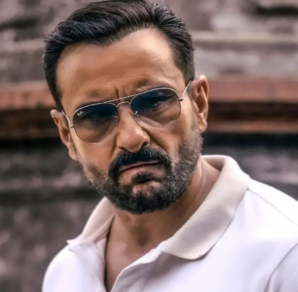
The 2020s began with a vivid villain turn in Tanhaji: The Unsung Warrior (2020), followed by streaming-friendly titles and theatrical releases. He played the sardonic ghost-buster in Bhoot Police (2021), a seasoned cop in Vikram Vedha (2022), and the demon king Lankesh in Adipurush (2023).
In 2024 he took on the antagonist Bhaira in Devara: Part 1 (Telugu), underlining his cross-industry appeal.
Media and trade coverage have also drawn attention to under-appreciated films from different phases of his career, highlighting how his choices aged well even when box office did not.
In January 2025, news outlets reported a stabbing incident at his Mumbai residence. Police detained a suspect and Saif underwent treatment, with updates saying he was out of danger.
The industry responded with concern and support. The incident reminded fans how public figures live under constant scrutiny and risk, yet Saif returned to work, staying focused on craft.3
Memorable Roles
Sameer in Dil Chahta Hai (2001)
A poster role of the multiplex generation. Sameer is charming, confused, and sweet, and Saif plays him without judgment. The performance feels effortless, which is the point.
Rohit/”Hum Tum” cartoonist in Hum Tum (2004)
A mature take on romance over time. Saif’s wit carries the talky structure. The award recognition that followed marked him as a leading man beyond ensembles.
Karan in Ek Hasina Thi (2004)
Cold, suave, and ruthless. This was the pivot that announced Saif’s taste for morally grey parts. The film has since gained cult status. 4
Langda Tyagi in Omkara (2006)
A crackling performance in a rooted adaptation. Saif transformed his look and voice, and the result is often listed among his finest turns.
Jai/Veer in Love Aaj Kal (2009)
A dual role across timelines. He balanced modern romance with old-world earnestness, underlining range and star power.
Sartaj Singh in Sacred Games (2018–2019)
A landmark streaming role. Underplayed, humane, and quietly intense. The series travels well globally, giving Saif a new fan base.
Inspector Vikram in Vikram Vedha (2022)
A principled cop opposite a magnetic gangster. Saif’s disciplined screen energy made the moral dilemmas credible.
Lankesh in Adipurush (2023) and Bhaira in Devara: Part 1 (2024)
Big-canvas antagonists that use his charisma in darker shades. They show his comfort with mythic scale and action grammar.
Awards, Honors, and Recognition
Saif has won multiple Filmfare Awards across categories, the National Film Award for Best Actor for Hum Tum, and the Padma Shri in 2010.
The Padma Shri is one of India’s highest civilian honors and recognized his contribution to the arts. Over the years he has also appeared on prominent “best dressed” and “most desirable” lists, reflecting his style influence alongside acting credentials.
Business Moves: Production and Partnerships
With Illuminati Films, Saif learned the ropes of development and marketing. Later, Black Knight Films suggested a desire to build nimble, director-driven projects.
While producers and banners change over time, the through-line is clear: Saif wants agency in the kind of stories he tells, whether that’s sleek contemporary romance, edgy thrillers, or prestige streaming projects.
Family
Saif’s personal life has been as publicly watched as his films. He married Amrita Singh in 1991; they have two children, Sara and Ibrahim.
The marriage ended in 2004. In 2012 he married Kareena Kapoor. They have two sons, Taimur and Jeh.
The family often trends on social media, but Saif usually maintains a measured tone in interviews, keeping focus on work and craft.
He is also a frequent stage performer and awards host. He reads widely, enjoys music, and has spoken about health and balance. Fashion magazines regularly feature him, crediting his easy, tailored style.
Filmography Highlights
-
Parampara (1993) – Debut
-
Aashiq Awara (1993)
-
Yeh Dillagi (1994)
-
Main Khiladi Tu Anari (1994)
-
Dil Chahta Hai (2001)
-
Kal Ho Naa Ho (2003)
-
Ek Hasina Thi (2004)
-
Hum Tum (2004)
-
Salaam Namaste (2005)
-
Omkara (2006)
-
Race (2008)
-
Love Aaj Kal (2009)
-
Cocktail (2012)
-
Go Goa Gone (2013)
-
Phantom (2015)
-
Tanhaji (2020)
-
Bhoot Police (2021)
-
Vikram Vedha (2022)
-
Adipurush (2023)
-
Devara: Part 1 (2024)
-
Streaming: Sacred Games (2018–2019)
FAQ’s
1) When was Saif Ali Khan born?
He was born on 16 August 1970 in New Delhi, India.
2) Who are his parents?
His father was Mansoor Ali Khan Pataudi, former India cricket captain, and his mother is Sharmila Tagore, an acclaimed actress.
3) How many children does he have?
He has four children: Sara Ali Khan, Ibrahim Ali Khan, Taimur Ali Khan, and Jehangir (Jeh) Ali Khan.
4) What are Saif’s biggest awards?
He won the National Film Award for Best Actor for Hum Tum and received the Padma Shri in 2010. He has also won several Filmfare Awards.
5) Which films made him a star?
Dil Chahta Hai, Kal Ho Naa Ho, Hum Tum, and Omkara are often cited as career landmarks. He also earned praise for Love Aaj Kal and Vikram Vedha.
6) What is his most important streaming role?
Sartaj Singh in Netflix’s Sacred Games. The show was India’s first Netflix original series and won global acclaim.
Conclusion
Saif Ali Khan’s career is a study in longevity through reinvention. He began as the affable hero of 1990s entertainers. He matured into a nuanced actor in the 2000s.
He bet on darker, riskier parts before it became a trend. He embraced streaming early and carried one of India’s most important series to global attention. Even now, he mixes mainstream tentpoles with character-driven roles.
If you are discovering him today, start with Dil Chahta Hai, Hum Tum, Omkara, Love Aaj Kal, and Sacred Games.
Then jump to Vikram Vedha, Adipurush, and Devara: Part 1. You will find an actor who keeps changing gears and still knows exactly who he is.
Also Read: Sanjay Kapoor’s Bio, Career, Movies, Family, Net Worth & More