

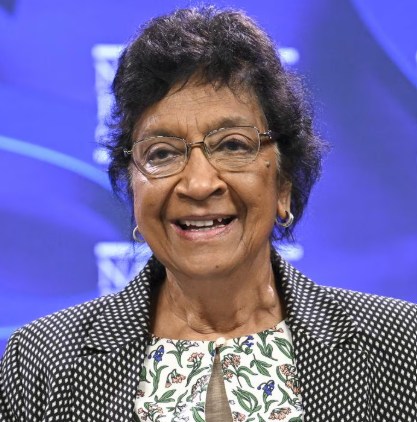
The story of Navi Pillay is a powerful example of how determination, education and courage can change the course of a life
Born into a modest Indian Tamil family in Durban, South Africa, she grew up under apartheid, a system that enforced racial segregation and discrimination.
Her father worked as a bus driver and her mother managed the household.
Despite facing social and economic barriers, Pillay pursued her education and became one of the most respected figures in international human rights law.
From her childhood in a working-class family to the highest levels of international justice, Navi Pillay’s journey reflects a lifelong commitment to human dignity.
Her story is not simply about personal success.
It is also about the importance of ensuring that the law protects everyone, regardless of their race, gender, background or position in society.
Also Read: Eagles Star Lane Johnson Bio: NFL Career and Achievements
Table of Contents
Who Is Navi Pillay?
Navi Pillay is a South African human rights lawyer, jurist and former United Nations official.1
She is internationally recognised for challenging racial discrimination, defending political prisoners and helping shape the development of international criminal law. Born on September 23, 1941, in Durban, South Africa, she grew up during apartheid.
The discriminatory system created serious barriers for Black South Africans and other communities classified as non-white. As a woman of Indian Tamil descent, Pillay faced additional obstacles in a legal profession dominated by racial and gender inequality.
Rather than allowing these circumstances to define her future, she used her education and legal knowledge to challenge injustice. In 1967, she opened her own law practice in Natal Province, becoming the first Black woman to do so.
Her work included assisting anti-apartheid activists and fighting for the rights of political detainees. Pillay later became the first Black woman appointed to South Africa’s High Court.
This appointment in 1995 marked an important milestone in the country’s legal history following the end of apartheid. Her international career expanded when she joined the International Criminal Tribunal for Rwanda.
She served as a judge and later became its president. During her time at the tribunal, she contributed to landmark legal developments concerning genocide and sexual violence.
From 2008 to 2014, Pillay served as the United Nations High Commissioner for Human Rights. In this position, she worked to promote equality, protect vulnerable communities and strengthen international human rights standards.
Her career has also included service as a judge at the International Criminal Court and as an ad hoc judge at the International Court of Justice in the case brought by The Gambia against Myanmar under the Genocide Convention.
In 2026, her decades of work received one of the world’s most prominent honours when she won the Nobel Peace Prize. The award recognised her efforts to strengthen international law and promote peaceful solutions through justice and accountability.
BREAKING NEWS
The Norwegian Nobel Committee has decided to award the 2026 #NobelPeacePrize to Navanethem “Navi” Pillay for her efforts to promote peace and international law.#NobelPrize https://t.co/97vurspw6z
— The Nobel Prize (@NobelPrize) October 9, 2026
Early Life and Childhood
Navi Pillay was born into a modest family in Durban, a coastal city in South Africa. Her parents were descendants of Tamil immigrants from southern India.
Her father worked as a bus driver, while her mother took care of the family. Her childhood was shaped by financial limitations and the racial discrimination that existed throughout South African society.
Apartheid affected where people could live, the education they could receive and the opportunities available to them. For many families from disadvantaged communities, access to quality education and professional careers was difficult.
Pillay’s family background did not offer the privileges enjoyed by many members of the country’s professional and political elite.
However, education became an important route towards a different future. Her academic achievements eventually opened doors that had long been closed to women of colour.
Her family story is therefore closely connected to her professional mission. Her rise from a modest household to the international legal arena demonstrates what education and perseverance can achieve, even in an unequal society.
Quick Facts
| Category | Details |
|---|---|
| Full name | Navanethem Pillay |
| Popular name | Navi Pillay |
| Date of birth | September 23, 1941 |
| Age in 2026 | 85 years |
| Birthplace | Durban, South Africa |
| Nationality | South African |
| Family background | Indian Tamil descent |
| Father’s occupation | Bus driver |
| Mother’s role | Homemaker |
| Profession | Lawyer, jurist and human rights advocate |
| Undergraduate university | University of Natal |
| Harvard qualification | LL.M., 1982 |
| Doctoral qualification | S.J.D., 1988 |
| Law practice established | 1967 |
| Historic judicial appointment | First Black woman appointed to South Africa’s High Court, 1995 |
| Rwanda tribunal leadership | President, 1999–2003 |
| International Criminal Court | Judge, 2003–2008 |
| UN High Commissioner for Human Rights | 2008–2014 |
| Women’s rights organisation | Co-founded Equality Now in 1992 |
| UN Commission of Inquiry | Chair, 2021–2025 |
| Major international honour | 2026 Nobel Peace Prize |
| Nobel citation | For her efforts to promote peace and international law |
Navi Pillay’s Education Despite Social Barriers
Pillay attended the University of Natal, where she studied law after completing her initial university education.2
She earned a Bachelor of Arts degree in 1963 and a Bachelor of Laws degree in 1965.
Her studies took place during a period when South Africa’s education system was deeply affected by racial segregation. She received financial assistance from members of the local Indian community, helping her continue her education despite her family’s limited resources.
While studying, Pillay became increasingly aware of the relationship between law and social justice. She understood that laws could be used to protect people, but they could also be used to maintain discrimination and inequality.
Her interest in justice grew as she learned more about the treatment of political prisoners and people who challenged apartheid.
She also became interested in international legal principles that could be used to hold individuals accountable for serious abuses. Pillay later studied at Harvard Law School in the United States.
She earned a Master of Laws degree in 1982 and a Doctor of Juridical Science degree in 1988. These qualifications strengthened her understanding of international law and human rights.
Her academic journey was remarkable not only because of the qualifications she earned but also because she pursued advanced legal education at a time when women from disadvantaged backgrounds faced considerable barriers.
How Navi Pillay Began Her Legal Career
Opening Her Own Law Practice
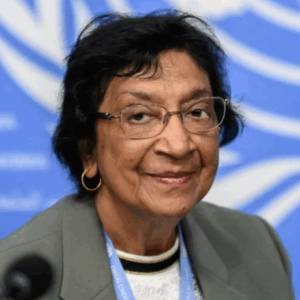
After completing her legal studies, Pillay trained under Narainsamy Naicker, an anti-apartheid activist who faced political restrictions. She qualified as a lawyer and began building her professional career in a difficult environment.
In 1967, she opened her own law practice in Natal Province. She became the first Black woman in the province to establish a legal practice.
Her achievement challenged the racial and gender barriers that existed within the legal profession. Pillay used her position as a lawyer to help people who had limited access to legal representation.
Many of her clients were political activists and detainees who faced harsh treatment under apartheid. Her work involved more than representing individuals in court.
She also helped expose the mistreatment of prisoners and challenged practices such as torture and solitary confinement. She advocated for prisoners’ access to lawyers and sought to ensure that people in custody received fair treatment.
Her legal practice became an important platform for challenging abuses of power. At a time when opposing apartheid could carry serious risks, Pillay continued to use the law to defend the rights of people who were vulnerable to state repression.
Defending Political Prisoners and Fighting Apartheid
Apartheid relied on laws that restricted the rights and freedoms of people classified as non-white. Political activists who challenged the system could face detention, intimidation and imprisonment.
Pillay represented people who opposed these discriminatory policies. Her work included helping political prisoners obtain access to legal assistance and drawing attention to allegations of abuse in detention.
She also worked on cases involving prisoners held on Robben Island, the prison where Nelson Mandela was incarcerated for many years. Her broader legal efforts contributed to campaigns for improved treatment and greater protection for political detainees.
These experiences strengthened her belief that the law should serve as a safeguard against abuse rather than an instrument of oppression.
Pillay’s early career established the principles that would guide her later international work: accountability, equality, fairness and the protection of human dignity.
Also Read: Joe Flacco Bio: What Happened to the NFL Quarterback?
Navi Pillay’s Rise in International Human Rights Law
A Historic Appointment to South Africa’s High Court
In 1995, following South Africa’s transition to democracy, Pillay became the first Black woman appointed to the country’s High Court.3
The appointment represented a significant change in a legal system that had long excluded the majority of the population from positions of authority. Her appointment also demonstrated the importance of creating public institutions that reflected the diversity of the people they served.
Pillay’s career was already distinguished by her work as a human rights lawyer. Her judicial appointment gave her a new opportunity to contribute to the development of the law and the administration of justice.
Work at the International Criminal Tribunal for Rwanda
Pillay’s international career took a major step forward in 1995 when she joined the International Criminal Tribunal for Rwanda.
The tribunal was established to prosecute individuals responsible for genocide and other serious crimes committed during the 1994 Rwandan genocide. She served as a judge and later became the tribunal’s president, a position she held from 1999 to 2003.
One of the most significant developments associated with her judicial work involved the Akayesu case. The tribunal’s 1998 judgment established an important legal precedent by recognising that rape and sexual violence could constitute acts of genocide when committed with the required intent to destroy a protected group.
The case was a major step towards recognising the devastating role sexual violence can play during mass atrocities. It also demonstrated that crimes committed against women and girls must be treated as serious violations of international law.
Pillay’s work at the tribunal helped strengthen the principle that individuals who commit grave international crimes can be held personally accountable.
Serving at the International Criminal Court
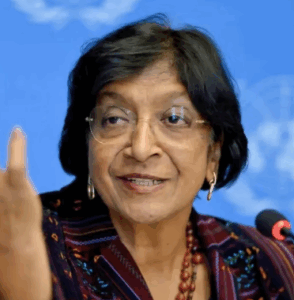
Pillay later served as a judge at the International Criminal Court from 2003 to 2008. The court was established to prosecute individuals accused of certain serious international crimes, including genocide, war crimes and crimes against humanity.
Her experience in South Africa and Rwanda provided valuable insight into the challenges of investigating and prosecuting serious abuses. The court’s work reflects an important principle of international justice: people who commit grave crimes should not automatically escape accountability because of their official positions or political influence.
Pillay’s service at the court added another important chapter to her career as an international jurist.
Navi Pillay as United Nations High Commissioner for Human Rights
One of the most prominent positions in Pillay’s career was her appointment as United Nations High Commissioner for Human Rights in 2008. She served in the role until 2014.
The High Commissioner leads the United Nations human rights office and works to promote and protect fundamental rights around the world. The position involves responding to serious abuses, supporting human rights institutions and encouraging governments to comply with international standards.
During her tenure, Pillay spoke about discrimination, the protection of civilians, women’s rights and the importance of accountability. She advocated for people whose rights were threatened because of their identity, beliefs or circumstances.
Her work required engagement with governments, international organisations and civil society groups. Human rights officials often face difficult situations when governments reject criticism or dispute allegations of wrongdoing.
Pillay’s approach reflected her belief that international human rights standards should apply equally to everyone. She argued for the importance of independent institutions and accountability when serious violations occur.
Her six years in the role gave her a global platform to address human rights concerns and reinforce the United Nations’ commitment to equality and dignity.
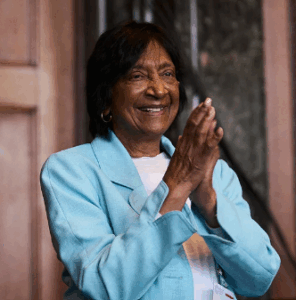
Her Work on Gender Equality and Women’s Rights
Women’s rights have been an important part of Pillay’s professional life. During her years as a practising lawyer, she assisted women who experienced domestic violence and other forms of abuse.
She also helped establish support services for survivors of violence, including the Advice Desk for the Abused. These efforts addressed a serious problem at a time when many women had limited access to legal protection and safe places to seek help.
In 1992, Pillay co-founded Equality Now, an international organisation dedicated to advancing women’s and girls’ rights. Her experience in criminal justice also influenced the way international institutions approached sexual violence.
The Akayesu judgment at the Rwanda tribunal helped establish that rape and other forms of sexual violence could constitute genocide under specific circumstances. This legal development was important because sexual violence had often been overlooked or inadequately addressed in discussions of mass atrocities.
Pillay’s work helped strengthen recognition that gender-based violence is not merely a private or social issue. Depending on the circumstances, it can also constitute a serious international crime.
Navi Pillay and the 2026 Nobel Peace Prize
On October 9, 2026, Navi Pillay was awarded the Nobel Peace Prize for her efforts to promote peace and international law. The Norwegian Nobel Committee recognised her role in developing international legal standards and strengthening accountability for serious crimes.
The award also highlighted the importance of independent courts and international institutions in preventing violence and resolving conflicts without force. Pillay’s selection reflected decades of work across several areas of international justice.
Her career included defending people under apartheid, serving on international criminal courts, leading the United Nations human rights office and contributing to investigations of serious alleged violations.
The Nobel recognition also brought renewed attention to her childhood, family background and education. Her story demonstrates how someone who grew up with limited financial resources can eventually help shape legal standards that influence the international community.
The award does not mean that every decision made by an international court or human rights body is free from debate. Instead, it recognises Pillay’s longstanding contribution to the principle that serious crimes must be addressed through evidence, legal procedures and accountability.
Her achievement is particularly significant at a time when international legal institutions face political pressure and disagreements over their authority. For Pillay, the central message of her career remains clear: lasting peace requires justice, and justice depends on the consistent application of the law.
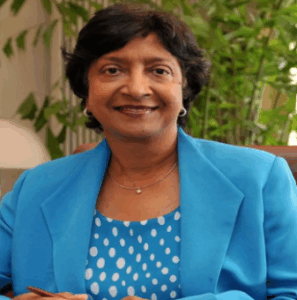
Navi Pillay’s Work in Recent Years
Pillay has continued to contribute to international justice beyond her time at the United Nations.
From 2021 to 2025, she chaired the United Nations Independent International Commission of Inquiry on the Occupied Palestinian Territory, including East Jerusalem and Israel. The commission investigated alleged violations of international law and examined questions of accountability.
The commission’s findings on Gaza became part of wider international debate about civilian protection, genocide and the responsibilities of states under international law. Its conclusions have also faced political disagreement and criticism.
Separately, Pillay has served as an ad hoc judge at the International Court of Justice in the case brought by The Gambia against Myanmar under the Genocide Convention.
The case concerns allegations of genocide against the Rohingya people. These roles demonstrate the continuing relevance of international legal mechanisms in addressing allegations of mass atrocities.
They also show why her career has attracted attention beyond South Africa. Her work connects the experiences of people affected by racial discrimination and political violence with the broader international effort to establish accountability for serious crimes.
Navi Pillay’s Achievements and Legacy
Navi Pillay’s legacy extends beyond the positions she has held. Her work has contributed to important changes in how international law recognises and addresses serious human rights violations.
Her achievements include breaking barriers in South Africa’s legal profession, defending political prisoners, advancing the protection of women and contributing to landmark international criminal proceedings.
She helped establish that sexual violence can form part of genocide under the appropriate legal conditions. She also worked to strengthen international institutions designed to investigate crimes and hold individuals accountable.
Her leadership at the United Nations brought human rights concerns to the attention of governments and international audiences. Her later work continued to focus on accountability and the role of law in responding to conflict.
Perhaps the most important part of Pillay’s legacy is the example she sets for future generations. Her life demonstrates that professional success does not have to come at the expense of social responsibility.
She used her legal training to help people who lacked power and influence. She challenged systems that treated some lives as less valuable than others and contributed to international efforts to ensure that serious crimes are not ignored.
Her story also highlights the importance of education, community support and access to independent institutions. The daughter of a bus driver became an internationally recognised jurist because she continued to pursue justice despite the barriers she encountered.
The 2026 Nobel Peace Prize adds a historic milestone to that journey. More importantly, it draws attention to the continuing need for a world in which human rights are respected and the law applies to everyone.
View this post on Instagram
FAQ’s
1. Who is Navi Pillay?
Navi Pillay is a South African lawyer and international jurist known for her work in human rights and international criminal law. She served as the United Nations High Commissioner for Human Rights and held senior judicial positions at international courts.
2. Why did Navi Pillay win the 2026 Nobel Peace Prize?
She won the 2026 Nobel Peace Prize for her efforts to promote peace and international law. The Norwegian Nobel Committee recognised her contributions to international justice and accountability for genocide, war crimes and crimes against humanity.
3. When and where was Navi Pillay born?
Navi Pillay was born on September 23, 1941, in Durban, South Africa.
4. What was Navi Pillay’s family background?
She was born into a modest family of Indian Tamil descent. Her father worked as a bus driver and her mother managed the household.
5. What did Navi Pillay study?
She studied at the University of Natal, earning a Bachelor of Arts degree in 1963 and a Bachelor of Laws degree in 1965. She later earned a Master of Laws degree from Harvard Law School in 1982 and a Doctor of Juridical Science degree in 1988.
Conclusion
Navi Pillay’s life is a story of perseverance, professional courage and a lasting commitment to justice.
Her achievements also remind the world that legal institutions must remain independent and that human rights should not depend on a person’s social status or political influence.
The daughter of a bus driver became one of the world’s most respected human rights figures through years of dedicated work.
Her journey offers an enduring lesson: even when society creates barriers, education, determination and a commitment to fairness can help transform lives and influence the world.
Also Read: The Spanish Rapper Arkano Bio: His Life and Music Career