
The world of artificial intelligence is moving beyond chatbots and virtual assistants. Today, AI is helping machines understand their surroundings, respond to instructions and perform tasks in the physical world
One of the people working at the intersection of AI and technology is Rohit Prasad, an Indian-origin engineer best known for his leadership at Amazon Alexa.
His career has attracted attention because of his role in developing voice-based AI technology and his work in advancing intelligent machines.
Prasad built much of his professional reputation at Amazon, where he helped shape Alexa into a widely recognized voice assistant.
His experience in speech recognition, machine learning and artificial intelligence placed him among the technology industry’s influential engineering leaders.
However, it is important to distinguish confirmed career information from claims about his latest position.
His well-established role is his leadership of Amazon’s Alexa organization and his work on generative AI.
Any claim that he has been appointed CEO of Boston Dynamics should be checked against an official company announcement before being presented as a confirmed fact.
Also Read: Joe Flacco Bio: What Happened to the NFL Quarterback?
Table of Contents
Who Is Rohit Prasad?
Rohit Prasad is an Indian-origin technology executive and engineer known for his work in artificial intelligence, natural language processing and automatic speech recognition.1
He became widely known through his work at Amazon, where he helped develop Alexa and led teams responsible for improving the voice assistant’s capabilities. Alexa was designed to let people interact with technology through everyday speech.
Users could ask questions, play music, check the weather, control compatible smart-home devices and perform other tasks without relying entirely on a keyboard or touchscreen. Making such a system work reliably required sophisticated engineering.
The technology had to recognize spoken words, understand what a person meant and generate a useful response. Prasad’s expertise in speech technology and machine learning made him an important figure in this process.
He worked on improving the systems that allow computers to recognize human speech and respond to spoken requests. These technologies became an important foundation for the wider development of conversational AI.
At Amazon, Prasad eventually became a senior leader associated with Alexa and the company’s efforts to develop more advanced AI systems. His work helped move voice assistants beyond simple commands toward more natural interactions.
His career is also relevant to the expanding discussion about how AI can be used outside computers and mobile devices.
Robotics companies are exploring ways to combine perception, reasoning and physical movement so that machines can carry out increasingly complicated tasks.
Engineers with experience in AI systems may contribute valuable knowledge to this field, although robotics also requires specialized expertise in mechanics, control systems, electronics and real-world safety.
Prasad’s professional background therefore makes him an interesting figure in the wider story of intelligent machines.
Nevertheless, his biography should be based on documented positions and announcements rather than assumptions about a new executive appointment.
Early life and family background
Publicly available information about Rohit Prasad’s childhood and family background is limited. He has a professional profile built largely around his engineering education, research and leadership in the technology industry.
His Indian origin is an important part of the public interest surrounding his career. Indian-origin engineers and technology leaders have made substantial contributions to global companies working in software, computing, cloud services and artificial intelligence.
Prasad’s career is one example of how technical knowledge can lead to opportunities to work on products used by millions of people.
However, his personal story should not be reduced to his heritage alone. His achievements are more directly connected to his technical expertise, research experience and ability to lead large engineering teams.
Just wrapped my first day as CEO of Boston Dynamics. This company has pioneered the modern robotics industry and fascinated people all over the world. Super excited to be joining at a pivotal moment for Physical AI, when there’s a massive opportunity to deliver real-world impact. https://t.co/uj843AZqHN
— Rohit Prasad (@RohitPrasadAI) October 8, 2026
Education and engineering interests
Prasad studied engineering and developed expertise in technologies related to speech recognition and machine learning.
These fields require a strong understanding of mathematics, algorithms, statistical modeling and computer systems.
Speech recognition is particularly challenging because human language is complicated. People speak at different speeds and accents.
Background noise can make words difficult to identify, while the same word can have different meanings depending on context.
An effective voice assistant must handle many of these challenges before it can provide a useful answer. Machine learning allows computer systems to identify patterns in large amounts of data and use those patterns to improve performance.
In speech technology, machine learning can help systems recognize spoken words and interpret language more accurately.
This technical foundation helped prepare Prasad for a career in research and product development. His work later involved turning complex research into technology that could be used in real products.
For readers interested in following a similar career path, his professional background illustrates the value of combining engineering fundamentals with specialized knowledge in AI.
It also demonstrates the importance of learning how to apply research to practical problems.
Quick Profile
| Category | Details |
|---|---|
| Full name | Rohit Prasad |
| National background | Indian-origin technology executive |
| Profession | Engineer and AI executive |
| Main area of expertise | Artificial intelligence and speech recognition |
| Best-known association | Amazon Alexa |
| Technical fields | Machine learning, natural language processing and speech technology |
| Major professional contribution | Leadership in the development of Alexa |
| Industry | Artificial intelligence and consumer technology |
| Robotics connection | Relevant to the wider development of intelligent machines |
| Boston Dynamics CEO appointment | Requires direct confirmation from an official or reliable source |
| Personal life | Limited verified public information |
Rohit Prasad’s Career Journey
Building expertise in speech recognition
Before becoming widely recognized as an Amazon executive, Prasad developed experience in speech technology.2
Automatic speech recognition allows computers to convert spoken language into text or commands that software can process.
The technology is used in many applications, including voice assistants, transcription software, customer service systems and accessibility tools. Although speech recognition has improved considerably, it remains a demanding area of research because real conversations rarely follow perfect patterns.
A person may pause in the middle of a sentence, change their wording or speak in a noisy room. Accents and pronunciation can also affect the system’s accuracy.
Engineers must account for these variations while developing systems that are fast enough for everyday use. This technical experience became particularly relevant as voice interfaces grew in popularity.
Companies began investing in systems that could understand spoken instructions and provide useful responses without requiring users to learn complicated commands.
Joining Amazon and working on Alexa
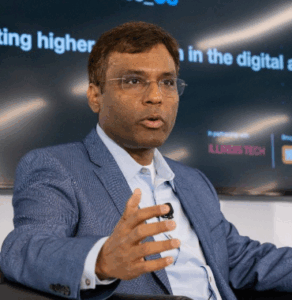
Prasad joined Amazon and became part of the team working on Alexa, the company’s voice assistant. Alexa was a major effort to make voice interaction a natural part of everyday computing.
The system had to connect several technologies. It needed to identify a person’s words, determine the request, access the appropriate information or service and respond in a way that made sense.
These tasks required collaboration among engineers, researchers, designers and product teams. Prasad became a key leader in Amazon’s Alexa organization.
His work contributed to the development of the technology behind the assistant and its ability to respond to a wider range of requests. Alexa also helped popularize the use of voice assistants in homes.
Through compatible devices, users could ask questions, listen to music, set reminders and control connected appliances. The product demonstrated how AI research could become part of an everyday consumer experience.
The development of Alexa was not the work of one individual. It involved large teams and years of engineering.
Prasad’s importance lies in his technical contributions and leadership within that wider effort.
Becoming a leader in conversational AI
As AI technology advanced, the expectations for voice assistants changed. Early systems were often designed to respond to specific commands.
Newer approaches aim to make interactions more flexible, allowing users to ask questions naturally and handle more complicated requests. Prasad’s leadership at Amazon placed him close to this transition.
He became associated with efforts to make Alexa more capable and to incorporate advances in generative AI into the product.
Generative AI differs from traditional software in its ability to produce new content, including text and conversational responses, based on patterns learned during training.
When combined with a voice interface, it can make interactions feel more flexible and less dependent on fixed commands.
These systems also introduce challenges. They may generate incorrect information, misunderstand a request or produce responses that require verification.
Building a useful AI assistant therefore involves more than making a system sound natural. It also requires attention to accuracy, privacy, reliability and user trust.
Prasad’s work at Amazon reflects the wider technology industry’s effort to improve how people communicate with intelligent systems.
His role in Amazon’s AI strategy
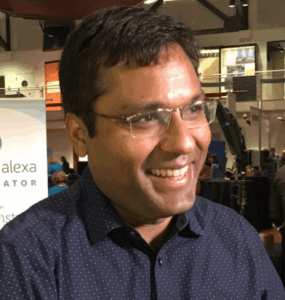
Amazon’s investments in AI extend beyond Alexa. The company operates cloud computing services, develops AI tools and incorporates machine learning into areas such as shopping, logistics and customer support.
Prasad’s experience with speech and conversational systems gave him a significant role in one part of this larger technology landscape.
His career illustrates how an engineer can move from solving a specific technical problem to managing teams responsible for complex products and long-term development. Leading an AI organization involves several responsibilities.
Executives must decide which technical problems deserve attention, manage research priorities, recruit specialists and help product teams turn new capabilities into practical features.
They must also consider cost, performance and the needs of customers. A system that works well in a research environment may require considerable changes before it can operate reliably at a large scale.
Prasad’s professional reputation grew through this combination of technical knowledge and leadership experience.
Also Read: Eagles Star Lane Johnson Bio: NFL Career and Achievements
Why Is Rohit Prasad Associated With Boston Dynamics?
Boston Dynamics is known for developing sophisticated mobile robots.3
Its machines are designed to move through environments that can be difficult for traditional robots, including uneven surfaces, industrial sites and spaces that require careful balance.
The company has attracted global attention through robots such as Spot, a four-legged machine designed for tasks including inspection and data collection and Atlas, its advanced humanoid robotics platform.
Its work combines mechanical engineering, dynamic control, sensing, perception and software. The connection between AI and robotics has become increasingly important.
A robot must do more than understand a spoken instruction. It must interpret its surroundings, plan a sequence of movements, respond to unexpected obstacles and operate safely.
This is where the broader field of AI becomes relevant. Machine learning and other intelligent systems can help robots recognize objects, interpret instructions and make decisions based on information from their sensors.
However, physical robots must also contend with forces, balance, friction, battery limits and the unpredictability of real environments.
Prasad’s experience with AI and conversational technology provides a useful lens through which to understand this industry shift. His work at Alexa involved making computer systems more responsive to human language.
Robotics companies are pursuing a related goal: making machines more capable of understanding people and acting in the physical world.
That connection does not, by itself, establish that Prasad has become Boston Dynamics’ CEO.
A claim about his appointment must be supported by an official Boston Dynamics announcement or another reliable report that directly confirms the appointment.
Until such evidence is available, it would be misleading to describe the CEO appointment as a verified career milestone. Readers should check the company’s leadership page and official announcements for the latest information.

What Makes Boston Dynamics Important?
Boston Dynamics has become one of the best-known names in advanced robotics because of its work on machines that can move with remarkable agility and stability.
1. Advanced robot movement
Robots must maintain balance while walking, turning, climbing or carrying equipment. Boston Dynamics has developed technologies that allow its machines to move across changing terrain and respond to physical disturbances.
These abilities are useful in environments where wheels or fixed industrial equipment may not be suitable.
2. Industrial inspection
Robots can help inspect facilities, collect information and enter areas that may be difficult or inconvenient for human workers. Spot, for example, can be configured for industrial inspection and data collection.
Such applications can help organizations monitor equipment and gather information more consistently. The benefits depend on the task, the environment and how the robot is integrated into existing operations.
3. Humanoid robotics
Humanoid robots are designed with a body structure that resembles a human, often including a torso, arms and legs. This form can be useful for research into movement and for environments built around human workers and tools.
However, creating a robot that can move convincingly is only one challenge. A commercially useful humanoid must also be reliable, safe, maintainable and economically practical.
4. The role of artificial intelligence
Modern robotics increasingly depends on software that can interpret sensor information and help determine what a machine should do next. AI may improve object recognition, language understanding, task planning and adaptation to unfamiliar situations.
Even so, AI does not replace the need for strong mechanical design and precise control systems. Successful robotics requires these elements to work together.
Rohit Prasad’s Potential Significance for the Future of AI
Prasad’s career is a useful example of the changing role of AI engineers. In the early stages of the voice-assistant industry, much of the focus was on recognizing speech and responding to commands.
Today, AI development increasingly involves systems that can interpret context, handle complex instructions and coordinate multiple steps. The next stage may involve closer links between conversational AI and physical machines.
A person might eventually give a robot a natural-language instruction and expect it to understand the task, identify relevant objects and carry out a sequence of actions. Achieving this vision requires progress in several areas.
Robots need reliable perception, accurate movement, effective planning and the ability to respond to unexpected situations.
They must also follow safety constraints and communicate their limitations clearly. AI leaders with experience in large-scale systems can offer valuable perspectives on how to develop, evaluate and deploy intelligent technology.
At the same time, successful robotics leadership requires an understanding of hardware, manufacturing, testing and real-world operations. Prasad’s established experience in AI makes his career relevant to discussions about this future.
Claims about any new executive position, however, should remain separate from broader analysis of the industry’s direction.
Lessons From Rohit Prasad’s Career
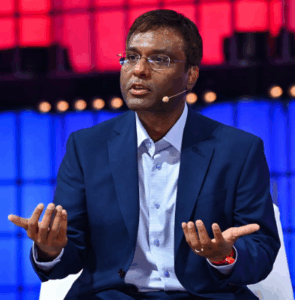
Prasad’s career offers several useful lessons for students, engineers and people interested in technology leadership.
First, technical depth matters. Speech recognition and machine learning are complex subjects that require a solid understanding of engineering and mathematics.
Building expertise in a demanding technical field can create opportunities to work on important products.
Second, research becomes more valuable when it solves real problems. Voice assistants had to work in ordinary homes and handle everyday requests.
This required engineers to move beyond laboratory demonstrations and build systems that could serve a large number of users.
Third, leadership requires more than technical knowledge. Managing an AI organization means coordinating teams, setting priorities and balancing research ambitions with product requirements.
Finally, AI is a broad field. Skills developed in speech technology can inform the wider discussion about intelligent systems but robotics has its own demanding requirements.
Engineers moving into robotics must also understand how software interacts with sensors, hardware and the physical environment.
These lessons help explain why experienced AI engineers are important to the technology industry’s continued development.
View this post on Instagram
FAQ’s
1. Who is Rohit Prasad?
Rohit Prasad is an Indian-origin engineer and technology executive known for his work on Amazon Alexa. His expertise includes artificial intelligence, machine learning and speech recognition.
2. Why is Rohit Prasad famous?
He is best known for his leadership in the development of Alexa and his work on technology that enables computers to recognize speech and respond to natural-language requests.
3. Is Rohit Prasad the CEO of Boston Dynamics?
That appointment should not be treated as confirmed without a direct announcement from Boston Dynamics or reliable reporting that verifies it. His established professional association is with Amazon’s Alexa organization.
4. What did Rohit Prasad do at Amazon?
Prasad held senior leadership responsibilities in the Alexa organization. His work focused on AI technology, including speech recognition and conversational capabilities.
5. What is Rohit Prasad’s area of expertise?
His main areas of expertise include artificial intelligence, machine learning, automatic speech recognition and natural language processing.
Conclusion
Rohit Prasad’s professional journey reflects the growing importance of artificial intelligence in everyday technology.
Through his work on Amazon Alexa, he became known for helping advance systems that allow people to communicate with computers using natural language.
His career also highlights the role of engineering expertise and technical leadership in turning complex research into products used around the world.
Until an official announcement or credible report confirms that development, it should not be presented as a settled fact.
Ultimately, Prasad’s career provides a compelling example of how AI engineering can influence the way people interact with machines.
The next chapter of artificial intelligence may involve not only systems that answer questions but also machines that can understand instructions and perform useful tasks in the physical world.
Also Read: Cal Ritchie Bio: What to Know About the Young NHL Star