

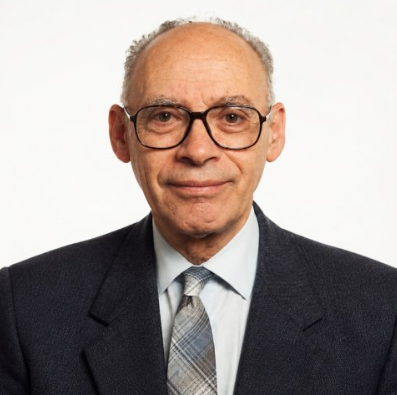
Science often rewards people who spend decades exploring difficult questions, testing new ideas and developing methods that change how others understand the world. Henri Kagan is a name associated with this kind of dedication
A renowned French chemist, Kagan is widely recognized for his contributions to organic chemistry and asymmetric synthesis.
His research helped advance the study of chirality, a fundamental concept in chemistry that plays an important role in pharmaceuticals, biological systems and modern chemical manufacturing.
Kagan’s scientific career demonstrates how years of careful research can lead to discoveries with lasting influence.
Rather than focusing on a single experiment or invention, his work contributed to a broader understanding of how chemists can control the three-dimensional structure of molecules.
So, what did Henri Kagan accomplish after a lifetime of research?
His legacy lies in helping chemists develop more effective ways to produce molecules with the desired three-dimensional arrangement.
His research on asymmetric catalysis and related methods became part of the scientific foundation that supports advances in organic synthesis and pharmaceutical chemistry.
This article explores Henri Kagan’s early life, education, scientific career, major achievements and lasting influence on chemistry.
Also Read: Eagles Star Lane Johnson Bio: NFL Career and Achievements
Table of Contents
Who Is Henri Kagan?
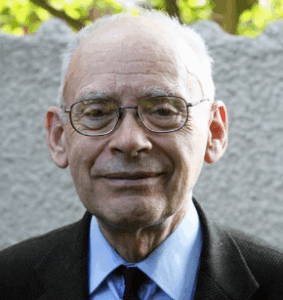
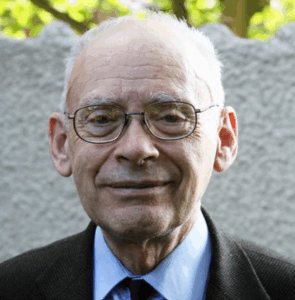
Henri Kagan is a French organic chemist known internationally for his research in stereochemistry, asymmetric synthesis and asymmetric catalysis.1
His scientific work has helped researchers understand how to control the spatial arrangement of atoms within molecules during chemical reactions.
In organic chemistry, the arrangement of atoms is not merely a matter of appearance. It can influence a substance’s biological activity, stability and chemical behavior.
This makes the control of molecular structure especially important when creating medicines and other compounds used in research and industry. Kagan became particularly associated with the development of chiral catalysts and ligands.
These are substances that help guide chemical reactions toward producing a preferred molecular form. His work helped establish practical approaches for creating compounds with a specific three-dimensional configuration.
One of the important areas connected with his research is asymmetric hydrogenation. This process involves adding hydrogen to a molecule in a way that favors the production of one particular stereoisomer.
A stereoisomer is a molecule that has the same atoms and chemical connections as another molecule but differs in the arrangement of those atoms in space. The importance of Kagan’s research extends beyond academic chemistry.
Methods for controlling chirality are valuable in pharmaceutical development, fine chemical production and the synthesis of complex organic compounds. Kagan’s reputation rests on the scientific value of this work and its influence on generations of chemists.
His career illustrates how fundamental research can eventually support practical advances in other fields.
2026 #NobelPrize laureate Henri Kagan discovered a new way of manipulating chemical reactions, allowing a greater excess of one of the mirror images to be created than was previously assumed possible. His discovery has been revolutionary for chemists who develop reactions for the manufacture of pharmaceuticals, flavours, scents and new materials.
— The Nobel Prize (@NobelPrize) October 7, 2026
Early Childhood and Family Background
Henri Boris Kagan was born on December 15, 1930, in Boulogne-Billancourt, near Paris, France. His childhood took place during a period of major political and social change in Europe.
The Second World War had a profound effect on his family and the course of his early life. According to the Wolf Foundation’s biography of Kagan, his parents were Alexandre Kagan, an engineer and Adeline Celniker.
His family was Jewish. During the Second World War, the family sought refuge in a village in southern France and lived under assumed names to protect themselves from persecution.
This difficult period formed an important part of Kagan’s early background. Like many families affected by the war, the Kagans had to adapt to circumstances far beyond their control.
The experience interrupted ordinary life and made education and personal security uncertain. Details about every aspect of Kagan’s childhood are not widely documented.
However, accounts of his early education offer an interesting detail: he was not initially regarded as an outstanding student. His academic path was not always straightforward, and he first followed a literary direction that did not suit him.
His eventual move toward chemistry shows that a person’s early academic performance does not necessarily determine their future achievements. A student who struggles to find the right subject may discover a talent later through experimentation, persistence and a better understanding of personal interests.
Kagan’s journey is particularly interesting because he went on to become one of the influential figures in modern asymmetric catalysis. His story demonstrates that major scientific achievements often emerge from a long process of learning rather than from an obvious early promise.
Quick Facts
| Category | Details |
|---|---|
| Full name | Henri Boris Kagan |
| Known as | Henri Kagan |
| Date of birth | December 15, 1930 |
| Age in October 2026 | 95 years |
| Birthplace | Boulogne-Billancourt, France |
| Nationality | French |
| Profession | Organic chemist and academic |
| Main research fields | Asymmetric catalysis, stereochemistry and organic synthesis |
| Education | École nationale supérieure de chimie de Paris; doctoral studies at the Collège de France |
| Doctorate | 1960 |
| University affiliation | Université Paris-Sud, now part of Université Paris-Saclay |
| Notable contribution | Research on asymmetric catalysis and nonlinear effects |
| Major earlier award | Wolf Prize in Chemistry, 2001 |
| Nobel recognition | 2026 Nobel Prize in Chemistry, jointly with Kensō Soai |
| Known for | Advancing methods to control molecular chirality |
Henri Kagan’s Academic Journey
Kagan’s formal education in France provided the foundation for his later scientific work.2
He studied at the Sorbonne and the École nationale supérieure de chimie de Paris, institutions associated with higher education in Paris.
He completed his engineering training in chemistry in 1954. His interest in organic chemistry continued to develop, leading him to undertake doctoral research at the Collège de France.
In 1960, Kagan earned his doctorate under the supervision of chemist Jean Jacques. His dissertation focused on steroid chemistry, an area concerned with the structure, properties and reactions of steroid compounds.
Steroids are important in chemistry and biology because they include naturally occurring substances involved in many biological processes. Studying their molecular structures provided Kagan with a foundation in the relationship between molecular arrangement and chemical behavior.
After completing his doctorate, Kagan worked with Alain Horeau, a respected French chemist associated with organic chemistry and stereochemistry. This stage of his career helped deepen his understanding of the challenges involved in producing molecules with precise structures.
Kagan later established his research career at Orsay, where he became associated with the University of Paris-Sud. The institution is now part of Université Paris-Saclay.
His work there helped build a research environment focused on asymmetric synthesis. Over time, he became a respected mentor and colleague to chemists working in organic synthesis, catalysis and related fields.
Kagan’s education is an important part of his biography because it shows how his early interest in chemistry developed into a specialized research career. His doctoral studies did not simply prepare him for a conventional academic position.
They helped establish the scientific foundation for research that would influence pharmaceutical chemistry and the wider chemical sciences.
Henri Kagan’s Career as a Chemist
Henri Kagan’s career centered on understanding how chemical reactions could be controlled to produce molecules with specific three-dimensional structures. This problem became one of the major themes of his scientific work.
After his doctoral studies and research with Alain Horeau, Kagan developed his career at Orsay. He became a leading figure in asymmetric synthesis and helped establish a laboratory dedicated to this area of chemistry.
His research covered several interconnected subjects, including asymmetric oxidation, asymmetric reduction, catalytic reactions and the behavior of chiral molecules. He also explored questions about how molecular asymmetry can be amplified and how chirality may have emerged in nature.
A major strength of Kagan’s scientific career was his ability to investigate fundamental chemical questions while considering their practical applications. His work helped chemists understand not only how to create particular molecules but also why a reaction may favor one molecular form over another.
The pharmaceutical industry has a strong interest in this subject. Medicines interact with biological systems that are themselves highly sensitive to molecular shape. Consequently, producing the correct molecular form can be essential to the development of effective and safe treatments.
Kagan’s research contributed to the scientific methods used to control such reactions. His influence is visible in the continuing study of asymmetric catalysis and in the work of researchers who have built on his ideas.
Also Read: John Clarke Biography: Know More About The Nobelist
Major Scientific Achievements of Henri Kagan
1. Advancing asymmetric catalysis
One of Kagan’s most important contributions was his pioneering work in asymmetric catalysis.3
A catalyst helps a chemical reaction occur more efficiently without being consumed in the overall process. A chiral catalyst has a three-dimensional structure that can favor the formation of one mirror-image form of a molecule over another.
Kagan’s research helped chemists develop catalysts that guide reactions toward a preferred molecular configuration. This was a significant advance because many conventional chemical reactions produce mixtures of different stereoisomers.
By improving control over these outcomes, researchers gained better ways to produce compounds with a desired structure. This capability is especially valuable in the manufacture of pharmaceuticals and other fine chemicals.
2. Developing the DIOP ligand
Kagan is also associated with the development of DIOP, a chiral diphosphine ligand that became important in asymmetric catalysis.
A ligand is a molecule or ion that binds to a metal center. In certain catalytic reactions, the ligand influences how the metal interacts with other molecules and can help determine which product forms.
DIOP helped demonstrate the potential of carefully designed chiral ligands in asymmetric hydrogenation. This work formed part of the early development of modern catalytic methods for producing molecules with a preferred three-dimensional structure.
The research also helped establish a broader principle: the design of a catalyst’s molecular environment can have a major effect on the selectivity of a chemical reaction.
3. Discovering nonlinear effects in asymmetric synthesis
Another major contribution was Kagan’s work on nonlinear effects in asymmetric synthesis, particularly research published in 1986.
Before this work, chemists often expected a relatively direct relationship between the proportions of different chiral forms in a catalyst and the proportions of the resulting products. Kagan’s research demonstrated that this relationship could be nonlinear.
In simple terms, a small change in the composition of a catalyst could sometimes lead to a disproportionately large change in the molecular composition of the product.
This finding was important because it showed that chemical asymmetry could be amplified through particular reaction systems. It also offered researchers new ways to investigate why biological systems overwhelmingly use particular molecular forms.
Kagan’s work on nonlinear effects became a major part of the scientific recognition he received later in his career.
4. Contributing to pharmaceutical chemistry
The control of chirality has practical significance in drug development.
Many drug molecules are chiral, meaning they can exist in two forms that are mirror images of each other. These forms may interact differently with enzymes, receptors and other biological structures.
An effective method for producing a preferred molecular form can help manufacturers improve the efficiency and selectivity of chemical synthesis. It can also reduce the need to separate unwanted forms after a reaction.
Kagan’s work helped advance the scientific principles behind these methods. His research did not independently solve every challenge in pharmaceutical manufacturing but it contributed to the wider body of knowledge that makes modern asymmetric synthesis possible.
5. Investigating the origin of molecular asymmetry
Kagan’s research also addressed a fundamental scientific question: why does life rely so strongly on particular forms of chiral molecules?
Many biological molecules display a consistent molecular handedness. For example, proteins are built mainly from L-amino acids, while the sugars in DNA and RNA predominantly use the D form.
Understanding how this imbalance arose is a major question connecting chemistry, biology and research into the origins of life.
Kagan’s work on nonlinear effects helped researchers understand how a small initial imbalance between mirror-image molecules might become amplified under certain chemical conditions.
This does not mean his research alone established exactly how life began. Instead, it provided important experimental and conceptual tools for studying the possible chemical processes behind molecular asymmetry.
Henri Kagan and the 2026 Nobel Prize in Chemistry
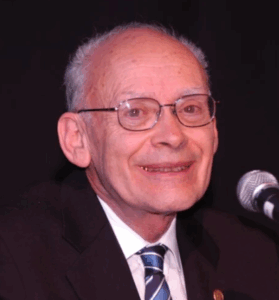
One of the biggest developments in Henri Kagan’s biography came on October 7, 2026, when the 2026 Nobel Prize in Chemistry was announced.
Kagan was awarded the prize jointly with Japanese chemist Kensō Soai for discoveries involving nonlinear effects and autocatalysis in asymmetric organic synthesis. The award recognized research that helped scientists understand how chemical reactions can favor one mirror-image form of a molecule over another.
The announcement marked a major moment in Kagan’s long scientific career. Born in 1930, he was 95 years old when the prize was announced, making his recognition particularly notable among scientists honored late in life.
Kagan’s work on molecular chirality and asymmetric catalysis helped transform how chemists approach the synthesis of molecules. The university highlighted the importance of his discoveries for pharmaceutical applications and fundamental chemical research.
The prize also recognized a complementary contribution by Soai, whose work on autocatalysis demonstrated how a reaction’s product can help promote the formation of more of that same product.
In particular, autocatalytic reactions can amplify an initially small imbalance between molecular mirror images. Together, these lines of research helped advance the scientific understanding of how chemical asymmetry can develop and become amplified.
The award is especially significant because Kagan’s contributions developed over decades. His research on asymmetric catalysis dates back to the early stages of his career, while his 1986 work on nonlinear effects became an important milestone in the field.
The Nobel recognition therefore represents more than a single discovery. It acknowledges a sustained contribution to chemistry and a body of work that helped establish important directions for future research.
The award ceremony is scheduled for December 10, 2026, in Stockholm. The Nobel announcement and the ceremony are separate events, so the distinction is important when describing the timing of the award.
Why Is Henri Kagan’s Nobel Prize Important?
The significance of Kagan’s Nobel Prize can be understood through three major points.
First, it recognizes fundamental research. Scientists do not always know the eventual practical value of a discovery when they begin investigating a problem.
Kagan’s work shows how research into the behavior of molecules can eventually influence fields far beyond the original laboratory.
Second, it highlights the importance of molecular handedness in chemistry. Two mirror-image molecules can have different effects when interacting with biological systems.
Developing reactions that favor the desired form is therefore an important goal in pharmaceutical science.
Third, the award draws attention to the long-term nature of scientific achievement. Kagan’s recognition came after decades of research, teaching and collaboration.
It demonstrates that important contributions can remain relevant long after the experiments that established them were first published.
His story is also a reminder that scientific progress is rarely the result of one person’s work alone. Kagan’s discoveries built on earlier chemistry and helped provide a foundation for later investigations by researchers around the world.
Henri Kagan’s Awards and Honors
Throughout his career, Kagan received several major awards and professional distinctions. His honors reflect his influence on asymmetric synthesis and organic chemistry.
Some of the most notable include:
-
CNRS Silver Medal (1974): Recognition from France’s National Centre for Scientific Research.
-
Grand Prix du Rayonnement Français for Science (1989): An honor recognizing scientific achievement.
-
Prelog Medal (1990): Recognition associated with stereochemistry.
-
Wolf Prize in Chemistry (2001): Awarded jointly to Henri Kagan, Ryoji Noyori and K. Barry Sharpless for pioneering work in asymmetric catalysis.
-
Honorary Fellow of the Royal Society of Chemistry (2002): Recognition of his contributions to chemistry.
-
Benjamin Franklin Medal (2005): An international scientific honor.
-
Lavoisier Medal (2013): Recognition associated with chemistry.
-
Nobel Prize in Chemistry (2026): Awarded jointly with Kensō Soai for discoveries concerning nonlinear effects and autocatalysis in asymmetric organic synthesis.
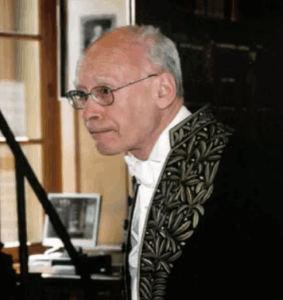
Kagan was elected to the French Academy of Sciences in 1991. He also received major French national honors during his career.
View this post on Instagram
FAQ’s
1. Who is Henri Kagan?
Henri Kagan is a French chemist known for pioneering research in asymmetric catalysis, stereochemistry and organic synthesis. His discoveries helped scientists develop methods for controlling the three-dimensional structure of molecules.
2. How old is Henri Kagan?
Henri Kagan was born on December 15, 1930. He is 95 years old as of October 2026.
3. Did Henri Kagan win the 2026 Nobel Prize in Chemistry?
Yes. Henri Kagan was awarded the 2026 Nobel Prize in Chemistry jointly with Japanese chemist Kensō Soai. The prize recognizes discoveries involving nonlinear effects and autocatalysis in asymmetric organic synthesis.
4. What is Henri Kagan famous for?
Kagan is best known for his contributions to asymmetric catalysis and his research on nonlinear effects in asymmetric synthesis. His work helped scientists understand how chemical reactions can favor one molecular mirror image over another.
5. What is asymmetric catalysis?
Asymmetric catalysis is a chemical process that uses a catalyst to favor the production of one stereoisomer over another. It is important in pharmaceutical manufacturing because different molecular forms can interact differently with biological systems.
Conclusion
Henri Kagan’s biography is a story of scientific dedication, intellectual curiosity and achievements that gained recognition over many decades.
Discoveries made in a laboratory can take years to influence other researchers and practical applications.
By helping chemists understand and control molecular handedness, Kagan contributed to a field that remains important to modern medicine and chemical research.
Ultimately, his legacy is not defined by age or awards alone. It rests on the questions he pursued, the methods he helped develop and the influence his work continues to have on chemistry.
Also Read: The Spanish Rapper Arkano Bio: His Life and Music Career