

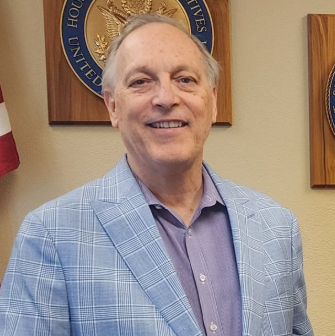
Andy Biggs is a Republican politician from Arizona who has built a national profile through his conservative views, long career in public office and close association with the Republican Party’s right wing
He has served in the U.S. House of Representatives and previously held leadership positions in the Arizona Legislature.
Over the years he has become a recognizable figure in debates about immigration, federal spending, border security and the direction of American conservatism.
As Arizona prepares for another important gubernatorial contest, Biggs remains a name of interest in discussions about the state’s political future.
His journey from a legal career to the Arizona Legislature and then to Congress illustrates how state-level experience, ideological consistency and national political alliances can help a politician become influential within a party.
This article explores Andy Biggs’s biography, early childhood, education, political career, policy positions, public profile and connection to Arizona’s gubernatorial politics.
It also examines the issues that could influence his standing among Republican voters.
Also Read: W. Kamau Bell Biography: From Stand-Up to CNN
Table of Contents
Who Is Andy Biggs?
Andy Biggs is an American Republican politician, former attorney and longtime public official from Arizona.1
Born on November 7, 1958, in Tucson, Arizona, he has spent much of his career working in state and federal politics.
Biggs first entered the Arizona House of Representatives in 2003. He later served in the Arizona State Senate, where he became Senate president in 2013.
In 2016, he won election to the U.S. House of Representatives and began representing Arizona’s 5th Congressional District in January 2017. He subsequently became one of the more prominent conservative voices in Congress.
His political influence grew through his involvement with the House Freedom Caucus, a group known for advocating conservative policies and challenging Republican leaders when members believe they have moved away from their principles.
Biggs chaired the group from 2019 through 2021, helping establish his reputation as a committed conservative within the Republican Party. In 2026, Biggs moved into a new stage of his political career by seeking the Arizona governorship.
He won the Republican gubernatorial primary on July 21, 2026, defeating fellow U.S. Representative David Schweikert and other Republican contenders. President Donald Trump endorsed him, strengthening his position among voters aligned with the president’s political movement.
Biggs is now the Republican nominee challenging Democratic Governor Katie Hobbs in the November 3, 2026, general election. His campaign places him at the center of a closely watched contest over Arizona’s future.
His political career combines experience in state government with a national reputation for conservative advocacy. Supporters value his positions on border security, taxes and government regulation.
Critics, meanwhile, question whether his strong ideological identity can attract the independent voters Republicans may need to win a statewide election. These competing views help explain why Biggs has become a significant figure in Arizona’s Republican politics.
Early Childhood
Andy Biggs was born and raised in Arizona, a state that would later become the foundation of his political career. His Tucson roots are an important part of his public biography and he has continued to build his political identity around representing Arizona residents.
However, detailed accounts of his childhood, including specific stories about his early school years and family life, are not extensively documented in the official biographies available for this profile.
It is therefore more accurate to focus on his verified educational and professional background rather than speculate about his early experiences.
Great news today on the economic front. Led by the Republican efforts to cut taxes for individuals, families, and business owners, our economy continues to show progress from the turmoil this nation experienced under the previous administration. I won’t stop fighting to lower costs and make life more affordable for everyday Americans.
— Rep Andy Biggs (@RepAndyBiggsAZ) October 29, 2026
Education at Brigham Young University
Biggs attended Brigham Young University in Provo, Utah, where he earned a bachelor’s degree in Asian Studies in 1982. The degree provided him with an academic background outside the traditional path of political science or law.
After graduating, he continued his education and began preparing for a professional career that would eventually combine legal work with public service.
Law School and Political Science
In 1984, Biggs earned his Juris Doctor degree from the University of Arizona in Tucson. He later completed a master’s degree in political science at Arizona State University in 1999.
These qualifications gave him a foundation in legal reasoning, government and public policy. He subsequently worked as an attorney and was licensed to practice law in Arizona, Washington and New Mexico, according to his official biography.
His legal experience became an important part of his professional identity before he entered elected office. Rather than moving directly from university into a political career, Biggs spent time working in the legal profession before seeking public office.
Stats Table
| Category | Details |
|---|---|
| Full name | Andrew Steven Biggs |
| Commonly known as | Andy Biggs |
| Date of birth | November 7, 1958 |
| Age | 67 as of October 2026 |
| Birthplace | Tucson, Arizona, United States |
| Nationality | American |
| Political party | Republican |
| Profession | Politician and retired attorney |
| Undergraduate degree | Asian Studies, Brigham Young University |
| Master’s degree | Political Science, Arizona State University |
| Law degree | University of Arizona |
| Arizona House service | 2003–2011 |
| Arizona Senate service | 2011–2017 |
| Arizona Senate president | 2013–2017 |
| U.S. House service | January 2017 onward, through the 119th Congress |
| Former leadership role | Chair of the House Freedom Caucus |
| Wife | Cindy Biggs |
| Children | Six |
| 2026 political role | Republican nominee for Arizona governor |
How Andy Biggs Started His Political Career
Biggs entered the Arizona House of Representatives in 2003. His election marked the beginning of a long period in state politics that would eventually lead him to national office.2
He served in the Arizona House for eight years, from 2003 to 2011. During this period, he developed experience with the legislative process and became involved in the debates shaping state government.
Arizona politics provided an important platform for his conservative views. Issues such as immigration, government spending, regulation and the relationship between state and federal authority were central to his political outlook.
Biggs’s early legislative career also helped him establish relationships with fellow Republicans and conservative activists.
Building support within a state legislature can be an important step for politicians who want to advance to leadership positions.
His next major step came in 2011, when he entered the Arizona State Senate.
Becoming Arizona Senate President
Biggs served in the Arizona State Senate from 2011 to 2017. In 2012, he was elected Senate president and began serving in that leadership role in 2013.
The position gave him greater influence over the legislative agenda, committee priorities and the chamber’s internal operations.
It also placed him among Arizona’s most prominent Republican state lawmakers. As Senate president, Biggs worked within a Republican-led legislature and participated in debates over the state’s policy direction.
His career during this period strengthened his credentials among conservative voters who favored limited government and a strict approach to immigration enforcement. His tenure was not without political challenges.
Biggs was involved in a Republican dispute over Medicaid expansion during the administration of Governor Jan Brewer. That disagreement demonstrated that ideological differences can create tensions even among members of the same political party.
His time in the state legislature helped prepare him for a move to Washington. By the end of his state-level career, he had spent 14 years in Arizona’s legislature and had held one of its most important leadership positions.

Andy Biggs in the U.S. House of Representatives
In 2016, Biggs ran for Arizona’s 5th Congressional District, seeking a seat in the U.S. House of Representatives. He won the Republican primary and went on to win the general election.
He took office on January 3, 2017. His election marked a major turning point.
In Congress, he gained access to national debates about federal spending, immigration, regulation and the role of the executive branch. Biggs also developed a reputation for taking firm positions on contentious political issues.
He became associated with the conservative wing of the Republican Party and frequently challenged approaches that he viewed as inconsistent with conservative principles.
Leadership in the House Freedom Caucus
One of the most important developments in Biggs’s congressional career was his leadership of the House Freedom Caucus.
He served as the group’s chairman from 2019 through 2021, making him an influential figure among Republicans who advocate a smaller federal government and a strict interpretation of conservative policy priorities.
The Freedom Caucus has often played a prominent role in debates over government spending, federal legislation and Republican leadership.
Its members have sometimes opposed proposals supported by their own party’s leadership when they believed those measures did not go far enough in advancing conservative objectives.
Biggs’s leadership position helped him develop a national political identity beyond Arizona. He became known not only as a representative of his district but also as a participant in wider disputes over the future of the Republican Party.
This profile helped him build support among conservative voters who value politicians willing to challenge party leaders.
At the same time, it made him a target of criticism from those who believe ideological confrontations can make governing more difficult.
His Relationship With Donald Trump
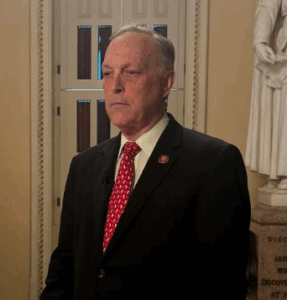
Biggs became a prominent supporter of Donald Trump and the political movement associated with him. Their political alignment has been particularly important to Biggs’s national standing.
Following the 2020 presidential election, Biggs supported Trump’s efforts to challenge the election outcome.
He voted against accepting electoral votes from Arizona and other battleground states during the congressional certification process on January 6, 2021.
These actions made him a controversial figure in debates about election integrity and the peaceful transfer of power. Supporters of Biggs often see his willingness to challenge political institutions as evidence that he remains committed to his principles.
Critics argue that his actions concerning the 2020 election raise questions about his judgment and commitment to democratic norms. These disagreements remain an important part of his public profile.
They may also influence how voters outside the Republican base evaluate his campaign for governor.
Also Read: Katie Zacharia Bio: Meet the New White House Press Secretary
Why Is Andy Biggs in the News in 2026?
Andy Biggs is in the news because he has become the Republican nominee for governor of Arizona. His campaign has turned his long congressional career into a statewide electoral contest.3
The November 3, 2026, general election will pit Biggs against Democratic incumbent Katie Hobbs.
The race is important because Arizona has become a competitive state in national politics, with Republicans and Democrats both seeking to strengthen their positions among voters.
Winning the Republican Primary
Biggs won the Republican gubernatorial primary on July 21, 2026. He defeated fellow congressman David Schweikert, along with other Republican candidates, securing his place on the general-election ballot.
His victory demonstrated the strength of his standing among Republican primary voters. It also showed that his conservative record and national political connections were significant assets in the contest.
President Trump’s endorsement was a notable advantage. Endorsements from influential national figures can help candidates attract attention, energize supporters and establish credibility with voters who prioritize loyalty to a particular political movement.
However, winning a party primary and winning a statewide general election are different challenges. Primary voters are often more ideologically committed than the broader electorate.
A candidate who performs well among conservative Republicans must still appeal to independents and voters who may disagree with parts of his record.
The Contest Against Katie Hobbs
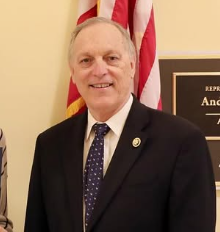
Biggs is challenging Katie Hobbs, the Democratic incumbent who became governor after winning the 2022 election. Their contest offers Arizona voters two different political approaches.
Biggs has emphasized conservative policies, border security, lower taxes and reducing government waste. Hobbs represents the Democratic administration and has defended her record on state governance and policy.
The outcome could have consequences beyond the candidates themselves. Arizona’s position as a competitive state means the election will be watched by national political organizations seeking to understand the strength of both parties.
For Biggs, the race offers an opportunity to move from federal legislative politics into state executive leadership. For Hobbs, it is a test of whether she can win another term while defending her administration’s record.
Andy Biggs’s Key Political Positions
Biggs’s campaign and legislative record provide insight into the issues likely to define his political message. Several themes have remained central throughout his career.
1. Border Security and Immigration
Border security is one of Biggs’s most prominent political priorities. He has supported stronger border enforcement and has been involved in congressional efforts focused on immigration policy.
He also serves as a co-chair of the Border Security Caucus, according to his congressional biography. For Arizona voters, immigration is an especially significant issue because the state shares an international border with Mexico.
Border enforcement, asylum procedures, public safety, and the economic impact of immigration all feature in statewide political debates. Biggs’s position may appeal to voters who want stricter enforcement.
However, immigration policy also involves economic, humanitarian and legal questions that can divide the broader electorate.
2. Taxes and Government Spending
Biggs supports a conservative approach to taxation and government spending. His 2026 campaign has promoted eliminating Arizona’s state income tax and working with local governments to reduce property tax burdens.
His campaign has also emphasized identifying waste and improving the efficiency of state agencies. These proposals are likely to appeal to voters who prioritize lower taxes and limited government.
Yet tax cuts also raise questions about how a state would pay for public services, including schools, infrastructure, and other essential programs.
The practical effects of any proposed changes would depend on the details of the legislation, the state’s financial position and the decisions of the governor and legislature.
3. Regulation and Economic Policy
Biggs has consistently supported reducing regulations that he considers unnecessary or harmful to economic activity. His conservative outlook emphasizes limiting federal intervention and encouraging private-sector growth.
In a gubernatorial campaign, this approach can translate into arguments about business competitiveness, employment, investment and the cost of operating in Arizona. However, regulation can also address public safety, environmental protection and consumer concerns.
The debate is therefore not simply about whether regulation should increase or decrease but about which rules should remain and how they affect residents and businesses.
4. Accountability in Government
Government accountability is another theme in Biggs’s campaign. He has proposed reviewing state agencies and programs to identify waste, fraud and inefficient practices.
The proposal fits his broader preference for limited government and tighter oversight of public spending. Its effectiveness would depend on how reviews are conducted, whether findings are made public and what changes follow.
For voters, accountability can be an important issue regardless of party affiliation. The challenge for any administration is to balance oversight with the need to deliver reliable public services.
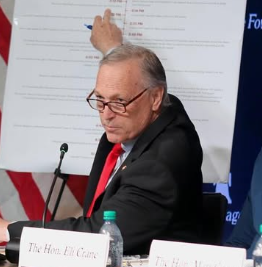
What Makes Andy Biggs a Prominent Figure in the Republican Contest?
Biggs’s rise in Arizona politics can be explained by several factors. His career combines years of state legislative experience, national media attention, conservative policy positions and a political alliance with Trump.
First, his background in Arizona government gives him experience with the state’s legislative system. He served in both chambers of the state legislature before moving to Congress.
This experience helps him present himself as a politician who understands Arizona’s institutions and political priorities.
Second, his leadership in the House Freedom Caucus gave him a national platform. His positions on federal spending, immigration and executive power made him recognizable to conservative voters beyond his congressional district.
Third, Trump’s endorsement helped strengthen his standing during the Republican primary. The endorsement connected Biggs’s campaign to a national political movement with a substantial following among Republican voters.
Finally, his election campaign has focused on issues that matter to many Arizona residents, including taxes, border security and government efficiency. These issues provide a clear message for voters who want a more conservative state government.
Nevertheless, his prominence also comes with political risks. His record on the 2020 election and his association with hard-line conservative politics may make it harder to appeal to some independents and moderate Republicans.
The same positions that energize his core supporters can become points of criticism during a general election.
His nomination therefore reflects both the strength of his conservative credentials and the challenge of expanding his appeal beyond the Republican primary electorate.
Andy Biggs’s Personal Life
Andy Biggs is married to Cindy Biggs. According to his official congressional biography, the couple have six children.
His campaign biography reports that they have twelve grandchildren. The family has longstanding ties to Arizona and has lived in Gilbert for many years.
Biggs generally maintains a public profile centered on politics and policy rather than personal celebrity. His career has involved frequent public debate, congressional responsibilities and appearances connected to Republican political events.
His professional background as a lawyer is also a significant part of his identity. Before entering Congress, he worked in private legal practice and built his career through elected office at the state level.
Although his political positions attract substantial attention, his family life remains comparatively private. Responsible biographical coverage should therefore distinguish information documented in public biographies from details that have not been reliably established.
Challenges Andy Biggs Faces in the Governor’s Race
Winning the Republican nomination was a major milestone, but it does not guarantee success in the general election.
Winning Over Independent Voters
Arizona has a history of competitive statewide elections. Biggs must appeal to voters who may not identify strongly with either major party.
His conservative positions could energize Republicans but some independents may focus more on his record concerning the 2020 election or his approach to governing.
Addressing Everyday Economic Concerns
Taxes and government spending are central to Biggs’s campaign, but voters are also concerned about housing affordability, jobs, education, infrastructure and the cost of living.
His ability to explain how his proposals would affect household budgets and public services could influence how voters evaluate his candidacy.
Explaining His Congressional Record
Biggs has spent nearly a decade in Congress. That experience gives him a substantial record to present to voters but it also means his past statements and votes are likely to receive scrutiny.
Supporters may highlight his consistency and willingness to challenge political leaders. Opponents may argue that his national political priorities do not adequately address the needs of Arizona residents.
Working With the State Legislature
Even if elected governor, Biggs would need to work with the Arizona Legislature to advance many of his proposals. The success of tax changes, spending reforms and other legislative priorities would depend on negotiations and the support of lawmakers.
The governor’s office also carries executive responsibilities that differ from those of a member of Congress. Managing state agencies, responding to emergencies and implementing state law require a different set of skills from legislative advocacy.
These challenges will help determine whether Biggs can translate his national political profile into a successful statewide campaign.
View this post on Instagram
FAQ’s
1. Who is Andy Biggs?
Andy Biggs is an American Republican politician and retired attorney from Arizona. He served in the Arizona Legislature before becoming a U.S. representative in 2017. In 2026, he won the Republican nomination for governor of Arizona.
2. How old is Andy Biggs?
Andy Biggs was born on November 7, 1958. He is 67 years old as of October 2026 and will turn 68 in November 2026.
3. Why is Andy Biggs in the news?
Biggs is in the news because he is the Republican nominee challenging Democratic Governor Katie Hobbs in Arizona’s November 3, 2026, gubernatorial election. His victory in the Republican primary and his endorsement from Donald Trump have drawn national political attention.
4. Did Andy Biggs win the Republican primary for Arizona governor?
Yes. Biggs won the Republican primary on July 21, 2026. He defeated David Schweikert and other Republican candidates to become the party’s nominee.
5. Who is Andy Biggs running against?
Biggs is running against Democratic incumbent Katie Hobbs in the November 3, 2026, general election. Other candidates are also listed on the ballot.
Conclusion
Andy Biggs has built a political career that stretches from the Arizona Legislature to the U.S. House of Representatives.
His experience as a state lawmaker, his tenure as Arizona Senate president and his leadership of the House Freedom Caucus have helped him become a recognizable figure in Republican politics.
His political strengths include a well-established conservative identity, substantial legislative experience and support among voters who favor stricter border enforcement and lower taxes.
It will also offer insight into the political priorities of Arizona voters and the continuing influence of Trump’s movement within the Republican Party.
Whatever the election outcome, Biggs’s journey illustrates how state-level experience, ideological commitment and national political alliances can shape a politician’s rise.
His gubernatorial campaign has made him one of the key figures to watch in Arizona’s 2026 political contest.
Also Read: Celina Jaitly Biography: Her Story Beyond Bollywood