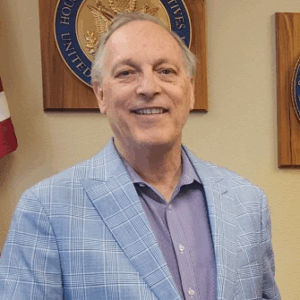

Kurt Alme has become an important name in Montana politics as the state prepares for the 2026 U.S. Senate election
A Republican candidate with decades of experience in law enforcement, state government and nonprofit leadership, Alme is seeking to turn his public service background into a seat in the United States Senate.
His campaign has drawn additional national attention through his connection to President Donald Trump and his appearance alongside the president at a Montana rally in October 2026.
Alme went on to win the Republican primary and is now competing in a general election against Democratic candidate Alani Bankhead, independent candidate Seth Bodnar and Libertarian candidate Kyle Austin.
So, who is Kurt Alme, what is his background and why is his name receiving more attention in national political coverage?
His story combines Montana roots, a long legal career, public service and a campaign built around affordability and conservative priorities.

Also Read: Celina Jaitly Biography: Her Story Beyond Bollywood
Table of Contents
Who Is Kurt Alme?
Kurt Alme is an American lawyer and Republican politician running for the U.S. Senate in Montana in the 2026 election.1
He is known for his work as a federal prosecutor and for holding senior positions in Montana state government.
His career has largely focused on public administration, legal affairs, budgeting and community service. Alme was born in Great Falls, Montana.
He grew up in several parts of the state because his family moved as his father pursued his career in education. These experiences allowed him to develop connections with different Montana communities from an early age.
He graduated from Custer County District High School in Miles City before attending the University of Colorado in Boulder. He later earned his law degree from Harvard Law School.
After completing his education, he returned to Montana and began building a career that included private legal practice and government service. Alme worked as a partner at the law firm Crowley Fleck and served as director of the Montana Department of Revenue under Governor Judy Martz.
He later worked as an assistant U.S. attorney before becoming the state’s U.S. attorney during President Trump’s first administration.
After leaving that position in 2020, Alme became budget director for Montana Governor Greg Gianforte. He also held a senior role at the National Christian Foundation, a nonprofit organization focused on charitable giving.
In 2025, he returned to the U.S. attorney’s office in an interim capacity. His background has become a central part of his Senate campaign.
Alme presents himself as a candidate who understands government operations and can use his experience to address economic and public safety concerns.
He has also emphasized that he is not a career politician because he had never run for elected office before entering the Senate contest.
Working hard to earn the votes of all Montanans today!
Ryegate ➡️ Harlowton ➡️ Hobson ➡️ Helena 🇺🇸 https://t.co/O8xyOikr2b
— Kurt Alme (@KurtAlme) October 29, 2026
Early Childhood and Family Background
Kurt Alme was born in Great Falls, Montana, in 1966.
Both of his parents were schoolteachers. His father taught high school mathematics, while his mother worked as an elementary school teacher.
Growing up in a family connected to education helped shape his views on learning, hard work and community responsibility.
His family moved to several Montana communities during his childhood. Alme lived in places including Dillon, Victor and Helena before graduating from high school in Miles City.
The moves gave him a broad experience of life across the state rather than a childhood tied to a single town. In interviews during the 2026 campaign, Alme has described his parents as important influences on his values.
He has credited them with teaching him the importance of faith, hard work and looking after neighbors. These themes now appear regularly in his political message.
Outdoor activities were also an important part of his early life. Alme has spoken about fishing, camping, hiking, skiing and spending time outdoors with his family.
These experiences helped shape the connection to Montana that he highlights during his campaign. At school, he participated in sports and student activities.
He played football and was involved in student leadership. He also took part in Montana Boys State, a civic education program that introduces students to government and public leadership. Alme was selected as governor during his Boys State experience.
His childhood across different Montana communities has become a key part of his campaign identity. He argues that living in several parts of the state helped him understand the concerns of families, workers and communities beyond the larger population centers.
Although his parents’ careers were rooted in education, Alme eventually chose law and public administration. His education would take him outside Montana for university and law school but he returned to the state to build his professional life and raise a family.
Stats Table
| Category | Details |
|---|---|
| Full name | Kurt G. Alme |
| Birthplace | Great Falls, Montana, United States |
| Birth year | 1966 |
| Age | 59 or 60 in 2026, depending on his birthday |
| Nationality | American |
| Political party | Republican |
| Profession | Lawyer, former prosecutor and public servant |
| High school | Custer County District High School, Miles City |
| Undergraduate education | University of Colorado, Boulder |
| Law degree | Harvard Law School |
| Spouse | Sandra Alme |
| Known for | Legal career, state government leadership and U.S. Senate campaign |
| Former government roles | Montana Department of Revenue director, state budget director and U.S. attorney |
| 2026 political campaign | Republican candidate for U.S. Senate in Montana |
| Main campaign themes | Affordability, public safety, fiscal responsibility and Montana values |
Kurt Alme’s Education From Montana to Harvard Law School
Alme attended Custer County District High School in Miles City. His academic performance and participation in leadership activities helped prepare him for higher education.2
He then attended the University of Colorado in Boulder, where he studied business. He graduated summa cum laude in 1989, according to his official biography.
He was also a Truman Scholar and participated in the university’s President’s Leadership Class. After earning his undergraduate degree, Alme went on to Harvard Law School.
He graduated cum laude in 1992, completing the legal education that would become the foundation of his career. His education brought together business, public leadership and law.
Those areas later became closely connected in his work. His legal career involved criminal prosecution and private practice, while his government positions required him to understand budgets, tax policy and the administration of public institutions.
After law school, Alme returned to Montana and clerked for U.S. District Judge Charles Lovell. A judicial clerkship provides experience in legal research and the court system.
It also offers a close view of how judges evaluate arguments and apply the law. Alme later joined Crowley Fleck, a regional law firm where he became a partner.
His experience in private practice gave him a foundation in legal work before he moved into state and federal government roles.

Alme’s Career Before Politics
Work as a lawyer
Alme began his professional career in the legal field after completing law school. He clerked for a federal judge and later worked at Crowley Fleck, becoming a partner at the firm.
Private legal practice gave him experience working with clients and handling legal matters outside government. However, his career gradually shifted toward public service.
He accepted appointments that placed him in positions responsible for taxation, criminal prosecution and government management.
Director of the Montana Department of Revenue
One of Alme’s significant early government roles was serving as director of the Montana Department of Revenue under Republican Governor Judy Martz. The department is responsible for administering state tax laws and collecting revenue.
Its work affects the state’s finances and the way tax policies are implemented. Alme has highlighted tax reform as one of his major achievements in state government.
His campaign says he helped reduce Montana’s top income tax rate from 11 percent and made the state’s tax structure more competitive. Supporters describe the changes as an effort to encourage investment and help businesses create jobs.
Tax reductions remain a major theme in his Senate campaign. Alme argues that government should control unnecessary spending and allow families to keep more of their income.
Assistant U.S. attorney and federal prosecutor
Alme later served as an assistant U.S. attorney in Montana from 2003 to 2010. He focused on cases involving white-collar crime, including financial fraud, government program fraud, bankruptcy fraud, money laundering and tax evasion.
He also served as first assistant U.S. attorney, helping manage the office. In 2017, President Donald Trump nominated Alme to become U.S. attorney for the District of Montana.
The Senate confirmed him unanimously and he held the role until December 2020. As U.S. attorney, Alme’s office handled federal criminal prosecutions and represented the federal government in legal matters.
His public statements and campaign materials have emphasized efforts to address violent crime and drug trafficking, including methamphetamine-related cases. His experience as a prosecutor is now one of the strongest pillars of his campaign.
Alme says that keeping communities safe requires effective law enforcement and cooperation among federal, state, tribal and local agencies.
State budget director
After leaving the U.S. attorney’s office at the end of Trump’s first term, Alme became budget director for Montana Governor Greg Gianforte. The role involved overseeing state budget planning and working with the governor’s administration on spending priorities.
Alme has credited the administration with balancing the budget, reducing spending and delivering tax cuts. His campaign presents these experiences as evidence that he can make difficult financial decisions and scrutinize government spending.
Whether voters agree with his approach to taxation and public finance is one of the questions at the center of the Senate campaign.
Nonprofit leadership
Alme has also worked in the nonprofit sector. He served as an executive and later president of the Yellowstone Boys and Girls Ranch Foundation, an organization supporting services for young people who need behavioral health and other forms of assistance.
He later became executive vice president for planned giving at the National Christian Foundation. His work in charitable organizations added another dimension to his public profile, involving fundraising, community support and nonprofit administration.
Outside his formal employment, Alme and his family have participated in community activities in Billings. He has described volunteering with youth organizations, healthcare institutions and other local groups.
His activities have included coaching youth sports and serving on nonprofit boards.
Why Is Kurt Alme Running for the U.S. Senate?
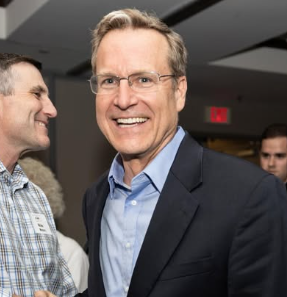
Alme says he entered the race because he wants to make life more affordable, improve public safety and protect Montana’s way of life. His campaign argues that his background in government and law has prepared him to represent the state in Washington.
His candidacy is also connected to an unusual development in the 2026 election. Republican Senator Steve Daines withdrew from the race on March 4, 2026 and endorsed Alme.
Alme filed to run on the same day. The timing attracted attention because Daines had already been preparing for reelection.
The decision changed the shape of the contest and drew criticism from some observers who questioned the process. Alme nevertheless won the Republican primary on June 2, 2026, defeating Lee Calhoun and Charles A. Walking Child.
He now faces three other candidates in the general election: Democrat Alani Bankhead, independent Seth Bodnar and Libertarian Kyle Austin.
The election is scheduled for November 3, 2026. Alme’s campaign has received national attention through Trump’s endorsement and campaign appearances.
At a rally in Kalispell on October 14, Trump publicly supported Alme and highlighted the Senate race. That appearance helped bring the Montana contest into wider political coverage.
For Alme, the challenge is to turn name recognition and political support into votes. He must also persuade voters that his record in appointed government positions will translate into effective representation in the Senate.
Also Read: Eagles Star Lane Johnson Bio: NFL Career and Achievements
Kurt Alme’s Main Political Views and Campaign Issues
1. Cost of living and housing
Affordability is one of the most prominent themes in Alme’s campaign. He has spoken about the difficulty younger Montanans face when trying to buy homes and establish families.3
He argues that lower taxes, reduced government waste and stronger economic opportunities can help make life more affordable.
Housing costs are particularly important in Montana, where rising prices have made homeownership difficult for some residents. His campaign presents affordability as a practical concern that affects families across generations.
Alme says he wants young people to have the same opportunity to build stable lives in Montana that earlier generations had.
2. Government spending and taxes
Alme emphasizes his experience in the Department of Revenue and the governor’s budget office. He argues that public officials should use taxpayer money responsibly and avoid unnecessary spending.
His campaign points to past tax reductions and budget management as evidence of his approach. If elected, he says he would bring that focus on fiscal responsibility to the federal government.
Critics of broad tax-cutting policies often argue that lower revenue can make it harder to fund public services. Voters will have to weigh those competing considerations when assessing his proposals.
3. Public safety and drug trafficking
Alme’s background as a federal prosecutor is central to his public safety message. He supports strong enforcement against violent crime and drug trafficking and has discussed the importance of cooperation among law enforcement agencies.
His experience in Montana’s U.S. attorney’s office gives him direct familiarity with federal criminal cases. He argues that a safe community is essential to a strong economy and a good quality of life.
4. Immigration enforcement
Alme supports stronger enforcement of federal immigration laws and prioritizing the removal of people who are in the country illegally and have committed crimes. His campaign connects this position to his broader emphasis on law enforcement and public safety.
Immigration policy is a national issue that involves border security, federal resources, legal processes and humanitarian concerns. As a Senate candidate, Alme would have to work with other lawmakers to turn campaign priorities into federal legislation.
5. Agriculture, public lands and rural communities
Montana has a strong agricultural tradition and Alme has emphasized the needs of farmers and ranchers. His campaign supports policies intended to help agricultural producers manage drought, rebuild cattle herds and reach markets for Montana products.
He has also called for more active management of federal lands, including forest thinning, prescribed burns and responsible logging. These proposals connect to broader debates about wildfire prevention, timber industries, conservation and public access.
6. Conservative social and constitutional priorities
Alme’s campaign identifies several other conservative priorities, including protecting the Second Amendment, supporting veterans, securing elections and opposing the participation of transgender girls in girls’ sports.
He also stresses religious freedom and the ability of people to live according to their faith and conscience. These positions reflect the broader conservative platform he is presenting to Montana voters.

National Campaigning and Growing Public Attention
Kurt Alme has spent much of his career in appointed roles rather than as an elected politician. His campaign has therefore relied heavily on his professional record, Montana background and support from prominent Republicans.
Trump’s endorsement has been especially important in raising his profile beyond Montana. Their shared political connection is not new: Trump nominated Alme as U.S. attorney during his first term and again in 2025.
Alme has referred to the president as a professional reference in discussing his return to federal service. The October 14 rally in Kalispell gave Alme a prominent stage during the final weeks of the campaign.
National political attention has focused on the race because it is an open Senate contest in a state that has leaned Republican in recent federal elections. Still, Alme faces a distinct challenge.
His opponents include independent Seth Bodnar, who has attracted support from some voters seeking an alternative to the major parties.
The presence of an independent candidate could affect how votes are distributed across the field. The race has also drawn scrutiny because of Daines’ late withdrawal and endorsement.
While Alme won the Republican primary decisively, the circumstances of his entry into the race remain part of the wider political discussion. His campaign now has to balance national support with local concerns.
Voters may be interested in Trump’s endorsement but they will also judge Alme on issues such as housing, jobs, healthcare, taxes, public lands and his approach to representing the state’s interests.
Personal Life and Community Involvement
Alme is married to Sandra Alme. The couple met while attending law school and returned to Montana after completing their education.
They settled in Billings, where they raised their children. Family and community life are recurring themes in Alme’s public remarks.
He has described taking part in school, church and outdoor activities with his family. He has also spoken about the difficulty younger generations face when trying to afford homes in the state.
His community involvement has included work with youth organizations, healthcare institutions and charitable groups. He has served on boards and supported services for children, seniors and people facing difficult circumstances.
These activities help explain how Alme presents himself to voters. Rather than describing his career only in terms of government positions, he emphasizes his connections to local organizations and the communities where he has lived.
Although his public profile has increased during the Senate campaign, Alme’s career has not primarily been built around television appearances or years of electoral politics.
His record is more closely associated with legal work, public administration and nonprofit leadership.
What Makes Kurt Alme Different From a Career Politician?
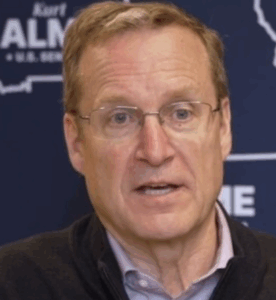
Alme’s supporters argue that his years in government give him practical experience without the habits of a long-serving elected official. He has worked in legal and administrative positions where his responsibilities included prosecuting cases, managing budgets and implementing state policy.
His campaign says these experiences provide a strong foundation for federal legislative work. Alme argues that he understands how government operates and that he can use that knowledge to reduce waste and improve public safety.
However, his lack of previous electoral experience can also raise questions. Being appointed to a government role is different from campaigning, representing a diverse constituency and building coalitions in the Senate.
A senator must work with colleagues, respond to voters and make decisions on a wide range of national issues. Alme’s record will therefore be judged in two ways.
Voters can assess his past work in government and nonprofits, while also deciding whether his proposals and political approach meet their expectations for the next senator from Montana.
His candidacy illustrates a familiar debate in American politics: whether voters should prioritize experience in government administration or experience as an elected representative.
The 2026 election will give Montana voters the opportunity to decide which matters more to them.
View this post on Instagram
FAQ’s
1. Who is Kurt Alme?
Kurt Alme is a Montana lawyer, former federal prosecutor and Republican candidate for the U.S. Senate in the 2026 election. He has held senior positions in state government and served as U.S. attorney for the District of Montana.
2. How old is Kurt Alme?
Alme was born in 1966. He was reported as 59 during the 2026 campaign, though his exact age on any particular date depends on his birthday.
3. Where was Kurt Alme born?
He was born in Great Falls, Montana, in the United States. He grew up in several Montana communities, including Dillon, Victor, Helena and Miles City.
4. Where did Kurt Alme study?
Alme graduated from Custer County District High School in Miles City. He earned a business degree from the University of Colorado in Boulder and a law degree from Harvard Law School.
5. Is Kurt Alme a Republican?
Yes. Alme is the Republican candidate for the U.S. Senate seat in Montana in the 2026 general election.
6. What government positions has Kurt Alme held?
He served as director of the Montana Department of Revenue, an assistant U.S. attorney, U.S. attorney for the District of Montana and budget director under Governor Greg Gianforte. He also returned to the U.S. attorney’s office in an interim role in 2025.
7. Why is Kurt Alme in the news?
Alme is receiving attention because he is running for the U.S. Senate in Montana. His campaign gained wider visibility after Senator Steve Daines withdrew from the race and endorsed him. President Donald Trump also supported Alme at a rally in Kalispell in October 2026.
8. What are Kurt Alme’s main campaign issues?
His campaign focuses on affordability, lower taxes, government spending, public safety, immigration enforcement, support for farmers and ranchers, public lands and conservative social priorities.
9. Is Kurt Alme married?
Yes. He is married to Sandra Alme. The couple returned to Montana after completing their education and raised their family in Billings.
10. Who is Kurt Alme running against?
In the November 3, 2026 general election, Alme is running against Democrat Alani Bankhead, independent Seth Bodnar and Libertarian Kyle Austin.
11. Has Kurt Alme held elected office before?
No. Before running for the U.S. Senate, Alme’s public service career was primarily in appointed government positions and nonprofit leadership. He has described the Senate race as his first campaign for elected office.
12. What is Kurt Alme known for professionally?
He is known for his legal career, his work as a federal prosecutor and his leadership roles in Montana’s tax and budget administration. His campaign uses this background to argue that he is prepared to represent the state in Washington.
Conclusion
Kurt Alme’s rise in Montana politics is rooted in a career that combines law, public administration and community service.
Born in Great Falls and raised across several Montana communities, he built a professional life that took him from private legal practice to state government, federal prosecution and nonprofit leadership.
His campaign for the U.S. Senate has brought him wider recognition, especially after Senator Steve Daines withdrew from the race and President Donald Trump publicly supported him.
Alme is presenting himself as a candidate who can use his experience to address the cost of living, public safety and government spending while defending conservative priorities.
At the same time, his candidacy raises important questions about political experience, the process that shaped the Republican race and how he would represent Montana in the Senate.
His opponents offer voters different political backgrounds and policy approaches, making the general election a choice about both leadership and priorities.
As Montana voters prepare to choose their next senator, Alme’s background and proposals will remain central to the debate.
His long record in appointed public service is the foundation of his campaign. Whether that record persuades enough voters will be decided at the ballot box on November 3, 2026.