

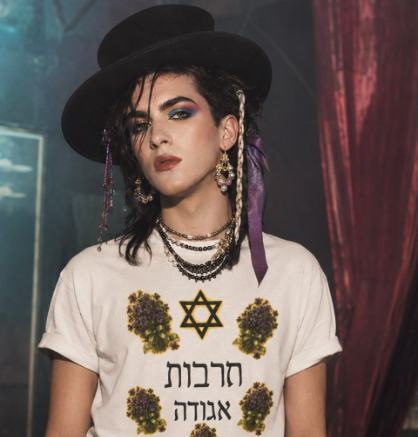
Boy George is back in the headlines for a reason that has little to do with his biggest musical hits. The Culture Club frontman has become part of a growing online controversy involving pop star Dua Lipa after he shared and amplified claims about her that were not supported by credible evidence
The controversy began in August 2026 when Boy George criticized Dua Lipa while defending his own position on Israel and his recently released song.
In a post on X he questioned why Dua Lipa was supposedly allowed to say that “Israel should be wiped off the face of the earth” while he received criticism for defending his Jewish friends.
He later shared screenshots that appeared to support the claim.
However, the screenshots came from unverified sources and there is no credible evidence that Dua Lipa made the statement attributed to her.
Now his name is trending again because of a social media post that placed him directly into a controversy surrounding Dua Lipa, Israel and misinformation.
So who is Boy George? What exactly happened with Dua Lipa? Did Dua Lipa really make the statement he attributed to her? And why has this incident attracted so much attention?
Here is everything to know.
Also Read: Angela Nikolau Age, Bio, Career, Relationship and Net Worth 2026
Table of Contents
Who Is Boy George?
Boy George was born George Alan O’Dowd on June 14, 1961, in England. He became famous under the stage name Boy George and rose to international prominence as the lead singer of Culture Club.1
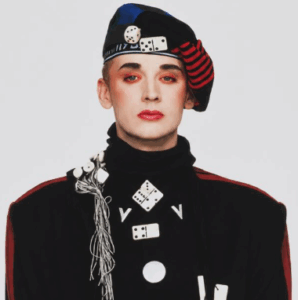
He was part of the New Romantic movement that became influential in British music and fashion in the late 1970s and early 1980s.
The movement was known for theatrical clothing, makeup, dramatic hairstyles and a rejection of conventional ideas about masculinity and pop-star image. Boy George became one of its most recognizable faces.
His appearance was immediately distinctive. He often wore heavy makeup, colorful clothing, elaborate hairstyles and accessories.
At a time when mainstream pop culture was still much less comfortable with gender-bending fashion, his image made a powerful impression. But Boy George was more than a fashion figure.
His voice helped Culture Club develop a sound that mixed pop, soul, reggae and new wave influences. The group became one of the biggest acts of the 1980s.
Culture Club formed in London in 1981. The original lineup included Boy George, Roy Hay, Mikey Craig and Jon Moss. The band quickly attracted attention and eventually became an international success.
Their breakthrough came with “Do You Really Want to Hurt Me,” which became a major hit in the UK and internationally.
Then came “Karma Chameleon.” The song became one of the defining pop records of the 1980s.
According to the Official Charts Company, “Karma Chameleon” reached No. 1 in the UK and remained at the top for six weeks. It eventually became the biggest-selling single in Britain in 1983.
Culture Club’s success made Boy George a global celebrity.
Get it here! Play it loud!
We Will Dance Again https://t.co/CK38GWbj1A
— Boy George (@BoyGeorge) August 8, 2026
Stats Table
| Category | Details |
|---|---|
| Real name | George Alan O’Dowd |
| Stage name | Boy George |
| Date of birth | June 14, 1961 |
| Birthplace | England |
| Profession | Singer, songwriter, DJ and artist |
| Best known for | Lead singer of Culture Club |
| Main genres | Pop, new wave, soul and reggae influences |
| Culture Club formed | 1981 |
| Major band hit | “Karma Chameleon” |
| “Karma Chameleon” UK peak | No. 1 |
| Weeks at UK No. 1 | 6 |
| Solo UK No. 1 | “Everything I Own” |
| Solo career | Began in the 1980s |
| Major award | Grammy Award for Best New Artist with Culture Club |
| Other work | DJ, television, fashion and visual art |
| Current controversy | False claim about Dua Lipa |
| 2026 song involved | “We Will Dance Again” |
| AI involvement | Boy George said the song was created using AI |
Boy George’s Career With Culture Club
Culture Club’s success was not limited to one or two songs.2
The band released several major singles during the 1980s. Their music appealed to a wide audience because it combined catchy pop melodies with soul and reggae influences.
Their second studio album, Colour by Numbers, became particularly successful.
“Karma Chameleon” was the standout hit from the album. The track became a major commercial success in Britain and the United States.
Official Charts lists the song as a UK No. 1 with six weeks at the top. It has also accumulated more than 1.5 million sales in the UK. Culture Club also received major awards during this period.
The band won the BRIT Award for Best Group in 1983. “Karma Chameleon” won Best Single at the same awards.
Culture Club also won the Grammy Award for Best New Artist. For Boy George, the 1980s were a period of enormous fame.
His image appeared everywhere. His fashion became part of his identity and helped challenge traditional expectations surrounding male pop stars.
Yet the intense fame also came with personal struggles. Culture Club eventually broke up in the mid-1980s.
Boy George then moved into a solo career and continued working in music.
Boy George’s Solo Career
Boy George did not disappear after Culture Club. He began building a solo career and achieved significant success outside the band.
One of his biggest solo moments came in 1987 with his version of “Everything I Own.” The song reached No. 1 on the UK Singles Chart. Official Charts lists Boy George as having one UK No. 1 single as a solo artist.
He also became involved in dance music and DJ culture. During the late 1980s and 1990s he worked with different musical styles and projects.
He also became involved with Jesus Loves You and continued to release music under his own name. His career has therefore lasted far beyond the Culture Club era.
He has also appeared on television and in other forms of entertainment. His public profile has remained strong even during periods when he was not releasing major new music.
That long history is important when understanding why his recent social media posts can attract attention.
Boy George is not an unknown internet personality. He is a major pop-culture figure whose comments can reach a large audience.
Boy George’s Personal Controversies
Boy George’s career has also included serious controversies.
In 2009 he was sentenced to 15 months in prison after being convicted of falsely imprisoning Norwegian model and male escort Audun Carlsen.
The case involved an incident at Boy George’s London flat in 2007. The Guardian reported that he was released after serving four months of the sentence. This remains an important part of his public history.
It also illustrates how complicated celebrity biographies can become. Boy George’s career includes extraordinary musical achievements as well as serious personal and legal controversies.
That background does not determine whether his current claims are true or false. However, it explains why public discussions about him often extend beyond music.
Today he remains a recognizable celebrity with a significant cultural legacy.

Boy George’s 2026 Controversy Explained
The latest controversy is connected to his views about Israel and his criticism of the backlash surrounding his new music.
According to PinkNews, Boy George released a new reggae song called “We Will Dance Again” on July 26, 2026. The song takes a strongly pro-Israel position.
The controversy surrounding the song became even more complicated because Boy George said it was created using artificial intelligence. He described the use of AI as “AI for good” and acknowledged that he would have struggled to write the song himself.
The song itself discusses the Israel-Palestine conflict in strongly confrontational language. As criticism surrounding the song continued, Boy George brought Dua Lipa into the conversation.
That is where the latest controversy began.
What Did Boy George Say About Dua Lipa?
On August 6, Boy George posted on X questioning why Dua Lipa was supposedly allowed to make an inflammatory statement about Israel while he was receiving criticism for defending his Jewish friends.
His post attributed the following claim to Dua Lipa: “Israel should be wiped off the face of the earth.”
The wording quickly became controversial because the statement was presented as something Dua Lipa had allegedly said.
However, the evidence Boy George provided did not establish that she had actually made that statement.
According to PinkNews, when an X user asked Boy George for his source, he shared screenshots containing images of Dua Lipa with text placed over photographs of her.
One image claimed that she had said that there would be no peace as long as Israel existed.
The problem was that the screenshots were not credible primary evidence. They were circulating claims rather than a verified interview, video, transcript or statement from Dua Lipa. That distinction matters.
Did Dua Lipa Really Say Israel Should Be Wiped Off the Face of the Earth?
There is no credible evidence that Dua Lipa said that. This is the most important point in the controversy.
PinkNews reported that no credible source had verified the statements attributed to Dua Lipa in the screenshots shared by Boy George.
Dua Lipa has previously spoken about the situation in Gaza and expressed support for Palestinians. Her position on the conflict has generated criticism and debate.
But expressing support for Palestinian rights or criticizing Israeli actions is not the same thing as calling for Israel to be “wiped off the face of the earth.” Those are completely different claims.
The viral material appears to have taken a real and widely discussed political position associated with Dua Lipa and attached a much more extreme statement to it.
That is why the controversy has been described as misinformation.
Why Did the False Claim Spread?
The incident demonstrates how misinformation can become convincing on social media.
A photograph of a celebrity combined with a quotation can look authentic even when there is no reliable source behind it.
People may see a familiar face and assume that the text is genuine. The problem becomes more serious when a celebrity shares the material.
A person with millions of followers can give an unverified claim a level of visibility that it would not otherwise receive.
That appears to be what happened here. Boy George did not simply encounter the claim and privately believe it. He used it publicly to challenge Dua Lipa and support his own argument.
Once the post appeared online it became a news story in its own right. This is one reason celebrities have to be particularly careful when sharing political claims.
Also Read: Joel Webbon Biography: Controversy, Backlash and Trolling Wave
Why Is Dua Lipa Involved in the Controversy?
Dua Lipa has been outspoken about humanitarian issues related to Palestinians.
Her comments have made her a target of criticism from some groups and individuals who disagree with her position.
That history made her a natural target for people looking to criticize celebrities who support Palestine.
But there is a major difference between criticism of Dua Lipa’s actual statements and criticism based on a fabricated quotation.
The first is a political disagreement. The second is the spread of misinformation.
In the Boy George controversy, the issue is specifically the unsupported claim that Dua Lipa said Israel should be destroyed. There is no reliable evidence supporting that attribution.
Boy George and Dua Lipa’s Different Positions
The controversy also reflects a larger divide within the entertainment industry.3
Dua Lipa has previously expressed support for Palestinians.
Boy George is now publicly defending Israel and has released a song expressing that position.
It is completely possible for two musicians to have different political opinions.
There is nothing unusual about that. The controversy comes from how those opinions are communicated.
Boy George’s criticism of Dua Lipa would have been a different story if he had simply disagreed with her verified statements. Instead, he attributed an extreme quotation to her without credible evidence.
That is why the focus quickly shifted from politics to accuracy.
Boy George’s New AI Song
Another major part of the story is Boy George’s new song “We Will Dance Again.”
The song was released in July 2026 and takes a pro-Israel position. PinkNews reported that Boy George acknowledged the song was created using AI. That disclosure makes the release particularly notable.
Artificial intelligence is increasingly being used in music production. Artists can now use AI to generate melodies, sounds and even entire musical arrangements.
But the use of AI also raises questions about authorship, creativity and authenticity.
In Boy George’s case, the AI element became part of the conversation because the song was already politically controversial.
Instead of being discussed only as a piece of music, it became part of a much larger argument about Israel, Palestine, celebrity activism and misinformation.
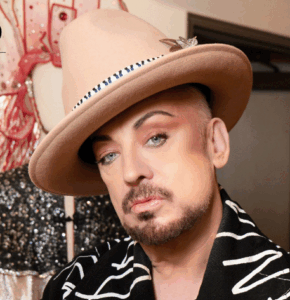
Boy George’s Legacy in Music
It is easy for the latest controversy to overshadow Boy George’s musical achievements. That would be unfair to the history of his career. Culture Club was one of the defining British pop groups of the 1980s.
Boy George helped create a style of celebrity that was both musical and visual. His clothes, makeup and hairstyle were almost as recognizable as his voice.
At a time when mainstream pop was dominated by more traditional male images, Boy George presented something different.
His success showed that a pop star could challenge conventional expectations and still become a massive commercial success.
Culture Club’s music has also remained popular. “Karma Chameleon” continues to be one of the most recognizable songs of the 1980s.
Official Charts reports that the song has sold more than 1.5 million copies in the UK. His career therefore cannot be reduced to the controversies surrounding him.
He is an influential musician who has also experienced serious personal and professional controversies. Both parts of his story matter.
What Makes the Dua Lipa Story Different?
The Dua Lipa controversy stands out because it involves a false attribution. There are countless celebrity disagreements every year.
What makes this one unusual is that the argument was built around something Dua Lipa apparently did not say. This is especially important in the current social media environment.
A screenshot can be created within seconds. A quote can be copied from one account to another. A celebrity can unknowingly share misinformation.
Then traditional media outlets can begin reporting on the controversy because the celebrity’s post itself has become news.
The result is a cycle where an unsupported claim can become widely known even after it has been challenged.
What Should People Take Away From the Boy George Controversy?
The biggest lesson is simple: check the original source before believing a viral celebrity quote.
If a famous person allegedly made a controversial statement, there should normally be some evidence. That could be a video interview.
It could be an official social media post. It could be a transcript from a reputable publication. It could be a direct recording of the person making the statement.
A graphic containing a photograph and a quotation is not enough. In this case, the available evidence does not establish that Dua Lipa made the statement attributed to her.
That does not mean people have to agree with Dua Lipa. It simply means criticism should be based on things she actually said or did.
View this post on Instagram
FAQ’s
Who is Boy George?
Boy George is an English singer, songwriter and DJ best known as the lead singer of Culture Club. He became an international star during the 1980s through songs such as “Do You Really Want to Hurt Me” and “Karma Chameleon.”
What is Boy George’s real name?
Boy George’s real name is George Alan O’Dowd. He was born on June 14, 1961.
Why is Boy George trending in 2026?
Boy George is trending because of a controversy involving Dua Lipa. He shared a claim that Dua Lipa had said Israel should be “wiped off the face of the earth.” The claim has not been supported by credible evidence.
Did Dua Lipa really say Israel should be wiped off the face of the earth?
There is no credible evidence that Dua Lipa made that statement. Boy George shared screenshots from unverified sources but those screenshots do not establish that the quotation came from Dua Lipa.
What did Boy George say about Dua Lipa?
Boy George questioned why Dua Lipa was allegedly allowed to make an extreme statement about Israel while he was criticized for defending his Jewish friends. He later shared screenshots that he appeared to believe supported his claim.
Conclusion
Boy George is one of the most recognizable British pop stars of the 1980s. As the lead singer of Culture Club, he helped define an era through his music, fashion and unmistakable public image.
Songs such as “Karma Chameleon” and “Do You Really Want to Hurt Me” made him a global star and gave him a career that has lasted for more than four decades.
That makes this controversy bigger than a disagreement between two pop stars. It is another example of how misinformation can move quickly online, especially when a celebrity gives an unverified claim additional attention.
Boy George has every right to express his political views and defend the people he believes deserve support.
Dua Lipa also has the right to express her views about the Israel-Palestine conflict. But public debate is strongest when it is based on verified statements rather than viral screenshots.
Also Read: Britt Barbie Bio: From “Period Ahh” Meme to Internet Creator