
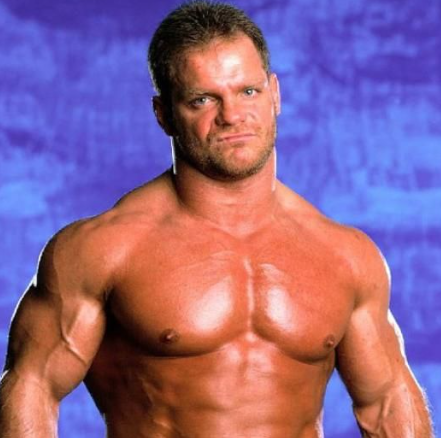
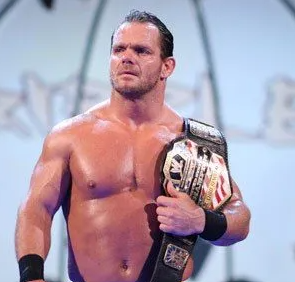
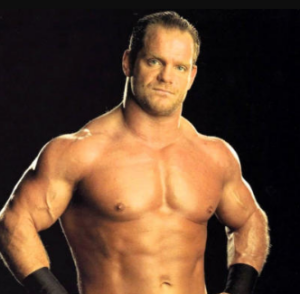
Chris Benoit’s Biography
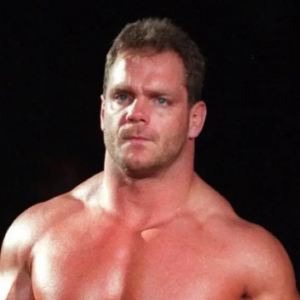
Chris Benoit’s Career
Chris Benoit, renowned for his ferocity and technical prowess, embarked on his professional wrestling journey in 1985 with ‘Stampede Wrestling.’
Inspired by Bret Hart and Tom Billington, Benoit incorporated their signature moves, such as the sharpshooter, diving headbutt, and snap suplex, into his repertoire.
His aggressive style and remarkable strength earned him the moniker ‘Dynamite.’
Early Years in Stampede Wrestling
Benoit made his debut in November 1985, participating in a tag team match where he secured victory with a sunset flip.
His tenure in ‘Stampede Wrestling’ was marked by significant success, as he captured four ‘British Commonwealth Titles‘ and four ‘International Tag Team Titles.’
This period solidified his reputation and paved the way for his transition to larger wrestling promotions.
Rising in New Japan Pro-Wrestling
In 1989, Benoit transitioned to Japan, joining ‘New Japan Pro-Wrestling‘ (NJPW) and adopting the ring name ‘The Pegasus Kid.’ He donned a mask and quickly made his mark by winning the ‘Best of the Super Juniors’ tournament twice and the ‘Super J-Cup Tournament.’
Throughout the early 1990s, Benoit wrestled in Japan, Mexico, and Europe, amassing several championship titles and further honing his craft.
Breakthrough in WCW and ECW
Benoit’s prowess caught the attention of ‘World Championship Wrestling’ (WCW) in 1992. By 1994, he had moved to ‘Extreme Championship Wrestling’ (ECW), where his feuds with prominent wrestlers earned him the nickname ‘Crippler Benoit.’
His first American title came in 1995 with the ‘ECW World Tag Team Championship.’ Due to a talent exchange program, Benoit frequently oscillated between NJPW and WCW.
In 1998, Benoit entered a notable feud with Booker T in WCW, leading to numerous memorable matches. The following year, he teamed up with Dean Malenko to win the ‘WCW Tag Team Championship’ and co-founded ‘The Horsemen,’ later rebranded as ‘The Revolution.’
Despite his in-ring success, dissatisfaction with WCW’s management prompted Benoit to leave and sign with ‘World Wrestling Federation’ (WWF).
Dominance in WWF and WWE
- In WWF, Benoit, along with Eddie Guerrero, Saturn, and Malenko, formed ‘The Radicalz.’ Their debut was bolstered by the inclusion of Triple H, transforming them into ‘Heel Faction.’
- At ‘WrestleMania 2000,’ Benoit won his first WWF title, the ‘Intercontinental Championship,’ in a triple threat match against Chris Jericho and Kurt Angle.
- This victory ignited a prolonged rivalry with Jericho, culminating in the loss of the title in January 2001.
- Following his departure from ‘The Radicalz,’ Benoit initiated a feud with Kurt Angle, even stealing Angle’s Olympic gold medal.
- Their rivalry included intense single and tag team matches. In the 2002 WWE draft, Benoit was moved to SmackDown.
- Despite their ongoing feud, Benoit and Angle teamed up to become the inaugural ‘WWE Tag Team’ champions. Benoit’s crowning achievement came in 2004 when he won the ‘Royal Rumble,’ earning a title shot at ‘WrestleMania 20.‘
- There, he defeated Triple H to clinch the ‘World Heavyweight Championship,’ though he later lost it to Edge.
Also Read: Dean Malenko (WWE Legend): Who Is He? Bio, Career, Personal Life, Achievements and More
Chris Benoit’s Obituary
In the annals of professional wrestling, few stories are as harrowing and complex as that of Chris Benoit.3
On June 25, 2007, the wrestling world was rocked when police discovered the bodies of Benoit, his wife Nancy, and their seven-year-old son Daniel.
This tragic event revealed a dark side of the wrestling industry and raised questions about the mental and physical toll it takes on its performers.
The WWE Tribute
In the immediate aftermath, WWE aired a three-hour tribute to Benoit, celebrating his in-ring accomplishments and his legacy as a performer.
However, as details of the tragedy emerged, the company faced backlash for honoring a man who had committed such heinous acts. The tribute was quickly pulled from future broadcasts, and WWE distanced itself from Benoit’s legacy.
Mental Health Struggles
Benoit’s father, Michael Benoit, gave a heart-wrenching interview where he revealed that his son had been suffering from severe depression.
This revelation was a critical piece in understanding the motivations behind the tragic events. Friends and colleagues also noted changes in Benoit’s behavior in the months leading up to the incident, attributing his deteriorating mental state to years of physical trauma sustained in the ring.
Toxicology Reports
- Toxicology reports on Benoit and his victims uncovered the presence of various substances, adding another layer of complexity to the case.
- Anabolic steroids were found in Benoit’s system, raising suspicions about “roid rage” – a term used to describe violent behavior induced by steroid use.
- Additionally, other toxic substances were identified, contributing to the theory that Benoit’s actions were influenced by a combination of mental illness and substance abuse.
- The findings of CTE in Benoit’s brain were particularly significant. CTE is a progressive degenerative brain disease found in individuals with a history of repetitive brain trauma.
- Symptoms include memory loss, confusion, impaired judgment, aggression, and, in severe cases, dementia.
- Benoit’s brain showed advanced stages of the disease, explaining his erratic and violent behavior. This case brought national attention to the issue of CTE, not only in wrestling but across all contact sports.
FAQs
Q1: Are there any new discoveries about Chris Benoit in 2025?
A1: No. As of August 2025, no fresh findings, documents, or studies concerning Chris Benoit have emerged in the public domain.
Q2: What exactly is CTE, and how did it relate to Benoit?
A2: Chronic Traumatic Encephalopathy (CTE) is a degenerative brain disease from repeated head trauma. Benoit’s post-mortem diagnosis showed extensive CTE damage, highlighting the physical risks of contact sports.
Q3: How did WWE respond to his death?
A3: WWE quickly pulled tribute content, distanced Benoit from its promotional narrative, and strengthened wellness policies—including mandating concussion protocols, banning dangerous moves, and instituting testing.
Q4: Why does Benoit’s case still matter?
A4: His case remains a pivotal lesson on the consequences of unmanaged head trauma and the importance of mental health awareness and safety protocols in sports.
Also Read: Bedale Joshua Chapman (Obituary): Death Cause, Ethnicity, Religion, Family And More Explained