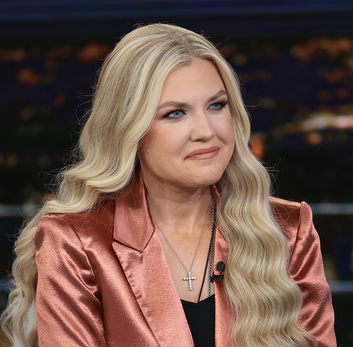
Erika Kirk has quickly become one of the most talked-about political personalities in recent years. After stepping into leadership following the assassination of her husband, Charlie Kirk, she moved from being a supportive public figure to a central face of a major conservative organization
Her rise has been dramatic, emotional, and highly public. But with visibility comes scrutiny. In 2026, Erika Kirk is under intense public and media criticism. The backlash is not driven by a single controversy.
Instead, it is the result of multiple overlapping issues. These include questions about her leadership style, viral emotional moments, clashes with influencers, and a broader debate about whether politics is turning into a form of online content creation.
This article explains who Erika Kirk is, what controversies surround her and why she has become a symbol of what many call “influencer-style politics.”
Erika Kirk did not rise through traditional political pathways. Her leadership began suddenly after a shocking event.1
The assassination of Charlie Kirk in 2025 was a major political moment. It sparked debates about political violence and polarization in the United States.
After his death, Erika stepped into a powerful role almost immediately. She positioned herself as both a grieving widow and a determined leader who would continue her husband’s legacy.
This dual identity, personal grief mixed with political ambition, became central to her public persona.
Congratulations to @NateMorris on his new role in the Trump administration as an ambassador!
I pray that Nate’s desire for unity inspires others in the Senate to do the same and unite to finally pass the SAVE AMERICA Act. We have to protect the integrity of our elections if we…
Erika Kirk became CEO of Turning Point USA after her husband’s assassination in 2025.
Her leadership began under tragic circumstances, which shaped both her public image and the expectations placed on her.
Why Erika Kirk Is Under Fire
1. Leadership Criticism
One of the biggest criticisms against Erika Kirk focuses on her leadership style.2
Critics argue that she lacks traditional political or organizational experience. Supporters say she brings authenticity and emotional connection.
Some controversies include:
Questions about her decision-making within Turning Point USA
Internal tensions within conservative circles
Public disputes with other right-wing figures
For example, influencer and commentator Candace Owens has repeatedly criticized her leadership, even releasing controversial content questioning her credibility.
This has created a visible divide within the same ideological space.
A major turning point in the backlash came from a viral emotional moment.
At the White House Correspondents’ Dinner, Erika Kirk was seen visibly shaken and emotional after a security scare.
Instead of sympathy alone, the moment triggered mixed reactions:
Supporters saw it as genuine human vulnerability
Critics accused her of dramatizing events
Others debated whether such displays are appropriate for leaders
Later, her responses to criticism made things worse. A viral critique by commentator Andy Signore intensified the backlash and fueled online debate.
This reflects a key issue: in the social media era, emotional moments do not stay private they become content.
3. Social Media Controversies and Viral Clips
Another major factor behind the backlash is how Erika Kirk appears in viral clips.
One podcast moment, where her facial reaction to a comment sparked online debate, became widely circulated.
The reaction online included:
Memes and criticism of her demeanor
Discussions about authenticity
Personal attacks on her personality
In modern politics, short clips often define public perception more than long speeches.
4. Conflict With Influencers and Media Figures
Erika Kirk is also at the center of multiple public feuds.
These include:
Criticism from Candace Owens
Viral attacks from internet personalities
Controversial media portrayals
One major controversy involved an AI-generated thumbnail showing her in a violent scenario. This sparked outrage and raised ethical concerns about digital media.
Another public clash came from Vivian Kubrick, who criticized her emotional messaging and authenticity.
These incidents show how modern political figures are constantly entangled in influencer-style conflicts.
Erika Kirk is an American businesswoman and political leader who became CEO of Turning Point USA after her husband’s assassination in 2025.
2. Why is Erika Kirk trending?
She is trending due to multiple controversies, including leadership criticism, viral emotional videos, and public conflicts with influencers.
3. What is the viral video controversy about?
A video showing her emotional reaction at a major political event sparked mixed reactions, leading to debates about authenticity and leadership.
4. What is influencer-style politics?
It refers to a style of political communication that uses social media, personal storytelling, and viral content to engage audiences.
5. Why do people criticize her leadership?
Critics question her experience and accuse her of relying too much on emotional appeal rather than traditional leadership skills.
6. Is Erika Kirk involved in internal political conflicts?
Yes, she has been involved in disputes with figures like Candace Owens and others within conservative circles.
7. Are all controversies about her true?
No. Some claims, such as viral rumors linking her to unrelated incidents, have been proven false.
Conclusion
Erika Kirk’s rise to prominence is a story shaped by tragedy, visibility, and modern media dynamics.
She is under fire not because of one mistake, but because she represents a new kind of political figure—one who operates at the intersection of leadership, emotion, and digital influence.
Her critics see inconsistency and performance. Her supporters see authenticity and courage.
What is clear is this:
Erika Kirk is not just a political leader. She is a symbol of how politics itself is changing in the age of social media.
Hi there! My name is Arpita Jain and I'm a passionate author with a love for storytelling. I've written several books across different genres including fiction, non-fiction, and children's literature.
My journey as an author started when I was a child and discovered my love for writing and creating stories. Over time, I've developed my writing skills and found my unique voice and perspective.
I strive to create characters that are vivid and compelling, settings that are immersive, and storylines that are thought-provoking. I explore complex themes such as love, loss, identity, and social issues in my writing, hoping to inspire readers to think deeply about the world around them.
Overall, writing is my true passion, and I'm grateful for the opportunity to share my stories with the world.