


Indian comedian Gaurav Gupta has attracted public attention in connection with online criticism of a stand-up clip that was perceived by some viewers as mocking a woman’s accent and caste identity
The discussion has raised a wider question about the limits of comedy and the responsibility that comes with having a public platform.
Comedians talk about everyday situations, cultural differences, family relationships and social behaviour.
They may exaggerate a person’s manner of speaking or highlight an uncomfortable truth to make an audience laugh.
Others argue that humour should not reinforce stereotypes or turn a person’s identity into a reason for ridicule.
This article explores who Gaurav Gupta is, his background and career, the public debate surrounding the clip and the broader question of where comedy ends and offensive stereotyping begins.
It also distinguishes between the reported criticism and any conclusions that would require further verified evidence.

Also Read: The Spanish Rapper Arkano Bio: His Life and Music Career
Table of Contents
Who Is Gaurav Gupta?
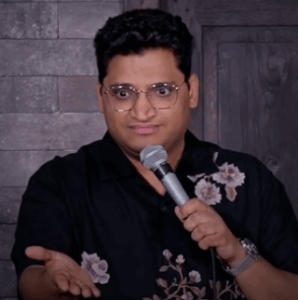
Gaurav Gupta is an Indian stand-up comedian who is known for his observational humour and jokes about middle-class Indian life.1
He originally trained and worked as a dentist before deciding to pursue comedy as a full-time career.
His comedy draws on familiar experiences such as family conversations, relationships, financial habits, social expectations and community identities. He has also built a public profile through his association with the phrase “Being Baniya,” which became widely recognised after one of his videos gained popularity online.
According to a 2023 interview with Gulf News, Gupta began pursuing stand-up comedy in 2015 while continuing to work in dentistry. He explained that although he was doing well professionally as a dentist, comedy had always interested him.
He gradually moved towards entertainment after becoming confident that it could provide a sustainable career. Gupta has performed at comedy venues, corporate events and live shows.
His work has also reached audiences through online videos and social media. His show Market Down Hai reflects his interest in middle-class experiences and family humour.
In a 2021 interview with The Tribune, he explained that the show’s title came from his father’s familiar response when he asked for pocket money during his growing-up years. His public image has largely been associated with observational comedy.
However, the viral clip involving a female audience member has brought attention to another side of stand-up performance: the risks of making jokes about an individual’s identity and personal circumstances.
It is important to distinguish the comedian’s established career from the criticism surrounding a particular performance. A controversy can influence public opinion but it does not tell the complete story of someone’s professional journey.
Doston new video is out on you tube.
https://t.co/88IfI4wv2A https://t.co/XmYFJFb0Ix— Gaurav Gupta |Market Down hai (@GauravGcomic) January 30, 2022
Early Childhood and Education
Information about Gaurav Gupta’s early childhood is limited in the major published interviews available for reference. There is not enough reliable public information to provide a detailed account of his childhood home, school years or family background without risking speculation.
Nevertheless, Gupta has discussed some of the experiences that shaped his sense of humour. His recollections of growing up in a middle-class household have influenced his comedy. Everyday exchanges between parents and children, discussions about money and the expectations placed on young adults frequently appear in his material.
His father’s repeated use of the phrase “market down hai” is one example. Gupta later used that familiar expression as the title of his show Market Down Hai.
The anecdote demonstrates how an ordinary family conversation can become the starting point for a comedy routine.
Quick Bio
| Detail | Information |
|---|---|
| Full name | Gaurav Gupta |
| Profession | Stand-up comedian; trained dentist |
| Nationality | Indian |
| Known for | Observational humour and Being Baniya |
| Comedy career began | 2015 |
| Previous profession | Dentistry |
| Professional background | Practised dentistry in Delhi |
| Recognisable show | Market Down Hai |
| Comedy subjects | Middle-class life, family experiences and community references |
| Television appearance | Finalist on The Great Indian Laughter Challenge, according to his event biography |
| Recent public attention | Online criticism over a stand-up clip involving remarks about a woman’s caste identity and accent |
| Date of reported controversy | October 2026 |
Gaurav Gupta’s Professional Training
Gupta studied dentistry and went on to practise as a dentist in Delhi.2
His medical training represents a significant part of his background because it shows that his entry into comedy was not a straightforward transition from entertainment studies or performance training.
In his interview with Gulf News, Gupta recalled being known as the funny person among his college friends. He enjoyed making people laugh and developed an interest in performing comedy while studying dentistry.
Initially, he did not abandon his professional training immediately. Instead, he continued working as a dentist while building his career in stand-up comedy.
This allowed him to explore the entertainment industry without depending entirely on an uncertain source of income. His journey is a useful example of a career change driven by personal interest.
It also shows that success in comedy often requires more than the ability to tell jokes. Performers must learn to write material, understand audiences, handle difficult reactions and develop a distinctive stage presence.
Although his professional education is documented, specific details about his school, exact college attendance dates and early academic achievements should not be presented as established facts unless supported by a reliable source.

Gaurav Gupta’s Career Journey
1. Beginning his stand-up comedy career
Gupta began pursuing stand-up comedy in 2015. At that time, India’s stand-up scene was developing and making a living as a comedian was not as widely accepted as it is today.
In his Gulf News interview, he described how the comedy industry changed over the following years. He explained that by 2018, more aspiring comedians were beginning to earn money and build public profiles through their performances.
His early experience also involved the familiar challenges faced by new performers. In a 2021 interview with The Tribune, Gupta recalled an early performance at a Delhi café where he asked his friends to laugh and clap after each joke.
The rest of the audience did not respond as he had hoped. He later described the experience as embarrassing. The incident illustrates an important aspect of stand-up comedy.
A joke may seem funny to its writer or close friends, but a live audience provides a different test. Comedians must learn to recognise what works, refine their delivery and adapt to the reactions in the room.
2. The popularity of Being Baniya
One of the recognisable parts of Gupta’s public identity is Being Baniya. The phrase became associated with him after a video of the same name gained popularity on social media.
In his interview with The Tribune, Gupta explained that the viral video was the reason his Instagram identity became associated with the phrase. His comedy often uses references to the Baniya community and trading-class experiences.
Community identity can provide comedians with material that feels familiar to people who share similar experiences. It can also help them explore social habits, family expectations and cultural stereotypes.
However, community-based humour can be interpreted differently depending on how it is delivered. A joke about one’s own background may be received differently from a joke directed at a person who does not want their identity to become part of a performance.
That distinction has become particularly relevant to the recent controversy.
3. Building a live-show audience
Gupta’s career has extended beyond viral videos. He has performed at comedy venues and corporate events, as well as live shows for audiences in India and abroad.
His Market Down Hai show draws on everyday middle-class experiences. The material reflects a familiar style of Indian comedy in which family conversations and financial concerns become sources of humour.
A listing for Gaurav Gupta Live on BookMyShow describes his work as observational comedy centred on daily life, people and funny encounters. It also notes his participation in open-mic competitions and his appearance among the finalists of The Great Indian Laughter Challenge.
Live performance remains important to stand-up comedians because it allows them to test new material and develop an understanding of audience reactions. The same interaction, however, can become complicated when the comedian begins joking directly about people in the audience.
4. His approach to comedy
Gupta has previously described his comedy as family-friendly and based on observations of middle-class Indian life. In his 2023 interview with Gulf News, he said that he generally avoided profanity and preferred humour drawn from familiar situations.
He also discussed making jokes about the Baniya and Marwari communities. That description provides useful context for understanding his established comic style.
However, an artist’s stated approach to comedy should not automatically settle questions about every individual performance.
Comedians can experiment with different formats. A performer who usually presents prepared stories may also improvise with audience members.
The risks and responsibilities of these formats can differ considerably. The recent backlash has therefore raised questions not only about Gupta but also about the expectations audiences should have when attending interactive comedy shows.
Also Read: Survivor Star Rick Devens Bio: Why Is Rick Devens Trending?
Gaurav Gupta’s Viral Controversy: What Happened?
In October 2026, Gaurav Gupta faced online criticism after a clip from one of his stand-up performances circulated on social media.3
According to an India Today report published on October 9, 2026, the video showed Gupta interacting with a woman in the audience and making remarks about her community identity, accent, education and lifestyle.
The clip attracted attention because the exchange appeared to continue even after the woman expressed discomfort with the way he addressed her.
The ‘Yadavni’ remark
According to the report, Gupta referred to the woman as “Yadavni,” a term connected to her Yadav background. When she indicated that she did not like being addressed that way, he continued the conversation and asked questions about her cultural roots.
The discussion then moved to her husband, her accent and her educational background. Gupta also made remarks about her lifestyle and her decision to be a homemaker.
The combination of these comments became a major focus of online criticism. For critics, the issue was not simply that the comedian had made a provocative joke.
They argued that the exchange became uncomfortable because it focused repeatedly on the same person and brought several aspects of her private life into the performance. Some viewers felt that references to caste or community identity required particular care.
Others objected to the jokes about her accent and occupation, arguing that a person’s way of speaking or decision to stay at home should not automatically become a reason for ridicule. It is important to remember that a viral clip represents only the footage available to viewers.
The complete performance may provide additional context but the existence of that context does not automatically resolve questions about how the interaction affected the person involved.

Why did the video attract so much attention?
The clip touched on several sensitive subjects at once. Caste, language, education, marriage and financial independence can all carry social significance in India.
An isolated joke about an accent might be dismissed by some viewers as ordinary teasing. However, when comments about an accent are combined with remarks about caste, schooling, marriage and employment, the overall interaction can feel different.
This is one reason the video attracted reactions beyond the usual disagreement over whether a joke was funny.
The criticism also raised a question about audience participation. People who attend interactive comedy shows may expect a performer to speak with them or make spontaneous jokes.
Yet that expectation does not mean every person will be comfortable with every subject or style of humour.
The central issue is whether the interaction remains playful and mutually understood or develops into a situation in which one person becomes the focus of repeated ridicule.
How Did Social Media React to Gaurav Gupta?
The online response was divided. Some viewers criticised Gupta’s remarks, while others defended his approach to crowd-work comedy.
Critics questioned the role of humiliation
One of the prominent reactions came from senior IPS officer Arun Bothra, who criticised the idea of making an audience member the target of jokes simply to entertain everyone else.
As reported by India Today, Bothra argued that good humour should leave the person being joked about laughing alongside the rest of the audience rather than feeling humiliated.
Other social media users raised concerns about the repeated references to the woman’s caste background, accent and personal circumstances. Some argued that the comedian should have changed direction after she expressed discomfort.
For these viewers, the controversy was about more than an individual remark. It was about the power difference between a performer holding a microphone and a person sitting in the audience.
A comedian controls the pace of the interaction, has the attention of the room and can turn a brief exchange into a public performance. An audience member may have fewer opportunities to respond without becoming part of the spectacle.
Some viewers defended crowd-work comedy
Other viewers argued that crowd work is an established part of stand-up comedy. It involves speaking directly to audience members, responding to their answers and improvising jokes based on the conversation.
Supporters of Gupta’s style suggested that people attending a comedian’s show should understand the kind of humour they are likely to encounter. They also argued that short clips can leave out the broader atmosphere of a performance.
These points raise legitimate questions about context. A joke can sound different when viewed as part of a full show rather than as a short social media clip.
However, context is not the only consideration. Even within an improvisational performance, audiences can reasonably question whether a comedian has crossed a boundary.
The disagreement reflects a broader challenge for modern stand-up comedy. Social media gives performances a much larger audience, including people who may never have attended the show.
A joke that receives laughter in a theatre can therefore become the subject of a wider public discussion.

Where Does Comedy End and Offensive Stereotyping Begin?
The controversy surrounding Gaurav Gupta brings us to the most important question: how should audiences distinguish between provocative comedy and offensive stereotyping?
There is no single rule that will settle every disagreement. Comedy depends on timing, delivery, context and the relationship between the performer and the audience.
Still, several principles can help explain why some jokes are received differently from others.
1. The difference between laughing with someone and laughing at them
A useful starting point is to ask who benefits from the joke and who bears its cost. When comedians joke about their own experiences, they often invite the audience to recognise something familiar.
A performer might exaggerate their family’s habits, describe an awkward social situation or make fun of their own mistakes.
Crowd work is more complicated because the joke may be directed at someone who did not prepare to become its subject.
If an audience member participates willingly and enjoys the exchange, the interaction may feel playful. If the person expresses discomfort and the jokes continue, viewers may interpret the same performance as humiliation rather than harmless teasing.
The distinction does not depend entirely on whether the audience laughs. A room can laugh at a joke even when the person at its centre is uncomfortable.
2. Caste identity is not just another punchline
Caste remains a socially significant subject in India. References to caste can carry meanings that go beyond an individual’s personal preferences or sense of humour.
Comedians should be able to discuss caste, social hierarchy and discrimination. Indeed, satire can be a powerful way to expose prejudice and question unfair social systems.
The concern arises when a person’s caste identity becomes a shortcut for mocking their behaviour, appearance, language or social position.
There is a difference between challenging a stereotype and using that stereotype to make an individual seem ridiculous. The first can encourage reflection.
The second may reinforce the assumptions that the joke could have challenged. In Gupta’s case, the public discussion focused partly on the repeated references to the woman’s community background.
Critics questioned whether these references contributed meaningful social commentary or simply made her identity part of the entertainment.
That criticism should be evaluated through the actual performance rather than assumptions about the comedian’s intentions.
3. An accent does not determine a person’s worth
Accents often become material for comedy because people recognise differences in pronunciation, vocabulary and speech patterns.
In a diverse country such as India, these differences can provide opportunities for light-hearted observations about language and culture.
However, accent-based jokes can also reproduce ideas about intelligence, education, class or social status.
A person who speaks English with a particular accent is not automatically more educated, less educated, wealthier or less deserving of respect. Likewise, a person’s pronunciation should not be treated as proof of arrogance.
In the clip described by news reports, the remarks about the woman’s accent were connected to her schooling, lifestyle and employment.
This combination contributed to criticism that the interaction had moved beyond a simple observation about speech.
The wider lesson is that humour about language works best when it explores a situation without suggesting that people deserve to be judged by the way they speak.
4. Intent matters but impact matters too
Comedians often explain that their intention was to entertain rather than offend. That distinction can be relevant when evaluating a performance.
Yet intention is not the only factor. A person can mean to be funny and still make a joke that others find degrading.
Similarly, not every person who feels offended is necessarily correct about the meaning or implications of a joke. The details matter, and criticism should be proportionate to what actually happened.
A fair assessment therefore considers several questions:
-
What was said during the complete exchange?
-
Was the joke aimed at a social issue or at an individual’s personal circumstances?
-
Did the audience member appear comfortable participating?
-
How did the comedian respond when discomfort was expressed?
-
Did the performance challenge a stereotype or appear to reinforce it?
These questions encourage a more thoughtful discussion than simply declaring all provocative comedy unacceptable or dismissing every objection as oversensitivity.
5. Freedom of expression comes with public scrutiny
Stand-up comedy needs room for experimentation. If every joke must avoid disagreement, comedians may struggle to address difficult topics or challenge conventional thinking.
At the same time, freedom of expression does not require audiences to approve of every performance. People can criticise jokes, decline to attend future shows or discuss the social effects of certain kinds of humour.
Public criticism is not automatically censorship. It can be part of the cultural conversation through which artists and audiences decide what they consider acceptable.
The most productive debate focuses on the material itself, the circumstances in which it was delivered and the reasons people responded as they did. Personal abuse, unsupported allegations and threats do little to improve that discussion.
Gaurav Gupta’s Career and the Controversy: A Balanced Perspective
The recent criticism should be considered alongside Gupta’s wider career. He entered stand-up comedy after training and working as a dentist, developed a recognisable identity through Being Baniya and performed at live events and comedy venues.
His earlier interviews also show that he has described his comedy as observational and family-oriented. That background helps explain his established public persona but it should not be used either to dismiss the criticism or to assume that every element of the viral clip represents his entire body of work.
The key distinction is between evaluating an individual performance and making sweeping judgments about a person.
It is reasonable for viewers to question whether the remarks in the clip crossed a line. It is equally important to avoid claiming knowledge of the comedian’s private intentions or the woman’s complete experience beyond what reliable reporting establishes.
As of October 17, 2026, the reports cited here document the backlash and the divided public response. They do not, by themselves, establish every detail of the full show or a definitive resolution to the dispute.
For comedians, the episode is a reminder that improvisation requires judgment as well as quick thinking. For audiences, it is an opportunity to consider why certain jokes work and why others can leave someone feeling targeted.
View this post on Instagram
FAQ’s
1. Who is Gaurav Gupta?
Gaurav Gupta is an Indian stand-up comedian who previously worked as a dentist. He is known for observational comedy about middle-class life and for the online identity Being Baniya.
2. What is Gaurav Gupta famous for?
He is known for his stand-up performances, his Being Baniya video and his comedy show Market Down Hai. His humour often draws on family experiences, everyday situations and community references.
3. What did Gaurav Gupta do before becoming a comedian?
Gupta trained as a dentist and practised in Delhi. He began pursuing stand-up comedy in 2015 while continuing to work in dentistry before eventually making comedy his main career.
4. Why is Gaurav Gupta facing online backlash?
In October 2026, a clip from one of his performances went viral. News reports described him making remarks about a female audience member’s caste background, accent, education and lifestyle. Critics argued that the interaction crossed the line from comedy into personal humiliation.
5. What was the controversy about the ‘Yadavni’ remark?
According to reports, Gupta addressed the woman as “Yadavni,” a term associated with her Yadav background. After she indicated that she did not like the term, the exchange continued with further remarks about her personal circumstances. This prompted criticism from viewers who felt her discomfort was not adequately respected.
Conclusion
Gaurav Gupta’s journey from dentistry to stand-up comedy reflects the growth of India’s live comedy scene and the opportunities that online platforms have created for performers.
It is whether a joke has something meaningful to say, whether its target is being treated fairly and whether the laughter comes from recognising a shared truth or simply watching someone else become uncomfortable.
The debate over Gaurav Gupta’s viral clip shows why these questions matter.
Audiences can defend the freedom of comedians while still asking them to exercise judgment. And comedians can push boundaries without assuming that every objection is an attack on their art.
Also Read: Eagles Star Lane Johnson Bio: NFL Career and Achievements