

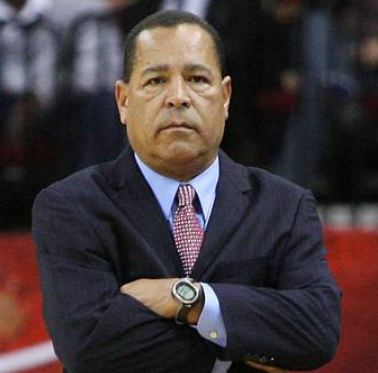
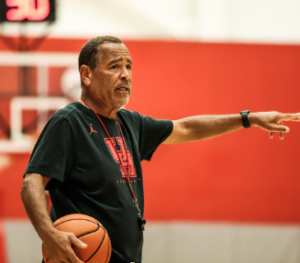
Kelvin Sampson (born October 5, 1955) is one of college basketball’s most consistent program builders
After successful stints at Washington State and Oklahoma and a brief, turbulent stop at Indiana Sampson rebuilt his reputation in the NBA, then transformed Houston into a national powerhouse.
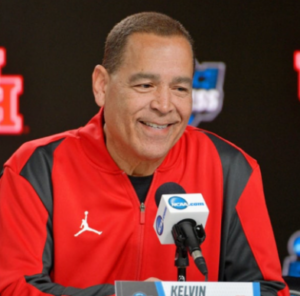
In 2025, he led the Cougars to the NCAA championship game and subsequently signed a new four-year contract through the 2028–29 season, cementing his status among the sport’s highest-paid and most respected coaches.
Also Read: Evan Mobley (Basketball): Contract Breakdown, Career Earnings and More
Table of Contents
Who Is Kelvin Sampson?
Kelvin Sampson’s name resonates throughout college basketball circles as a coach whose impact stretches far beyond the box score.1
From a modest upbringing in North Carolina to leading one of the nation’s top college basketball programs, Sampson has crafted a legacy grounded in discipline, strategy, and unrelenting drive.
Early Years in Pembroke: The Roots of a Leader
Kelvin Sampson was born in Laurinburg, North Carolina, and raised in the small town of Pembroke.
His formative basketball years were spent at Pembroke High School, where he began to display a natural understanding of the game.
Sampson’s early experiences in rural North Carolina helped shape his philosophy on hard work and perseverance—traits that would come to define his coaching style.
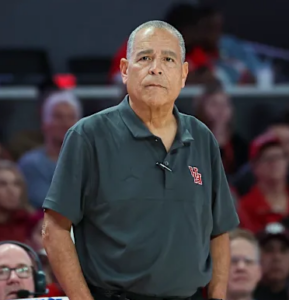
Kelvin Sampson’s Career
College Playing Days at Pembroke State
From 1974 to 1978, Sampson played as a guard at Pembroke State University (now the University of North Carolina at Pembroke).2
Though he didn’t enjoy national stardom as a player, he left a lasting impression with his intelligence and tenacity on the court.
His years as a player would provide a solid foundation for the strategic mind he would later bring to the sidelines.
The Coaching Journey Begins at Montana Tech
Sampson’s coaching career began in 1979, but it was at Montana Tech that he truly cut his teeth as a head coach.
Taking over a relatively obscure program, Sampson compiled a 73–45 record, showcasing his ability to transform teams. It was here that he first developed a reputation for getting the most out of his players, even when faced with limited resources.
Climbing the Ranks: Washington State Challenges
In 1987, Sampson accepted the head coaching position at Washington State University. Over the course of seven seasons, he posted a 103–103 record.
While the .500 mark might seem modest, context matters—Washington State was a program long overshadowed in the competitive Pac-10 Conference.
Sampson’s time there included a rare NCAA Tournament appearance in 1994, highlighting his ability to elevate a struggling program.
Breakthrough at Oklahoma: Building a Powerhouse
Sampson’s career took a significant leap forward in 1994 when he was hired as head coach of the University of Oklahoma. Over the next 12 years, he built the Sooners into a perennial contender.
His tenure at Oklahoma produced a stellar 281–107 record and included 11 NCAA Tournament appearances.
The pinnacle of Sampson’s time with the Sooners came in 2002, when he led the team to the Final Four.
Known for his gritty defensive schemes and disciplined offense, Sampson’s teams were a reflection of his coaching DNA—tough, determined, and prepared.
In 2006, Sampson accepted the head coaching position at Indiana University. Although his time in Bloomington was brief, he led the Hoosiers to a 43–15 record.
His teams were successful on the court, but NCAA violations ultimately cut his tenure short. Despite this setback, Sampson’s coaching acumen was never in doubt, and it wasn’t long before he found a new opportunity.
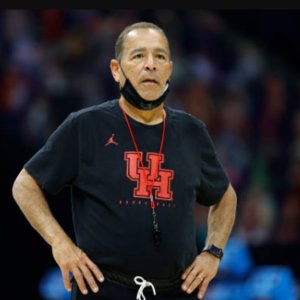
Kelvin Sampson: From Rebuild to National Power
In 2014, Sampson took over the University of Houston men’s basketball program, a once-proud team in need of rejuvenation.3
It proved to be a perfect match. Under his leadership, the Cougars experienced a dramatic transformation.
As of March 2025, Sampson has guided Houston to a record of 297–83 (.782), one of the most impressive stretches in program history.
He has led the Cougars to multiple NCAA Tournament appearances, including deep runs that have placed Houston back in the national spotlight. His success has been built on relentless defense, efficient offense, and a culture of accountability.
Joining the Big 12: New Challenges, Same Results
Houston’s move to the Big 12 Conference brought new challenges, including stronger competition and increased national exposure. Sampson embraced the opportunity, and his Cougars didn’t miss a beat.
Despite the elevated level of play, Houston remained one of the top programs in the country, consistently battling for conference titles and tournament seeding.
This transition demonstrated Sampson’s adaptability and ability to thrive in any environment. Whether in the American Athletic Conference or the Big 12, his teams continued to play with the same intensity and focus.
Coaching Philosophy: Defense, Discipline, and Development
Sampson’s coaching philosophy is rooted in three pillars: defense, discipline, and player development.
His teams are known for suffocating defense, often ranking among the national leaders in defensive efficiency. Sampson emphasizes fundamentals and insists on accountability from every player.
But it’s not just about X’s and O’s—Sampson has a gift for developing players. Many of his athletes arrive under the radar and leave as NBA prospects. His focus on growth, both on and off the court, has made him a mentor to generations of players.
With an overall head coaching record of 797–354 and a .692 winning percentage as of March 2025, Sampson has cemented his place among college basketball’s elite. He has won conference titles, made deep NCAA Tournament runs, and developed numerous professional players.
More importantly, he is respected by his peers for his resilience and consistency. Through highs and lows, controversies and comebacks, Sampson has remained true to his principles.
Family and Legacy
Basketball is a family affair for the Sampsons. His son, Kellen Sampson, has been a long-time assistant and is widely regarded as a rising star in the coaching world.
Kelvin’s influence extends beyond the hardwood; he has built a legacy of leadership and integrity that will endure long after he leaves the sidelines.
For Sampson, the game has never been just about winning—it’s about building character, creating community, and mentoring young men. His journey from Pembroke to Houston is a testament to the power of perseverance and purpose.
As of 2025, Sampson continues to lead the Houston Cougars with the same energy and focus that have defined his career.
Though now in his late 60s, there’s no sign that he’s slowing down. His teams remain competitive, and his passion for the game is as strong as ever.
Whether he chooses to coach for a few more seasons or eventually hands the reins to his son, Sampson’s impact on the game is undeniable.
He has redefined what it means to build a program and shown that success is possible through commitment, integrity, and relentless effort.
Also Read: LSU Basketball Duo Flau’jae Johnson and Aneesah Morrow Bring the Laughs with We All Fam Trend
Kelvin Sampson’s Parents
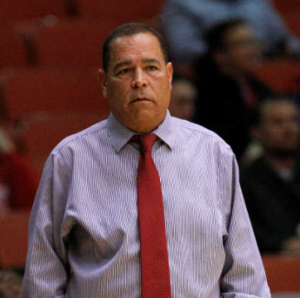
Kelvin Sampson, a highly respected figure in college basketball coaching, has not only made a name for himself on the court but also comes from a deeply rooted and impactful family background.
Understanding where he came from—his upbringing, values, and the influence of his parents—offers meaningful insight into the man behind the whistle.
Let’s take a closer look at the lives of John W. “Ned” Sampson and Eva Sampson, the parents who shaped Kelvin Sampson.
John W. ‘Ned’ Sampson: A Legacy in Leadership and Courage
Kelvin Sampson’s father, John W. “Ned” Sampson, was more than a parent—he was a community pillar and an inspirational leader.
Ned served as a coach at Pembroke High School in North Carolina, where he was revered not just for his athletic acumen but for his role as a mentor to young Native American students.
As a member of the Lumbee tribe, Ned Sampson was committed to education, discipline, and empowerment through sports.
Coaching at a time when racial and ethnic tensions were high, especially in the American South, Ned’s role extended far beyond the basketball court.
He was a symbol of pride and resilience for the Lumbee community, guiding young athletes not just to play, but to believe in themselves.
Eva Sampson: The Quiet Strength Behind the Family
While Ned may have been more visibly active in the community, Kelvin’s mother, Eva Sampson, was a powerful presence in her own right.
She was the nurturing foundation of the family, providing stability and support in an era where Native American families often faced systemic disadvantages and limited resources.
Though much less is publicly documented about Eva’s life compared to her husband, those who knew the Sampsons recognize Eva’s role in holding the family together.
Kelvin has spoken with reverence about the values instilled in him by both his parents—hard work, humility, and the importance of education. Eva Sampson, with her quiet strength and unwavering support, helped mold her son’s integrity and determination.
Kelvin Sampson’s Nationality
Cultural Roots That Matter
Both Ned and Eva Sampson were proud members of the Lumbee Tribe, a Native American community based primarily in Robeson County, North Carolina.
The Lumbee people have a unique history of cultural preservation and resilience, often navigating the complexities of racial identity and legal recognition. Growing up in a Lumbee household, Kelvin Sampson inherited a deep respect for his heritage.
His father, Ned, frequently taught him about the significance of their Lumbee identity—lessons that extended beyond tradition and into the realms of courage, resistance, and pride.
This cultural grounding would later become a central theme in Kelvin’s own leadership style, particularly his focus on inclusivity and team unity.
American Nationals with a Unique American Story
Both John W. “Ned” Sampson and Eva Sampson were born and raised in the United States, proudly holding American nationality.
However, their identities were layered and nuanced, shaped by their Lumbee heritage and experiences growing up in the segregated South.
Their American story was not one of ease but of endurance. As Native Americans navigating an era marked by both racial and economic hardship, the Sampsons exemplified the struggles and triumphs of marginalized communities in the U.S.
Their nationality came with challenges, but it also gave them a stage—particularly in Ned’s case—to defy expectations and uplift others.
Frequently Asked Questions
1) How old is Kelvin Sampson?
He was born on October 5, 1955, making him 69 (turning 70 in October 2025).4
2) What is his current job and how long is he under contract?
He’s the head coach at Houston. As of May 2025, he signed a four-year extension through the 2028–29 season.5
3) Did Houston reach the Final Four or title game under Sampson recently?
Yes. Houston made the 2025 Final Four and finished national runner-up to Florida.6
4) How much does Kelvin Sampson make?
Reports place his compensation around $5.5M for 2025–26, rising above $6M later in the deal, placing him among the highest-paid coaches.7
5) What is Sampson best known for as a coach?
Relentless defense, rebounding, player development, and turning Houston into a perennial national contender.8
6) How is Houston set up for 2025–26?
With a highly-rated recruiting class and core returners, Houston again projects as a Big 12 and national title contender.9
Also Read: Chad Baker-Mazara (Basketball): Who Is He? Bio, Career, Parents, Family and More