

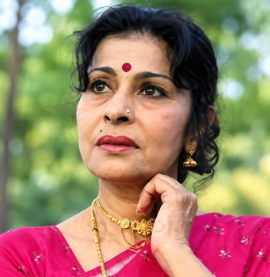
Remember the actress who played the mother of Nana Patekar in two films despite being younger than him? That was Madhu Kambikar, a respected Marathi actress and Lavani performer whose contribution to Indian entertainment went far beyond the silver screen
Madhu Kambikar built a remarkable career through Marathi cinema, theatre, television and traditional folk performances.
She became known for her expressive acting, strong stage presence and ability to bring everyday characters to life.
From emotional family dramas to popular commercial films, she portrayed a wide range of roles that connected with audiences across Maharashtra.
Her work with Nana Patekar remains an interesting part of her filmography but her identity was never limited to playing a mother or a supporting character.
This article explores Madhu Kambikar’s early childhood, education, acting career, notable films, awards and the legacy she leaves behind.
Also Read: The Spanish Rapper Arkano Bio: His Life and Music Career
Table of Contents
Who Is Madhu Kambikar?
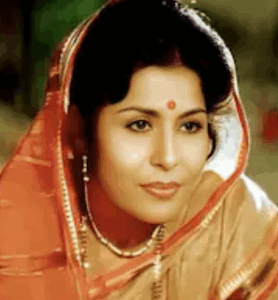
Madhu Kambikar was an Indian actress, theatre performer and folk dancer best known for her work in Marathi entertainment.1
Born on July 28, 1953, in Malegaon Khurd in Maharashtra’s Beed district, she developed her skills through folk theatre and dance before becoming a recognised film actress.
She worked across several forms of entertainment, including Marathi and Hindi cinema, television, stage plays and Lavani performances. Her career spanned more than four decades and her performances helped bring traditional Maharashtrian culture to a wider audience.
Kambikar was particularly admired for her ability to balance acting with dance. She could portray emotional characters with sincerity while also delivering lively folk performances filled with rhythm and expression.
Her film career included collaborations with well-known performers such as Nana Patekar, Laxmikant Berde, Dada Kondke and other prominent names in Marathi cinema. She also appeared in Hindi films, allowing her work to reach audiences beyond Maharashtra.
What made her career special was her connection to the cultural traditions she represented. She did not simply perform Lavani on stage. She helped keep the art form relevant through theatre, cinema, teaching and public performances.
She danced her way into our hearts. Today, she leaves them heavy.
The passing of veteran actress Madhu Kambikar is a great loss to the marathi cinema.
Heartfelt tributes.
#MadhuKambikar #RIPMadhuKambikar #IndianFolkArt #FolkDance #MarathiTheatre https://t.co/FvrJp7vg3f
— Maharashtra Tourism (@maha_tourism) October 12, 2026
Early Childhood and Family Background
Madhu Kambikar’s journey began in rural Maharashtra, where folk music, dance and theatre formed an important part of her surroundings. She was born in Malegaon Khurd in Beed district on July 28, 1953.
Her childhood was closely connected to the performing arts, as her mother and aunt were Lavani performers and her father was also associated with artistic activities. Her early years were not without difficulties.
Accounts of her life describe a challenging social and economic background. However, her interest in performing grew from an early age.
Watching artists perform and learning about folk traditions helped shape the career she would later build. Her aunt, Ayubai, adopted her and she spent much of her childhood in Kambi village in the former Ahmednagar district, now part of Ahilyanagar district.
The village also became significant to her professional identity. Her stage name, Kambikar, was associated with Kambi. She completed her schooling up to the seventh standard in the village before focusing more closely on her artistic development.
Bio at a Glance
| Detail | Information |
|---|---|
| Full name | Madhu Kambikar |
| Profession | Actress, folk dancer and theatre artist |
| Date of birth | July 28, 1953 |
| Birthplace | Malegaon Khurd, Beed district, Maharashtra |
| Date of death | October 12, 2026 |
| Age at death | 73 |
| Nationality | Indian |
| Main industry | Marathi cinema |
| Other fields | Hindi films, television, theatre and folk arts |
| Dance tradition | Lavani; trained in Kathak |
| Notable films | Shapit, Hech Majha Maher, Ek Hota Vidushak, Zapatlela, Yeshwant |
| Notable stage production | Sakhi Majhi Lavani |
| Years active | From the early 1970s through her later career |
| Known for | Expressive acting and traditional Maharashtrian folk performance |
Madhu’s Family’s Influence on Her Career
Madhu’s family played a significant role in nurturing her interest in the arts. Her mother, Kalabai and aunt Ayubai were familiar with Lavani performance.2
Their experience gave her early exposure to a tradition that combines music, dance, poetry and dramatic expression.
Her adoptive father, Rambhau Daulatrao Mhaske Patil, also supported her artistic development. Rather than treating performance as a passing interest, the family helped her pursue formal dance training.
This early encouragement gave Kambikar the confidence to enter a demanding profession at a young age. Her background also helped her understand the lives and emotions of the rural women she would later portray on screen.
Education and Dance Training
Although Madhu Kambikar did not pursue an extensive formal education, she received training that became central to her career. She travelled to Pune to learn classical dance under Balasaheb Gokhale.
She trained in Kathak, which helped her develop control over rhythm, movement, posture and facial expression.
These skills became particularly useful when she performed Lavani, a traditional Maharashtrian art form known for its energetic movements, expressive gestures and strong connection to music and poetry.
Lavani requires much more than dance steps. A performer must understand the meaning of the lyrics and communicate emotion through body language.
Kambikar developed a style that combined these elements with her natural acting ability. Her training gave her an advantage when she moved between the folk stage and cinema.
She could perform a dance sequence with confidence and then deliver a dramatic scene with the same level of conviction.
How Madhu Kambikar Started Her Career
Madhu Kambikar began her professional artistic journey in 1973 at New Hanuman Theatre in Mumbai’s Lalbaug area, according to the Marathi Vishwakosh biographical entry.
She initially worked in folk performance and gradually became known for her command of Lavani and other traditional dance forms. The folk stage was an important training ground.
Performers had to connect with live audiences, maintain energy throughout a show and make every expression clear. Kambikar learned how to hold an audience’s attention through movement, timing and characterisation.
Her performances eventually attracted wider recognition. She participated in cultural programmes and performed as part of Maharashtra’s folk-art traditions.
In 1977, she appeared with the Maharashtra Chi Lokdhara cultural troupe in Delhi, an important milestone in her career. Her work on stage helped establish her reputation before she became a familiar face in Marathi films.
She also appeared in folk plays, including Gadhavacha Lagna and Vichha Majhi Puri Kara. Kambikar’s transition to cinema was not a departure from her folk roots.
Instead, she carried the skills she developed on stage into film roles that often demanded a similar understanding of regional culture and human emotions.
Madhu Kambikar’s Marathi Film Career
Madhu Kambikar became an established performer in Marathi cinema through a combination of dramatic roles, family stories and films connected to rural life.
Her screen presence was rooted in observation rather than exaggeration. She could make a character believable through small gestures, expressions and the way she delivered dialogue.
She worked with several leading actors and filmmakers over the years.
Her filmography includes more than 75 films according to some reports, while the Marathi Vishwakosh profile lists approximately 103 Marathi films.
These totals may differ because of the way individual sources count film appearances and credits.
Also Read: Jake Ferguson Bio: NFL Career & Latest Updates
Notable Movies of Madhu Kambikar
1. Shapit
Shapit was an important film in Kambikar’s career. Her performance brought recognition for her dramatic ability and contributed to the awards she received during the 1980s. The film remains one of the titles associated with her rise as a respected Marathi actress.
2. Hech Majha Maher
This Marathi film is another notable entry in her career. Kambikar received recognition for her acting in the film, demonstrating her ability to portray emotionally grounded characters connected to family and social life.
3. Ek Hota Vidushak
Directed by Jabbar Patel, this film explored the world of folk performance and the personal struggles of an artist. Kambikar’s experience with Lavani made her a natural fit for a story closely connected to traditional performance culture.
4. Zapatlela
Kambikar also appeared in Zapatlela, the popular Marathi horror-comedy featuring Laxmikant Berde. Her role as the protagonist’s mother helped make her familiar to audiences who enjoyed mainstream Marathi entertainment.
5. Yeshwant
In this Hindi crime drama starring Nana Patekar, Kambikar played his on-screen mother. The role became part of the conversation surrounding her career after her death and highlighted her ability to portray older family characters convincingly.
6. Hum Dono
Kambikar appeared alongside Nana Patekar in this 1995 Hindi film. Her performance as his mother is particularly memorable because she was actually younger than him.
The role demonstrated that an actor’s ability to embody a character matters more than their real-life age.
7. Yeu Ka Gharat
Her association with Dada Kondke also formed an important part of her Marathi film career. This film is among the titles frequently mentioned in accounts of her work in popular commercial cinema.
These films represent only a selection of her screen work. Other titles associated with her career include Raghumaina, Debu, Mala Gheun Chala, Hyoch Navra Pahije, Raosaheb and Goshta Chhoti Dongraewdhi.
She also appeared in Hindi films such as Shola Aur Shabnam and Saatwan Aasman.
Why Did Madhu Kambikar Play Nana Patekar’s Mother?
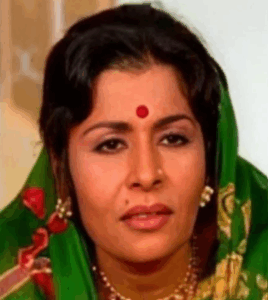
One of the most searched aspects of Madhu Kambikar’s filmography is her role as Nana Patekar’s mother in two Hindi films: Hum Dono (1995) and Yeshwant (1997).3
The interesting detail is that Kambikar was born in 1953, while Patekar was born in 1951. She was approximately two years younger than him in real life.
Yet she convincingly portrayed his mother on screen. This casting detail offers a useful insight into acting.
Screen age and real age do not always match. Costume, body language, dialogue delivery and the emotional relationship between characters help audiences accept a fictional family dynamic.
Kambikar’s experience in theatre and cinema helped her adapt to such roles. She understood how to convey warmth, authority, concern and vulnerability without making a character feel artificial.
Her performance in these films also shows why she should not be remembered only as a supporting actress. She brought years of stage experience and cultural understanding to every role, regardless of how much screen time she received.
Madhu Kambikar’s Contribution to Lavani and Folk Theatre
While many viewers remember Madhu Kambikar for her film roles, her contribution to Lavani was equally important. She was not simply an actress who performed traditional dance sequences.
She was a trained folk artist who worked to preserve and promote a cultural tradition that has been part of Maharashtra’s artistic identity for generations. Lavani combines expressive dance, music, poetry and storytelling.
Its performers often communicate humour, heartbreak, social criticism and everyday experiences through movement and lyrics.
Kambikar understood these elements and used them to create performances that entertained audiences while respecting the art form.
Sakhi Majhi Lavani
One of her notable artistic initiatives was Sakhi Majhi Lavani, a stage programme dedicated to Lavani performance.
Through this production, she presented traditional songs and dance to audiences in different places. According to the Marathi Vishwakosh profile, she also performed the programme internationally, including in the United States, Abu Dhabi, Dubai and Mauritius.
Her work helped introduce Maharashtrian folk traditions to audiences outside India. Kambikar also trained aspiring Lavani performers and participated in educational programmes and discussions about folk culture.
She used her experience to help younger artists understand the importance of preserving traditional performance techniques.
Her contribution was significant because folk traditions depend on more than performances alone. They also need teachers, researchers and experienced artists who can pass their knowledge to future generations.
Through her stage work, Kambikar helped ensure that Lavani remained connected to its cultural roots while reaching new audiences.
Awards and Recognition
Madhu Kambikar received recognition for her work in Marathi cinema and other performing arts. Her awards reflected her ability to move between demanding dramatic roles and culturally rooted performances.
The awards were important but Kambikar’s influence extended beyond formal recognition. Her career showed that regional cinema and folk performance could provide artists with a lasting professional identity.
Some of the honours and achievements associated with her career include:
| Award or recognition | Associated work or achievement |
|---|---|
| Maharashtra State Film Award | Recognition for Shapit |
| Best Actress recognition | Hech Majha Maher |
| Maharashtra State Film Festival recognition | Raghumaina |
| State award for supporting acting | Mukta |
| State award for supporting acting | Kulswamini Tuljabhavani |
| Best Actress recognition | Sangharsh Jeevanacha |
| Gujarat State Film Award | Best Actress for the Gujarati film Saad |
| Filmfare-related honours | Recognition for her work in Marathi cinema |
| Zee Chitra Gaurav Award | Reported among her later career honours |
Personal Life and Health Struggles
Madhu Kambikar generally remained known to the public for her artistic work. Biographical accounts identify her as a mother and describe the support she received from her family during her career.
Her life changed significantly in November 2016 when she suffered a stroke during a Lavani performance at Yashwant Natya Mandir in Mumbai. Reports stated that the medical complications affected one side of her body and left her bedridden for years.
Madhu Kambikar’s Legacy in Marathi Cinema
Madhu Kambikar’s legacy cannot be measured only by the number of films she appeared in or the awards she received. Her career connected different parts of Maharashtra’s performing arts tradition.
She began with folk performance, developed her abilities through formal dance training and built a career in cinema and theatre. At each stage, she brought her understanding of regional culture to the characters she portrayed.
Her work also challenged the idea that an actor must always play a lead role to leave a lasting impression. She became memorable through characters that felt authentic, whether she was portraying a mother, a rural woman or a folk performer.
Her role as Nana Patekar’s mother in Hum Dono and Yeshwant remains an interesting example of her versatility. Meanwhile, films such as Shapit, Hech Majha Maher, Ek Hota Vidushak and Zapatlela represent the wider range of her work.
Her contribution to Lavani is equally important. By performing, teaching and presenting programmes such as Sakhi Majhi Lavani, she helped carry traditional Maharashtrian performance into new settings.
For audiences who grew up watching Marathi cinema, her performances remain part of a familiar cultural landscape. For younger artists, her career offers an example of how traditional skills can support a long and varied life in entertainment.
View this post on Instagram
FAQ’s
1. Who was Madhu Kambikar?
Madhu Kambikar was a veteran Marathi actress, theatre performer and Lavani artist. She worked in Marathi and Hindi films and was known for her expressive acting and contribution to Maharashtrian folk culture.
2. When did Madhu Kambikar die?
Madhu Kambikar died in Pune on October 12, 2026, following a prolonged illness. She was 73 according to reports from several news outlets.
3. What was Madhu Kambikar’s age at the time of her death?
She was 73 years old. She was born on July 28, 1953 and died on October 12, 2026.
4. Which films featured Madhu Kambikar as Nana Patekar’s mother?
She played Nana Patekar’s mother in the Hindi films Hum Dono (1995) and Yeshwant (1997). Interestingly, she was approximately two years younger than Patekar in real life.
5. What are Madhu Kambikar’s most famous movies?
Some of her best-known films include Shapit, Hech Majha Maher, Raghumaina, Ek Hota Vidushak, Zapatlela, Debu, Yeshwant and Hum Dono.
Conclusion
Madhu Kambikar’s life was a story of talent, dedication and a deep connection to Maharashtra’s performing arts.
From her childhood in rural Maharashtra to her years on the folk stage and her appearances in popular films, she built a career that crossed the boundaries between traditional performance and mainstream entertainment.
Her role as Nana Patekar’s mother in Hum Dono and Yeshwant may attract renewed attention but those films represent only a small part of her contribution.
She leaves behind a legacy that extends beyond the screen through the folk artists she inspired and the traditions she helped keep alive.
Madhu Kambikar will be remembered not just as an actress who played memorable mothers and supporting characters but as a performer who brought dignity, emotion and authenticity to every art form she embraced.
Also Read: Eagles Star Lane Johnson Bio: NFL Career and Achievements