

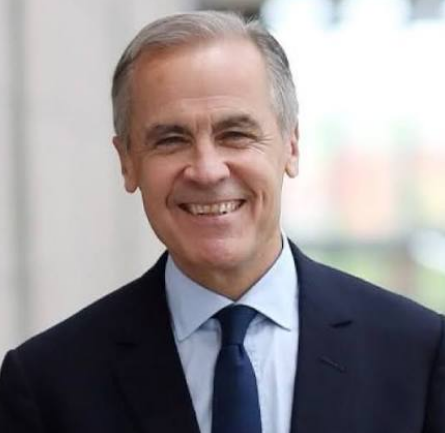
Mark Carney has become one of the most discussed political and economic figures in Canada as tensions between Canada and the United States continue to develop
His name is also receiving increased attention in the United States as the administration of President Donald Trump and Carney’s Canadian government remain locked in a difficult trade dispute.
Carney is not a traditional career politician.
Before entering Canadian politics he built a long career in economics, finance and central banking.
He served as Governor of the Bank of Canada and later became Governor of the Bank of England.
His international experience has made him a familiar figure in global economic circles.
On September 29, 2026, the United States also moved ahead with a ban covering nearly $1 billion in Canadian imports including certain alcoholic beverages, dairy products and motorcycles.
The measure represented another escalation in the wider trade dispute between the two countries.
These developments help explain why Mark Carney is becoming a prominent search topic beyond Canada.
To understand why his name matters in the current Canada-Trump story, it is useful to look at his background, his career before politics and his approach to Canada’s relationship with the United States.
Also Read: Amy Beck Bio: Why Noah Beck’s Mom Suddenly Went Viral Again
Table of Contents
Who Is Mark Carney?
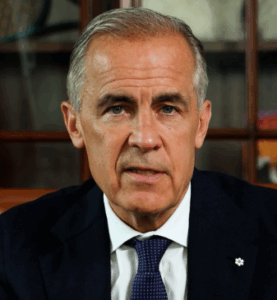
Mark Carney is the 24th Prime Minister of Canada and the leader of the Liberal Party of Canada. He became prime minister in March 2025 after being elected Liberal leader.1
The official website of the Prime Minister of Canada identifies him as the country’s 24th prime minister.
Carney was born in Fort Smith in the Northwest Territories and was raised in Edmonton, Alberta. He comes from an academic and professional background rather than a traditional political family.
His parents were teachers. He studied economics at Harvard University, where he earned a bachelor’s degree in 1988.
He later attended Oxford University and earned a master’s degree in economics in 1993 and a doctorate in economics in 1995.
His professional career began in the financial sector. Carney spent 13 years at Goldman Sachs, working in several international offices including London, Tokyo, New York and Toronto.
He eventually became a managing director at the firm. That experience helped establish Carney as an international financial figure long before he became a political leader.
The historic investments in LNG Canada Phase 2 here in British Columbia are proof that Canada is building big and bold again.
Built in partnership with Indigenous Peoples. 4,000 jobs during construction alone. The second-largest LNG facility of its kind in the world. pic.twitter.com/hEH25IPH4n
— Mark Carney (@MarkJCarney) September 29, 2026
Career Before Politics
Carney’s career is unusual for a Canadian prime minister because much of his professional life was spent working in finance and economic policy.
After working at Goldman Sachs, he entered Canadian public service. He became Deputy Governor of the Bank of Canada in 2003 and later served as Senior Associate Deputy Minister of Finance.
In 2008 he became Governor of the Bank of Canada. His appointment came at a major moment for the global economy because the world was entering the global financial crisis.
The Bank of Canada records that Carney served as governor from February 2008 until June 2013. During this period he became one of the best-known central bankers in the world.
His international career continued when he became Governor of the Bank of England in 2013. He remained in that position until March 2020.
The Bank of England records his term as Governor as running from July 2013 to March 2020. Carney therefore led two major central banks during periods of significant economic change.
He also served as chairman of the Financial Stability Board. Later he became the United Nations Special Envoy on Climate Action and Finance.
His work brought him into discussions involving climate finance, international investment and economic policy. This background is important when examining his approach as prime minister.
Carney entered politics with extensive experience in financial markets, central banking and international economic institutions.
Quick Stats
| Category | Details |
|---|---|
| Full name | Mark Joseph Carney |
| Current position | Prime Minister of Canada |
| Political party | Liberal Party of Canada |
| Became Prime Minister | March 2025 |
| Born | Fort Smith, Northwest Territories, Canada |
| Raised in | Edmonton, Alberta |
| Education | Harvard University and University of Oxford |
| Undergraduate degree | Bachelor of Economics |
| Master’s degree | Economics |
| Doctorate | Economics |
| Bank of Canada | Governor, 2008–2013 |
| Bank of England | Governor, 2013–2020 |
| Earlier career | Goldman Sachs |
| Former international role | UN Special Envoy on Climate Action and Finance |
| Current major issue | Canada–U.S. trade relations |
| Spouse | Diana Carney |
| Children | Four |
Mark Carney Becomes Prime Minister
Carney entered Canadian politics at a time when the Liberal Party was going through a leadership transition.2
Following Justin Trudeau’s resignation as Liberal leader, Carney was elected leader of the Liberal Party in March 2025.
He subsequently became prime minister. He then called a federal election for April 28, 2025.
Elections Canada lists April 28, 2025 as the date of Canada’s 45th general election. The Liberal Party retained government under Carney following the election.
The result placed him in a position to lead Canada through a particularly complicated relationship with the United States. The U.S. relationship quickly became one of the major issues surrounding his government.
Why Is Mark Carney Trending in Connection With Donald Trump?
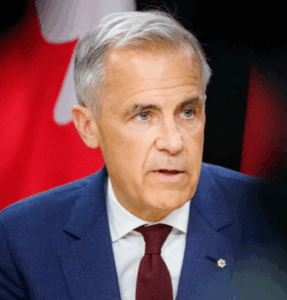
The main reason Carney is attracting attention in the United States is the growing trade dispute between Canada and the Trump administration.
Canada and the United States have one of the world’s most closely integrated economic relationships. Goods and supply chains regularly cross the border, particularly in sectors such as automobiles, energy, agriculture, manufacturing and consumer products.
During 2026 the relationship became increasingly complicated as Washington introduced tariffs and other trade measures affecting Canadian products. Canada responded with its own countermeasures.
According to the Canadian Department of Finance, the government introduced new counter-tariffs effective September 8, 2026.
The measures covered $27.6 billion in U.S. imports and included products in sectors such as steel, dairy, appliances, agricultural equipment, pulp and paper and electronics.
This made Carney a central figure in a dispute that directly affects American businesses and consumers as well as Canadian companies.
Reuters reported on September 25 that the Trump administration was comfortable maintaining the trade standoff with Canada.
The report also said Washington was threatening additional tariffs on Canadian automobiles, parts and steel.
The situation escalated further on September 29 when the United States implemented restrictions affecting nearly $1 billion in Canadian imports.
That development placed even more attention on Carney because he is the Canadian leader responsible for negotiating with Washington while also responding to economic pressure at home.
Mark Carney and Canada’s Response to U.S. Tariffs
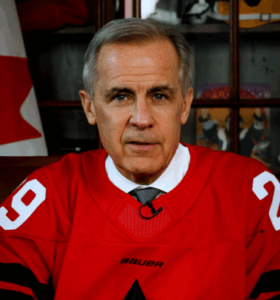
Carney’s government has responded to U.S. trade measures with a combination of counter-tariffs and efforts to diversify Canada’s economy.
The Canadian government has argued that the country needs to protect Canadian workers and businesses while also reducing excessive dependence on a single export market.
Carney has also emphasized the importance of strengthening trade relationships outside the United States.
This does not mean Canada can quickly replace its enormous economic relationship with the United States. The two countries remain deeply connected through supply chains, investment and cross-border commerce.
The challenge for Carney is therefore balancing two goals. Canada needs to maintain an important relationship with its largest trading partner while also building additional economic relationships around the world.
Reuters reported in September that Carney had been pursuing closer relationships with Europe as tensions with Washington continued.
Also Read: Gabrielle Carrington Bio: The Story Behind the Controversial Case
Carney Looks Toward Europe
One of the most notable developments in Carney’s foreign policy has been his effort to strengthen Canada’s relationship with Europe.3
In September 2026 Carney traveled to Europe and addressed the European Parliament. Reuters reported that he promoted closer Canada–Europe cooperation in areas including markets, energy, critical minerals, technology and security.
Carney has described Canada and Europe as partners that can work together in a changing international environment.
The issue became more significant after European leaders discussed the possibility of Canada becoming an associate member of the European Union.
The proposal does not mean Canada is joining the EU. It represents a potential new form of closer cooperation that would have to be negotiated and defined.
The discussions show how Canada’s relationship with the United States is influencing its wider international strategy.
Mark Carney and Donald Trump
Carney and Trump occupy different political positions and represent governments with different approaches to trade.
Their relationship has become particularly important because the United States is Canada’s largest economic partner.
Carney has continued to leave room for negotiations with Washington. In September he said Canada was prepared to reach a trade agreement with the United States if it benefited both countries.
Reuters reported that Carney emphasized the importance of stability and credibility in any future agreement. At the same time, the negotiations have been difficult.
Carney has also spoken directly with Trump on issues beyond trade.
Reuters reported on September 10 that Carney said he had spoken with Trump several times about the war in Ukraine and issues involving Iran.
This is an important part of their relationship because Canada and the United States cooperate on many international issues even while disagreeing over trade.
Mark Carney’s Economic Background
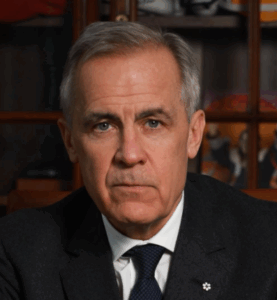
Carney’s economic background remains one of the defining features of his public profile. He spent years working in international finance before moving into government.
His time at the Bank of Canada and Bank of England gave him experience with inflation, financial stability, monetary policy and economic crises.
His career also gave him international contacts and experience working with governments and financial institutions.
The Bank of Canada notes that Carney worked at Goldman Sachs for 13 years before entering senior Canadian government and central-bank positions.
That background helps explain why economic policy is such an important part of his public identity.
It also explains why his actions during the current trade dispute receive attention from financial markets and international businesses.
Mark Carney’s International Profile
Before becoming prime minister, Carney was already known internationally.
His appointment as Governor of the Bank of England made him one of the few Canadians to lead one of the world’s major central banks.
He later worked on international climate finance and economic issues through the United Nations.
As prime minister he has brought that international experience into Canadian foreign policy.
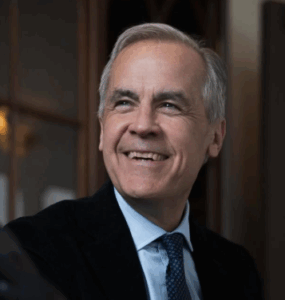
The current dispute with Washington has therefore placed an internationally experienced economist at the center of a major political and economic confrontation.
His meetings with European leaders and efforts to expand Canada’s trade relationships are part of that broader international role.
Why Mark Carney Matters in the Current Canada-U.S. Story
Mark Carney’s importance in the current news cycle goes beyond his position as Canada’s prime minister.
The United States and Canada have one of the world’s most important bilateral economic relationships. Changes in tariffs can affect manufacturers, farmers, retailers, energy companies and consumers in both countries.
That makes decisions by Carney’s government relevant to American audiences. The September 29 U.S. import restrictions are another example.
The measure affects Canadian products and adds another layer to the trade dispute. AP reported that the ban covers nearly $1 billion in Canadian imports, including dairy products, alcoholic beverages and motorcycles.
At the same time, Canada is attempting to develop stronger trade connections with Europe and other markets.
This combination of U.S. pressure and Canadian efforts to diversify trade has made Carney an increasingly visible international political figure.
What Comes Next for Mark Carney?
The next phase of Carney’s premiership is likely to remain closely connected to Canada’s relationship with the United States.
Trade negotiations could change depending on decisions made by Washington and Ottawa. Tariffs and import restrictions can also affect individual industries at different levels.
Canada is simultaneously trying to strengthen other international relationships. Carney’s government has been exploring closer economic ties with Europe and other global markets.
Reuters has reported on Canada’s efforts to build new partnerships while its relationship with Washington remains under pressure. The results of those efforts will take time to become clear.
For now, Carney remains at the center of Canada’s economic and diplomatic response to a difficult relationship with its largest trading partner.
View this post on Instagram
FAQ’s
Who is Mark Carney?
Mark Carney is the 24th Prime Minister of Canada and leader of the Liberal Party. He became prime minister in March 2025 after being elected Liberal leader. Before entering politics he served as Governor of the Bank of Canada and Governor of the Bank of England.
How old is Mark Carney?
Mark Carney was born in 1965. He is 61 years old as of September 2026.
Where was Mark Carney born?
Carney was born in Fort Smith in the Northwest Territories of Canada. He was raised in Edmonton, Alberta.
What did Mark Carney do before becoming prime minister?
Before entering politics Carney worked in finance and public policy. He spent 13 years at Goldman Sachs and later became Deputy Governor of the Bank of Canada, Governor of the Bank of Canada and Governor of the Bank of England.
Was Mark Carney Governor of the Bank of Canada?
Yes. Carney served as Governor of the Bank of Canada from 2008 to 2013. He later became Governor of the Bank of England in 2013.
Why is Mark Carney in the news with Donald Trump?
Carney is in the news because Canada and the United States are involved in an escalating trade dispute. The Trump administration has imposed measures affecting Canadian goods while Carney’s government has responded with Canadian counter-tariffs. Recent U.S. restrictions on Canadian imports have added to the tensions.
Conclusion
Mark Carney has a background that sets him apart from many political leaders. His career spans international banking, public policy, central banking and global economic institutions.
As Canada’s prime minister, he is now dealing with one of the most important challenges in the country’s modern economic relationship with the United States.
The continuing trade dispute with Donald Trump has brought Carney into the U.S. news cycle as well as Canadian headlines.
Whether discussing trade, investment or Canada’s position in the global economy, his career before politics remains an important part of understanding his role today.
For readers searching for Mark Carney in 2026, the current Canada-Trump dispute is only one part of his story.
He is also a former Governor of two major central banks, an international economic policy figure and the leader of the Canadian government during a period of significant changes in global trade and diplomacy.
Also Read: Bhad Bhabie: Bio Career, Health Battle and Life in 2026