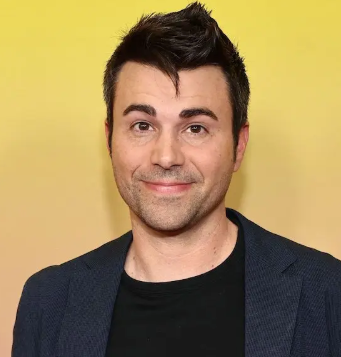
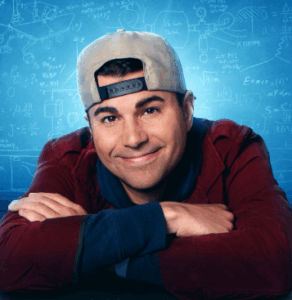
Mark Rober is proof that science does not have to feel like a school lecture. It can be funny. It can be surprising. It can involve giant machines, exploding experiments, clever gadgets and even glitter bombs
Rober began his professional career as an engineer. He spent nine years working at NASA’s Jet Propulsion Laboratory and seven of those years were connected to the Curiosity rover project.
He later worked at Apple in its Special Projects Group before eventually turning his YouTube channel into a full-time career. Today, Mark Rober is much more than a YouTuber.
He is an engineer, inventor, educator, entrepreneur and one of the most recognizable science creators in the United States.
His videos have introduced millions of people to engineering concepts through entertaining experiments.
His career has also moved beyond YouTube. Through CrunchLabs he has built educational products and programs around hands-on STEM learning.
His work has now expanded to Netflix as well.
Netflix currently carries Mark Rober’s CrunchLabs and has also developed new projects including the kids and family competition series SCHOOLED!.
So how did a former NASA engineer become one of America’s biggest creators?
The answer is a combination of engineering knowledge, curiosity, storytelling and an unusual ability to make complicated ideas feel exciting.
Also Read: Emily Hart Bio: Is She Real or AI? Influencer Mystery Explained
Table of Contents
Who Is Mark Rober?
Mark Rober is an American engineer, inventor, science communicator and YouTube creator. He is best known for making large-scale experiments and educational videos that combine engineering with entertainment.1
Rober was born and raised in California. His interest in engineering started when he was young. Instead of simply being interested in how things worked, he enjoyed building things and finding creative solutions to everyday problems.
He studied mechanical engineering at Brigham Young University and later earned a master’s degree in mechanical engineering from the University of Southern California.
His academic background became the foundation for everything that followed.
After college, Rober joined NASA’s Jet Propulsion Laboratory. He worked there for nine years and spent seven years working on the Curiosity rover.
His NASA experience gave him something that would later become extremely valuable on YouTube: the ability to solve difficult technical problems while thinking creatively.
Rober later moved to Apple. He worked for several years in the company’s Special Projects Group as a mechanical engineer and product designer.
He has also discussed a patent related to virtual reality and self-driving cars. His transition from engineer to creator was not originally part of some giant business plan.
YouTube began as a creative outlet. That simple decision eventually changed his career.
How Did Mark Rober Become Famous?
Rober’s YouTube journey began in 2011. One of his first major viral moments came from a Halloween costume that used two iPads to create the illusion of a large hole through his torso.
The idea was simple but visually shocking. The costume quickly attracted attention online and helped establish Rober as someone who could use technology to create entertaining experiences.
The important part was not simply that the video went viral. It showed Rober that engineering could be entertainment.
Instead of explaining a scientific principle with a traditional lecture, he could demonstrate it through something people actually wanted to watch. That became the foundation of his channel.
Over the years, his videos expanded into experiments involving physics, animals, engineering, psychology, space and everyday technology. He became known for taking an interesting question and turning it into a large-scale experiment.
His famous projects have included glitter bombs designed to catch package thieves, enormous Nerf-related experiments, squirrel obstacle courses and elaborate engineering challenges.
The videos often look like entertainment first. But underneath the spectacle is a lesson. That combination became Rober’s biggest advantage.
1 year in!! LFG!! https://t.co/Tr7hazJuWP
— Mark Rober (@MarkRober) August 1, 2026
Stats Table
| Category | Mark Rober |
|---|---|
| Profession | Engineer, inventor, educator and YouTube creator |
| Education | Brigham Young University and University of Southern California |
| Degree | Mechanical Engineering |
| NASA career | 9 years |
| Curiosity rover work | 7 years |
| Former employer after NASA | Apple |
| YouTube career began | 2011 |
| Major early viral project | iPad Halloween costume |
| Company | CrunchLabs |
| CrunchLabs founded | 2022 |
| Main content | Science, engineering, experiments and education |
| YouTube audience | 80M+ according to CrunchLabs |
| Netflix projects | Mark Rober’s CrunchLabs, SCHOOLED! and related programming |
| Main mission | Make science and engineering engaging and accessible |
Why Mark Rober’s Content Is Different
There are many science channels on YouTube. Mark Rober stands out because he does not treat education and entertainment as separate things.2
He combines them. A typical Rober video starts with a question or challenge that immediately creates curiosity.
Can a particular machine work? Can an unusual material solve a problem?
Can an animal complete an obstacle course? Can an enormous experiment demonstrate a scientific principle?
The audience gets a reason to keep watching before the educational explanation even begins. Rober has described his goal as making science and engineering accessible and interesting, particularly for young people.
PBS NewsHour highlighted how his work evolved from a creative outlet into a larger mission to make engineering feel cool and approachable.
This is important because many people develop their opinions about science during childhood. If science feels difficult or boring, students may decide that it is not for them.
Rober takes the opposite approach. He makes failure part of the entertainment. He shows prototypes.
He tests ideas. He changes designs. He makes mistakes.
Then he explains why something worked or failed. That is very close to how real engineering works.
From NASA Engineer to YouTube Star
Rober’s NASA background gives his videos credibility but it is not the only reason people watch him. His biggest strength is his ability to translate technical ideas into stories.
Working at NASA requires precision. You cannot build a spacecraft or contribute to a Mars rover project without understanding engineering at a serious level.
But YouTube requires another skill. You need to hold someone’s attention.
Rober learned how to combine both. His videos frequently use cinematic production, humor and suspense.
Instead of simply saying that a concept works, he creates a challenge where viewers want to see the result. This approach helped transform Rober from a technically skilled engineer into a mainstream science communicator.
PBS describes him as a former NASA engineer who became a YouTube sensation and later founded CrunchLabs.
His journey also demonstrates how the definition of an educator has changed. An educator does not always need a classroom.
Rober can explain a physics principle to millions of viewers from a workshop or an experimental set.
Mark Rober and CrunchLabs
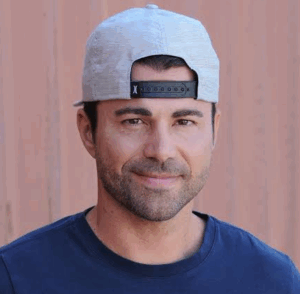
One of the biggest developments in Rober’s career was the creation of CrunchLabs. CrunchLabs takes the same philosophy that made his YouTube channel successful and turns it into hands-on learning.
The company describes itself as a place where engineers, designers and makers work together to help children and adults think like engineers. Its products are designed around building, experimenting and solving problems.
This is an important step in Rober’s evolution. YouTube allows people to watch engineering.
CrunchLabs allows them to build. That difference matters.
A child watching a Rober video may become interested in how a machine works. A hands-on kit can then give that child the opportunity to build something and discover the answer personally.
CrunchLabs has also expanded into educational initiatives designed for classrooms.
CrunchLabs.org says its mission is to make hands-on STEM learning more accessible and provide science lessons that teachers can use in classrooms.
This means Rober’s influence is no longer limited to entertainment. He is building an educational ecosystem around the same idea that made his videos successful.
Mark Rober’s Move to Netflix
The Netflix connection represents another major stage in Rober’s career.
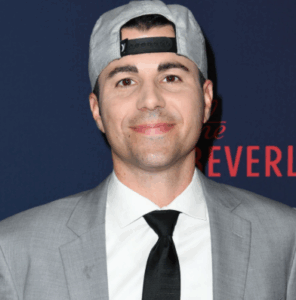
In 2025, Netflix announced that Rober would bring some of his popular experiments to the streaming platform and develop a new kids and family competition series for 2026. The project was being produced by CrunchLabs in partnership with Kimmelot.
That announcement was significant because it showed how far YouTube creators have moved into mainstream entertainment.
Rober was no longer simply creating videos for his own channel.
A major streaming platform was adapting his style for its audience.
Netflix later introduced Mark Rober’s CrunchLabs, a science and nature series built around experiments and challenges. The Netflix catalog currently lists four seasons of the program.
The show includes experiments involving moving trains, lasers, lightning, glitter bombs, tracking dogs, squirrels and space technology.
The format feels familiar to anyone who watches Rober on YouTube.
That is actually the point.
Netflix did not need to completely change Rober’s formula.
His existing approach already had the ingredients needed for television and streaming: strong visual ideas, family-friendly entertainment, educational value and recognizable personality.
Also Read: Britt Barbie Bio: From “Period Ahh” Meme to Internet Creator
What Is SCHOOLED!?
Rober’s Netflix expansion also includes SCHOOLED!, a kids and family competition series.3
Netflix announced in March 2026 that the show was casting. It is built around a gamified laboratory where young innovators compete in imaginative science and engineering experiments.
The concept is a natural extension of Rober’s philosophy. Instead of treating education as something that happens only through textbooks, the show turns learning into a competition.
The contestants get challenges. They test ideas. They build things. They learn from failure. And the audience learns alongside them.
This is the same philosophy Rober has used on YouTube for years. The difference is scale.
YouTube helped Rober reach millions of people directly. Netflix gives the same concept another mainstream entertainment platform.
Why Mark Rober Has Such a Large Audience
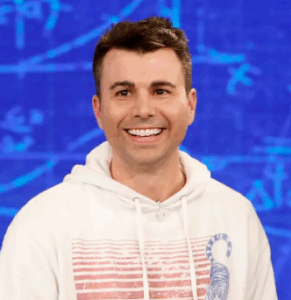
Rober’s success is not only about science. It is about curiosity.
People are naturally interested in unusual questions. Rober understands this and builds his videos around that instinct.
He also avoids making viewers feel like they need an advanced science degree to understand the experiment.
The explanation usually comes after the audience has already become interested. That is a powerful teaching method.
First comes curiosity. Then comes experimentation. Then comes explanation.
This structure allows Rober to reach children, parents, science fans and people who might never normally watch educational content.
His work has also developed a strong family appeal.
Parents can watch his videos with their children without worrying that the content is simply empty entertainment.
Children can enjoy the spectacle while learning something about physics, engineering or problem-solving. That combination is difficult to achieve.
Is Mark Rober Still an Engineer?
Yes. Although he is now better known as a creator and entrepreneur, engineering remains central to his identity and work.
His YouTube projects depend heavily on engineering principles. CrunchLabs is built around engineering education.
His Netflix projects continue to feature experiments and challenges based on scientific and engineering concepts.
Rober’s own explanation of engineering is also revealing. In his PBS appearance, he described engineering as a way of turning things that do not exist into things that do.
That idea explains much of his career. He did not abandon engineering when he became a YouTuber. He found a different way to practice it.
Mark Rober’s Impact on STEM Education
Rober’s biggest long-term contribution may not be a viral video. It may be his ability to make STEM subjects feel accessible.
Science education often struggles with engagement. Students may understand that science is important but still find traditional lessons difficult to connect with everyday life.
Rober brings science into unusual situations. He makes a machine. He tests a theory. He builds an experiment. He asks what happens next.
Then he explains the science behind the result. CrunchLabs has expanded that philosophy into physical products and classroom programs.
The company’s education initiative says it combines video storytelling with hands-on challenges designed around standards-aligned STEM learning. That makes Rober’s career especially interesting.
He started by building things for himself. Then he built videos for an audience. Then he built products for children.
Now he is building educational entertainment for streaming audiences and classrooms.
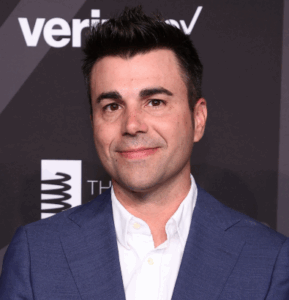
What Makes Mark Rober’s Career So Unusual?
The unusual part of Rober’s career is not that an engineer became famous.
Engineers can become entrepreneurs, inventors and public figures. The unusual part is how successfully Rober combined several careers.
He has worked at NASA. He has worked at Apple. He became a YouTube creator. He founded a STEM company.
He became an educator. He entered mainstream streaming entertainment.
These are very different industries. Yet Rober has connected them through one central idea: curiosity.
That consistency is probably the most important reason his brand has remained strong.
Whether he is explaining a physics experiment on YouTube or hosting a competition on Netflix, the underlying message is similar.
Ask questions. Build something. Test it. Learn from what happens. Try again.
View this post on Instagram
FAQ’s
Who is Mark Rober?
Mark Rober is an American engineer, inventor, educator and YouTube creator. He is a former NASA engineer who later worked at Apple before becoming a full-time creator.
What did Mark Rober do at NASA?
Rober worked at NASA’s Jet Propulsion Laboratory for nine years. Seven of those years involved work connected to the Curiosity rover.
Where did Mark Rober study?
Rober studied mechanical engineering at Brigham Young University and later earned a master’s degree in mechanical engineering from the University of Southern California.
When did Mark Rober start YouTube?
Rober began making YouTube videos in 2011. His early viral success came from an iPad-based Halloween costume that created the illusion of a hole through his body.
What is CrunchLabs?
CrunchLabs is Rober’s engineering and STEM education company. It creates hands-on learning products and educational programs designed to encourage children and adults to think like engineers.
Conclusion
Mark Rober’s rise from engineer to mainstream creator did not happen because he stopped being an engineer.
It happened because he found a new way to use engineering.
He did not simply become famous online. He built an entire career around making people curious.
His biggest achievement may be showing millions of young viewers that science is not just something they study for a test. It is something they can build, experiment with and enjoy.
And as his Netflix projects and CrunchLabs education programs continue to expand, Mark Rober’s journey from NASA engineer to one of America’s biggest creators looks less like a career change and more like the next stage of the same mission.
He is still an engineer. He is simply engineering something much bigger now: a new way to make people excited about science.
Also Read: Angela Nikolau Age, Bio, Career, Relationship and Net Worth 2026