


Nasser Hussain, born in Madras (now Chennai), India, on March 28, 1968, is an iconic figure in English cricket history
A determined batsman and influential leader, he captained England from 1999 to 2003, transforming the team into a consistent force.
Today, he thrives as a seasoned commentator with Sky Sports, providing insightful analysis of modern cricket dynamics.
This updated profile delves into his career trajectory, key achievements, current activities, and pressing viewpoints on today’s England–India series.

Also Read: Nasser Hussain Cautionary Advice to England Team
Table of Contents
Who Is Nasser Hussain?
Nasser Hussain OBE, born on March 28, 1968, in Madras (now Chennai), India, stands as one of the most influential figures in English cricket.1
His unique background, as the son of an Indian father, Jawad Hussain (also known as Joe), and an English mother, Patricia (who later converted to Islam and adopted the name Shireen), contributed to his multifaceted perspective on cricket and life.
Early Life
Nasser Hussain’s upbringing was strongly influenced by his Indian father, Jawad, who had a deep love for cricket.
Jawad had moved to England in the 1960s and became a key figure in encouraging Nasser to take up cricket.
His mother, Patricia, who converted to Islam and took the name Shireen, also had a significant role in his life.
This fusion of Indian and British cultures gave Nasser a unique perspective, which influenced his approach both on and off the field.

Nasser Hussain’s Cricket Career
Hussain made his mark in county cricket, playing for Essex, where he honed his skills as a top-order batsman.
He was known for his determination and gritty style of play, which would become his hallmark throughout his career.
Despite early struggles with consistency, he gradually established himself as a player with a strong temperament, particularly suited for the rigors of Test cricket.
Taking the Reins: Transforming England’s Fortunes
In 1999, Nasser Hussain was appointed captain of the England cricket team, taking over at a time when the team was in disarray.
England was at a low point, having suffered humiliating defeats, and morale within the squad was at an all-time low.
Hussain’s appointment was seen as a bold move, given his reputation as a tough, no-nonsense character. However, it was precisely this toughness and determination that the England team needed to turn things around.
Challenges and Criticisms
While Nasser Hussain’s leadership was widely praised, it was not without its challenges and criticisms. Some critics felt that his approach was too authoritarian and that his intense style could put undue pressure on his teammates.
There were moments when his tactics were questioned, particularly in high-pressure situations.2
One of the most controversial moments of his captaincy came during the 2001 Ashes series, where England suffered a heavy defeat at the hands of Australia.
Hussain’s decision to bowl first in the first Test at Edgbaston, despite favorable batting conditions, was heavily criticized and became a point of contention throughout the series.
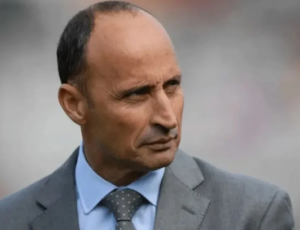
Nasser Hussain’s Transition into Commentary and Media
Within hours of announcing his retirement from professional cricket in 2004, Nasser Hussain made a seamless transition into a career in sports broadcasting, a move that surprised few given his articulate nature and deep understanding of the game.3
Hussain joined Sky Sports’ esteemed commentary team, where he has worked alongside legendary figures such as former England captains Bob Willis, David Gower, Ian Botham, and his former coach David Lloyd.
Early Days in Commentary
- When Nasser Hussain joined Sky Sports, his quick move into broadcasting was indicative of the respect he had garnered throughout his playing career. Known for his candid and direct approach, Hussain brought a new perspective to the commentary box.
- As someone who had captained England through both highs and lows, he was able to offer a player’s point of view with a special focus on leadership, decision-making, and the mental challenges faced by cricketers.
- Initially, Hussain’s commentary work reflected his deep tactical understanding of the game. He became known for breaking down complex strategies and explaining the nuances of cricket in a way that was accessible to both seasoned fans and newcomers alike.
- His style of commentary, filled with honesty and insight, quickly made him a favorite among viewers.
A Key Voice in Modern Cricket Commentary
Over the years, Hussain has grown into one of the most respected voices in cricket. His insightful, no-nonsense analysis is valued by fans and players alike.
Unlike some commentators who may hold back for the sake of diplomacy, Hussain is known for calling things as he sees them.
Whether it’s offering constructive criticism of players or dissecting the tactical errors made by teams, Hussain’s honest assessments are widely appreciated.
Contributions Beyond the Commentary Box
In addition to his role as a commentator, Nasser Hussain has taken on the responsibility of being a thought leader in the cricketing world.
He frequently addresses broader issues that impact the sport, including diversity, mental health, and the evolving nature of leadership in sports.
KL Rahul on love for Test cricket and desire to continue play… https://t.co/VEzi8ih4kx via @YouTube
— Nasser Hussain (@nassercricket) May 25, 2025
Recent Commentary on England–India Series
A Rivalry Worth Remembering
-
Hussain likened the ongoing India–England Test series (2025) to the 2005 Ashes, praising its drama and competitiveness.4
On Mohammed Siraj & Emotional Cricket
-
Defended India fast bowler Mohammed Siraj’s animated celebration, emphasizing passion over robotic restraint: “you don’t need 22 robots.” Declared the ICC’s fine as overly harsh.5
Concerns on Slow Over Rate
-
Called the delays in over rates during the Lord’s Test “diabolical,” demanding umpires step up to maintain the game’s integrity.

Nasser Hussain’s Family
Nasser Hussain, one of England’s most respected cricketers and commentators, comes from a family deeply rooted in both cricket and multiculturalism.
His father, Joe Hussain, was an Indian-born cricket coach who played one first-class match for Madras before moving to England. Nasser’s mother, Shireen, formerly Patricia, is of English descent, and she converted to Islam after marrying Joe.
The family’s migration to England and their strong connection to cricket played a pivotal role in shaping Nasser’s future career.
Joe Hussain: The Influence of a Cricketing Father
Joe Hussain, originally Jawad Hussain, was not only a dedicated cricket player but also a passionate coach who made significant sacrifices to ensure that his children, particularly Nasser, had the opportunity to pursue cricket at the highest level.
Having played a single first-class match for Madras, Joe’s cricketing aspirations were not fully realized in India. In search of better opportunities, he migrated to England in 1975 after an earlier visit in the 1960s.
There, he immersed himself in cricket coaching, becoming a significant figure in Nasser’s development as a cricketer.
Nasser Hussain’s upbringing was uniquely shaped by his multicultural background. Born in India to an Indian father and an English mother, Nasser grew up straddling two different cultural worlds.
His mother, Patricia, converted to Islam and took the name Shireen after marrying Joe, which further blended the family’s cultural and religious identities. This mix of Eastern and Western influences played an important role in Nasser’s development, both as a person and as a cricketer.
Siblings
Nasser was not the only child in the Hussain family with a talent for cricket. His two brothers, Mel and Abbas, were also passionate about the sport, with all three boys benefiting from their father’s dedication to coaching and training.
The family’s love for cricket was evident in their daily lives, with Joe constantly encouraging his sons to practice and improve their skills.

Also Read: Rachin Ravindra Journey Back to Bengaluru: A Special Moment in His Cricket Career
Nasser Hussain’s Remarkable Records
Nasser Hussain is celebrated not only for his leadership as the captain of the England cricket team but also for his memorable individual performances on the field. Throughout his illustrious career, Hussain set several records that still resonate with cricket enthusiasts today.
One of his most iconic achievements came during the 1997 Ashes series, where he produced a batting masterclass that would go down in history.
Highest Test Score: 207 Against Australia in the 1997 Ashes
Hussain’s highest Test score of 207, achieved during the first Test of the 1997 Ashes at Edgbaston, remains one of the highlights of his career.
This innings, described by Wisden as “touched by genius,” was a defining moment for Hussain and England as they sought to reclaim the Ashes from their fierce rivals, Australia.
Century on Captaincy Debut
In 1999, when Hussain took over the England captaincy, he was under immense pressure to turn around the team’s fortunes. In his first match as captain, Hussain scored a vital century against New Zealand at Edgbaston, making him only the third England captain to score a century on debut as captain.
His knock of 103 was a sign of things to come under his leadership, showcasing his ability to lead from the front.
Most Test Matches as Captain of England
Nasser Hussain holds the record for captaining the England team in 45 Test matches from 1999 to 2003. While his captaincy tenure was not always marked by smooth sailing, it is widely credited with laying the foundation for England’s future success in Test cricket.
His leadership was instrumental in turning England into a competitive side, particularly after a challenging period in the late 1990s when the team struggled for consistency.
Personal Life of Nasser Hussain
Nasser Hussain has always been a prominent figure in the cricketing world, but behind his successful career, his personal life has remained relatively private.
Married to Karen since 1993, the couple has built a strong and enduring relationship, raising their three children together while balancing the demands of Hussain’s high-profile career in cricket and later as a commentator.
Family Life
- Nasser and Karen have two sons, Joel and Jacob, and a daughter, Layla. All three of their children share their father’s love for cricket and are active players at Hutton Cricket Club, located in their home county of Essex.
- This family connection to the sport has clearly been passed down to the next generation, with Hussain’s children following in his footsteps by playing cricket at a local level.
- The bond between Hussain and his family is apparent, as they often spend time at the cricket grounds together, continuing the family’s passion for the game.
- The fact that his children are active in cricket is no surprise, considering the deep-rooted connection Nasser Hussain himself has to the sport.
- His guidance and experience in the cricketing world likely serve as valuable influences on his children’s development as cricketers, while they also benefit from the nurturing environment of their local club.
A Legacy of Cricket
Nasser Hussain’s father, Joe Hussain, was a significant influence in his cricketing journey. Joe, who migrated from India to England in the 1960s and settled permanently in 1975, played one first-class match for Madras (now Chennai).
He later became a cricket coach in England, inspiring Nasser to pursue a career in the sport. Joe’s impact on Nasser’s early development was instrumental in shaping his discipline and commitment to the game.
Life Beyond Cricket
Since retiring from professional cricket and transitioning into a full-time commentary role with Sky Sports, Nasser Hussain has maintained a balance between his professional and personal life.
Despite the demands of his broadcasting career, which often involves extensive travel and long working hours, Hussain has managed to stay close to his family and remain involved in his children’s lives.
FAQ’s
Q1: Where was Nasser Hussain born and when did he start playing for England?
A1: Born in Madras (Chennai), India, in 1968, Hussain moved to England in 1975. He debuted in ODIs in October 1989 and in Tests in February 1990.7
Q5: Has he written a book?
A5: Yes—Playing With Fire, his 2005 autobiography, won the Best Autobiography award at the British Sports Book Awards.
Conclusion
Nasser Hussain remains a cornerstone of modern cricket through his legacy as captain, influential cricket commentator, and mentor.
His forthright opinions on the current India–England test series reaffirm his ongoing passion and relevance in the cricket world.
Read More: Tamim Iqbal on Indian Cricket: BCCI Power Essential for Rohit and Kohli Success
- fandom
- wikipedia
- thecricketgazette
- skysports
- indianexpress
- en.wikipedia.org[/efn_note]
Q2: What are his biggest career achievements?
A2: Captained England to four consecutive Test series wins, climbed to third in ICC rankings, and scored a career-high 207 in the 1997 Ashes. Post-retirement, won the British Sports Book Award for his autobiography.Q3: What is Nasser Hussain doing now?
A3: He serves as a senior Sky Sports commentator, occasional coach, and respected cricket strategist and analyst.Q4: What has he said about the 2025 India vs England series?
A4: He lauded its intensity, defended Siraj’s passion, criticized the ICC’s penalty, and called out poor over rates.6indianexpress