


Neha Bora has emerged as one of the prominent faces of India’s student-led protest movement in October 2026
A doctoral scholar at Jawaharlal Nehru University (JNU) and the national president of the All India Students’ Association (AISA), she has attracted national attention for her role in demonstrations demanding accountability from the Election Commission of India.
Her repeated detention during protests in Delhi has brought her activism and political views into the public spotlight.
Her participation in these campaigns has helped connect student politics with broader public concerns.
Bora’s journey includes her education in Delhi, her involvement in theatre, her experience in student politics and her participation in earlier campaigns concerning citizenship laws and examination-related controversies.
However, it is important to distinguish confirmed events from allegations.
Her detention by Delhi Police has been reported by several news organisations.
Claims concerning voter deletions, the conduct of police officers and the intentions behind the electoral revision remain contested matters that require careful attribution.
So, who is Neha Bora, and why has she become a widely discussed student leader? Here is a closer look at her early life, education, activism, political journey and the events that brought her into the national spotlight.
Also Read: Jadyn Davis Bio: Who Is the College Quarterback?
Table of Contents
Who Is Neha Bora?
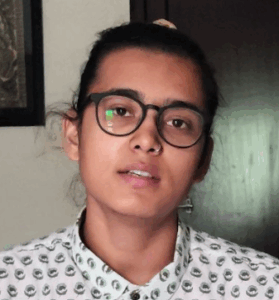
Neha Bora is an Indian student activist, research scholar and political organiser.1
She serves as the national president of the All India Students’ Association, commonly known as AISA. She is also a doctoral scholar at Jawaharlal Nehru University’s School of Arts and Aesthetics, where her academic interests include theatre and performance studies.
Born in Uttarakhand, Bora is 29 years old according to news reports published in October 2026. Her educational journey took her from school in eastern India to Delhi University, Ambedkar University Delhi and eventually JNU.
Before becoming widely recognised for her protest speeches, Bora developed an interest in theatre and participated in street-theatre activities. Her engagement with social issues gradually led her towards student activism.
The protests against the Citizenship (Amendment) Act in 2019 and 2020 became an important turning point in her political journey. Bora’s national profile has grown significantly through her involvement in demonstrations about examination irregularities and electoral accountability.
Her speeches often connect specific student concerns with larger questions about constitutional rights, democratic institutions and government responsibility. In October 2026, she became a prominent figure in protests demanding the resignation of Chief Election Commissioner Gyanesh Kumar.
Delhi Police detained her during several demonstrations, and she was released after at least some of these detentions. Her growing visibility reflects the role that student organisations can play in wider political movements.
Although Bora has become an important public face of the current agitation, she is not its only organiser or spokesperson. Other student groups, activists and political figures have also participated in the demonstrations.
Sahil’s parents have been in relentless pursuit of justice for the institutional murder of their son.
Comrades have been holding the ground in solidarity at IIT Bombay as well! Join them! https://t.co/tw8cVmAjvM
— Neha (@neha_aisa) October 14, 2026
Early Childhood and Family Background
Neha Bora grew up in Uttarakhand, a Himalayan state in northern India. Reports published in October 2026 describe her as having moved between places during childhood because her father served in the Indian Army.
Frequent moves can expose children to different communities, schools and social environments. Although it would be difficult to draw firm conclusions about how these experiences shaped Bora’s personality, her reported background provides context for her educational journey across different parts of India.
According to published profiles, she completed her schooling in Bengal before moving to Delhi for higher education. Her academic interests eventually brought her into contact with theatre, literature and political discussions that influenced her later involvement in student activism.
Bora has also spoken publicly about political differences within her family. In an interview cited by Hindustan Times, she described disagreements with family members over their political views.
This detail offers a glimpse into the personal conversations behind her public identity, although there is limited verified information about her wider family life. She has generally kept her private life out of the spotlight.
As a result, details about her parents, siblings, relationships and other personal matters should not be assumed without reliable reporting. Her early years are relevant primarily because they help explain the educational and cultural experiences that preceded her public activism.
Rather than beginning as a full-time political figure, Bora developed interests in the arts and social questions before becoming involved in organised student politics.
Quick Bio
| Detail | Information |
|---|---|
| Full name | Neha Bora |
| Nationality | Indian |
| Age | 29, according to October 2026 reports |
| Hometown | Uttarakhand |
| Profession | Student activist and research scholar |
| Known for | Student politics and public protests |
| Current organisation | All India Students’ Association (AISA) |
| Leadership position | National president of AISA |
| University | Jawaharlal Nehru University |
| Academic department | School of Arts and Aesthetics |
| Research field | Theatre and performance studies |
| Earlier education | Delhi University and Ambedkar University Delhi |
| Other interests | Theatre and street performance |
| Major public issues | Examination irregularities, electoral accountability and students’ rights |
| Recent controversy | Detention during Delhi protests in October 2026 |
Neha Bora’s Education: From Delhi University to JNU
Education has played a central role in Neha Bora’s journey. Her academic path reflects a combination of social science, the arts and political engagement.2
Undergraduate studies at Delhi University
Bora studied sociology at Hindu College, University of Delhi, according to a profile published by The Times of India. Sociology examines society, institutions, inequality and the relationships between individuals and communities.
These subjects also feature prominently in public discussions about student rights and democratic participation.During her undergraduate years, Bora became involved in theatre.
This experience introduced her to a form of public expression that would later become important in her activism. Theatre allowed her to engage with different characters, social situations and viewpoints rather than simply presenting an argument from one perspective.

Postgraduate studies at Ambedkar University Delhi
After completing her undergraduate degree, Bora pursued postgraduate studies at Dr B. R. Ambedkar University Delhi. Her academic background helped establish the foundation for her later research and public engagement.
There is limited publicly available information about her postgraduate dissertation or the full details of her academic work. It is therefore better to avoid assigning her specific research findings or academic achievements that have not been documented in reliable sources.
Doctoral research at Jawaharlal Nehru University
Bora later joined Jawaharlal Nehru University, where she became a doctoral scholar at the School of Arts and Aesthetics. Her research field is theatre and performance studies.
JNU has a long history of student political activity and public debate. Students and researchers at the university have frequently participated in discussions about education policy, civil liberties and national politics.
Bora’s academic and political activities have developed within this wider environment. Her work as a research scholar and her role as a student leader are distinct parts of her public identity.
One involves academic study, while the other involves organising campaigns, addressing demonstrators and representing a student organisation.
How Theatre Influenced Neha Bora’s Activism
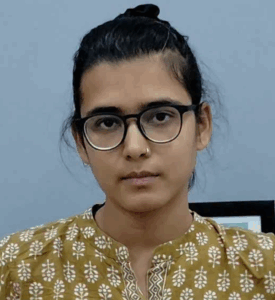
Theatre is an important part of Bora’s story because it preceded her rise in student politics.
During her time at Delhi University, she participated in theatrical performances addressing social issues. She also became associated with Sangwari, a Delhi-based street-theatre group, according to published profiles.
Street theatre takes performances beyond conventional stages and into public spaces. It often addresses topics such as inequality, discrimination, labour rights, education and political accountability.
By bringing performances directly to communities, street theatre can make complex issues easier to understand and discuss.
Bora has explained that theatre helped her understand people whose experiences and opinions differed from her own. That perspective is relevant to her later public speeches, which often attempt to connect individual concerns with wider social questions.
Theatre and protest organising share certain practical skills. Both require communicating clearly to an audience, responding to changing circumstances and conveying a message in a public setting.
They can also require collaboration with people who bring different experiences and ideas. It would be an overstatement to suggest that theatre alone explains Bora’s political development.
Her education, exposure to public debates and involvement in student organisations also contributed to her journey.
Nevertheless, her experience in performance offers a useful explanation for her communication style and comfort with public speaking.
Also Read: Chace Crawford Bio: From Gossip Girl to The Boys
When Did Neha Bora Become a Student Activist?
Bora’s political involvement developed over several years rather than beginning with the October 2026 protests.3
The Citizenship Amendment Act protests of 2019–2020
The protests against the Citizenship (Amendment) Act (CAA) in 2019 and 2020 were an important turning point in Bora’s political journey, according to Reuters. The legislation and its relationship with India’s citizenship framework generated widespread debate.
Critics argued that the law discriminated against Muslims because of the way it identified religious groups eligible for a particular citizenship pathway. The government defended the legislation as a measure intended to provide relief to persecuted religious minorities from neighbouring countries.
Students at several universities participated in demonstrations, discussions and marches during this period. Bora has described seeing members of her generation take part in protests as an experience that helped move political ideas from books and discussions into public action.
Her participation in student politics subsequently became more organised. She joined AISA, a left-wing student organisation associated with the Communist Party of India (Marxist–Leninist) Liberation and eventually became its national president.
Becoming national president of AISA
AISA campaigns on issues related to education, students’ rights and broader political concerns. Its activities include demonstrations, public meetings and student mobilisation.
As national president, Bora became a visible representative of the organisation. The position gave her a platform to address issues affecting students and to participate in campaigns beyond an individual university campus.
Her role has included speaking at demonstrations and helping mobilise student groups around public concerns. Her profile increased during protests over alleged examination irregularities earlier in 2026, before the electoral-roll demonstrations brought her further attention.
Neha Bora and the Examination Irregularities Protests
Before the October electoral controversy, Bora had already drawn attention through campaigns related to examination irregularities.
Issues surrounding competitive examinations can have a substantial impact on students. Many candidates spend years preparing for entrance tests and government recruitment examinations.
Allegations of leaked question papers, recruitment irregularities or unfair selection processes can undermine confidence in institutions and create financial and emotional difficulties for applicants.
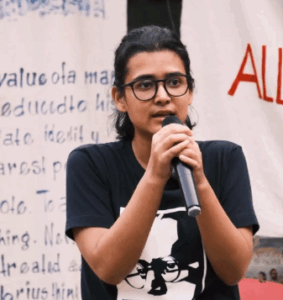
Bora participated in protests demanding accountability over examination-related controversies. These demonstrations formed part of a wider campaign led by student and youth activists.
Reports also state that she joined education reformer Sonam Wangchuk and other student leaders in a hunger strike at Jantar Mantar. The protest was connected to demands for action over alleged examination irregularities.
Coverage of the campaign linked the broader agitation to the eventual resignation of former Union education minister Dharmendra Pradhan.
That sequence of events should not be simplified into a claim that Bora alone caused the minister’s resignation.
Large political campaigns involve numerous organisers, participants and political developments. The available reporting supports her participation in the movement, not exclusive responsibility for its outcome.
Bora also participated in protests in Jharkhand concerning alleged irregularities in examinations conducted by the Jharkhand Public Service Commission and the Jharkhand Staff Selection Commission, according to Hindustan Times.
These campaigns helped establish her as an activist concerned with education and institutional accountability. They also explain why she was already a recognised figure among some student groups before the latest protests began.
Why Is Neha Bora at the Centre of the Delhi Protests?
Neha Bora’s latest rise to national attention is connected to demonstrations against Chief Election Commissioner Gyanesh Kumar and the Election Commission’s Special Intensive Revision of electoral rolls.
The SIR is an exercise intended to review and update electoral rolls. Such revisions can involve checking voter details, identifying entries that require correction and removing entries that electoral authorities determine should no longer remain on the rolls.
The controversy concerns allegations that the process has resulted in the deletion of a large number of eligible voters. Protesters associated with the Cockroach Janta Party and other groups have claimed that approximately 130 million names were deleted and have questioned whether the process was being carried out fairly.
These are allegations advanced by the protest movement. The Election Commission has disputed accusations that its work favours the ruling Bharatiya Janata Party.
The claimed scale of deletions and their effect on eligible voters should therefore not be presented as independently established proof of deliberate voter suppression. Bora became involved in the demonstrations alongside other student activists and political figures.
Her role has been to mobilise AISA members, speak publicly about democratic rights and encourage demonstrators to continue their campaign when police restricted access to protest locations. The demand for Gyanesh Kumar’s resignation has become a central rallying point for protesters.
The movement has also raised broader questions about access to designated protest sites and the ability of citizens to express opposition to government institutions.
Bora’s prominence comes from her position within an established student organisation and her willingness to continue participating in demonstrations despite repeated detentions.
However, she is one of several figures associated with the agitation. Cockroach Janta Party organisers, other student groups, civil society activists and opposition figures have also played roles in the wider campaign.
Neha Bora’s Detention: What Has Been Verified?
The detention of Neha Bora is one of the main reasons her name has attracted widespread attention. Reports from The Indian Express, ThePrint and Reuters document her detention during the October 2026 protests.
However, the different incidents should not be confused with one another.
Early October: Detention during demonstrations
On October 3, The Indian Express reported that Bora was among protesters detained by Delhi Police while marching towards Jantar Mantar. The demonstration demanded the resignation of Chief Election Commissioner Gyanesh Kumar.
The newspaper also reported that protesters had been detained on the previous day. Police said permission had not been granted for the demonstrations.
The detention was therefore part of a broader police response to the protests rather than an isolated event involving Bora alone.
October 4: Dispute over the circumstances of her detention
ThePrint reported that Bora was detained again on October 4 and taken to a police station in Delhi’s Outer North district. The publication cited a police officer who confirmed the detention and her subsequent release.
AISA alleged that police had taken Bora away in a vehicle without providing immediate information about her location. The organisation also claimed that her phone and bag were seized.
Delhi Police disputed the allegation concerning the seizure of her belongings. A senior police official stated that the phone and bag had not been seized.
These details must be reported as competing accounts. The fact that Bora was detained and later released was confirmed in the reporting but the disagreement over her belongings should not be described as conclusively resolved without further evidence.
AISA and supporters characterised the incident as unlawful or akin to abduction. Those are their descriptions of the event, not a judicial finding that a kidnapping occurred.
October 10: Protests continue despite restrictions
On October 10, authorities again moved to stop demonstrations in New Delhi. The Associated Press reported that police detained large numbers of protesters and intercepted activists travelling towards the designated protest site.
Police said permission for the planned demonstration had been denied because the request had been submitted late. Protest organisers, meanwhile, described the restrictions and detentions as an attempt to prevent peaceful mobilisation.
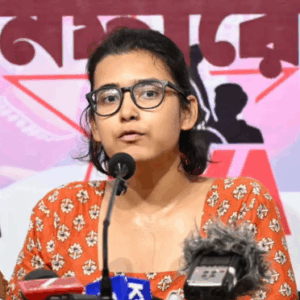
Bora urged protesters to regroup at Dilli Haat after access to Jantar Mantar was restricted. Her call became one of the notable moments of the agitation. Reuters reported that she was detained during the crackdown and later continued encouraging demonstrators to maintain their campaign.
October 11–13: Further detentions and renewed attention
Subsequent reporting described additional detentions and confusion surrounding a protest location where another woman was initially mistaken for Bora.
The Indian Express reported that the woman apprehended at one location was not the AISA president; Bora was later identified at a separate protest location and detained near Vijay Chowk.
This episode illustrates why early social media posts and initial reports should be checked against later updates. In a fast-moving protest, mistaken identity can lead to incorrect claims about who has been detained and where.
By October 13, national news coverage had established Bora as one of the prominent student leaders repeatedly detained during the agitation. Reports also said that many detainees were later released.
The confirmed sequence shows that she was repeatedly detained during demonstrations. It does not, by itself, establish every allegation made by protesters about police conduct or the political motivations behind the restrictions.
What Are the Main Allegations in the Neha Bora Protest Controversy?
The controversy surrounding Bora involves several different claims. Separating them is essential for understanding the story accurately.
The distinction between an allegation and a verified event is especially important when reporting on political activism. A police detention can be documented without automatically proving that police acted unlawfully.
Similarly, an official denial does not automatically establish that every aspect of an incident occurred as authorities describe it.
The same principle applies to electoral disputes. Claims about voter deletions should be examined through official records, independent reporting and any relevant legal findings.
The number of entries removed, the number of eligible voters affected and the reasons for those removals are separate questions. Bora’s activism has placed these issues in public discussion.
Her role in raising them should be distinguished from the independent verification of the claims themselves.
| Issue | What is known | What remains disputed |
|---|---|---|
| Police detention | Multiple news reports confirm that Bora was detained during protests. | Whether every aspect of the police action was lawful has not been established merely by the fact of detention. |
| Seizure of belongings | AISA alleged that Bora’s phone and bag were taken. | Delhi Police denied seizing them. |
| Electoral-roll deletions | Protesters have raised concerns about large-scale deletions during the SIR exercise. | The claim of deliberate, politically motivated voter suppression is disputed by the Election Commission. |
| Restrictions on protests | Police restricted access to protest locations and said permission had not been granted. | The necessity and proportionality of those restrictions are subjects of public debate. |
| Alleged abduction | Activists described the circumstances of Bora’s removal as an abduction. | That description should not be treated as an established criminal finding without supporting legal evidence. |
Neha Bora’s Political Views and Activism
Bora is associated with AISA, a left-wing student organisation. Her public activism focuses on student concerns, education, democratic rights and institutional accountability.
Her speeches frequently connect individual grievances with wider questions about the functioning of public institutions. For example, examination irregularities can be presented as more than an issue affecting individual candidates.
Activists may also argue that such problems raise questions about transparency, fairness and the responsibilities of government departments. Similarly, the current electoral-roll protests have brought together concerns about voter registration, access to democratic participation and the independence of election administration.
Bora’s approach is part of a wider tradition of student activism in India. University students have historically participated in movements concerning education, employment, social justice and national politics.
Some campaigns remain focused on campus issues, while others develop into broader political movements. Her political affiliation is relevant to understanding her position but it should not be used as a substitute for examining the substance of her arguments.
Claims made by activists and responses from government institutions need to be assessed on the available evidence. It is also important to distinguish Bora’s views from those of every participant in the protests.
A demonstration can bring together people with different political backgrounds who share a particular demand without agreeing on every other issue.
Why Has Neha Bora Become So Popular in News Searches?
Several factors explain the increase in public interest in Neha Bora.
1. Repeated detention during protests
Her reported detentions have made her a prominent figure in coverage of the Delhi demonstrations. Images and videos showing activists being taken away by police have circulated widely, attracting attention beyond established student political networks.
2. Her role as an AISA leader
Bora’s position as national president gives her an organisational platform. She is not simply an individual participant in the protests; she represents a student organisation with a wider network of members and supporters.
3. The importance of electoral accountability
Electoral rolls are central to the voting process. Questions about whether eligible voters can register and participate in elections naturally attract significant public interest.
Because the allegations surrounding the SIR exercise are politically contested, the demonstrations have also drawn attention from opposition parties, civil society groups and national media outlets.
4. Her background in theatre
Bora’s transition from theatre to student politics provides a personal dimension to her public profile. Her background helps explain her interest in communication, performance and public engagement.
5. Her participation in earlier student campaigns
Her involvement in protests concerning examination irregularities means that her activism did not begin with the current electoral controversy.
News coverage of her recent activities has prompted readers to look into her earlier campaigns and educational background.
Together, these factors have transformed Bora from a relatively unfamiliar student leader into a nationally discussed figure.
What Does Neha Bora’s Story Say About Student Activism in India?
Bora’s rise highlights the continuing role of student organisations in public debate. Students often experience the effects of education policy, recruitment systems and economic uncertainty directly.
Their campaigns can bring attention to issues that might otherwise receive limited public discussion. Student activism can also create opportunities for young people to learn organisational skills, communicate with the public and participate in democratic processes.
Protests provide one way of expressing disagreement, while petitions, public meetings, legal challenges and dialogue with authorities offer other routes.
At the same time, political demonstrations can become contentious when organisers and authorities disagree about permissions, locations or public order.
Such disputes require careful consideration of both the right to peaceful assembly and the legal framework governing public gatherings.
In a democratic society, peaceful dissent and institutional accountability are important public concerns. Equally, serious accusations against individuals or institutions should be supported by evidence rather than repeated as established facts.
Bora’s story therefore raises questions beyond her personal biography. It concerns how student leaders enter national politics, how protest movements gain visibility and how competing claims are evaluated during a fast-moving public controversy.
Whether the current movement produces lasting political or institutional changes remains uncertain. What is clear is that Bora has become one of its most recognisable student organisers.
View this post on Instagram
FAQ’s
1. Who is Neha Bora?
Neha Bora is an Indian student activist, doctoral scholar at Jawaharlal Nehru University and national president of the All India Students’ Association. She became widely known through her participation in student-led protests concerning examination irregularities and electoral accountability.
2. How old is Neha Bora?
News reports published in October 2026 describe Bora as 29 years old. Her exact date of birth has not been reliably established in the sources referenced here.
3. Where is Neha Bora from?
Bora is from Uttarakhand. Reports state that she moved between places during childhood because her father served in the Indian Army and that she completed her schooling in Bengal.
4. What is Neha Bora studying?
She is a doctoral scholar at the School of Arts and Aesthetics at Jawaharlal Nehru University. Her academic field is theatre and performance studies.
5. Which student organisation does Neha Bora lead?
Bora is the national president of the All India Students’ Association, or AISA, a left-wing student organisation associated with the Communist Party of India (Marxist–Leninist) Liberation.
Conclusion
Neha Bora’s emergence as a prominent student activist reflects the growing visibility of youth-led political movements in India.
A doctoral scholar at JNU and national president of AISA, she has developed a public profile through her involvement in theatre, student organising and campaigns related to education and democratic accountability.
For now, Neha Bora is best understood as one of the visible organisers of a wider student and youth movement.
Her biography offers insight into the person behind the headlines, while the disputed claims surrounding the protests show why balanced reporting and careful verification remain essential.
Also Read: NFL Executive Ernie Accorsi Bio: His NFL Legacy Explained