
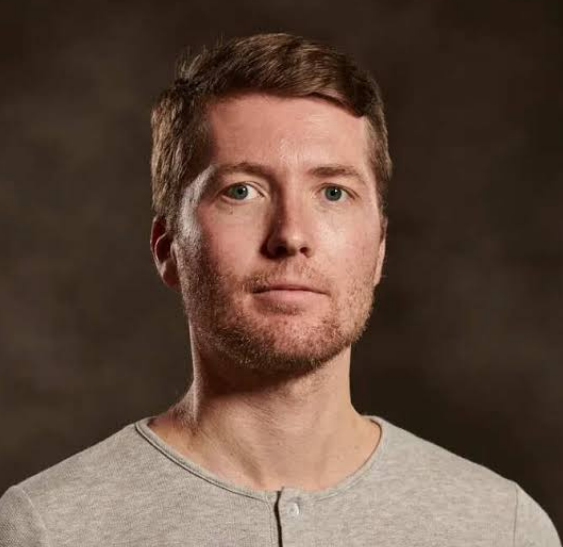
Clément Delangue is a French technology entrepreneur and one of the most recognizable names in the open-source artificial intelligence industry
He is best known as the co-founder and CEO of Hugging Face, a company that grew from a small chatbot project into one of the most important platforms for AI models, datasets and machine learning development.
For many people, Hugging Face is now a familiar name in artificial intelligence.
Developers use the platform to find and share models.
Researchers use it to publish work and datasets. Companies use its tools to build and deploy AI applications.
The company has often been compared with GitHub because of the way it helps developers collaborate around AI technology.
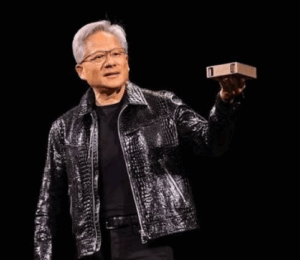
The transaction highlighted how valuable open-weight models and AI developer infrastructure have become.
So who is Clément Delangue? What did he do before Hugging Face? How did he build the company? And why has he become an important personality in the AI industry?
Here is everything you need to know about Clément Delangue.

Also Read: Joel Webbon Biography: Controversy, Backlash and Trolling Wave
Table of Contents
Who Is Clément Delangue?
Clément Delangue is a French entrepreneur, technology executive and AI industry leader. He is the co-founder and CEO of Hugging Face.1
Hugging Face was founded in 2016 by Delangue, Julien Chaumond and Thomas Wolf. The company initially focused on conversational AI through a chatbot.
However, the founders eventually realized that there was a much larger opportunity in machine learning infrastructure and open-source AI. The company moved toward building a platform where developers and researchers could share machine learning models, datasets and applications.
That change became the foundation of Hugging Face’s success. Delangue is particularly associated with the idea that artificial intelligence should be more accessible.
Rather than keeping powerful AI technology behind closed systems, Hugging Face has promoted open-source software, open research and open access to AI resources.
In a 2023 written statement for the U.S. Senate AI Insight Forum, Delangue described Hugging Face as a community-oriented company whose mission was to democratize good machine learning through openness, open science and open source.
That philosophy has remained central to his public identity.
Early Life
Clément Delangue grew up in La Bassée, a small town in northern France. According to a profile published by Sequoia Capital, Delangue was the third child in a family of four children.
His mother worked as a nurse while his father owned a lawnmower shop. His childhood was not surrounded by the technology culture that would later define his career.
Instead, the internet became an important window into the wider world. Delangue has spoken about receiving his first computer when he was around 12 years old.
The experience introduced him to possibilities that were difficult to access from his small hometown. He soon discovered that the internet could also create business opportunities.
As a teenager, he and his older brother started selling imported ATVs and motorbikes through eBay. His online business became successful enough to attract the attention of eBay itself.
By the time he was around 17, Delangue had become one of the prominent French sellers on the platform. This early experience was important because it gave him a combination of technology and business skills.
He was not simply interested in computers. He was interested in what computers could allow people to build. That combination would later become one of the defining features of his career.
It’s now clear that alignment is critical and won’t be solved behind the closed doors of a handful of frontier labs.
So today we’re launching the Open Alignment Initiative, led by @Thom_Wolf @huggingface and asking to be part of the “embedded evaluators” program that… https://t.co/etuzx3NvzJ
— clem 🤗 (@ClementDelangue) September 12, 2026
Education
Delangue studied at ESCP Business School and completed a management degree.
His education also included international experiences. Public profiles list studies connected with institutions including University College Dublin, Universidad Carlos III de Madrid and the Indian Institute of Management Bangalore.
He also completed a Stanford University computer science program through Stanford Engineering Everywhere. His Stanford experience became particularly relevant later.
While working with Julien Chaumond, Delangue took an online Stanford engineering course. The two became part of a study group that also included Thomas Wolf.
That group would eventually become connected to the founding team behind Hugging Face. His educational background shows the unusual combination that has characterized his career.
Delangue was trained in management and business but developed a strong interest in computer science and machine learning.
Stats Table
| Category | Details |
|---|---|
| Full name | Clément Delangue |
| Known as | Clem Delangue |
| Nationality | French |
| Profession | Entrepreneur and technology executive |
| Best known for | Co-founding Hugging Face |
| Current role | Co-founder and CEO of Hugging Face |
| Company founded | Hugging Face |
| Year founded | 2016 |
| Co-founders | Julien Chaumond and Thomas Wolf |
| Hometown | La Bassée, northern France |
| Education | ESCP Business School and Stanford University program |
| Earlier technology company | Moodstocks |
| Previous online business | eBay seller |
| Main industry | Artificial intelligence and machine learning |
| Main focus | Open-source AI and machine learning infrastructure |
| Hugging Face acquisition | Nvidia announced a deal worth about $12.93 billion in 2026 |
| Known for | Promoting accessible and collaborative AI development |
Clement Delangue Career Before Hugging Face
Before Hugging Face, Delangue worked across several startups and technology projects.2
One of the most important steps in his career was his work with Moodstocks. Moodstocks was a computer vision startup focused on technology that could recognize objects through a smartphone camera.
For Delangue, this was an early opportunity to work directly with machine learning. The experience helped him understand how machine learning could change the way software was built.
Moodstocks was eventually acquired by Google in 2016. Delangue also worked in product and marketing roles at several startups.
His background was not limited to engineering. He often operated at the intersection of technology, product development and business.
Before Hugging Face, he was also involved in projects such as VideoNot.es and UniShared. These projects reflected another recurring theme in his career: collaboration.
UniShared was designed to help students share knowledge and take notes collaboratively. The project demonstrated Delangue’s interest in using technology to make information easier to share.
That same idea later appeared on a much larger scale at Hugging Face.

How Did Hugging Face Start?
Hugging Face was founded in 2016. At the beginning, the company was not the AI platform that people know today.
The original idea was to create a conversational chatbot. Delangue and Chaumond wanted to create something more entertaining and engaging than the digital assistants that were popular at the time.
They were interested in natural language processing and believed conversational technology could become much more powerful. Thomas Wolf later joined the founding team.
The name “Hugging Face” came from the popular smiling hugging-face emoji. The name was initially treated almost like a placeholder.
The founders did not necessarily expect it to become the name of a major AI company. But they kept it.
The company eventually became much more interested in the technology behind AI models than in building a consumer chatbot. That was the turning point.
The Hugging Face Pivot
The biggest story in Delangue’s career may be the decision to pivot Hugging Face.
The company shifted away from being primarily a chatbot company and began focusing on machine learning models and developer tools.
This was a major strategic decision. Instead of trying to compete directly with every company building AI applications, Hugging Face created infrastructure for the wider AI community.
The platform allowed researchers and developers to share models and datasets. It also provided tools that made machine learning easier to access.
This helped Hugging Face become something like a collaborative home for AI developers. The company eventually became associated with the Transformers library and a growing ecosystem of models and datasets.
As generative AI became mainstream, the importance of this infrastructure increased dramatically.

What Is Hugging Face Known For?
Hugging Face is known for providing tools and infrastructure for artificial intelligence and machine learning.
Its platform allows developers and researchers to discover, share and work with AI models and datasets. One of its best-known contributions is the Transformers ecosystem.
Transformers became a major part of modern natural language processing and later played an important role in the broader generative AI revolution.
Hugging Face also hosts models from a wide range of organizations and independent developers. This means that the platform is not tied to one single AI model.
Instead, it acts as a broader ecosystem. That distinction is important when understanding Delangue’s role in the AI industry.
He is not primarily known as the scientist behind one famous AI model.
His influence comes from building infrastructure that allows thousands of other researchers and developers to create, share and use AI.
Also Read: Why Marco Rubio Is Talking About RFK Jr.’s Diet?
Clement Delangue And Open-Source AI
Open-source AI is one of the most important parts of Delangue’s public identity.3
He has repeatedly argued for greater openness in artificial intelligence. His position is that developers and researchers should have access to AI models and tools rather than relying entirely on closed platforms.
This does not mean Delangue believes every part of AI development should be completely unrestricted. Instead, his approach emphasizes transparency, collaboration and wider access.
Hugging Face has become one of the most visible companies supporting this model. The company hosts open models and datasets while providing infrastructure for developers.
This has also made Delangue an important voice in debates about the future of AI.
Clement Delangue And AI Safety
Delangue has also participated in discussions about AI regulation and safety. In 2023, he provided written testimony for the U.S. Senate AI Insight Forum.
He emphasized the importance of coordination across industries and areas of expertise as AI technology develops. His views are especially relevant because open AI systems create both opportunities and challenges.
Greater access can encourage innovation. It can also make powerful technology easier for more people to use. That creates complicated questions around responsibility, safety and governance.
Delangue has therefore become part of a wider conversation involving technology companies, researchers and policymakers.
In 2026, he was again involved in public discussions about AI safety as industry leaders debated the pace of AI development and the potential risks of increasingly powerful systems.

Clement Delangue And Nvidia’s Hugging Face Acquisition
One of the biggest developments in Delangue’s career came in September 2026. Nvidia announced that it would acquire Hugging Face for approximately $12.93 billion.
The deal was significant because Hugging Face was not primarily known for manufacturing chips or developing a single frontier AI model.
Instead, it had become a major part of the infrastructure surrounding AI development. The acquisition showed how important open-weight AI and developer ecosystems had become.
Nvidia has become one of the most powerful companies in the AI hardware market. Bringing Hugging Face into the company gives Nvidia a much deeper connection to the developers and researchers building AI applications and models.
For Delangue, the deal represents a remarkable transformation. What started as a chatbot project in 2016 grew into a major AI platform that attracted a multibillion-dollar acquisition.
Why Is Clement Delangue Trending In 2026?
There are several reasons why searches for Clement Delangue have increased in 2026.
The biggest reason is the growing importance of Hugging Face. The company has moved from being a niche machine learning platform to a central part of the global AI ecosystem.
The Nvidia acquisition has also put Delangue and the company’s founders back in the spotlight. The deal has raised questions about the future of open-source AI and whether Hugging Face will remain independent in its mission while operating under Nvidia.
Delangue has also continued to speak publicly about AI development and safety. His comments are followed by developers, investors and technology enthusiasts because Hugging Face sits at an important point in the AI ecosystem.
For people searching for AI personalities beyond the better-known names such as Sam Altman, Jensen Huang or Demis Hassabis, Delangue represents a different side of the industry.
He is a founder focused heavily on infrastructure, open models and developer communities.
What Makes Clement Delangue Different From Other AI CEOs?
One of the biggest differences is that Delangue did not build his reputation around a single consumer-facing AI product.
Instead, he helped create an ecosystem. That ecosystem has become useful to developers working with many different types of AI.
His background also combines business experience with technical curiosity. He started selling products online as a teenager.
He worked with startups. He became interested in computer vision. He learned more about computer science.
Then he built a company around machine learning and open collaboration. That path is unusual.
It also explains why Delangue often speaks about AI as infrastructure rather than simply as a consumer product.

Is Clement Delangue Married?
Details about Delangue’s private family life are not widely documented in reliable public sources. His professional work and technology interests receive far more attention than his personal relationships.
As a result, it is better not to treat unverified online claims about his spouse or family as established facts.
What Is Clement Delangue’s Vision For AI?
Delangue’s vision is strongly connected to openness. He has argued that AI should not become a technology controlled only by a small number of companies.
Hugging Face’s mission has been built around giving developers access to models, datasets and tools. His approach is based on the idea that collaboration can accelerate technological progress.
The rise of open-weight models has made that argument increasingly important. AI is now being used in research, business, education, healthcare, robotics and many other areas.
The debate about who should control these systems is likely to become even more important. Delangue’s career places him directly in the middle of that debate.
Why Is Hugging Face Important To AI?
Hugging Face matters because modern AI development depends on more than large companies building giant models.
Developers need models. They need datasets. They need libraries. They need tools for testing and deployment.
They need communities where researchers can share discoveries. Hugging Face provides much of this infrastructure.
That is why the company’s influence can sometimes be greater than its public visibility suggests.
A person may use an AI application without ever hearing about Hugging Face while the developers behind that application may rely heavily on Hugging Face tools.
This is one reason Delangue has become an important niche AI personality.
View this post on Instagram
FAQ’s
Who is Clement Delangue?
Clément Delangue is a French technology entrepreneur and the co-founder and CEO of Hugging Face. He is known for promoting open-source AI and building infrastructure for machine learning developers and researchers.
What is Clement Delangue famous for?
He is best known for co-founding Hugging Face in 2016 with Julien Chaumond and Thomas Wolf. The company became one of the world’s most important platforms for AI models, datasets and machine learning tools.
How old is Clement Delangue?
Reliable major sources do not consistently publish a confirmed birth date for Delangue. Some online biography sites list a specific birth date but this information is not sufficiently supported by high-quality primary sources. It is therefore safer not to state an exact age as confirmed fact.
Where is Clement Delangue from?
Clement Delangue is from La Bassée in northern France. He grew up there before pursuing his education and technology career.
What did Clement Delangue do before Hugging Face?
Before Hugging Face, Delangue worked with startups and technology projects. He was involved with Moodstocks, a computer vision company that was later acquired by Google. He also worked in product and marketing roles and was involved with projects including VideoNot.es and UniShared.
Conclusion
Clément Delangue has become one of the most interesting personalities in the modern AI industry because his career represents a different path to influence.
He did not become famous by creating a single consumer chatbot or launching one of the world’s biggest frontier AI models.
Instead, he helped build the infrastructure that allows other people to build AI. His journey began in northern France where he discovered the internet as a teenager. His early experience selling products on eBay taught him about online business.
As the AI industry continues to evolve, Clement Delangue is likely to remain a name worth watching.
His influence comes not only from running Hugging Face but from helping shape the infrastructure and philosophy behind the open AI movement.
Also Read: Angela Nikolau Age, Bio, Career, Relationship and Net Worth 2026