

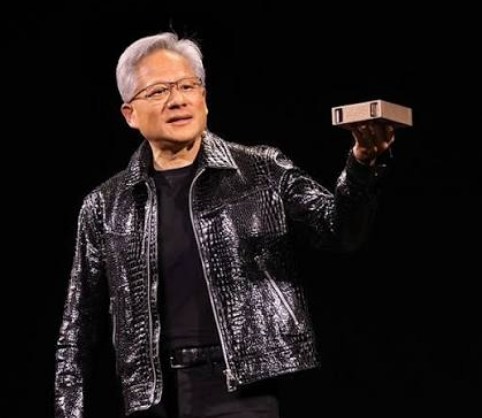
Jensen Huang is one of the most important names in the global technology industry. As the founder, president and CEO of NVIDIA, Huang has played a major role in turning graphics processors into the computing engine behind the modern artificial intelligence boom
His name often appears whenever the AI industry enters a major new phase.
NVIDIA’s chips power many of the world’s largest AI systems.
As companies invest billions of dollars in data centers and AI infrastructure, attention naturally turns to Huang and the company he has led since 1993.
Huang is also notable because he has remained NVIDIA’s chief executive since the company was founded.
NVIDIA’s Blackwell platform has been followed by new generations of computing technology and the company is increasingly presenting itself as a full-stack AI infrastructure company rather than simply a chipmaker.
So who is Jensen Huang? What is his background? How did he build NVIDIA? And why has he become such a central figure in the AI revolution?
Let’s take a closer look.
Also Read: Priya Patel Bio: Viral Fame, Controversy and Global Reactions
Table of Contents
Who Is Jensen Huang?
Jensen Huang is the founder and CEO of NVIDIA. His full name is Jen-Hsun Huang. He was born in Taiwan in 1963 and later moved to the United States.1
Huang studied electrical engineering at Oregon State University. He later earned a master’s degree in electrical engineering from Stanford University.
His engineering background became important throughout his career. Rather than approaching NVIDIA purely as a business opportunity, Huang helped shape the company’s technology strategy around a long-term vision for accelerated computing.
In 1993 Huang co-founded NVIDIA with Chris Malachowsky and Curtis Priem. The company initially focused on computer graphics and the emerging market for graphics processors.
At the time, NVIDIA was far from being the technology giant it is today. The company was competing in a difficult semiconductor industry where technological changes could quickly make products obsolete.
Huang’s decision to stay focused on accelerated computing eventually became one of the defining choices of his career.
NVIDIA’s own corporate history states that the company was founded on April 5, 1993 with a vision of bringing 3D graphics to gaming and multimedia markets.
In 1999 NVIDIA introduced the GPU and later opened up the parallel processing capabilities of GPUs through CUDA in 2006. Those developments eventually helped NVIDIA move beyond gaming.
NVIDIA compute is fungible, durable and highly rentable. It is a productive, revenue-generating asset. https://t.co/cvmjaNoiK8
— Jensen Huang (@JensenHuang) September 8, 2026
Early Life and Education
Jensen Huang was born in Tainan, Taiwan in 1963. His early childhood included time in Taiwan and Thailand before he moved to the United States.
His family eventually settled in the United States. Huang attended school in Kentucky before studying electrical engineering at Oregon State University.
After completing his undergraduate studies, Huang continued his education at Stanford University. He earned a master’s degree in electrical engineering.
His technical education gave him a strong foundation in computer architecture and semiconductor technology. That knowledge would become valuable when the personal computer industry began demanding better graphics performance.
Huang’s career also shows how important timing can be in technology. When NVIDIA was founded in 1993, computer graphics were becoming increasingly important to personal computers and video games.
The company saw an opportunity to create specialized processors that could handle graphics calculations more efficiently. That idea eventually became the foundation for NVIDIA’s GPU business.
Stats Table
| Category | Details |
|---|---|
| Full name | Jen-Hsun Huang |
| Common name | Jensen Huang |
| Born | 1963 |
| Birthplace | Tainan, Taiwan |
| Profession | Technology executive and entrepreneur |
| Company | NVIDIA |
| Position | Founder, President and CEO |
| NVIDIA founded | 1993 |
| Co-founders | Chris Malachowsky and Curtis Priem |
| Undergraduate degree | Electrical Engineering |
| University | Oregon State University |
| Graduate degree | Master’s in Electrical Engineering |
| Graduate school | Stanford University |
| Industry | Semiconductors and technology |
| Major focus | GPUs, accelerated computing and AI |
| NVIDIA fiscal 2026 revenue | $215.9 billion |
| NVIDIA fiscal 2026 Data Center revenue | $193.7 billion |
| Major recent platform | Blackwell |
| Next-generation platform highlighted by NVIDIA | Rubin |
How Jensen Huang Founded NVIDIA
Jensen Huang founded NVIDIA in 1993 alongside Chris Malachowsky and Curtis Priem. The company’s original focus was very different from its current position in artificial intelligence. 2
NVIDIA was created around the idea of improving computer graphics and developing specialized chips for visual computing.
The company entered the market at a time when 3D graphics were becoming increasingly important in PC gaming. NVIDIA eventually introduced the GeForce product line which helped establish the company as a major force in gaming graphics.
But Huang did not want NVIDIA to remain only a gaming company. He believed GPUs could be useful for other forms of computing because they could perform many calculations simultaneously.
That became increasingly important for scientific research and eventually for machine learning. The introduction of CUDA was a major step in that direction.
CUDA allowed developers to use NVIDIA GPUs for general-purpose parallel computing. Over time it helped create a large software ecosystem around NVIDIA’s hardware.
That ecosystem later became one of NVIDIA’s biggest advantages in artificial intelligence.
Jensen Huang and the Rise of AI
The modern AI boom did not happen overnight for NVIDIA. The company had spent years developing GPUs and software that could handle highly parallel workloads.
When researchers discovered that GPUs were extremely effective for training neural networks, NVIDIA was already positioned to benefit. The 2012 breakthrough involving deep learning helped accelerate this trend.
As AI models became larger, researchers needed more computing power. NVIDIA GPUs became widely used for AI training and inference.
The company’s hardware was only one part of the story. CUDA and the wider NVIDIA software ecosystem also became important because developers could build applications around NVIDIA’s computing platform.
This is one reason Huang is often described as more than a semiconductor CEO. His strategy has been to build an entire computing platform around NVIDIA’s chips.
NVIDIA now describes itself as a full-stack computing company with hardware, networking, software and AI platforms.

Why Jensen Huang Is So Important to the AI Industry
Huang’s importance comes largely from NVIDIA’s position in AI infrastructure. Large AI models require enormous amounts of computing power.
Training and running these models can require thousands or even millions of processors working together. NVIDIA provides GPUs as well as networking technology, software and complete computing systems designed for these workloads.
This has made NVIDIA one of the most important suppliers to cloud companies, AI laboratories and large technology businesses. Huang is also a prominent communicator for the AI industry.
His keynote presentations at NVIDIA events often become major technology news stories because he uses them to explain the company’s vision for the next stage of computing.
At GTC 2026, NVIDIA highlighted accelerated computing, AI factories, open models, agentic systems and physical AI as major areas of development. This helps explain why searches for Jensen Huang often rise during major AI announcements.
When NVIDIA announces a new chip platform or major partnership, Huang is usually one of the most visible people explaining what it means.
Jensen Huang and NVIDIA’s Blackwell Generation
One of the biggest recent chapters in Huang’s career has been NVIDIA’s Blackwell platform.
Blackwell was designed for large-scale AI workloads. It became a major part of NVIDIA’s strategy as companies invested heavily in generative AI infrastructure.
NVIDIA’s fiscal 2026 results showed just how large this business had become. The company reported fiscal 2026 revenue of $215.9 billion.
That represented a 65 percent increase from the previous year. Data Center revenue for the full fiscal year reached $193.7 billion.
These figures illustrate why Huang is now closely associated with the AI infrastructure boom. NVIDIA is no longer primarily viewed as a company that sells graphics cards for gamers.
Its data center business has become the central engine of its growth.
Also Read: Klaudia Zakrzewska Bio: Age, Career and London Crash Details
Jensen Huang and the Next AI Chip Cycle
The AI industry changes quickly. New processors and computing platforms can become major stories within months. Huang has continued to position NVIDIA around this rapid cycle.3
NVIDIA’s fiscal 2026 results highlighted the Rubin platform as the company’s next major computing architecture.
The company said Rubin was designed to reduce inference costs compared with the Blackwell platform. This is important because AI is moving beyond model training.
Running AI models for billions of users can require enormous amounts of computing power. As companies deploy AI agents and other AI applications, inference becomes a major part of the infrastructure challenge.
Huang has increasingly talked about AI as infrastructure rather than simply software. In a 2026 NVIDIA article, he described AI as infrastructure comparable in importance to electricity and the internet.
That view explains much of NVIDIA’s current strategy.
Jensen Huang’s Leadership Style
Huang has developed a distinctive public image. He is often seen wearing his trademark black leather jacket during NVIDIA events.
His keynote presentations have become highly anticipated events within the technology industry. But his leadership style is not simply about public appearances.
Huang has remained closely involved with NVIDIA’s long-term technology direction. He has repeatedly pushed the company toward markets that were initially uncertain.
The move from gaming graphics to accelerated computing was one such decision. The investment in CUDA was another.
The company’s focus on AI before generative AI became mainstream was also significant. This long-term approach is one of the main reasons Huang’s career is frequently studied as an example of technology leadership.

Jensen Huang’s Major Achievements
Huang’s career includes several major milestones.
Founding NVIDIA
Huang co-founded NVIDIA in 1993 and has remained its CEO since the beginning. That level of continuity is unusual for a major technology company.
Building the GPU Business
Under Huang’s leadership, NVIDIA became one of the world’s leading GPU companies. Its graphics processors became widely used in gaming and professional visualization.
Promoting CUDA
CUDA helped turn NVIDIA’s GPUs into general-purpose computing platforms. The software ecosystem became a major competitive advantage as demand for AI computing increased.
Leading NVIDIA Into AI
Huang positioned NVIDIA to benefit from the growing demand for machine learning and deep learning. As generative AI became mainstream, NVIDIA was already supplying the hardware and software needed to build large AI systems.
Expanding Beyond Gaming
NVIDIA now operates across data centers, gaming, professional visualization, automotive and robotics. The company’s fiscal 2026 results showed record revenue across several of these areas.
Jensen Huang’s Personal Life
Jensen Huang is married to Lori Huang. The couple met while they were students and later married. They have two children.
Huang generally keeps much of his personal life away from the spotlight. His public profile is dominated by NVIDIA, technology and AI.
He and Lori Huang have also been involved in philanthropy. Their foundation has supported initiatives in areas including healthcare and education.
Despite becoming one of the most recognizable technology CEOs in the world, Huang has maintained a relatively focused public identity around engineering and NVIDIA.
Why Jensen Huang Trends During AI News
There is a simple reason Jensen Huang often becomes a trending name during major AI developments. NVIDIA sits at the center of the AI hardware supply chain.
When a major AI company announces a new data center project, when a new GPU architecture is introduced or when investors debate AI spending, NVIDIA is usually part of the conversation. That naturally brings Huang into the spotlight.
His keynote speeches also generate significant attention. A major NVIDIA presentation can include new processors, partnerships, software platforms and predictions about the future of AI.
In 2026, NVIDIA continued expanding its AI infrastructure strategy through partnerships and new platforms. The company also highlighted areas such as agentic AI and physical AI.
This makes Huang a useful person to follow for anyone trying to understand where the AI chip cycle is heading.
Jensen Huang’s Vision for the Future
Huang believes artificial intelligence will become part of almost every industry. That means NVIDIA’s opportunity is not limited to technology companies.
AI can be used in healthcare, manufacturing, finance, robotics, transportation, scientific research and many other fields.
NVIDIA is therefore building technology that supports both digital AI and physical AI. Physical AI refers to systems that interact with the real world. Robots and autonomous machines are examples.
NVIDIA has been developing platforms for robotics and autonomous vehicles as part of this broader strategy. The company’s fiscal 2026 announcements included new robotics platforms and partnerships with industrial companies.
Huang’s larger vision is that accelerated computing will become a basic layer of modern infrastructure. If that prediction proves correct, NVIDIA could remain an important company for many years.
View this post on Instagram
FAQ’s
Who is Jensen Huang?
Jensen Huang is the founder, president and CEO of NVIDIA. He co-founded the company in 1993 with Chris Malachowsky and Curtis Priem and has remained its CEO since its founding.
How old is Jensen Huang?
Jensen Huang was born in 1963. He is 63 years old in 2026.
Where was Jensen Huang born?
Jensen Huang was born in Tainan, Taiwan.
What is Jensen Huang’s real name?
His full name is Jen-Hsun Huang. He is widely known professionally as Jensen Huang.
What did Jensen Huang study?
Huang studied electrical engineering at Oregon State University. He later earned a master’s degree in electrical engineering from Stanford University.
Conclusion
Jensen Huang is much more than the CEO of a successful semiconductor company. He is one of the central figures in the modern AI revolution. His journey began in 1993 when he co-founded NVIDIA with a vision focused on computer graphics.
Over the following decades, he helped transform the company from a graphics chip developer into a major accelerated computing and AI infrastructure company. The importance of that transformation can be seen in NVIDIA’s recent financial results.
Today, Huang is one of the most recognizable leaders in technology. Whenever the AI chip market accelerates or NVIDIA announces a major new platform, his name is likely to appear alongside the story.
As AI moves toward agentic systems, robotics, autonomous machines and increasingly powerful data centers, Jensen Huang’s role will remain closely connected to the next stage of computing.
Also Read: Who Is Alex Stein? Full Bio, Viral Moments and Latest Controversy