

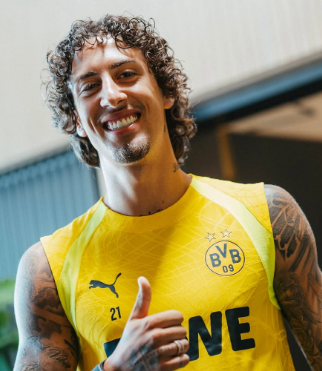
Football fans across Europe are paying close attention to Fabio Silva. Once known mainly as a talented youngster from Porto, he is now becoming one of Portugal’s most talked-about forwards
Every strong performance brings more attention and raises an important question: can Fabio Silva become Portugal’s next leading striker?
Portugal has produced some of the world’s finest footballers. While Cristiano Ronaldo remains a legendary figure, the national team must eventually look toward the future.
Several young attackers are competing for that role and Fabio Silva is among the most promising names.
His journey has not always been smooth. He faced pressure at a young age, moved between different clubs and dealt with criticism.
However, his recent performances have shown clear signs of growth. His goal-scoring ability, movement and maturity are helping him earn recognition across Europe.
In this article, we will explore who Fabio Silva is, his career journey, key statistics, strengths, weaknesses and whether he has what it takes to become Portugal’s next leading striker.
Also Read: Joel Webbon Biography: Controversy, Backlash and Trolling Wave
Table of Contents
Who Is Fabio Silva?
Fabio Daniel Soares Silva is a Portuguese professional footballer born on July 19, 2002, in Porto, Portugal.1
He plays as a striker and has been considered one of Portugal’s brightest young talents since his teenage years.
Silva came through the youth system at Porto and quickly attracted attention because of his technical skills and natural finishing ability.
He made history by becoming one of the youngest players to represent Porto’s first team.
His rapid rise convinced Wolverhampton Wanderers to sign him in 2020 for a club-record fee.
The move to England brought huge expectations. While he showed flashes of quality, adapting to the Premier League at such a young age proved difficult.
To gain more experience, Silva spent time on loan with Anderlecht, PSV Eindhoven, Rangers and Las Palmas. These spells helped him develop physically and mentally.
One of the most important periods of his career came with Las Palmas. Despite the club’s struggles, Silva scored regularly and established himself as the team’s leading scorer.
His performances helped rebuild confidence and reminded many observers why he was once regarded as one of Europe’s best young forwards.
He later earned opportunities with Portugal’s senior national team and continued attracting interest from top European clubs.
His development has placed him firmly among Portugal’s most exciting attacking prospects.
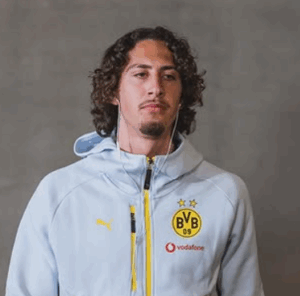
🚨🟡⚫️ Fabio Silva to Borussia Dortmund, here we go! Deal in place with all parties as medical has been booked.
Fee over €25m package agreed with Wolves as BVB win race over several clubs also in Italy, as @TheAthleticFC reports.
Five year deal for Silva at BVB. 🇵🇹 pic.twitter.com/La6FikeZkC
— Fabrizio Romano (@FabrizioRomano) August 27, 2025
Quick View
| Detail | Information |
|---|---|
| Full Name | Fábio Daniel Soares Silva |
| Date of Birth | 19 July 2002 |
| Age | 23 |
| Nationality | Portuguese |
| Birthplace | Porto, Portugal |
| Position | Centre-Forward |
| Height | 1.85 m (6 ft 1 in) |
| Preferred Foot | Right |
| Current Club | Borussia Dortmund |
| National Team | Portugal |
| Market Value | €22 million (approx.) |
Fabio Silva’s Career Journey
Early Days at Porto
Silva’s football education began at Porto.2
He progressed through the academy system and quickly stood out due to his intelligence in front of goal. Coaches praised his composure and ability to find scoring positions.
He made his professional debut as a teenager and helped Porto win domestic trophies during the 2019-20 season.
Even though he was very young, his performances showed he could compete at a high level.
Wolverhampton Wanderers Move
In 2020, Wolves invested heavily in Silva. The transfer fee created significant pressure because expectations immediately became very high.
The Premier League is one of the most demanding leagues in the world. Silva was still developing physically and often faced experienced defenders.
While he scored some important goals, consistency was difficult to achieve.
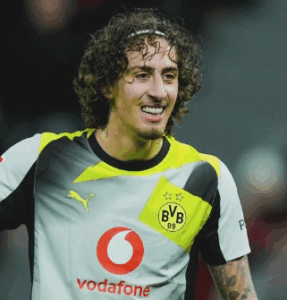
Valuable Loan Experiences
Rather than remaining on the bench, Silva gained experience through several loan moves.
At Anderlecht, he showed improvement in front of goal and scored regularly.
He later joined PSV Eindhoven and contributed to the team’s success. His spell at Rangers brought mixed results but provided valuable experience in a demanding environment.
The biggest breakthrough came during his loan spell with Las Palmas.
He scored 10 league goals and became the club’s top scorer. Even though the team struggled overall, Silva’s performances earned praise from fans and analysts.
Continued Development
Recent seasons have shown a more mature version of Fabio Silva.
He appears stronger, more confident and more capable of handling pressure.
His movement inside the penalty area has improved and his overall contribution to team play continues to grow.
Career Stats
| Club | Appearances | Goals |
|---|---|---|
| Porto | 21 | 3 |
| Wolverhampton Wanderers | 73 | 5 |
| Anderlecht (Loan) | 32 | 11 |
| PSV Eindhoven (Loan) | 19 | 5 |
| Rangers (Loan) | 25 | 6 |
| Las Palmas (Loan) | 25 | 10 |
| Borussia Dortmund | 38 | 3 |
| Career Total | 236 | 43 |
Why Is Fabio Silva Getting More Attention?
Several factors explain why Silva is receiving more attention with each appearance.
Improved Goal Scoring
Strikers are judged by goals and Silva has shown greater consistency in front of goal during recent seasons. His success at Las Palmas demonstrated that he can lead an attack and score regularly.
Better Decision Making
Young forwards often struggle with decision making. Silva has become calmer in key moments. He chooses better positions and makes smarter runs inside the penalty area.
Increased Experience
Many people forget how young Silva still is.
Despite his age, he has already played in Portugal, England, Belgium, the Netherlands, Scotland, Germany and Spain.
That experience has accelerated his development.
International Recognition
Representing Portugal at senior level has increased his profile. National team involvement naturally places players under greater attention and scrutiny.
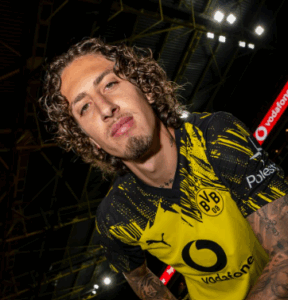
Strengths That Could Make Him Portugal’s Main Striker
Natural Finishing Ability
Silva has always possessed strong finishing skills. He can score with either foot and remains composed when facing goalkeepers.
Smart Movement
One of his biggest strengths is movement off the ball. He understands how to create space and find dangerous areas inside the box.
Technical Quality
Unlike traditional target strikers, Silva is comfortable linking play. He can combine with teammates and contribute during attacking build-up phases.
Work Rate
Recent reports have highlighted his effort and commitment. Coaches value players who contribute both with and without the ball.
His willingness to press defenders and work for the team makes him more complete.
Adaptability
Playing in multiple countries has helped Silva adapt to different tactical systems and styles of football.
This flexibility could prove valuable for Portugal.
Also Read: Ruby Franke Biography: Arrest Updates and Current Life Status
Areas Where He Still Needs Improvement
Consistency
The biggest challenge is maintaining high performance levels over a full season. Top strikers score regularly year after year.
Physical Presence
Silva has improved physically but can still become stronger. International football often requires forwards to battle powerful defenders.
Goal Numbers at Elite Level
Although his recent form is encouraging, he still needs to produce more goals at top clubs and major competitions.
Leading international strikers usually deliver impressive numbers every season.
Handling Pressure
Portugal fans expect excellence. Any player hoping to replace legendary forwards must learn to manage enormous expectations.
Competition for Portugal’s Striker Role
Silva is not the only talented Portuguese attacker.3
Portugal has several exciting forwards competing for opportunities. This competition can be challenging but also beneficial because it pushes players to improve.
National team coaches will select players based on form, consistency and tactical needs.
Silva must continue proving that he deserves a regular place in the squad. The good news for him is that age is on his side.
At just 23 years old, he still has many years to develop further.
Can Fabio Silva Replace Cristiano Ronaldo’s Influence?
Comparing any player to Cristiano Ronaldo is difficult.
Ronaldo is one of the greatest footballers in history. His goal records, leadership and longevity are extraordinary.
Expecting Silva to replicate those achievements would be unrealistic. However, Portugal does not necessarily need another Ronaldo.
The team needs a reliable striker who can score goals, contribute to team play and perform in major tournaments.
Silva’s objective should not be becoming the next Ronaldo. Instead, he should focus on becoming the best version of himself.

What Experts and Observers Are Saying
Many football analysts believe Silva’s recent progress is encouraging.
His successful spell at Las Palmas helped restore confidence and showed he can perform as a leading attacking player.
Reports surrounding his development suggest coaches appreciate his work rate and overall contribution even when he is not scoring.
His move through several European leagues has also given him valuable experience that many players his age do not possess.
This broad football education could become a major advantage as he enters his peak years.
Can Fabio Silva Become Portugal’s Next Leading Striker?
The answer is yes but several factors will determine whether it happens.
Silva clearly possesses talent. His technical ability, finishing, movement and growing maturity make him a strong candidate for a major role with Portugal.
His recent improvement suggests he is moving in the right direction. More importantly, he appears to be learning from previous challenges rather than being discouraged by them.
To become Portugal’s leading striker, he must continue scoring goals consistently, perform well in major competitions and establish himself as a regular starter at club level.
If he achieves those objectives, there is every reason to believe he can become one of Portugal’s most important attacking players over the next decade.
FAQ’s
How old is Fabio Silva?
Fabio Silva was born on July 19, 2002. He is one of Portugal’s most promising young forwards.
What position does Fabio Silva play?
He primarily plays as a striker but can also operate in other attacking roles when needed.
Which clubs has Fabio Silva played for?
He has played for Porto, Wolverhampton Wanderers, Anderlecht, PSV Eindhoven, Rangers, Las Palmas and Borussia Dortmund.
Why is Fabio Silva receiving more attention?
His recent performances, improved goal-scoring record, growing experience and involvement with Portugal’s national team have increased his profile.
Did Fabio Silva play for Portugal’s senior team?
Yes. Silva earned opportunities with Portugal’s senior national team after progressing through the youth levels.
Can Fabio Silva become Portugal’s main striker?
Yes. He has the talent and potential. However, he must continue improving and produce consistent performances at both club and international levels.
Conclusion
Fabio Silva’s career has been a story of talent, expectations, challenges and growth.
Few players experience so much attention at such a young age. While his path has not always been straightforward, he has shown resilience and determination throughout his journey.
His performances in recent seasons have reminded football fans why he was considered one of Europe’s brightest prospects.
Better finishing, increased maturity and valuable experience across multiple leagues have strengthened his reputation.
Can Fabio Silva become Portugal’s next leading striker? The possibility is certainly real. He has the qualities needed to succeed and continues to improve with every season.
If his development continues at the current pace, Portugal may have found one of the key figures for its next generation.
Also Read: FouseyTube Bio: Rise, Fall and the Ongoing Cycle of Comebacks