

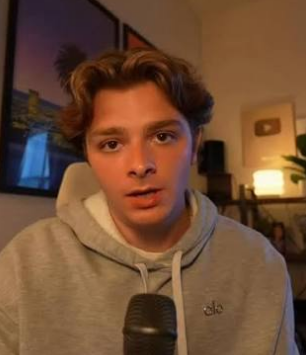
The internet has created a new kind of celebrity. Some creators become household names after appearing in movies, television shows or major music releases. Others build huge audiences without becoming widely recognized outside online communities. John Casterline is a good example of the second group
Known online as H1T1, John Casterline is an American digital creator who has built a large following through comedy, commentary and short-form storytelling.
His content often focuses on internet culture, strange online stories, social media trends and other subjects that catch the attention of online audiences.
As of 2026, third-party YouTube tracking services place his channel at more than 8 million subscribers and more than 11 billion total views.
These figures can change over time but they show the scale of his online audience.
So who is H1T1? What is John Casterline known for? How did he become popular? And why does a creator who is still relatively unknown outside internet circles have such a large online audience?
Here is a closer look at his background, career and content.

Also Read: Klaudia Zakrzewska Bio: Age, Career and London Crash Details
Table of Contents
Who Is H1T1?
H1T1 is the online name of John Casterline. He is an American content creator known for comedy videos, commentary and internet-focused storytelling.1
His official website identifies him simply as John Casterline and H1T1. His YouTube channel also operates under the H1T1 name. Casterline was born in Florida on August 25, 2003.
Public biography sources list him as an American creator and social media personality. He began exploring social media at a young age and gradually developed an understanding of how online platforms work.
According to IMDb’s biography, Casterline became involved with social media when he was young and later leaned into TikTok as the platform became increasingly popular.
The same biography describes him as a digital creator known for short storytelling and commentary videos.
His career is interesting because it did not begin with a major media company or traditional entertainment opportunity.
Like many modern internet creators, Casterline developed his audience by publishing directly to social media.
His content has changed over the years. He has experimented with comedy sketches, short videos, commentary and longer storytelling. This ability to adapt has been an important part of his growth.
Viewmaxxing rn (plz don’t mog me @MrBeast) pic.twitter.com/iAREIWD76x
— john casterline (@h1t1official) May 11, 2026
Early Life and Interest in Social Media
John Casterline’s interest in social media started earlier than his professional creator career.
IMDb reports that his interest in social media began when he was around eight years old. Other biographical sources say he was already involved in managing social media accounts for a boutique art gallery at around age 12.
That early experience may help explain why Casterline developed an understanding of social media before becoming a recognizable creator himself.
For many young users social media starts as entertainment. For Casterline it eventually became something more. He learned about posting content, audience behavior and the importance of finding subjects that people want to watch.
This experience became especially useful when short-form video platforms began growing rapidly.
Instead of treating social media as a simple place to post random videos, Casterline gradually approached it as a creative and business opportunity.

How Did H1T1 Become Famous?
H1T1’s rise was closely connected to TikTok and YouTube.
Casterline began posting on TikTok under the H1T1 name and gained attention through comedy-focused videos. His content included short sketches, observations and commentary about things happening online.
His style worked well with short-form platforms because his videos could quickly establish a subject and deliver a joke or observation without requiring a long introduction.
The creator also moved into YouTube. His H1T1 YouTube channel was created on November 6, 2020. Current tracking information shows that the channel has grown to more than 8 million subscribers and more than 11 billion views.
The growth was not immediate. In a post on LinkedIn, Casterline explained that he once averaged only about 25 views per video for more than six months.
He said he was posting almost daily during that period. Eventually his persistence started producing results.
That story is important because it shows that his career was not simply an overnight viral success.
The early stage involved repeated uploads, experimentation and a willingness to continue even when the numbers were small.
His YouTube channel later passed major milestones. Public channel tracking records show that the channel reached one million subscribers in 2022 and continued through several additional milestones before passing eight million subscribers in 2026.
Stats Table
| Category | Details |
|---|---|
| Full name | John Casterline |
| Online name | H1T1 |
| Date of birth | August 25, 2003 |
| Birthplace | Florida, United States |
| Nationality | American |
| Profession | Content creator and social media personality |
| Main content | Comedy, commentary and storytelling |
| YouTube channel | H1T1 |
| YouTube joined | November 6, 2020 |
| YouTube subscribers | More than 8 million in 2026 |
| YouTube views | More than 11 billion in 2026 |
| YouTube videos | More than 2,500 in current tracking data |
| TikTok followers | More than 3.7 million according to Famous Birthdays |
| TikTok likes | More than 250 million according to Famous Birthdays |
| Main platforms | YouTube and TikTok |
| Known for | Comedy, internet commentary and viral storytelling |
What Type of Content Does H1T1 Make?
H1T1 is best known for comedy and commentary content.2
His videos often revolve around things happening on the internet. That can include unusual trends, strange stories, online personalities, questionable products, scams or moments that become popular across social media.
Rather than presenting these topics as traditional news reports, Casterline usually approaches them through humor.
That combination is one of the main reasons his content is easy to recognize.
His videos can feel like short internet documentaries with comedic narration. The subject may be strange or serious but the presentation often remains casual and humorous.
A typical H1T1 video can include screenshots, clips, commentary and visual jokes. The editing helps keep the story moving quickly.
This is particularly useful on YouTube Shorts and TikTok where viewers can leave a video within seconds.
H1T1’s Comedy Style
Comedy is a major part of Casterline’s identity as a creator. His humor often comes from treating strange internet situations as if they deserve a much deeper investigation than they probably do. That contrast creates part of the joke.
He can take an unusual online trend and build a story around it. The humor then comes from the narration, timing and absurdity of the situation.
This style also allows him to discuss internet culture without making every video feel like a serious commentary piece.
His comedy can be described as internet-native. It relies on references and situations that viewers who spend a lot of time online are likely to understand.
That makes his content particularly suited to younger digital audiences.
At the same time, the structure is simple enough for a new viewer to understand what is happening.

H1T1 and Internet Commentary
Commentary has become another important part of John Casterline’s content.
Rather than simply producing jokes, he often examines something that is already happening online and gives viewers his own perspective.
His subjects can include internet personalities, trends and unusual online behavior.
This places H1T1 within the broader creator-commentary space. However, his approach is usually more comedic than traditional commentary channels.
Instead of relying only on long discussions, he uses storytelling and humor to make his point. That combination gives the videos a fast pace.
It also means that viewers do not necessarily need to know much about the subject before watching. The video can provide enough context while also entertaining the audience.
The Importance of Short-Form Video
Short-form video has played a major role in H1T1’s success. TikTok and YouTube Shorts changed the way audiences discover creators.
A person does not need to search for a particular channel anymore. A video can appear in a recommendation feed and reach millions of people who have never heard of the creator.
Casterline’s content fits this system well. His videos often have a clear premise. They can introduce an unusual situation quickly and then move directly toward the joke or conclusion.
This makes them easy to consume and share. His YouTube statistics also show how important short-form video has become to his channel.
Third-party analytics published in 2026 indicate that the overwhelming majority of his recent YouTube uploads and views come from Shorts rather than long-form videos.
That is a useful insight into his strategy. H1T1 is not simply a traditional YouTuber who occasionally makes Shorts. Short-form storytelling is central to his online identity.
H1T1’s YouTube Growth
H1T1’s YouTube growth is one of the most notable parts of John Casterline’s career. The channel was launched in 2020.
It took time to build momentum. Casterline has described the early period as one in which he was posting frequently but receiving very few views. Eventually his videos started reaching larger audiences.
According to Social Blade’s current channel data, H1T1 has more than 8 million subscribers, more than 11 billion views and more than 2,500 uploaded videos.
Those numbers place the channel among the larger comedy-oriented YouTube channels.
Some individual videos have also reached extremely large audiences. VidIQ lists several H1T1 videos with tens of millions of views. One of the channel’s top videos has been recorded at more than 190 million views by the platform.
The numbers demonstrate that his reach goes well beyond a small niche community. However, H1T1 remains more familiar to heavy internet users than to the general public.
That is common among creators who built their careers almost entirely through digital platforms.
Also Read: Emily Hart Bio: Is She Real or AI? Influencer Mystery Explained
H1T1 and the Viral Tram Emoji Trend
One of the most recognizable examples of H1T1’s influence on internet culture came from his promotion of the aerial tramway emoji.3
In May 2025, Casterline posted a video encouraging people to use the aerial tramway emoji as an alternative to commonly used laughing or reaction emojis. The idea was intentionally strange.
Instead of using familiar reactions such as the laughing face or crying face, users were encouraged to use the tram emoji.
The concept became a short-lived internet trend. Public accounts of the event say Casterline’s video gained significant attention and the emoji began appearing in comments and social posts.
The moment shows another part of his creative approach. H1T1 is not only reacting to trends. At times he tries to create the trend himself. That is an important difference.
A commentary creator can explain something after it becomes popular. A creator with a strong community can sometimes introduce an idea and encourage followers to turn it into a meme.
John Casterline’s Social Media Career Beyond YouTube
YouTube is now one of H1T1’s biggest platforms but it was not his only focus. Casterline has also been active on TikTok and other social media platforms.
Famous Birthdays lists his TikTok account as having more than 3.7 million followers and more than 250 million likes.
Third-party TikTok tracking services have also recorded millions of followers and hundreds of millions of likes for the account. Exact numbers can change frequently because social media metrics are constantly updated.
His ability to move between platforms has helped him build a broader audience.
TikTok can provide fast discovery. YouTube can provide a larger library of videos and long-term search traffic. Instagram and other platforms can then help maintain connections with followers.
For a modern creator, this multi-platform approach can be more valuable than relying on one website.

John Casterline’s Experience With Brands
Casterline has also worked with brands. Public biographies mention partnerships involving companies such as Arby’s.
His career also includes experience working on social media professionally outside his personal creator accounts.
According to his LinkedIn profile, Casterline spent a summer as a social media intern with FC Dallas.
His role focused on creating and editing short-form video content for platforms including TikTok, Instagram and YouTube.
He reported that the club’s TikTok account generated more than nine million views during his time there while YouTube generated more than one million views.
This experience is significant because it shows that Casterline’s understanding of social media is not limited to his own channel.
He has also worked on content designed for a professional organization. That type of experience can help a creator understand audience retention, platform trends and brand communication.
John Casterline’s Education and Professional Development
Although John Casterline became famous online at a young age, he also pursued education.
His LinkedIn profile lists Florida State University and the Jim Moran College of Entrepreneurship. His profile also recently included a post saying that he had graduated.
This is an interesting part of his story because his career developed while he was still young. Many creators who achieve large audiences early in life face a difficult choice between education and content creation.
Casterline appears to have continued both paths. His academic background also fits with the business side of his career.
A large creator is not only an entertainer. They also need to understand marketing, branding, partnerships, audience growth and digital business.
Why Is H1T1 Popular?
There is no single reason behind H1T1’s popularity.
One major factor is his ability to identify subjects that already have some level of curiosity around them.
The internet produces thousands of strange stories every day. Most disappear quickly. A creator needs to recognize which ones can become entertaining videos. Casterline has developed a strong sense for that.
Another factor is pacing. His content generally does not spend a long time establishing a topic. The viewer is quickly given a reason to keep watching.
Comedy also makes the content easier to share. A serious explanation might interest a smaller audience. A funny explanation can reach people who do not even care about the original topic.
This combination of curiosity, speed and humor has helped H1T1 build a large audience.
Why Is H1T1 Still Relatively Unknown Outside Internet Circles?
Despite his huge online numbers, John Casterline is not necessarily a mainstream celebrity.
That may sound surprising when a creator has billions of views. The difference comes down to where those views happen.
H1T1’s audience is primarily digital. People may recognize his videos, voice or username without knowing much about John Casterline as a person.
Traditional celebrities often appear on television, in movies, newspapers and major entertainment publications. Internet creators can build much larger numbers while remaining relatively unknown to people who do not spend much time on social media.
H1T1 fits this modern category. Within online communities he is an established creator. Outside those communities, many people may still ask who H1T1 is.
That contrast is actually part of what makes his career interesting.

What Makes H1T1 Different From Other Commentary Creators?
The internet commentary space is crowded. Thousands of creators discuss influencers, viral stories and online drama.
H1T1 stands out because comedy is closely connected to his commentary.
He is not simply explaining what happened. The presentation itself is part of the entertainment.
His videos can also be very short. This makes the content easier to consume than traditional commentary videos that may run for 20 minutes or longer.
Another difference is his willingness to experiment. The tram emoji trend is one example of a creator using his audience to test a strange internet idea.
His career also demonstrates an understanding of short-form storytelling.
That skill is valuable because audiences have become increasingly comfortable consuming information in very small pieces.
What Is John Casterline Doing Now?
John Casterline continues to create content under the H1T1 name. His official YouTube channel remains active and current third-party tracking shows continued uploads and audience growth.
Recent channel data also shows that his audience has continued to grow into 2026.
At this stage of his career, H1T1 is no longer an unknown small creator trying to get noticed. He has already built a large digital business around his content. The bigger question is how far he can take the brand.
Creators who become successful through short-form content often have several possible directions.
They can expand into longer videos, podcasts, television, brand partnerships, live events or other forms of entertainment.
Casterline’s experience with storytelling and social media gives him several possible paths.
What Can Creators Learn From H1T1’s Career?
John Casterline’s career offers several useful lessons for new creators.
The first is consistency. Casterline has openly discussed the period when his videos received only a small number of views.
Instead of quitting, he continued uploading.
The second lesson is adaptation. Social media platforms change constantly. What worked on TikTok several years ago may not work today.
H1T1 has moved between comedy sketches, commentary and storytelling while adapting to the growth of Shorts.
The third lesson is understanding the audience. His content is built around subjects that internet users already find interesting.
The fourth lesson is simplicity. A video does not always need a huge production budget. A strong idea, good storytelling and effective editing can be enough to attract millions of viewers.
Finally, his career shows the value of developing a recognizable identity.
The H1T1 name itself became a brand. Viewers who encounter the name know that they are likely to see internet-focused comedy and commentary.
View this post on Instagram
FAQ’s
Who is H1T1?
H1T1 is the online name of John Casterline, an American content creator known for comedy, commentary and short-form storytelling.
What is John Casterline famous for?
John Casterline is famous for his H1T1 social media accounts and his comedy and commentary videos about internet culture, trends and unusual online stories.
How old is John Casterline?
John Casterline was born on August 25, 2003. He is 22 years old as of August 2026.
Where is John Casterline from?
Public sources identify John Casterline as being from Florida, United States. His professional profiles have also associated him with Naples, Florida.
What does H1T1 stand for?
H1T1 is John Casterline’s online creator name. Public sources identify the H1T1 brand with Casterline but there is no widely established public explanation that definitively gives the name a longer meaning.
When did H1T1 start YouTube?
The H1T1 YouTube channel was created on November 6, 2020.
Conclusion
John Casterline, better known online as H1T1, represents a new generation of internet creators who built their careers outside traditional entertainment.
His story began with an early interest in social media and developed through years of experimentation with comedy, short videos and online commentary.
He did not become successful simply because one video went viral.
His career shows that creators do not always need traditional fame to build a huge audience.
They need a strong understanding of the internet, a recognizable voice and the patience to keep creating when the numbers are still small.
For anyone discovering the name for the first time, the simple answer is this: H1T1 is John Casterline, a young American creator who turned internet comedy and commentary into a major digital career.
Also Read: Who Is Alex Stein? Full Bio, Viral Moments and Latest Controversy