
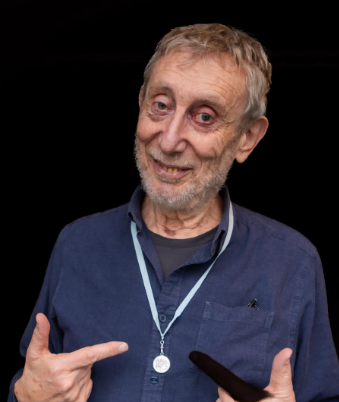
Michael Rosen has been famous for decades. Long before TikTok trends and short-form videos made older internet clips popular again, Rosen had already built a huge connection with children, parents, teachers and readers through poetry, storytelling and performance
For many people in the UK, his name is closely connected with childhood. His books such as We’re Going on a Bear Hunt became classroom and bedtime favorites.
His poems such as Chocolate Cake became famous for their funny rhythm and energetic performances. Then the internet discovered another side of Michael Rosen.
His performances became highly shareable online. Clips were edited, remixed and turned into memes. His facial expressions, unusual delivery and distinctive voice made him an easy subject for internet humor.
Over time, Michael Rosen became much more than a children’s author. He became a recognizable internet personality.
He continued writing, performing and communicating with audiences.
He also experienced a serious health crisis after contracting COVID-19 in 2020 and spent weeks in intensive care. His recovery became another important part of his public story.
By 2026, Rosen is still active. In fact, 2026 is particularly significant because he turned 80 and launched a new live show celebrating his career.
His return to meme conversations is therefore not really a comeback from nowhere. It is another chapter in a career that has already crossed books, television, YouTube and internet culture.
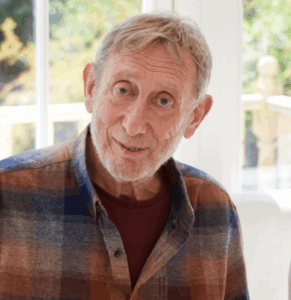
Also Read: Can Fabio Silva Fill Portugal’s Striker Void?
Table of Contents
Who Is Michael Rosen?
Michael Rosen is a British children’s author, poet, performer, broadcaster and academic. He was born on May 7, 1946, in Harrow, Middlesex, England.1
Rosen began publishing in the 1970s and developed a career that combined poetry with performance.
His work often uses humor, repetition, rhythm and everyday experiences. Instead of treating poetry as something distant or formal, Rosen made it feel accessible and playful.
His first poetry collection, Mind Your Own Business, appeared in 1974. Over the following decades, he produced a large body of work for both children and adults.
One of his best-known books is We’re Going on a Bear Hunt. Published in 1989 with illustrations by Helen Oxenbury, the book became one of the most recognizable children’s picture books in Britain and beyond.
Rosen also became known for performing his poems. This is particularly important when looking at his later internet popularity.
His performances were not simply readings. He used facial expressions, gestures, pauses and changes in voice to make the poems entertaining. That performance style translated extremely well to online video.
His poem Chocolate Cake became one of the most famous examples. The poem tells a humorous story about a child’s obsession with chocolate cake. Rosen’s performance turned the simple story into something memorable for viewers of all ages.
His online audience eventually expanded beyond the people who had grown up reading his books.
Younger internet users who may not have known Rosen primarily as an author discovered his videos through YouTube clips and remixes.
That helped create an unusual second life for his work.
Why Is Michael Rosen Trending Again in 2026?
The 2026 meme reset has helped revive interest in several older internet personalities and meme formats. Michael Rosen is one of the figures benefiting from that nostalgia.
However, his renewed attention is not limited to memes. There is another major reason he is back in the spotlight: Michael Rosen turned 80 in 2026.
His official website highlights a new live show called NICE! Stories and Poems with Michael Rosen. The show celebrates his career and features familiar performances alongside new material.
That makes 2026 an important year for Rosen even without the meme revival. His online popularity and his professional career are now overlapping again.
Someone may discover a Michael Rosen meme on TikTok and then learn that the person in the clip is an 80-year-old author who has been writing and performing for more than five decades.
That contrast is part of the appeal. The internet can make an established cultural figure feel new again.
Happy birthday Michael Rosen! Thank you for all your poetry that has brought so much joy to so many people, young and old.
And well done for always speaking up for peace and humanity.
Hope you have a great day @MichaelRosenYes!
— Jeremy Corbyn (@jeremycorbyn) May 7, 2026
Stats Table
| Category | Details |
|---|---|
| Full name | Michael Wayne Rosen |
| Date of birth | May 7, 1946 |
| Age in 2026 | 80 |
| Birthplace | Harrow, Middlesex, England |
| Profession | Author, poet, performer, broadcaster and academic |
| Active since | 1970s |
| First poetry collection | Mind Your Own Business |
| Famous children’s book | We’re Going on a Bear Hunt |
| Famous poem | Chocolate Cake |
| Children’s Laureate | 2007–2009 |
| Major online association | YouTube performances and memes |
| Major health event | Severe COVID-19 illness in 2020 |
| Recovery | Extensive rehabilitation after intensive care |
| 2026 milestone | 80th birthday and new live show |
| Major literary recognition | 2023 PEN Pinter Prize |
Why Did Michael Rosen Become a Meme?
Michael Rosen’s meme status is closely connected to his performance style.2
Internet memes often depend on material that can be edited, repeated or placed into a new context. Rosen’s videos provided plenty of material for that kind of creativity.
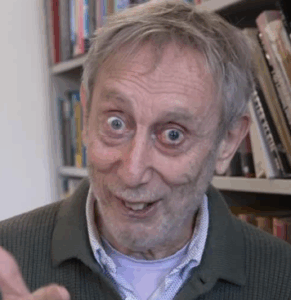
His expressions are exaggerated. His delivery is energetic. His voice has a distinctive rhythm. His performances also contain moments that can be isolated and reused.
That combination made his clips particularly attractive to internet creators.
One of the most important developments was the growth of YouTube remix culture. Users began taking parts of Rosen’s performances and manipulating them through editing, sound effects and visual effects.
Some edits were simple jokes. Others became much more elaborate.
This created a strange situation in which a children’s poet became part of an online subculture that had little to do with children’s literature.
Rosen himself has discussed this transformation.
In a 2026 Guardian interview, he explained that he was initially bothered by people taking his work and turning it into YouTube “poops” and memes.
He later came to view the phenomenon differently. He said that if he had grown up with YouTube and modern internet culture, he might have participated in similar mashups himself.
That is an important detail because it shows that Rosen’s relationship with meme culture has evolved.
He did not simply become famous because the internet randomly selected him. His own performance style made his work particularly suitable for remix culture.
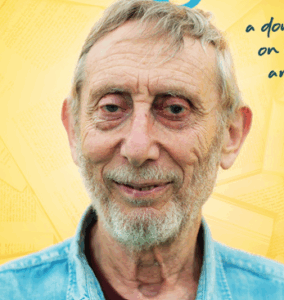
What Is the Great Meme Reset of 2026?
The Great Meme Reset is an internet trend built around nostalgia for older meme culture.
The basic idea is that parts of the internet have become tired of newer forms of repetitive meme content. Some participants want to return to the style of memes associated with earlier internet culture.
The movement has been especially visible on TikTok and other social platforms.
The trend is also connected to complaints about “brain rot” content and the growing presence of AI-generated material.
Supporters of the reset have promoted older memes and recognizable internet figures as alternatives. That has brought names from previous internet eras back into conversations.
Michael Rosen fits naturally into this nostalgia cycle.
His videos became popular online long before the current wave of AI-generated meme content. His popularity is based on a real person with a distinctive performance style rather than a character created specifically for meme culture.
That makes his return particularly interesting. For younger users, Rosen can appear like a newly discovered internet personality.
For older viewers, he represents a familiar piece of childhood and early online culture. The same clip can therefore work on two levels.
One audience sees an old-school meme. Another audience remembers the person behind the meme.
Michael Rosen and Chocolate Cake
If there is one performance that explains Rosen’s internet appeal, Chocolate Cake is a strong candidate.
The poem is simple. It tells a funny story about eating chocolate cake and trying to hide the evidence. What makes the performance memorable is Rosen’s delivery.
He does not perform it like a formal literary reading. He acts out the situation. He changes his expression and voice. He uses timing to make the story funny.
For children, that makes the poem entertaining. For adults, it can become nostalgic. For internet users, it provides material that can be clipped, edited and remixed.
This is one reason Rosen has managed to cross generations.
A child may encounter Chocolate Cake at school. A teenager may discover the same performance through a meme. An adult may remember hearing it years earlier.
Few children’s poets have achieved that kind of cultural crossover.
We’re Going on a Bear Hunt and His Literary Legacy
Although memes have made Rosen famous among a different online audience, his literary achievements remain the foundation of his career.
We’re Going on a Bear Hunt is perhaps his most internationally recognizable work.
The book was inspired by a traditional story and song that Rosen had encountered before turning the idea into a children’s picture book.
His collaboration with illustrator Helen Oxenbury helped create a work that became a major children’s classic.
The book’s repetitive structure makes it easy for children to participate when it is read aloud. That connection between spoken language and written language is central to Rosen’s approach.
He has repeatedly emphasized the importance of reading aloud and connecting children with language through performance.
This also helps explain why his work adapted so naturally to YouTube. Rosen’s books were already designed around rhythm and sound. His performances made those qualities even more visible.
The internet simply gave those performances another distribution channel.

What Happened to Michael Rosen’s Health?
One of the biggest events in Michael Rosen’s recent life was his battle with COVID-19 in 2020.
Rosen became seriously ill after contracting the virus and was admitted to hospital. He spent several weeks in intensive care.
According to accounts of his illness, he spent around seven weeks in intensive care and six weeks on a ventilator. The experience was life-threatening.
Rosen later described the frightening uncertainty surrounding his condition. He also spent a significant amount of time recovering after leaving intensive care.
His recovery was not immediate. He had to rebuild his strength and learn to walk again. Rehabilitation became an important part of his recovery.
The experience later influenced his writing.
His book Many Different Kinds of Love: A Story of Life, Death and the NHS explored his experience of illness and the care he received.
His children’s book Sticky McStickstick also drew on his recovery and the walking stick that helped him regain mobility.
The health crisis therefore became part of his creative work rather than simply being an isolated event in his biography.
Did Michael Rosen Disappear From Public Life?
No. The idea that Michael Rosen “disappeared” is misleading. His online visibility has gone through different phases but he has continued working.
He has written books, performed, appeared in interviews and maintained an online presence. His official website continues to promote his work and performances.
The confusion probably comes from how internet fame works. A person can be extremely famous within one online community and almost invisible in another.
A meme can also disappear for several years before suddenly returning. That does not mean the person stopped working.
In Rosen’s case, his professional career continued while internet culture moved through different trends.
The Great Meme Reset has simply brought some older material back into circulation.
Michael Rosen’s Relationship With Internet Culture
Rosen’s relationship with internet culture is more complicated than simply being “a meme.”
His work has been remixed and parodied for years. Some of that attention has been harmless and creative. Other uses have crossed lines he does not accept.
In his 2026 Guardian interview, Rosen explained that he eventually became more accepting of meme culture after understanding how remix communities work.
He has also made it clear that there are limits. He particularly objected to antisemitic uses of his image and said he had made efforts to have such material removed.
That distinction matters. Rosen appears comfortable with people transforming his performances for humor when the result is simply absurd or playful.
He is less accepting when his image is used to promote hateful material.
That position is understandable given the way meme culture can move between harmless jokes and more troubling forms of content.
Also Read: Amy Beck Bio: Why Noah Beck’s Mom Suddenly Went Viral Again
Why Does Michael Rosen Still Matter?
Michael Rosen’s continued relevance comes from his ability to connect different generations.3
He belongs to children’s literature. He belongs to British television and radio. He belongs to YouTube culture.
And now he has once again become part of meme culture. Those identities do not cancel each other out. In fact, they reinforce each other.
His books gave him a long-term cultural foundation. His performances gave him material that worked on video.
YouTube introduced those performances to a new generation. Meme culture transformed parts of that material into internet humor.
Then nostalgia brought it back again. This is a good example of how internet culture can preserve and recycle older media.
A video recorded years ago can suddenly become relevant to millions of people who were not even old enough to remember when it first became popular.
Michael Rosen at 80
Turning 80 is a major milestone for Rosen. Instead of treating the birthday as the end of a career, he is using it as an opportunity to celebrate his work and continue performing.
His official website describes 2026 as a year of celebration with his new live show.
The show combines familiar favorites with new material and is designed for audiences of different ages.
That is fitting for Rosen. His career has always crossed age groups. Children enjoy the humor.
Parents recognize the books. Teachers use the poems. Older internet users recognize the YouTube memes. Younger users may discover him through TikTok.
Few contemporary children’s writers have such a broad route through popular culture.
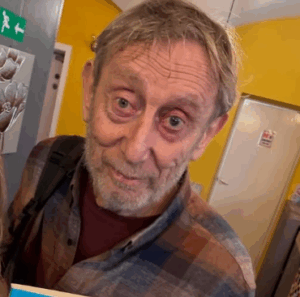
What Makes Michael Rosen’s Memes So Enduring?
A major reason is recognition. A meme works better when people immediately understand the source.
Rosen’s face and voice are distinctive. His performances also contain strong emotional reactions that can be understood even without knowing the original poem.
Another reason is nostalgia. People who encountered Rosen as children may now be adults using social media.
Seeing his face again can bring back memories of school assemblies, story time and children’s books.
The Great Meme Reset adds another layer. The movement is based partly on the idea that older internet humor feels more authentic than some of the highly repetitive or AI-generated content that dominates parts of today’s social media.
Rosen represents that older internet era. He is not an artificial meme character. He is a real performer whose work happened to become meme material.
That difference makes the nostalgia stronger.
Is Michael Rosen Still Making Content?
Yes. Rosen continues to write and perform.
His official website currently promotes his YouTube channel, where he performs poems and stories. His 2026 live work also demonstrates that he remains active as a performer.
His career has therefore moved through several forms of media without stopping. He started with books and poetry.
He moved into broadcasting and live performance. His work later found an audience on YouTube.
Then internet culture turned parts of his work into memes. Now those memes are being rediscovered by a new generation.
It is a remarkable example of longevity in entertainment.
What Does the Great Meme Reset Mean for Michael Rosen?
The Great Meme Reset does not fundamentally change Michael Rosen’s career.
Instead, it changes how another generation is discovering him. For people who already knew Rosen, the trend can feel nostalgic.
For younger users, it can feel like a discovery. That is one of the strange powers of internet culture. Old content can become new content without actually changing.
A video from years ago can suddenly be watched millions of times because the cultural context around it has changed.
Michael Rosen is particularly well suited to this process because his performances were already expressive and highly recognizable.
His face, voice and delivery are almost impossible to confuse with anyone else. That makes him ideal meme material.
Michael Rosen’s Lasting Cultural Impact
It would be easy to focus only on the memes and forget what made Rosen famous in the first place. His greatest impact is still literary and educational.
He helped make poetry feel accessible to children. His performances encouraged children to experience poems as something they could hear, repeat and enjoy rather than something they only had to study.
His work also helped normalize playful language.
That matters because children’s literature often depends on sound. A memorable rhythm can encourage children to participate in reading before they are confident readers themselves.
Rosen understood this connection between performance and literacy. His internet fame is almost an accidental extension of the same idea.
He performed poems for children. The internet turned those performances into shareable clips. The clips became memes.
The memes reached people who may never have opened one of his books. In an unexpected way, internet culture has helped keep his work visible.
What Happened to Michael Rosen? The Real Answer
So, what happened to Michael Rosen? He grew from a children’s poet into one of Britain’s best-known literary performers.
His work became part of childhood for generations of readers. Later, his performances became popular on YouTube and turned him into an unlikely internet meme.
In 2020, he experienced a serious and potentially fatal COVID-19 illness that required weeks in intensive care and extensive rehabilitation. He recovered and returned to writing and performing.
By 2026, he had reached another major milestone. He turned 80 and continued celebrating his career with live work and new material.
At the same time, internet users rediscovered his older videos through the Great Meme Reset. So this is not really a story about Michael Rosen disappearing and suddenly returning.
It is a story about Michael Rosen never truly leaving. His literary work continued. His performances continued. His online presence continued.
The internet simply changed its mind about which parts of his career it wanted to remember.
Why Michael Rosen’s 2026 Meme Comeback Matters
The renewed attention around Michael Rosen says something interesting about internet culture. The internet is becoming increasingly nostalgic.
Older memes are being rediscovered because they remind people of a time when online humor was built around recognizable personalities, simple edits and strange inside jokes.
Michael Rosen fits perfectly into that world. He is familiar enough to be instantly recognizable but unusual enough to remain funny. His return also shows how unpredictable cultural fame can be.
Rosen became famous as an author. Then he became famous as a performer. Then he became an internet personality. Then he became a meme.
Now he is being rediscovered as part of a nostalgic meme movement. Each generation seems to find a different reason to watch him. That may be the clearest explanation for his staying power.
FAQ’s
Who is Michael Rosen?
Michael Rosen is a British children’s author, poet, performer and broadcaster. He is best known for works such as We’re Going on a Bear Hunt and Chocolate Cake.
How old is Michael Rosen in 2026?
Michael Rosen turned 80 on May 7, 2026.
Why is Michael Rosen trending again in 2026?
He is receiving renewed attention because older memes and internet personalities are being rediscovered during the Great Meme Reset of 2026. His viral YouTube performances are among the older pieces of internet culture being revisited.
What is the Great Meme Reset?
The Great Meme Reset is a 2026 internet trend focused on bringing back older meme culture. It is associated with nostalgia for earlier internet humor and criticism of repetitive “brain rot” and AI-generated meme content.
Is Michael Rosen still alive?
Yes. Michael Rosen is alive and remains active as a writer and performer in 2026.
Conclusion
Michael Rosen’s story is much bigger than a meme comeback.
He is a respected children’s author who has spent more than five decades writing, performing and encouraging people to enjoy language.
His books became classics. His poems became part of school life. His performances later became viral internet material.
All of those versions are Michael Rosen. That is why his return to meme culture feels so natural.
He did not need a new character or a new viral stunt. The internet went back into its archives and found what was already there.
And after more than 50 years in the public eye, Michael Rosen remains surprisingly good at one thing the internet values above almost everything else: being memorable.
Also Read: Britt Barbie Bio: From “Period Ahh” Meme to Internet Creator