
The Russia-Ukraine war has become one of the most difficult international conflicts to resolve. Since Russia launched its full-scale invasion of Ukraine in February 2022, diplomatic efforts have repeatedly struggled to produce a lasting ceasefire or peace agreement
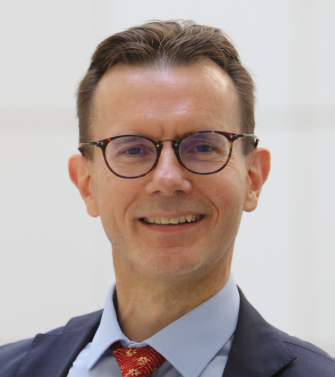
Although world leaders have discussed negotiations and possible compromises, the central disagreements between Moscow and Kyiv remain unresolved. One expert who has been explaining these difficulties is Nigel Gould-Davies, a former British diplomat and specialist in Russian and Eurasian affairs.
He argued that the fundamental problem is the gap between Russia’s objectives and Ukraine’s willingness to accept a settlement that could weaken its independence.
His perspective is useful because it looks beyond diplomatic meetings and public statements.
It examines what the two countries actually want, what they believe they can achieve through military action and whether there is enough common ground for a lasting agreement.
This article explores who Nigel Gould-Davies is, what is known about his early life and education, how he built his career and why his views matter in understanding the Russia-Ukraine conflict.
Also Read: Celina Jaitly Biography: Her Story Beyond Bollywood
Table of Contents
Who Is Nigel Gould-Davies?
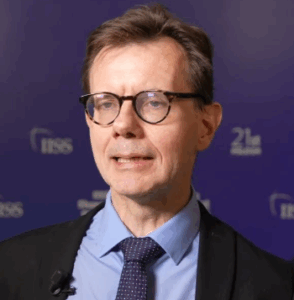
Nigel Gould-Davies is a British former diplomat, academic and foreign-policy analyst. He is best known for his work on Russia, the former Soviet Union, international relations and global political risk.1
He currently serves as a Senior Fellow for Russia and Eurasia at the International Institute for Strategic Studies. He is also associated with the organisation’s Strategic Survey, which examines major developments in international security and global affairs.
Before joining the IISS, Gould-Davies worked in several professional fields. He taught politics and international relations at the University of Oxford. Later, he served in the British Foreign and Commonwealth Office, where he held diplomatic and policy roles connected to Russia and Belarus.
One of the most important positions in his career was his appointment as the United Kingdom’s ambassador to Belarus.
The role gave him direct experience of diplomacy in a country closely connected to Russia and central to the political and security environment of Eastern Europe. His professional background is particularly relevant to the Russia-Ukraine war.
Understanding the conflict requires knowledge of Russian foreign policy, the political history of the former Soviet region and the way governments calculate their national interests.
Gould-Davies has spent much of his career studying these subjects. He is not a military commander or a representative of either Russia or Ukraine.
His role is that of an analyst who studies the political, economic and security factors behind international events. His comments should therefore be understood as expert interpretation rather than official statements from the British government.
New additions to the growing line of former ministers across Europe who call for the transfer of Russian Central Bank assets, once they no longer have the power to achieve this.
https://t.co/iv433ajobx
— Nigel Gould-Davies (@Nigelgd1) October 29, 2026
Early Education
Gould-Davies studied at the University of Oxford, where he earned both a bachelor’s degree and a Master of Philosophy degree. He later completed a PhD at Harvard University.
These qualifications provided the academic foundation for his work in international relations and foreign policy.
Oxford gave him a grounding in political and historical study, while his doctoral research at Harvard developed his ability to examine international affairs through detailed research and analysis.
His early professional career also shows that his interests were not limited to one country. From 1996 to 2000, he taught politics and international relations at Oxford.
This period helped establish his academic career before he moved into government service. His academic training and later diplomatic appointments help explain how he became an established specialist in Russian and Eurasian affairs.
Quick Bio
| Category | Details |
|---|---|
| Full name | Nigel Gould-Davies |
| Nationality | British |
| Profession | Former diplomat, academic and foreign-policy analyst |
| Main area of expertise | Russia, Eurasia and international security |
| Current professional role | Senior Fellow for Russia and Eurasia at the IISS |
| Previous diplomatic service | United Kingdom Foreign and Commonwealth Office |
| Former diplomatic position | British ambassador to Belarus |
| Moscow assignment | Head of the economics department |
| Academic institution | University of Oxford |
| Doctoral institution | Harvard University |
| Academic qualifications | Bachelor’s degree, MPhil and PhD |
| Oxford teaching career | 1996–2000 |
| Foreign Office career | 2000–2010 |
| Energy industry experience | 2010–2014 |
| Joined IISS | 2020 |
| Published book | Tectonic Politics: Global Political Risk in an Age of Transformation (2019) |
| Languages listed by IISS | English and Russian |
Nigel Gould-Davies’s Career Journey
1. Teaching at the University of Oxford
Gould-Davies began his documented professional career in academia. Between 1996 and 2000, he taught politics and international relations at the University of Oxford.2
Teaching these subjects requires an understanding of how states interact, how political systems operate and why international conflicts develop. His academic work provided a foundation for the diplomatic and research roles that followed.
This experience also helped him develop the ability to explain complex political developments in a structured way. That skill remains important in his current work as an analyst and commentator.
2. Working in the British Foreign and Commonwealth Office
In 2000, Gould-Davies joined the United Kingdom’s Foreign and Commonwealth Office, the government department responsible at the time for Britain’s foreign relations and diplomatic work.
He remained in the department until 2010. During this period, he held several positions that gave him experience in diplomacy, international policy and strategic planning.
One of his important assignments was serving as head of the economics department in Moscow. The position involved examining economic developments in Russia and understanding how those developments affected the country’s political and international relationships.
Working in Moscow would have provided valuable insight into the Russian government’s priorities and the wider economic environment. Russia’s political decisions cannot be understood through military issues alone.
Energy, trade, sanctions and economic relationships also play important roles in its foreign policy. Gould-Davies’s experience in Moscow is one reason his later analysis of Russia receives attention.
He has professional experience in the country as well as an academic understanding of its politics.
3. Serving as British Ambassador to Belarus
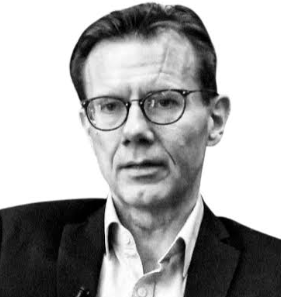
Another major stage in his diplomatic career was his appointment as the United Kingdom’s ambassador to Belarus.
Belarus occupies an important position in Eastern Europe. It shares borders with Ukraine and several NATO members and has maintained close political, economic and military ties with Russia.
The country became especially important during the Russia-Ukraine war because Russian forces used Belarusian territory as part of the route for the invasion of Ukraine in February 2022.
Belarus’s relationship with Moscow has therefore been a significant issue in European security discussions. Gould-Davies’s diplomatic experience in Belarus gave him direct knowledge of the political environment in the region.
His work was not simply about understanding one country’s government. It also involved the wider relationships between Russia, Belarus, Europe and the international community.
He also served as a project director in the Foreign and Commonwealth Office’s strategy unit. This role involved broader policy and planning work.
4. Working in the Energy Industry
After leaving the Foreign and Commonwealth Office in 2010, Gould-Davies moved into senior government-relations positions in the energy industry. From 2010 to 2014, he worked in Central and Southeast Asia.
This experience added another dimension to his professional background. Energy is closely connected to international politics.
Countries depend on energy supplies for economic activity and national security. Oil and gas relationships can influence diplomatic partnerships, trade policy and strategic decisions.
Russia’s energy exports have been particularly important in its relationship with European countries. After the full-scale invasion of Ukraine, sanctions and efforts to reduce dependence on Russian energy became major issues for European governments.
His experience in the energy sector helps explain why his research often considers economic and political factors together.
5. Returning to Academic and Policy Research
Gould-Davies later returned to research and analysis. Before joining the International Institute for Strategic Studies, he taught and conducted research on international relations in Asia.
He joined the IISS in 2020. The organisation is known for its research on international security, military affairs and strategic developments.
At the IISS, Gould-Davies focuses on Russia and Eurasia. His work examines the politics, economics and security of the former Soviet region.
He has also contributed to discussions about the future of Russian political power, European security and the consequences of the war in Ukraine.
Nigel Gould-Davies and the Russia-Ukraine War
The Russia-Ukraine war is one of the central subjects of Gould-Davies’s recent analysis.
His work attempts to explain why the conflict has continued despite diplomatic pressure and repeated discussions about a possible settlement.
A key part of his argument is that negotiations cannot succeed simply because leaders meet or announce that they want peace.
The sides must also believe that an agreement would be better for them than continuing to fight. This is a basic principle of conflict negotiation.
Each side has demands, priorities and limits. A settlement becomes possible when there is enough overlap between those positions.
In the Russia-Ukraine conflict, that overlap has been extremely difficult to find.
Also Read: Cal Ritchie Bio: What to Know About the Young NHL Star
Why Russia and Ukraine Want Different Outcomes
Russia and Ukraine have fundamentally different views of how the war should end.3
Ukraine wants to protect its independence, territorial integrity and ability to determine its own future. It has repeatedly rejected any settlement that would leave it permanently vulnerable to further Russian aggression.
Russia’s stated demands have gone beyond a simple temporary pause in fighting. Gould-Davies has argued that Moscow’s broader objective is to subordinate Ukraine and secure a position of dominance over its neighbour.
This difference makes negotiations difficult. A ceasefire might stop the immediate fighting, but it would not automatically resolve disagreements about territory, security guarantees or Ukraine’s future relationship with Europe and NATO.
For Ukraine, accepting a settlement that leaves Russia in a stronger position to attack again could create a serious long-term security risk. For Russia, accepting a settlement without achieving its wider objectives could be viewed by the Kremlin as a failure.
The two sides therefore face a problem that cannot be solved by arranging a meeting alone.
Why a Ceasefire Is Not the Same as Peace
A ceasefire and a permanent peace agreement are two different things. A ceasefire is an arrangement to stop or reduce military activity.
It may create an opportunity for negotiations, humanitarian assistance and the return of civilians to safer conditions. However, a ceasefire does not necessarily settle the political questions that caused the conflict.
A permanent agreement would need to address difficult issues such as territorial control, security guarantees, military arrangements and the future relationship between Russia and Ukraine. Gould-Davies’s analysis highlights why a temporary pause may not be enough.
If one side believes it can achieve more through continued fighting, it may have little reason to accept a ceasefire on terms that do not serve its objectives.
This is why public calls for peace should be examined alongside the actual demands made by the governments involved.
Why Negotiations Have Struggled
In an October 15, 2026, Guardian briefing, Gould-Davies discussed the difficulties surrounding recent diplomatic efforts.
He argued that some of the discussions taking place were not genuine negotiations aimed at finding a mutually acceptable settlement. Instead, Russia and Ukraine were also trying to persuade the United States that the other side was responsible for the lack of progress.
This distinction matters. Negotiations require both sides to explore possible compromises. Diplomatic communication can also be used to influence a powerful third party, shape international opinion or place political pressure on an opponent.
When the main objective becomes influencing another country’s leadership rather than finding common ground, the chances of a settlement become more limited.
Gould-Davies also discussed the complications created by the approach of US President Donald Trump. He described the challenge of dealing with what he called a non-standard president and highlighted the different views that may exist among people inside the White House.
His assessment suggests that international diplomacy is shaped not only by the positions of Russia and Ukraine but also by the policies and internal political dynamics of countries trying to influence the conflict.
The Role of the United States and Europe
The United States and European countries have played major roles in the diplomatic and military environment surrounding the war.
Washington has provided significant support to Ukraine, while European governments have contributed military assistance, financial support and sanctions against Russia.
However, Western governments do not always have identical priorities. They may disagree over how much pressure to place on Moscow, how quickly to pursue negotiations and what security arrangements should follow a ceasefire.
Gould-Davies’s analysis draws attention to the importance of these differences. A united diplomatic position can strengthen pressure for a settlement.
Divisions among Ukraine’s partners may create opportunities for Russia to pursue its objectives. Europe also has to consider its own long-term security.
A settlement that ends the immediate fighting but leaves Ukraine exposed to another invasion could create further instability across the continent.
For this reason, the question is not only how to stop the current war. It is also how to prevent another one.

Why Russia’s Military and Economic Situation Matters
Gould-Davies also examines the war through the relationship between military developments and economic resources.
In his February 25, 2026, IISS analysis titled Russia-Ukraine War: escalation, not stalemate, he argued that the apparent lack of major movement on the battlefield should not be mistaken for a stable situation.
He described the conflict as an unstable equilibrium that was driving escalation rather than compromise.
His analysis considered several important factors, including Russia’s ability to recruit soldiers, Europe’s financial capacity to increase defence spending and China’s relationship with Moscow.
These issues matter because wars are influenced by more than battlefield victories. A government must consider how long it can sustain military operations, replace equipment, finance its forces and maintain political support at home.
Russia’s economic resources and recruitment challenges therefore affect its ability to continue the war. Europe’s willingness to provide financial and military support affects Ukraine’s ability to resist.
China’s choices also matter because its economic and diplomatic relationship with Russia can influence Moscow’s international position. The longer the war continues, the more these factors shape the calculations of the governments involved.
Nigel Gould-Davies’s Book and Research
Gould-Davies is also the author of Tectonic Politics: Global Political Risk in an Age of Transformation, published by Brookings in 2019.
The book examines political risk in a changing international environment. Its subject reflects his wider professional interest in the relationship between political developments, economic change and international security.
His research is not limited to the Russia-Ukraine war. He has written about Russian politics, Eurasian affairs, global political risk and the future of international relations.
His work at the IISS also includes analysis of Russia’s political economy and the strategic consequences of the war. This broader research background is important because the Russia-Ukraine conflict is connected to several international issues.
It affects European defence policy, global energy markets, relations between major powers and the future of the international security system.
Why Is Nigel Gould-Davies Being Discussed?
Nigel Gould-Davies is attracting attention because his analysis helps audiences understand the diplomatic obstacles behind the Russia-Ukraine war.
News coverage often focuses on meetings between presidents, statements from foreign ministers and announcements about possible ceasefires. These developments are important, but they do not always explain why an agreement remains out of reach.
Gould-Davies approaches the issue by looking at the interests of the countries involved. He asks whether Russia and Ukraine have enough common ground to accept the same settlement and whether their leaders believe that compromise is preferable to continuing the war.
His former diplomatic experience also gives his analysis a practical dimension. He has worked in Moscow and served as Britain’s ambassador to Belarus.
These roles gave him direct exposure to the political environment of the region.
For readers trying to understand the conflict, his central message is straightforward: peace requires more than diplomatic pressure or public declarations.
It requires a change in the calculations of the parties involved.
View this post on Instagram
FAQ’s
1. Who is Nigel Gould-Davies?
Nigel Gould-Davies is a British former diplomat, academic and foreign-policy expert. He specialises in Russia, Eurasia and international security. He currently serves as Senior Fellow for Russia and Eurasia at the International Institute for Strategic Studies.
2. Is Nigel Gould-Davies a former British diplomat?
Yes. He served in the United Kingdom’s Foreign and Commonwealth Office from 2000 to 2010. His positions included head of the economics department in Moscow, British ambassador to Belarus and project director in the strategy unit.
3. What is Nigel Gould-Davies known for?
He is known for his research and analysis of Russian politics, Eurasian affairs, international relations and security. He has also become a recognised commentator on the Russia-Ukraine war.
4. Where did Nigel Gould-Davies study?
He studied at the University of Oxford, where he earned bachelor’s and master’s degrees. He later completed a PhD at Harvard University.
5. What is Nigel Gould-Davies’s current job?
He is a Senior Fellow for Russia and Eurasia at the International Institute for Strategic Studies. His work includes research and writing on the politics, economics and security of the former Soviet region.
Conclusion
Nigel Gould-Davies is an experienced British diplomat and foreign-policy analyst whose work helps explain the political and strategic challenges behind the Russia-Ukraine war.
His career includes teaching at Oxford, serving in the British Foreign and Commonwealth Office, working in Moscow, becoming the British ambassador to Belarus and later joining the International Institute for Strategic Studies.
For anyone trying to understand why Russia-Ukraine peace efforts continue to face obstacles, Gould-Davies offers an important perspective.
His combination of diplomatic experience and academic research provides a way to look beyond headlines and examine the deeper political calculations shaping the conflict.
Also Read: Katie Zacharia Bio: Meet the New White House Press Secretary