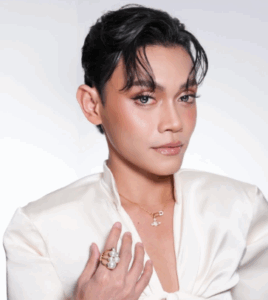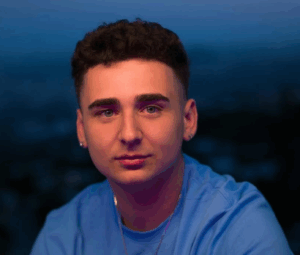

Macoy Dubs is once again at the center of online conversation in the Philippines. The Filipino content creator has spent nearly a decade building a career around comedy, satire, relatable characters and social commentary
He first became widely known for his dubbed videos and later became even more recognizable through the popular Auntie Julie persona. Today, Macoy Dubs is more than a social media comedian.
He is an actor, host, automotive content creator and one half of the comedy podcast Dogshow Divas, which he co-hosts with Baus Rufo.
Macoy’s comments were especially notable because he has long used comedy to discuss identity, culture and social issues.
His public persona has often combined humor with commentary. His latest remarks therefore fit into a larger pattern rather than appearing completely out of nowhere.
This article looks at who Macoy Dubs is, how he became famous, what Dogshow Divas is, why he called out other creators and why the discussion has become significant in Filipino creator culture.
Also Read: Amy Beck Bio: Why Noah Beck’s Mom Suddenly Went Viral Again
Table of Contents
Who Is Macoy Dubs?
Macoy Dubs is the professional name of Filipino content creator and entertainer Mark Averilla. He is known for comedy videos, character-based skits, dubbing popular movie scenes and his long-running Auntie Julie character.1
His entertainment career began online in 2017. Before becoming a full-time creator, Averilla had experience in advertising, teaching and other professional fields.
He studied at Colegio de San Juan de Letran and later taught advertising there. He also worked in Qatar before returning to the Philippines and pursuing content creation more seriously.
The transition was not originally part of a carefully planned celebrity strategy.
Macoy has explained that he started making memes and videos as a creative outlet. His early work involved dubbing movie clips in Filipino. Those videos eventually found an audience online.
That audience grew because his humor felt familiar to Filipino viewers. Instead of relying only on expensive production or elaborate sets, Macoy used voices, expressions, characters and everyday situations to create comedy.
His early success eventually turned the Macoy Dubs name into a recognizable Filipino internet brand.
Early Career
Macoy’s content creation journey began while he was still exploring different professional paths.
According to interviews with the creator, he had already been making memes during college. His interest in creative work continued after graduation.
He worked in advertising and other fields before social media eventually became his full-time career.
In 2017, Macoy started posting dubbed videos more consistently. The idea was simple. He would take recognizable scenes and give them a Filipino comedic treatment.
The result was a style that combined pop culture references with local humor.
This was important because Filipino audiences were already familiar with the original movies and characters.
Macoy’s versions gave those scenes a completely different personality. His videos eventually helped establish him as a major social media comedian.
By 2022, Esquire Philippines described Macoy as part of a new generation of Filipino comedy royalty alongside creators such as Pipay Kipay and Sassa Gurl.
At that time, Esquire reported that Macoy had around 1.2 million Facebook followers and nearly one million TikTok followers.
‘LOVE THE POUT’ 😗
LOOK: Social media star Macoy Dubs amuses his followers as he shares his driver’s license photo on Instagram.
“Dapat naka pout ka rin pag nahuli ka,” Pia Wurtzbach writes.
Ai dela Cruz, meanwhile, says, “Official documents but SLAY.” | 📷: Macoy Dubs pic.twitter.com/cyClbHvZYV
— Inquirer (@inquirerdotnet) March 27, 2023
Quick Facts
| Category | Details |
|---|---|
| Real name | Mark Averilla |
| Professional name | Macoy Dubs |
| Nationality | Filipino |
| Profession | Content creator, comedian, actor and host |
| Active since | 2017 |
| Education | Colegio de San Juan de Letran |
| Best known for | Dubbing videos and Auntie Julie |
| Podcast | Dogshow Divas |
| Co-host | Baus Rufo |
| Main comedy style | Satire, character comedy and pop culture humor |
| Other interest | Automotive content |
| Film work | Fruitcake, One Day League and Drags To Riches |
| Major current project | Dogshow Divas |
| Social media milestone | More than 1 million Facebook followers by 2021 |
| 2025 reported reach | 1.4M+ Facebook, 1M TikTok and nearly 300K Instagram followers |
The Rise of Auntie Julie
One of Macoy Dubs’ most recognizable creations is Auntie Julie.2
Auntie Julie is a fictional Filipino aunt who represents a particular type of “Tita” culture. She wears pearls, has a distinctive personality and delivers advice in an exaggerated but often surprisingly progressive way.
The character became particularly popular during the pandemic.
Macoy explained that Auntie Julie came from observing the personalities and mannerisms of older Filipino women during family gatherings.
He combined those observations with his own comedic ideas and created a character who could talk about relationships, sexuality, family and social issues while maintaining a humorous tone.
The character became more than a comedy gimmick.
Auntie Julie gave Macoy a way to discuss topics that might otherwise feel uncomfortable. The humor made serious conversations easier for audiences to approach.
At the same time, the character reflected Macoy’s broader approach to content. Comedy was not simply about making people laugh. It could also be used to challenge social expectations.
That approach helps explain why his recent comments about queerbaiting attracted so much attention.
Macoy Dubs and His Growth as a Creator
Macoy’s career has continued to evolve as social media itself has changed.
He has moved between Facebook, TikTok, Instagram, YouTube and other forms of entertainment. His content has also expanded beyond dubbing and Auntie Julie.
He has explored podcasts, television, acting and automotive content. His interest in cars has become a significant part of his online identity.
In a 2025 Esquire Philippines profile, Macoy discussed his passion for cars and his 1993 Honda Prelude VTEC project.
The publication reported that he had more than 1.4 million Facebook followers, around one million TikTok followers and close to 300,000 Instagram followers at the time.
Those numbers are useful as a snapshot of his reach but should not be treated as current follower counts. Social media numbers change constantly.
His career also moved further into mainstream entertainment.
In 2026, GMA reported that Macoy was interested in pursuing mainstream acting after almost a decade as a content creator. His official Cornerstone Entertainment profile also lists him as a content creator, actor, host and endorser.
The profile identifies him as a co-host of Dogshow Divas and lists his 2026 comedy film Drags To Riches among his projects.

What Is Dogshow Divas?
Dogshow Divas is a comedy and pop culture podcast hosted by Macoy Dubs and Baus Rufo.
The show officially launched in September 2025. Its origins were surprisingly casual.
Macoy appeared as a guest on Baus Rufo’s existing podcast Kaya Pa Ba? in August 2025. The episode became unexpectedly popular.
The chemistry between the two creators was strong enough that listeners wanted to hear more from them. Baus eventually suggested turning that chemistry into a new podcast.
Macoy was initially hesitant because the two creators had different brands. But the response to their original conversation convinced him that there was something worth developing.
That became Dogshow Divas. The title itself reflects the show’s tone.
In Philippine slang, “dogshow” can refer to making fun of a person, situation or event. It can describe something intentionally chaotic or satirical. That is essentially the philosophy behind the podcast.
Dogshow Divas is not designed to sound like a traditional formal interview program. The hosts jump between pop culture, personal experiences, work, entertainment and social issues.
The humor is often spontaneous.
Why Did Dogshow Divas Become Popular?
The popularity of Dogshow Divas is partly based on the chemistry between Macoy and Baus.
Both creators have experience in advertising and online entertainment. Both understand Filipino internet culture.
Their conversations often sound less like a traditional podcast and more like two friends talking without worrying too much about whether the discussion follows a strict structure.
GMA News Online reported that the podcast had already reached more than 91,000 Instagram followers and over 49,000 TikTok followers within its first few months.
The report also noted that the show had attracted listeners who used it for entertainment while working out, relaxing or dealing with homesickness.
That sense of informality is one of its strongest features. The podcast also benefits from the fact that Macoy and Baus are willing to move between silly subjects and serious conversations.
One moment can be completely ridiculous. The next can involve identity, politics, representation or creator responsibility.
That combination has helped the show become part of Filipino online culture.
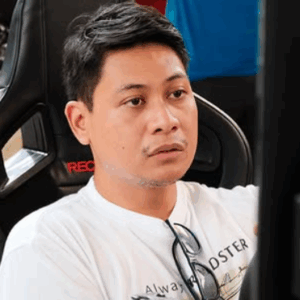
Why Is Macoy Dubs Calling Out Other Creators?
The recent controversy is connected to comments Macoy made with Baus Rufo about queerbaiting.
During the March 18, 2026 episode of Dogshow Divas titled “Mga Nanay Niyong Galit,” the hosts discussed the way some straight creators use queer behavior or queer-coded comedy in their content.
Macoy directly told straight creators who make this kind of content to stop. Baus described the practice as queerbaiting.
Neither host named specific creators during the discussion. That distinction matters.
Online discussions sometimes turn general comments into accusations against specific people.
In this case, credible reports state that Macoy and Baus did not identify particular individuals. Their criticism was directed at a broader creator trend.
What Does Queerbaiting Mean?
Queerbaiting generally refers to content that attempts to attract LGBTQ+ audiences through queer themes, suggestions or behavior without providing meaningful representation.
The term has existed in discussions around entertainment for years. It has also become increasingly relevant to social media creators.
For Macoy and Baus, the concern is not simply that straight people can participate in queer humor. Their argument is about motivation and responsibility.
They questioned the practice of straight creators adopting exaggerated queer personas or behavior because it can attract attention from LGBTQ+ audiences while avoiding the discrimination and social consequences that queer people themselves experience.
GMA News Online described the discussion as a criticism of creators who portray queer behavior in their content to appeal to audiences.
Macoy’s position is therefore more complicated than simply saying that straight creators should never make queer jokes.
The central question is whether queer identity is being treated as a costume or marketing tool.
Also Read: Can Fabio Silva Fill Portugal’s Striker Void?
What Did Macoy and Baus Say?
Macoy and Baus were unusually direct.3
Macoy told straight creators who engage in what he considered “bakla-baklaan” content to stop. Baus followed by explicitly calling the practice queerbaiting.
Their broader point was that queer audiences should not be treated as a shortcut to online popularity. Baus argued that members of the queer community have spent much of their lives seeking acceptance.
He questioned why creators would suddenly imitate queer behavior when it becomes commercially or socially useful.
He summarized the idea with a memorable phrase about putting allyship before clout. The remarks resonated because they connected online creator behavior with real-world experiences of LGBTQ+ people.
Why Is Macoy’s Background Important to This Discussion?
Macoy’s own career helps explain why the issue matters to him.
His comedy has long included queer perspectives and characters. His public work has also touched on social issues and representation.
In 2019, Macoy spoke publicly after a brand allegedly dropped a collaboration because he was considered “too gay.”
The incident sparked discussion about discrimination in advertising and how brands view LGBTQ+ creators. That experience gives additional context to his current criticism.
For a creator who has experienced the professional consequences associated with queer identity, seeing other creators use queer-coded behavior purely for entertainment can raise different questions.
It is not simply an abstract internet debate. It can be connected to the difference between performing an identity for views and actually living with the social consequences associated with that identity.

Macoy Also Connected the Discussion to the SOGIE Equality Bill
The conversation did not stop with social media content.
Macoy and Baus also connected their criticism to LGBTQ+ rights in the Philippines.
They questioned why some people might enjoy queer-themed content while political and legal equality remains unresolved.
Macoy specifically raised the SOGIE Equality Bill during the discussion. Baus similarly questioned the contradiction between enjoying queer entertainment and failing to support equal rights.
This shows that their criticism was about more than jokes.
They were asking creators and audiences to think about the difference between consuming queer culture and supporting queer people.
Did Macoy Name the Creators He Was Talking About?
No. This is one of the most important points to understand when discussing the controversy.
Macoy and Baus did not publicly identify specific creators during the Dogshow Divas discussion.
Some media reports and online discussions have connected their remarks to various personalities. However, those connections should not be presented as confirmed targets unless Macoy or Baus explicitly identified them.
One report mentioned that online discussions had included creators such as Tito Marsy and Tito Abdul. However, Macoy and Baus themselves did not name them during the episode.
For that reason, it is more accurate to say that Macoy was criticizing a type of creator behavior rather than publicly launching an attack on a particular individual.
Is Macoy Dubs Against Straight Creators?
That would be an oversimplification. His comments were specifically about creators who use queer behavior or queer identity as a form of content without genuine allyship.
The criticism was not simply that straight people cannot participate in queer culture. The issue is the way that participation happens.
There is a major difference between supporting queer people, collaborating with queer creators and making respectful comedy on one hand and adopting queer stereotypes because they generate clicks on the other.
Macoy and Baus were arguing about that distinction.
Why Has the Controversy Generated So Much Discussion?
The controversy has touched on several major issues in modern creator culture.
First is authenticity. Social media rewards creators who can attract attention. Sometimes that encourages people to exaggerate their personalities or adopt identities that make their content more entertaining.
Second is representation. For LGBTQ+ viewers, seeing queer people represented in mainstream entertainment can be meaningful.
But representation can become uncomfortable when stereotypes are used without understanding the communities being portrayed.
Third is monetization. Creators can turn almost anything into content. A personality, political opinion, relationship or identity can become part of a personal brand.
That raises the question of whether certain identities are being turned into commercial products. Macoy and Baus’ criticism taps directly into that tension.
Macoy Dubs and the Bigger Problem With Creator Culture
The discussion around Macoy Dubs is ultimately part of a much larger conversation.
Influencers are no longer simply people who upload videos for fun. Many creators have businesses, brand partnerships, production companies, podcasts and entertainment careers.
Their online behavior can influence millions of people. That creates responsibility.
When a creator uses a marginalized community as a source of humor or engagement, the question becomes whether that creator is contributing to visibility or simply benefiting from a stereotype.
This is why Macoy’s comments attracted attention beyond Dogshow Divas listeners. They touched on the changing relationship between identity, entertainment and influence.
Macoy’s History With Social Commentary
Macoy has previously used his platform for social commentary.
His content has covered issues related to politics, discrimination, LGBTQ+ experiences and online culture. His public career has therefore never been limited to entertainment.
His earlier work with Auntie Julie also demonstrated how comedy can carry a social message.
In a 2022 Esquire Philippines interview, Macoy discussed cancel culture and the effect it can have on comedy. He argued that excessive fear around offending people can limit creative expression.
That perspective is interesting when compared with his current criticism. Macoy is not necessarily arguing for less comedy.
Instead, he appears to be arguing for comedy that understands the difference between satire and exploitation.
The Evolution of Macoy Dubs
Macoy’s career has gone through several distinct stages.
The first was the dubbing era. That was when Macoy became known for putting Filipino voices and humor into familiar movie scenes.
The second was the character era. Auntie Julie helped turn him into a recognizable personality rather than simply a creator who made viral videos.
The third stage involved mainstream entertainment. Macoy moved into hosting and acting while continuing to build his online platforms.
The fourth stage is the current multi-platform era. He now combines comedy, podcasts, cars, acting and entertainment.
Dogshow Divas fits naturally into this evolution because it allows him to use his personality rather than relying on a single recurring character.
Macoy Dubs in 2026
As of 2026, Macoy remains active across multiple entertainment spaces. GMA reported in March that he was looking to expand into mainstream acting after nearly a decade in content creation.
The same report described Dogshow Divas as one of his major current projects.
His official Cornerstone profile lists Drags To Riches as a 2026 film project and continues to identify him as a content creator, actor, host and endorser.
Dogshow Divas has also continued to evolve.
In July 2026, ABS-CBN reported that the podcast had introduced Joy Barcoma and comedian-actress Tuesday Vargas as guest hosts while Macoy responded humorously to calls for him to be replaced.
That suggests the podcast has become a larger entertainment property rather than simply an extension of Macoy’s social media page.

Why Dogshow Divas Works for Macoy
Dogshow Divas gives Macoy something his older content could not always provide. It gives him room to talk.
A short skit may last less than a minute. A podcast can allow a creator to explain an opinion, tell a story and debate an issue.
That is especially useful for someone like Macoy whose career has always involved both comedy and commentary.
The podcast also gives him Baus Rufo as a conversational partner.
Their contrasting styles create a dynamic that can move quickly from nonsense to serious discussion. That unpredictability is part of the show’s appeal.
What Macoy’s Comments Say About Modern Filipino Comedy
Filipino comedy has always involved teasing, parody and exaggerated personalities. But social media has changed the consequences.
A joke can reach millions within hours. A character can become a brand. A stereotype can become a business model.
That means creators have to think more carefully about what they are portraying.
Macoy’s comments suggest that he believes queer comedy should not be separated from the reality faced by queer Filipinos.
You can laugh. You can parody. You can create outrageous characters.
But the argument is that creators should not treat queerness as a costume that can be removed once the views stop coming.
Does This Mean Macoy Is Trying to “Cancel” Other Creators?
Not based on the available reporting.
The March 2026 discussion was a criticism rather than a formal campaign to remove specific creators from the internet.
Macoy and Baus did not identify particular people. Their language was strong but their broader argument focused on behavior.
This is important because “calling out” and “canceling” are often treated as identical online. They are not necessarily the same thing.
Calling out questionable behavior means publicly criticizing it. Canceling usually implies a broader campaign to punish or isolate someone.
The available reports support the first description more clearly than the second.
The Main Takeaway From the Dogshow Divas Debate
The controversy surrounding Macoy Dubs is not really about whether comedy should be allowed to be provocative.
It is about who benefits from a joke and who carries the consequences.
Macoy and Baus believe some creators are benefiting from queer-coded content without dealing with the discrimination and social pressure that queer people face.
Their answer is simple: allyship should come before clout.
Whether audiences agree with their approach or not, the discussion highlights an important change in influencer culture.
Creators are increasingly expected to think about the communities represented in their content.
And audiences are increasingly willing to question whether viral content is authentic or simply designed for engagement.
View this post on Instagram
FAQ’s
Who is Macoy Dubs?
Macoy Dubs is the online name of Filipino creator Mark Averilla. He is a comedian, actor, host and content creator known for dubbed videos, character skits and the Auntie Julie persona.
What is Macoy Dubs’ real name?
Macoy Dubs’ real name is Mark Averilla. He is also sometimes referred to as Macoy Averilla in entertainment coverage.
When did Macoy Dubs start creating content?
Macoy began building his online content career in 2017. He had already been making memes and experimenting with creative work before that but 2017 became the major starting point for his professional content creator journey.
What is Macoy Dubs best known for?
He is best known for his Filipino-dubbed videos and Auntie Julie character. His comedy later expanded into podcasts, automotive content, television and film.
Who is Auntie Julie?
Auntie Julie is one of Macoy Dubs’ most famous fictional characters. She is portrayed as a glamorous and progressive Filipino aunt who gives advice while discussing relationships, identity and everyday life through comedy.
What is Dogshow Divas?
Dogshow Divas is a comedy and pop culture podcast hosted by Macoy Dubs and Baus Rufo. It launched in September 2025 after the pair’s guest appearance together on Baus’ podcast generated a strong response online.
Conclusion
Macoy Dubs has come a long way from the creator who became famous by dubbing movie clips in Filipino.
Today, Mark Averilla is a multi-platform entertainer with a career that includes comedy, acting, hosting, automotive content and podcasting.
His Auntie Julie character helped establish him as one of the recognizable faces of Filipino internet comedy. Dogshow Divas has now added another major chapter to that career.
They did not name specific individuals. Instead, they questioned a wider trend in online creator culture. The debate is ultimately about authenticity.
For Macoy Dubs, that conversation is consistent with a career built around comedy that often carries a deeper message.
And with Dogshow Divas continuing to grow, it is likely that Macoy and Baus will keep turning internet culture into both comedy and conversation.
Also Read: Angela Nikolau Age, Bio, Career, Relationship and Net Worth 2026