

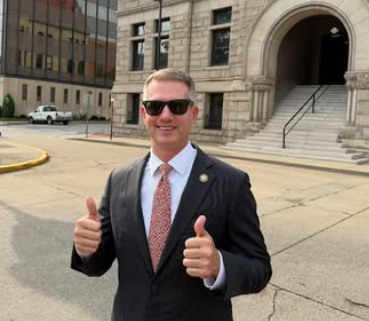
Riley Moore is a Republican politician from West Virginia who has recently attracted attention outside the United States after making strong comments about India’s proposed Foreign Contribution (Regulation) Amendment Bill, 2026
His remarks have sparked debate in India and online, with critics questioning whether his description of the proposed law accurately reflects what the legislation actually says.
Moore is not a newcomer to politics.
He has served as West Virginia’s state treasurer and previously worked in the West Virginia House of Delegates.
In January 2025 he became a member of the U.S. House of Representatives after winning election from West Virginia’s 2nd Congressional District.
His latest attention comes from comments about India’s FCRA Amendment Bill. Moore described the proposed changes as a “clear attack against Christians” and warned that the issue could become a concern in relations between India and the United States.
Independent legislative analysis from PRS Legislative Research also confirms that the bill would create such an authority while raising concerns about the potential loss of assets.
So who is Riley Moore? Why is a U.S. congressman from West Virginia suddenly being discussed in India? And what exactly did he say that caused the controversy?

Also Read: Who Is Alex Stein? Full Bio, Viral Moments and Latest Controversy
Table of Contents
Who Is Riley Moore?
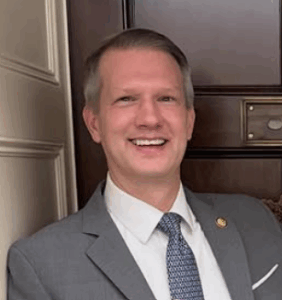
Riley McGowan Moore is an American Republican politician who represents West Virginia’s 2nd Congressional District in the U.S. House of Representatives.1
According to the official records of the U.S. House, Moore was born on July 1, 1980, in Morgantown, West Virginia.
He attended the C.S. Monroe Technology Center and later earned a bachelor’s degree from George Mason University. He also received a master’s degree from the National Defense University.
Before entering politics he worked as a welder and later held positions in government and business.
Moore’s political career began in West Virginia. He served in the West Virginia House of Delegates before becoming the state’s 25th treasurer.
He held the treasurer’s office from 2021 until 2025. He then moved to federal politics and won election to the U.S. House in 2024. He was sworn into Congress on January 3, 2025.
His background is also closely connected to West Virginia’s political establishment.
The House historian notes that Moore is the nephew of U.S. Senator Shelley Moore Capito and the grandson of former West Virginia Governor and congressman Arch Alfred Moore Jr.
As a congressman Moore has become associated with conservative positions on energy, national security, immigration and other political issues.
His official congressional biography highlights his opposition to environmental, social and governance policies in financial markets and his support for policies designed to expand American energy production.
He is currently a member of the House Appropriations Committee.
His subcommittee assignments include Commerce, Justice, Science and Related Agencies; Labor, Health and Human Services, Education and Related Agencies and the Legislative Branch.
Why Is Riley Moore Trending Now?
Riley Moore is currently being discussed because of comments he made about India’s proposed FCRA Amendment Bill, 2026.
In an August 2026 statement shared on X, Moore referred to India’s Christian history before criticizing the proposed amendments to the Foreign Contribution (Regulation) Act.
He argued that the bill could allow the government to take control of churches and religious charities.
Moore called the proposal a “clear attack against Christians” and warned that if the bill moved forward in its current form it could become a major concern in India-U.S. relations. India Today reported his comments on August 5, 2026.
The Times of India also reported on the statement and described Moore as warning that the proposed changes could affect India-U.S. relations.
Those comments were significant because Moore is a U.S. lawmaker rather than an Indian politician. His intervention brought an American political voice into an ongoing Indian debate over foreign funding rules.
Restoring American industrial independence is not optional!
In my new essay for @AmericanAffrs, I tell the story of Weirton Steel and make the case that America’s hollowed out industrial heartland isn’t just an economic disaster but also a national security crisis.
Highlights… pic.twitter.com/03WvfBY60F
— Rep. Riley M. Moore (@RepRileyMoore) August 20, 2026
Stats Table
| Category | Details |
|---|---|
| Full name | Riley McGowan Moore |
| Date of birth | July 1, 1980 |
| Birthplace | Morgantown, West Virginia |
| Political party | Republican |
| Current position | U.S. Representative |
| Congressional district | West Virginia’s 2nd District |
| House term began | January 3, 2025 |
| Previous position | West Virginia State Treasurer |
| State treasurer term | 2021–2025 |
| Previous elected office | West Virginia House of Delegates |
| Education | George Mason University and National Defense University |
| Professional background | Welder, government staffer and business executive |
| House committee | Appropriations Committee |
| Family connection | Nephew of Senator Shelley Moore Capito |
| Current political issue drawing attention | Comments about India’s FCRA Amendment Bill |
Riley Moore’s Career Before Congress
Moore’s career did not begin in Washington politics. 2
His first professional experience was as a welder. His official biography says he later earned degrees in government and strategic security studies before working in national security and government-related roles.
He also served on the staff of the House Foreign Affairs Committee earlier in his career.
He entered the West Virginia House of Delegates in 2017 and represented the 67th District. He later became West Virginia state treasurer in 2021.
During his time as treasurer, Moore became nationally known among conservatives for opposing what he described as the influence of ESG policies on financial institutions. His office also promoted initiatives such as the Hope Scholarship Program and the Jumpstart Savings Program.
His experience as a welder has also shaped some of his political messaging. His campaign biography says the Jumpstart Savings Plan was inspired in part by his own experience and was designed to help people pursuing trades or starting businesses pay for tools, equipment and certifications.
That background helped establish Moore as a conservative figure with a strong focus on economic issues, energy policy and national security before he entered Congress.
Riley Moore’s Rise to Congress
Moore announced his campaign for West Virginia’s 2nd Congressional District before the 2024 election.
He won the Republican nomination and then won the general election. His congressional career officially began when he took the oath of office on January 3, 2025.
The position gave Moore a larger national platform. His membership on the Appropriations Committee also gave him a role in one of the most important areas of congressional policymaking because the committee deals with federal spending.
By 2026 Moore had become a recognizable conservative voice on several issues. His official congressional website lists recent work involving budget legislation, national security appropriations and privacy legislation.
However, his latest wave of attention is different because it is tied to a foreign policy and religious freedom debate involving India.
What Is the FCRA Amendment Bill?
The Foreign Contribution (Regulation) Act is India’s main legal framework for regulating foreign contributions received by organisations and certain other entities.
The 2026 amendment bill was introduced in the Lok Sabha on March 25, 2026. It proposes changes to the way foreign-funded organisations are regulated when their FCRA registration ends.
One of the most important proposals involves a Designated Authority.
Under the bill, foreign contributions and certain assets could be placed under the authority’s control when an organisation’s registration is cancelled, surrendered or otherwise ceases.
The bill provides for provisional vesting and also sets out circumstances in which vesting could become permanent. This is the part of the proposal that has generated some of the strongest reactions.
Critics argue that the legislation could give the central government significant control over assets created with foreign funding.
PRS Legislative Research notes that organisations could lose control of assets created from foreign contributions if their FCRA certificates cease and are not restored.
The Indian government presents the proposal differently.
According to the Press Information Bureau, the bill is intended to address administrative gaps and provide a clear procedure for managing assets after an organisation’s FCRA registration ends.
The government says assets would initially be provisionally vested and could be returned if the organisation’s registration is restored within the prescribed period.
This distinction is important when discussing the Riley Moore controversy.
Did Riley Moore Spread Misinformation?
The word “misinformation” has appeared in online discussions about Moore’s comments. However, it is important to separate a political dispute from a proven finding that someone deliberately spread false information.
There is no evidence in the sources reviewed here that a government agency or court has formally determined that Moore deliberately spread misinformation about the FCRA bill.
The more precise issue is that critics have challenged the way Moore characterized the proposed legislation.
Moore’s statement suggested that the amendments would permit government takeovers of churches and religious charities.
The bill does create a Designated Authority with powers over foreign-funded assets in certain circumstances. It also specifically addresses assets that include places of worship.
At the same time, the bill does not simply state that all churches or religious charities will be taken over by the government.
The proposed framework applies to organisations whose FCRA registration has been cancelled, surrendered or has ceased under the conditions set out in the legislation.
The government says provisional vesting would be reversible if registration is restored. The bill also says that permanently vested assets should be used for public purposes.
The bill’s language therefore makes the issue more complicated than a simple claim that the government is taking control of every church or religious charity.
PRS Legislative Research has highlighted both sides of the issue. It describes the proposed Designated Authority and the possibility of assets being permanently vested.
At the same time, it notes that the framework applies in specific circumstances involving the end of FCRA registration.
This is why it is more accurate to describe the controversy as a dispute over Moore’s characterization of the bill rather than stating as an established fact that he knowingly spread misinformation.
Also Read: Joel Webbon Biography: Controversy, Backlash and Trolling Wave
What Does the Indian Government Say?
The Indian government’s explanation differs from Moore’s framing.3
The Press Information Bureau says the 2026 amendments are focused on transparency, accountability and administrative gaps in the existing system. It also says the concept of vesting foreign-funded assets after cancellation of registration already existed under the 2010 FCRA framework.
The government says the proposed changes would provide a clearer process for handling assets and funds when an organisation loses its FCRA registration.
Under the proposed system, the Designated Authority would initially take provisional control. If the organisation restores its registration within the required period, the government says the assets and unused funds would be returned.
The bill also contains provisions concerning places of worship. The government says the religious character of such a place must be preserved if an asset becomes permanently vested.
These details are central to understanding why the controversy has attracted competing interpretations.
Why Are Churches and NGOs Concerned?
The controversy around the FCRA bill is not limited to Riley Moore.
Indian opposition parties, NGOs and civil society groups have raised concerns about the powers proposed for the Designated Authority.
India Today reported that critics believe the bill could give the central government broad powers over organisations receiving foreign donations.
The issue is particularly sensitive for organisations that have built hospitals, schools, religious institutions or other infrastructure using foreign contributions.
PRS Legislative Research noted that assets created with foreign funds could be affected if an organisation’s FCRA certificate ceases and is not restored. It also raised questions about the absence of some appeal protections under the proposed framework.
The government argues that stronger oversight is necessary to ensure foreign funds are used lawfully and transparently. That disagreement explains why Moore’s comments became politically sensitive.
Riley Moore and the Broader Political Context
Moore’s intervention also fits his wider political profile.
As a Republican congressman, he has consistently emphasized conservative priorities. His official biography highlights energy independence, opposition to ESG policies and support for religious freedom and national security issues.
His decision to comment on India’s FCRA legislation therefore reflects issues that already feature prominently in his political messaging. The timing is also important.
The FCRA Amendment Bill remains under parliamentary consideration. On August 12, 2026, Lok Sabha referred the bill to a Joint Parliamentary Committee for further scrutiny.
That means the legislation is still part of an ongoing political and legislative process rather than being a settled law.
That development makes the debate around Moore’s comments even more relevant because the bill could still be examined and potentially changed during the parliamentary process.
Is Riley Moore Still a Member of Congress?
Yes. Riley Moore is currently serving his first term in the U.S. House of Representatives. The House Clerk lists him as the Republican representative for West Virginia’s 2nd Congressional District.
His official congressional website also lists him as the current representative for the district and shows recent legislative activity in July 2026.
His current position means that statements he makes on international issues can attract attention beyond his home state.
Why Does His Statement Matter?
At first glance, Moore’s comments might appear to be another political statement from a U.S. lawmaker. But the issue has a wider significance.
The FCRA controls how organisations in India receive and use foreign contributions. Changes to the law can therefore affect NGOs, charities, religious organisations and other groups that rely on overseas funding.
Moore’s warning also brought the issue into the context of India-U.S. relations. India and the United States have broad diplomatic, economic and strat1egic ties.
When an American member of Congress publicly criticizes an Indian legislative proposal and connects it to religious freedom, the comments can receive attention from both Indian and American audiences.
At the same time, Moore does not determine the final content of Indian legislation.
The FCRA bill remains within India’s parliamentary process and has been referred to a Joint Parliamentary Committee for further examination.
What Happens Next?
The next stage of the FCRA debate will take place through India’s parliamentary process.
The Joint Parliamentary Committee is expected to examine the bill and hear different views before submitting its report. The legislation could then return to Parliament for further consideration.
This means that some of the details currently being debated could change.
For Riley Moore, the controversy may continue to attract attention because his comments have placed him in an international discussion that goes beyond his West Virginia constituency.
Whether his intervention has any impact on the final bill remains uncertain.
View this post on Instagram
FAQ’s
Who is Riley Moore?
Riley Moore is a Republican U.S. congressman representing West Virginia’s 2nd Congressional District. He entered Congress in January 2025 after previously serving as West Virginia’s state treasurer.
How old is Riley Moore?
Riley Moore was born on July 1, 1980. He is 46 years old as of August 2026.
What did Riley Moore say about India?
Moore criticized India’s proposed FCRA Amendment Bill, 2026. He said the proposal could allow government control of churches and religious charities and called it a “clear attack against Christians.” He also warned that the issue could affect India-U.S. relations.
Is the FCRA bill already law?
No. The Foreign Contribution (Regulation) Amendment Bill, 2026 remains part of the parliamentary process. On August 12, 2026, Lok Sabha referred it to a Joint Parliamentary Committee for further scrutiny.
Is Riley Moore still a U.S. congressman?
Yes. Moore currently represents West Virginia’s 2nd Congressional District in the U.S. House of Representatives.
Conclusion
Riley Moore is a Republican U.S. congressman from West Virginia who has built a political career around conservative economic, energy, national security and religious freedom issues.
His path to Congress included work as a welder, service in the West Virginia House of Delegates and four years as the state’s treasurer.
However, the legislation also sets out provisional vesting, restoration provisions and rules for the treatment of places of worship.
For now, the FCRA bill remains under parliamentary review. Its referral to a Joint Parliamentary Committee means the debate is far from over.
Riley Moore’s name is therefore circulating because he has inserted himself into a sensitive Indian political debate from thousands of miles away.
Whether his intervention becomes a lasting diplomatic issue or simply another moment in the fast-moving online news cycle will depend largely on what happens to the FCRA bill next.
Also Read: Valentina Gomez: Biography, UK Ban and Political Controversy