


Zebânis is a name that has started appearing more often in conversations about contemporary Turkish psychedelic music
The band has attracted fresh attention through its live performances and its collaboration with Turkish singer-songwriter Umut Adan.
For listeners discovering Zebânis for the first time, there is an interesting detail behind the group.
Despite being closely connected with Turkish music, Zebânis is actually made up of Italian musicians.
The band grew out of Adan’s long-running musical relationship with three Italian players from Turin’s experimental music scene.
A recent review of their July 24, 2026 performance at the Gümüşlük Music Festival in Bodrum described Adan and Zebânis performing on a seaside stage while the Italian musicians created a psychedelic and atmospheric backdrop.
So who are Zebânis? Why are people suddenly discovering them? And what makes their music different from other Anatolian psychedelic projects?

Also Read: Amy Beck Bio: Why Noah Beck’s Mom Suddenly Went Viral Again
Table of Contents
Who Is Zebânis?
Zebânis is the musical project formed around Turkish songwriter Umut Adan and three Italian musicians: Andrea Marazzi, Michele Bussone and Filippo Gillono.1
The three musicians are connected with Pietra Tonale, a Turin-based collective known for experimental music.
They also work across rock, electronic and other alternative musical projects.
The collaboration between Adan and the musicians began in 2018. Initially their goal was to take Adan’s music on the road and perform material from his earlier album Bahar.
Over time that touring relationship became something much bigger.
According to Six Degrees Records, the musicians eventually developed a collective creative approach for Başka Bahar.
Zebânis became more than a backing band. The musicians began challenging and reshaping Adan’s songs through improvisation, distortion and experimental arrangements.
This is important when understanding the band’s identity.
Zebânis is not simply an Italian backing group playing Turkish songs. It is a creative partnership between musicians from different backgrounds.
The result is music that can move between traditional folk influences and modern experimental sounds.
Umut Adan & Zebânis
‘Başka Bahar’ @sixdegreesrcrds
‘Khayyam’ OUT NOW! pic.twitter.com/VmuNrw2Aqq— Umut Adan (@UmutAdan) March 7, 2026
What Does the Name Zebânis Mean?
The name Zebânis has an unusual origin. According to Six Degrees Records, “Zebânis” was a nickname given to the musicians in Turkey.
The name refers to guardian demons of hell in Islamic mythology. The unusual name fits the group’s musical personality.
Their sound can be playful and melodic in one moment before becoming noisy or intense. The project is deliberately less predictable than a conventional rock band.
Rather than following a fixed musical formula, Zebânis uses contrast as part of its identity.
That can mean moving from folk-inspired melodies into psychedelic passages or from a quiet narrative section into heavier experimental noise.
Who Are the Members of Zebânis?
Zebânis is closely associated with three Italian musicians.
| Member | Role / Background | Connection |
|---|---|---|
| Andrea Marazzi | Multi-instrumentalist and producer | Pietra Tonale / Zebânis |
| Michele Bussone | Experimental musician | Pietra Tonale / Zebânis |
| Filippo Gillono | Musician and performer | Pietra Tonale / Zebânis |
| Umut Adan | Turkish singer-songwriter | Lead songwriter and vocalist |
The three Italian members are active in Turin’s experimental music community. Their work with Adan brings a different musical language to his Anatolian songwriting.
Adan remains the central songwriter and vocalist of the project. However, Zebânis plays an important creative role in shaping the overall sound.
This is one reason the project is better understood as a collective than as a solo artist with hired musicians.
Quick Facts
| Category | Details |
|---|---|
| Band | Zebânis |
| Main project | Umut Adan & Zebânis |
| Musical base | Turin, Italy / Brussels connection |
| Lead artist | Umut Adan |
| Members | Andrea Marazzi, Michele Bussone, Filippo Gillono |
| Country connection | Turkey and Italy |
| Collaboration began | 2018 |
| Main genres | Anatolian psych, psychedelic folk, experimental rock, art rock |
| Major 2026 album | Başka Bahar |
| Album release | March 6, 2026 |
| Record label | Six Degrees Records |
| Album length | 12 tracks |
| Album running time | About 34 minutes |
| Latest major live period | 2026 |
| Notable 2026 performance | Gümüşlük Music Festival, July 24, 2026 |
What Kind of Music Does Zebânis Make?
Zebânis operates in a space that is difficult to place into one genre.2
The project’s music draws heavily from Anatolian psychedelic traditions. At the same time it includes elements of folk, psychedelic rock, electronic music, noise and experimental art rock.
Umut Adan’s songwriting provides the Turkish and Anatolian foundation. Zebânis then pushes those songs into less predictable territory.
This makes the music feel both familiar and strange. Listeners who know Turkish psychedelic music may recognize the influence of Anatolian folk traditions.
Listeners coming from experimental rock may instead notice the distorted textures and unconventional arrangements.
The band has described its approach in terms of “danceable dissent.” That idea is particularly clear on the single “Bogotà.”
Released in September 2025, “Bogotà” combines Anatolian psychedelic influences with the rhythm of cumbia.
The track was presented as a protest song and as a statement against hierarchy and oppression. The result is music that can be political without becoming musically rigid.
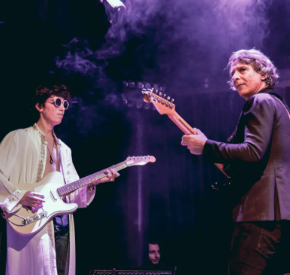
What Is Başka Bahar?
Başka Bahar, which can be translated as “Another Spring,” is the major release that has brought Zebânis renewed attention in 2026.
The album was released by San Francisco-based Six Degrees Records on March 6, 2026.
It contains 12 tracks including “Bogotà,” “Sale Marino,” “Gülleri Derdim Sen Seversin,” “Kaptan,” “Deli Biri Var,” “İstiklal Noise Interference,” “Yol Ver,” “Beni Seçtiğin Bu Yerde,” “Dončić,” “Porta Palazzo Noise Interference,” “Pro War” and “Khayyam.”
The album was developed over several years. Its creation moved between Istanbul, Turin and Brussels.
Rather than being recorded in a conventional studio environment, the project was developed through a more mobile and DIY process.
That approach helped shape the album’s experimental character.
Six Degrees Records describes the project as a transnational collaboration that rejects both simple nostalgia and the idea of turning Turkish musical traditions into an easily packaged form of exoticism.
Why Are People Suddenly Discovering Zebânis?
There are several reasons for the renewed interest.
1. Their 2026 Live Performances
The biggest factor is arguably the band’s live activity.
Zebânis and Umut Adan have performed extensively around Europe and have also appeared in Turkey. Their 2026 schedule has placed them in front of audiences that may not have encountered the project through recordings alone.
The group toured the UK in April 2026 before continuing with European dates. The announced shows included performances in Brighton, Falmouth, Manchester, Newcastle, Glasgow, Todmorden and London.
The live performances are particularly important because Zebânis does not simply reproduce the album on stage.
The band’s own description says the live show extends the record. Songs can move from narrative folk into noise and from ritualistic passages into more chaotic sections.
That makes the live experience different from simply listening to the studio recordings.
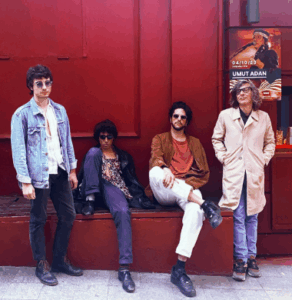
2. The Gümüşlük Music Festival Performance
The band’s appearance at the Gümüşlük Music Festival in Bodrum on July 24, 2026 gave the project another major moment.
Under the Radar reviewed the performance and described Adan performing with Zebânis on a seaside stage. The review highlighted the psychedelic sound created by the Italian musicians and the combination of Turkish and French elements in the performance.
Festival appearances can be especially valuable for emerging acts because they introduce musicians to listeners who may not have searched for them independently.
For Zebânis, that appears to be happening at a useful moment. The group now has a new album and a growing live identity.
3. The Renewed Interest in Anatolian Psychedelia
Anatolian psychedelic music has continued to attract international listeners. Zebânis benefits from that interest but does not simply copy the sound associated with classic Turkish psychedelic artists.
Instead, the group approaches the tradition from a contemporary perspective.
Turquazz described Başka Bahar as part of a contemporary wave of Anatolian psychedelia and noted how the project combines Turkish folk roots with psychedelic textures and art-rock arrangements.
That combination gives new listeners an accessible entry point while still offering something unusual.
4. The International Story Behind the Band
There is also a compelling story behind Zebânis. A Turkish songwriter is working with three Italian musicians from Turin’s experimental scene.
The resulting project has moved between Istanbul, Turin and Brussels. That international background gives the music a sense of movement.
It also explains why Zebânis does not sound like a conventional Turkish rock band. The project is built around cultural exchange rather than a single national musical identity.
Also Read: Gabrielle Carrington Bio: The Story Behind the Controversial Case
What Makes Zebânis Different?
One of the band’s biggest strengths is its refusal to stay in one place stylistically.3
A typical psychedelic band may establish a recognizable sound and repeat it across an album. Zebânis takes a more restless approach.
The musicians can use traditional melodic ideas and then disrupt them with electronic sounds or noisy passages. That unpredictability is central to the band’s appeal.
Their music also avoids treating Anatolian traditions as museum pieces. Instead the group uses those influences as material for contemporary songwriting. The result can feel nostalgic without being purely retro.
That distinction is important. The international audience for Anatolian psychedelic music has grown in recent years.
Many artists have found new listeners by revisiting sounds associated with Turkey’s psychedelic era. Zebânis is part of that wider conversation but adds a distinctly experimental dimension.

Songs New Listeners Should Know
If someone is discovering Zebânis for the first time, several songs from Başka Bahar provide a useful starting point.
“Bogotà” is one of the clearest introductions. It combines psychedelic elements with a strong rhythmic pulse and carries a political message.
“Sale Marino” has a strong connection to Turkish imagery and language. The song’s lyrics reference places and experiences associated with Istanbul and Bodrum.
“Khayyam” is another important track. It closes the album and connects the project’s contemporary sound with the legacy of Persian poet Omar Khayyam.
“Dončić” shows another side of the album and is one of the shorter tracks on the record.
Together these tracks demonstrate why the project is difficult to classify.
Is Zebânis a Turkish Band?
This question can be slightly confusing. Zebânis is strongly connected to Turkish music because the project is led by Turkish songwriter Umut Adan and draws extensively from Anatolian musical traditions.
However, the three musicians who make up Zebânis are Italian. Six Degrees Records describes the project as the meeting of Adan and three Italian musicians from Turin’s Pietra Tonale collective.
So it is more accurate to describe Zebânis as an international or transnational musical project with a strong Turkish and Anatolian identity rather than simply calling it a conventional Turkish band.
The Future of Zebânis
The group’s current momentum comes at an interesting time.
Başka Bahar gives Zebânis a substantial body of new material. Their international touring schedule gives audiences an opportunity to hear that music in a live environment.
The band’s future will likely depend heavily on how far it can take this combination of Turkish songwriting and European experimental music.
The project already has a distinctive identity. It does not need to compete with mainstream rock or pop.
Its appeal comes from occupying a space between psychedelic folk, experimental rock and contemporary Anatolian music.
If the 2026 performances continue to introduce the band to new audiences, Zebânis could become one of the more interesting names in the current international Anatolian psychedelic scene.
View this post on Instagram
Frequently Asked Questions
Who are Zebânis?
Zebânis is a musical project built around Turkish singer-songwriter Umut Adan and three Italian musicians: Andrea Marazzi, Michele Bussone and Filippo Gillono.
Is Zebânis a Turkish band?
Zebânis has strong Turkish musical roots through Umut Adan and its Anatolian psychedelic sound. However, the three musicians who form the band are Italian and connected with Turin’s experimental music scene.
When did Zebânis form?
The collaboration between Umut Adan and the musicians began in 2018. It initially developed around touring Adan’s earlier music before becoming a more collaborative creative project.
What does Zebânis mean?
According to Six Degrees Records, Zebânis is a nickname given to the musicians in Turkey. It refers to guardian demons of hell in Islamic mythology.
What is Zebânis’ latest album?
The group’s latest major album is Başka Bahar, released on March 6, 2026 through Six Degrees Records.
What genre is Zebânis?
Zebânis combines Anatolian psychedelia with psychedelic folk, experimental rock, art rock, electronic textures and noise.
Conclusion
Zebânis is gaining attention because it offers something more unusual than a standard psychedelic rock project.
The group brings together Turkish songwriter Umut Adan and three Italian musicians from Turin’s experimental underground.
Their recent appearance at the Gümüşlük Music Festival is a good example of the attention surrounding the group.
The band is increasingly being discussed not only as an accompaniment to Umut Adan but as a creative force in its own right.
For anyone interested in psychedelic music, Turkish folk or experimental rock, Zebânis is a name worth watching.
Their music looks toward Anatolian traditions while refusing to remain trapped in the past.
That balance may be the biggest reason people are discovering them now.